Top Milk Jugs for Frothing and Pouring in 2026
A milk jug has an outsized effect on your coffee: the right one makes steamed milk silky and pours a thin, controlled stream; the wrong one gives stiff foam and a splash. The top milk jugs for frothing and pouring in 2026 share clear traits: a narrow, precise spout, a shape that lets milk swirl while it steams, a handle that stays cool, and a size matched to the drink you make. We tested steel, ceramic and glass jugs at home to find the ones that make better coffee with less mess.
Key Takeaways
- A narrow, well-shaped spout matters most: it controls the milk flow for latte art and stops splashing.
- Stainless steel is the best all-rounder for frothing: light, tough, easy to clean, and it lets you feel the milk temperature through the wall.
- Match the jug to the drink: 350 ml suits one small flat white, 600 ml suits two drinks or a large latte.
- Fill only to just below the spout before steaming, so the milk has room to expand.
- Measurement marks inside save guesswork, and a dishwasher-safe jug is far easier to live with.

What Makes a Milk Jug Good for Frothing
Frothing milk is about movement: steam pushes air in while the jug shape keeps it swirling, stretching it into a smooth, glossy texture rather than stiff bubbles. A jug that is too wide lets the milk sit flat; one too narrow traps the steam wand and overheats the milk in one spot. The best jugs have a gently tapered body, wider at the base than the rim, which sets up a natural whirlpool as the milk heats, turning it into silky microfoam that pours well and tastes sweet.
The spout decides the pour
Once the milk is frothed, the spout takes over. A pointed, narrow spout gives a slow, precise stream you can steer for latte art, while a wide, rounded lip dumps the milk too fast and breaks the foam. The best spouts are sharply defined at the tip and smoothly curved where they meet the body, so the milk starts and stops cleanly without dribbling. Even without latte art, a good spout lets you pour slowly into a small cup without splashing milk onto the saucer or table.
Size: one drink or two
Milk expands by about a third as it froths, so never fill a jug past the base of the spout: the jug must be bigger than the drink you make. A 350 ml jug is right for a single small flat white or cappuccino, a 600 ml jug covers two drinks or one large latte, and a 1 litre jug belongs where several drinks are made in a row. Buying too big is a common mistake: a small amount of milk in a large jug will not swirl properly and will overheat before it foams. Buy the size that matches your usual drink, and keep a larger jug only if you regularly make coffee for guests.
Materials compared
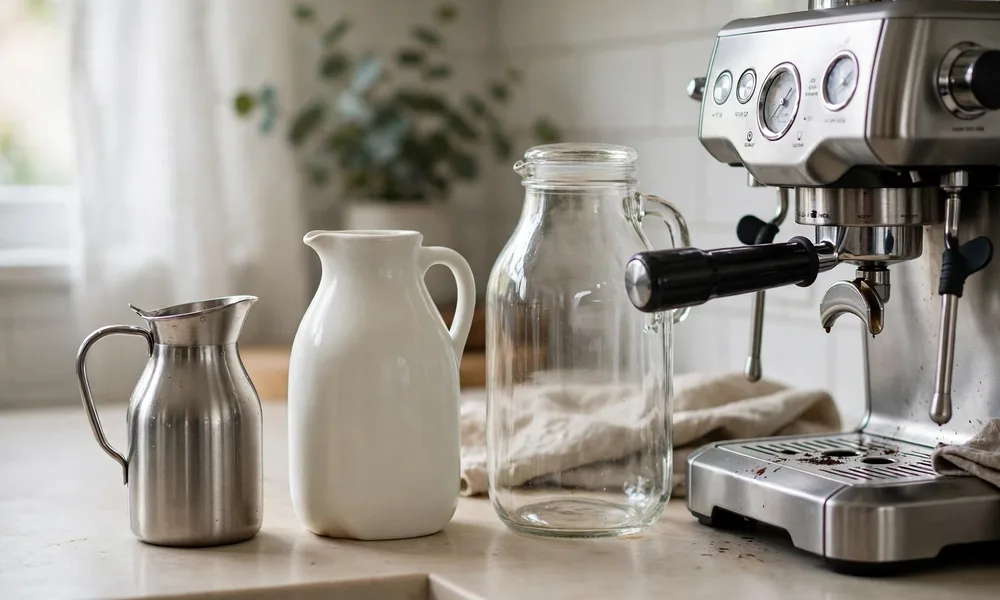
Stainless steel is the professional standard and the best choice for most people. It is light, it will not break if dropped, it cleans easily, and its thin wall lets you feel the milk warming, the simplest way to judge temperature without a thermometer. Ceramic jugs look beautiful and pour well for serving, but they are heavier, hide the temperature from your hand, and can chip. Glass jugs let you watch the milk froth, which helps beginners, but they get hot to hold and are the most fragile. Enamelled steel sits between the two, with the look of ceramic and the toughness of steel, though a chip can expose the metal underneath.
The Best Milk Jugs of 2026
We judged each style on frothing texture, pouring control, comfort in the hand, cleaning and durability over weeks of daily use. The winners below are types to look for rather than single models, since good versions of each are made by many kitchenware makers and the design matters more than the label.
1. Classic stainless steel frothing jug, 600 ml
The workhorse of home coffee. A 600 ml steel jug froths enough milk for two drinks, feels the temperature through its wall, and survives a fall off the counter. Look for a comfortable handle clear of the steam, a defined spout tip and measurement marks inside. It is the jug to buy first, and it will last for years.
2. Small stainless steel jug, 350 ml
For a single flat white or small cappuccino, the 350 ml jug is better than its bigger brother: the milk swirls properly, heats evenly and wastes nothing. It is also the easiest jug for latte art, since it is light and the stream is easy to control. Pair it with the 600 ml jug if you sometimes make coffee for two.
3. Ceramic serving jug
Not every jug needs to froth. A ceramic jug is the best choice for serving cold or warm milk at the table, where looks matter as much as function. Choose a comfortable handle, a drip-free spout and a glaze that wipes clean. Keep it for serving rather than steaming, since ceramic hides the temperature.
4. Glass frothing jug
A glass jug is the best teacher: seeing the milk swirl and rise helps beginners learn the motion and timing far faster than steel can. Choose thick, heat-resistant glass with a handle that stays cool, and treat it gently, since it is the most breakable option. Many people learn on glass, then move to steel.
5. Large steel jug, 1 litre
For households that make coffee for several people at once, a 1 litre steel jug earns its place. It froths a big batch evenly, keeps the temperature stable and pours cleanly through the same narrow spout. Do not use it for a single drink: a small amount of milk in a large jug will not swirl and will scorch before it foams.
Comparison Table
| Milk jug style | Material | Size | Spout | Dishwasher safe | Best for |
|---|---|---|---|---|---|
| Classic steel frothing jug | Stainless steel | 600 ml | Narrow, pointed | Yes | Two drinks or one large latte |
| Small steel jug | Stainless steel | 350 ml | Narrow, pointed | Yes | One flat white and latte art |
| Ceramic serving jug | Ceramic | 300–500 ml | Rounded lip | Yes | Serving milk at the table |
| Glass frothing jug | Heat-resistant glass | 350–600 ml | Narrow | Yes | Learning to froth by sight |
| Large steel jug | Stainless steel | 1 litre | Narrow, pointed | Yes | Several drinks at once |
How to Froth Milk Well
Start with cold milk and a cold jug, which gives you more time before the milk overheats. Fill the jug to just below the spout. Purge the steam wand, place the tip just under the surface and open the steam. You will hear a gentle tearing sound as air goes in; that stretching stage should last only a few seconds for a flat white, longer for a cappuccino. Then lower the jug so the wand sits deeper and the milk swirls, heating evenly until the jug feels too hot to hold, about 60 to 65 degrees. Stop, tap the jug once to pop large bubbles, swirl it and pour straight away: milk that sits will separate.
Whole milk froths most easily and tastes sweetest, while oat milk is the best plant-based option for a similar silky texture. Skimmed milk makes a stiffer, drier foam that suits a cappuccino but pours poorly for latte art. Whatever milk you use, a steel jug lets you feel the temperature, which is the difference between sweet milk and scorched milk. For the rest of your setup, see our guide to the milk frothers worth the counter space if you have no steam wand, and our pick of the best espresso machines 2026. If you are still learning the drinks, our guide to why a great cappuccino is worth making at home explains the difference between a flat white, a latte and a cappuccino.
Pouring latte art without the stress
Latte art looks hard because the pour is the last step of a chain: milk that is too hot, too bubbly or left standing will not pour a pattern. Start with well-frothed milk that looks like wet paint, hold the jug high to mix it into the coffee, then lower it close to the surface and pour slowly, wiggling the spout for a rosetta or pouring steadily for a heart. A narrow spout makes this far easier. Expect the first dozen attempts to look rough; the technique clicks once the texture is right.

Common Mistakes to Avoid
The most common mistake is overheating the milk. Above about 70 degrees it tastes burnt and its sweetness disappears, and no jug can save it. Judge by touch on a steel jug, or use a thermometer until the feeling is familiar. The second mistake is the wrong size: too big and the milk will not swirl, too small and it overflows. Third, never re-froth steamed milk: it gives a dry, separated foam. Finally, do not leave milk to dry in the jug: rinse straight after pouring, since dried milk is hard to remove and can sour in the spout.
Milk Jug Buying Checklist
- Spout is narrow and sharply defined, so the milk pours in a thin, controlled stream.
- Body tapers gently, wider at the base, so the milk swirls while it steams.
- Size matches your usual drink: 350 ml for one small drink, 600 ml for two.
- Handle is comfortable, stays cool, and keeps your hand clear of the steam wand.
- Steel wall is thin enough to feel the temperature, or the jug has clear measurement marks.
- Jug is dishwasher safe, easy to rinse clean, and has no crevices where milk can dry and sour.
Frequently Asked Questions
What size milk jug should I buy?
A 350 ml jug suits one small flat white or cappuccino, 600 ml suits two drinks or one large latte, and 1 litre suits several drinks at once. Milk expands by about a third when frothed, so never fill past the spout base.
Is stainless steel or ceramic better for a milk jug?
Steel is better for frothing: light, tough, easy to clean, and it lets you feel the temperature through the wall. Ceramic is better for serving milk at the table, where looks matter and steaming is not needed.
Can I froth milk in a glass jug?
Yes, if it is heat-resistant glass. A glass jug is a good way to learn, since you can watch the milk swirl and rise, but it gets hot to hold and is fragile, so handle it carefully.
How full should I fill a milk jug before frothing?
Fill to just below the spout, roughly a third to a half full. Milk expands as air is added: a jug filled too high overflows, while one filled too low will not swirl properly and may overheat.
What is the best milk for frothing?
Whole milk froths most easily and tastes sweetest. Oat milk is the best plant-based alternative, while skimmed milk makes a stiffer foam that suits a cappuccino but pours poorly for latte art.
How do I clean a milk jug?
Rinse immediately after pouring, before the milk dries. Wash with warm soapy water or in the dishwasher, paying attention to the spout, where milk can collect. If milk has dried on, soak in warm water first.
The Bottom Line
The best milk jug is the one that matches your drink: 350 ml of steel for a single flat white, 600 ml for two drinks or a large latte, and a larger jug only if you regularly make coffee for a crowd. Steel wins for frothing, with a narrow spout and tapered body that swirls milk into silky microfoam; ceramic and glass have their place at the table and in learning. Buy the right size, fill below the spout, stop when the jug feels too hot to hold, and the jug will do the rest.