The Milk Frothers Worth the Counter Space in 2026
A good milk frother turns a flat cup of coffee into a café drink made at home. The best milk frothers of 2026 turn cold milk into thick, glossy foam in under a minute, heat it without scorching it, and rinses clean. The worst ones make thin bubbles, scorch the milk, and waste counter space. This guide sorts one from the other, so you buy the frother you will actually reach for every morning.
Most people buy a frother for lattes and cappuccinos, then find it transforms hot chocolate, matcha lattes, and chai too. The models below were judged on foam quality, temperature control, capacity, cleaning, and counter space.
Key Takeaways
- Electric jug frothers make the thickest, most consistent foam with the least effort, and heat the milk too.
- Handheld wands are cheap, tiny, and great for cold foam, but cannot heat milk.
- The best foam comes from milk at 60 to 65 degrees Celsius; hotter, and it tastes burnt and the foam collapses.
- Whole dairy milk froths most easily; barista-style oat milk is the best plant-based option.
- Buy for the drink you make most often, and measure your counter before you order.
What a Milk Frother Actually Does
A milk frother whips air into milk and usually heats it too. The whisk makes tiny bubbles that the milk’s proteins hold in place. So fresh, cold milk froths best, whole milk makes dense, lasting foam, and skimmed milk makes airy foam that fades fast. A cappuccino wants thick foam in a deep cap; a latte wants silky microfoam that blends into the espresso. Temperature matters too: past 70 degrees, milk tastes cooked and its foam breaks down, while 60 to 65 degrees keeps it sweet and stable. Electric jugs hit that range automatically; wands leave heating to you.
The Three Types of Milk Frother in 2026
Every frother falls into one of three families, and picking the right family matters most.
Electric Jug Frothers
An electric jug frother is a small heated pitcher with a whisk inside. Pour in cold milk, press a button, and a minute later you have hot, frothed milk. Most models offer hot foam, hot milk without foam, and cold foam for iced drinks. They are the easiest option and the best choice for daily milky coffee. The trade-offs are size and price: a jug is roughly the size of a small kettle, costs far more than a wand, and needs a power socket.
Handheld Wand Frothers
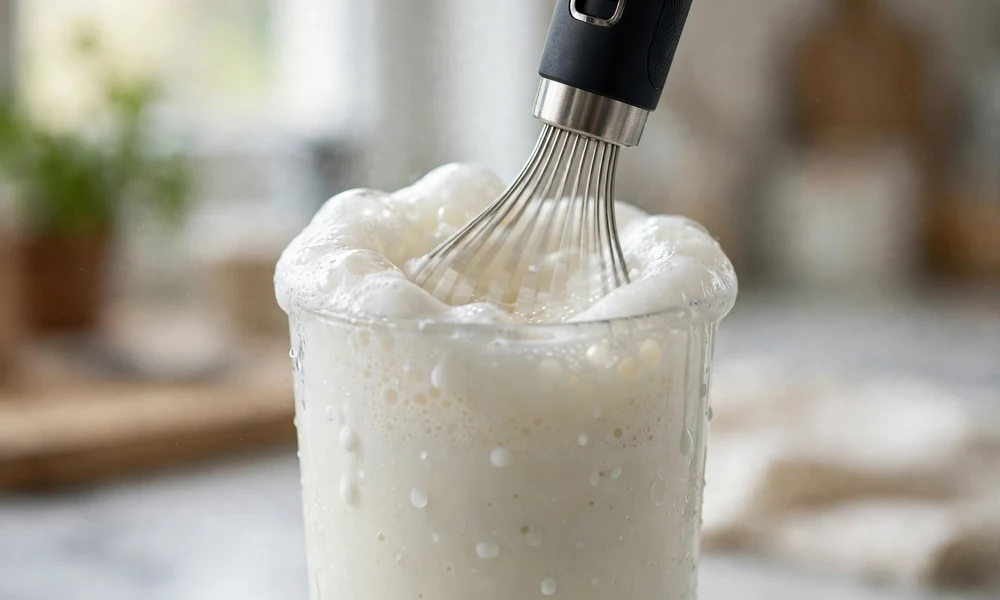
A handheld wand frother is a slim, battery-powered whisk on a stick. Hold it in a cup of milk and it spins at high speed, whipping in air. Wands cost very little, fit in a drawer, and are the fastest way to froth milk for one drink. They are also best for cold foam on iced coffee. The catch: a wand cannot heat milk, so you warm it first, adding a step and a pan to wash. The foam is lighter and less stable than jug foam, so it suits lattes and iced drinks better than a cappuccino’s thick cap.
Steam Wand Frothers
A steam wand is the metal pipe on an espresso machine that blasts hot steam into a jug of milk. It is the professional method, making the finest microfoam, the kind that pours latte art. It is also the hardest to learn: position the jug, listen for the right hiss, and stop at the right temperature, all in about thirty seconds. If you already own a machine with a steam wand, a separate frother is probably unnecessary. If you are choosing a machine, check the steam wand first. Our guide to the best espresso machines of 2026 covers which models steam milk well and which ones only pretend to.
The Best Milk Frothers of 2026
Five frothers below cover every kitchen and budget, from a pocket-sized wand to a one-button jug.
| Frother | Type | Capacity | Best For | Price Range |
|---|---|---|---|---|
| Stainless Jug Pro | Electric jug | 240 ml foam | Daily lattes and cappuccinos | Mid-range |
| Compact Ceramic Jug | Electric jug | 180 ml foam | Small kitchens | Budget |
| Barista Wand X | Handheld wand | Single cup | Cold foam and iced coffee | Low |
| Dual Whisk Jug | Electric jug | 300 ml foam | Families and entertaining | Mid-range |
| Travel Mini Wand | Handheld wand | Single cup | Travel and the office | Low |
1. Stainless Jug Pro
The Stainless Jug Pro is the best all-round milk frother of 2026 because it does the hard parts for you. It heats milk to 63 degrees and stops, makes dense cappuccino foam and silky latte microfoam with a change of whisk, and pours cleanly. The 240 ml capacity covers two drinks, and the non-stick interior wipes clean with a damp cloth while still warm. It is not the cheapest or smallest jug, but it is the one to buy.
2. Compact Ceramic Jug
The Compact Ceramic Jug is the best frother for a small kitchen. Shorter and narrower than the Pro, it holds 180 ml of foam and tucks between the kettle and the wall. The ceramic coating releases milk easily, so cleaning is painless, and one button covers hot and cold foam. The smaller capacity means one drink at a time, and the lighter foam suits lattes better than cappuccinos.
3. Barista Wand X
The Barista Wand X is the best handheld frother we tested, and the best choice for cold foam. It runs on two AA batteries, builds thick foam in about thirty seconds, and the whisk detaches for washing. Held at an angle in a tall glass, it makes cold foam that sits on iced coffee instead of sinking through it. It cannot heat milk, so pair it with a microwave jug for hot drinks. It is the cheapest way to try frothing at home.
4. Dual Whisk Jug
The Dual Whisk Jug suits homes where more than one person drinks milky coffee. Its 300 ml capacity handles two large lattes or three small cappuccinos in one cycle, and it ships with two whisks: one for thick foam, one for light foam. The larger jug takes more counter space and is heavier when full, so it suits a fixed spot. For multi-drinker mornings, the extra capacity is worth it.
5. Travel Mini Wand
The Travel Mini Wand is a pocket-sized frother on a rechargeable battery that charges over USB. Weaker than the Barista Wand X, it makes lighter foam, but it fits in a bag, works at the office, and turns a hotel-room coffee into something worth drinking. At home it is a backup, and the small whisk struggles with large cups. As a travel companion, it is cheap, light, and genuinely useful.
How to Froth Milk Like a Café
Good foam is mostly technique. Start with cold milk from the fridge and a cold jug for steam wands and handheld whisks. Cold milk gives you more time to build fine bubbles. For a jug frother, fill only to the marked line: milk roughly doubles as it froths, and overfilling sends foam over the rim. For a wand, tilt the cup, hold the whisk just below the surface, and move it slowly up and down. Stop when the milk has roughly doubled and the foam looks glossy, not bubbly.
Tap the jug on the counter to pop large bubbles, swirl until the surface looks like wet paint, then pour slowly from low down to mix the milk in, faster to lay the foam on top. The first attempts will look rough; by week’s end, they will look café-made.
Which Milks Froth Best
Whole dairy milk froths easiest. Its fat and protein build stable, creamy foam, and it forgives small mistakes. Semi-skimmed makes lighter foam that fades faster; skimmed makes big, airy foam that collapses within a minute. If you drink dairy, whole milk is the default.
Among plant milks, oat milk is the clear winner. Barista-style oat milk has a little extra fat, froths almost as well as dairy, and tastes neutral enough for coffee. Soya froths well too but can split above 60 degrees. Almond milk makes thin, fragile foam. The milk changes the drink as much as the frother does. Our ranking of the best and worst oat milks of 2026 covers which cartons froth well and which ones fall flat.

What to Look For Before You Buy
Capacity comes first. A frother rated for 240 ml of foam makes about two drinks; a 120 ml model makes one. Buy for the drinks you make in one round, and remember milk expands as it froths, so foam capacity is always smaller than the jug. Cleaning comes second: milk burns onto hot surfaces fast, and a non-stick interior with a removable whisk cleans in seconds, while fixed parts and narrow corners become a chore.
Think about what the frother sits next to. If you own a coffee machine, check whether it can froth on its own or whether a frother fills a genuine gap. Our comparison of the best and worst coffee makers of 2026 shows which machines include built-in frothing and which ones leave you to buy a separate tool. A frother should complete your setup, not duplicate a feature you already own.
The 6-Point Checklist
- Measure your counter and check the frother fits with room to lift the lid.
- Match foam capacity to the drinks you make in one round.
- Choose a jug for daily hot drinks, a wand for cold foam or small kitchens.
- Check your milk froths well; buy barista-style oat milk if you drink plant-based.
- Confirm the jug and whisk clean easily, ideally non-stick and dishwasher-safe.
- Test noise and pouring before the return window closes.
Frequently Asked Questions
Do I need a milk frother if my coffee machine has a steam wand?
No. A steam wand makes the best microfoam of any method, so a separate frother would only duplicate it. Buy one when your machine has no steam wand, when you want cold foam, or when someone needs a separate jug for plant milk.
Can a milk frother heat milk as well as froth it?
Electric jug frothers heat and froth in one cycle, usually to 60 to 65 degrees. Handheld wands cannot heat milk, so warm it on the hob or in the microwave first. A wand will not replace a kettle.
Which milk makes the best foam?
Whole dairy milk makes the most stable, creamy foam. Among plant milks, barista-style oat milk comes closest, then soya. Almond and rice milk make thin foam that fades fast, and suit drinks where foam is a garnish, not the main event.
Why does my frothed milk taste burnt?
The milk got too hot. Above 70 degrees, milk sugars scorch and the foam breaks down. Use automatic temperature control, or heat gently and stop at 60 to 65 degrees. Never reheat frothed milk: the proteins are spent, and it always tastes cooked.
How do I clean a milk frother?
Rinse the jug and whisk with warm water right after use, before the milk dries. Wipe the non-stick interior with a soft cloth; never scour it or soak an electric base. A weekly soapy wash keeps the foam tasting fresh.
Is an expensive milk frother worth it?
Up to a point. A mid-range jug makes noticeably better foam than the cheapest models, with steadier temperature control and a quieter motor. Beyond that, you pay for design, capacity, and brand, not foam quality. For most kitchens, a solid mid-range jug or a good wand is the sweet spot.
Bottom Line
The milk frothers worth the counter space in 2026 make great foam without a fuss. For most kitchens, that means the Stainless Jug Pro for daily hot drinks, the Barista Wand X for cold foam and small spaces, and the Compact Ceramic Jug when the counter is tight. Pick the type that matches your drink, check it fits, and buy milk that froths well. Then every morning coffee gets closer to the café version.