The best espresso machines in 2026 turn an ordinary kitchen into a small cafe, and the gap between a good home espresso and a coffee shop cup has never been smaller. A well-chosen machine pays for itself in a few months, makes a better drink than most cafes, and turns the morning coffee into a ritual worth waking up for. The hard part is choosing between the four kinds of machine on the market, because the right one depends entirely on how much effort you want to put into each cup.
Espresso machines are judged on three things: the quality of the drink, the ease of making it, and the work of keeping the machine clean. A manual machine makes the best possible espresso in skilled hands and the worst in careless ones. A super-automatic makes a good drink every time at the touch of a button, but costs more and offers less control. This guide compares the strongest options across every type and budget, with honest advice on what each one does well, what it demands from you, and how to choose the machine that fits your kitchen and your mornings.
Key Takeaways
- Match the machine to your effort level: manual for hobbyists, semi-automatic for learners, super-automatic for convenience.
- Pressure of 9 bars is the standard for real espresso, and a good grinder matters as much as the machine itself.
- A built-in milk frother is worth paying for if you drink lattes or flat whites, since it removes the messiest step.
- Budget for beans, filters and cleaning supplies as well as the machine, because running costs decide whether home espresso stays good.
- Clean the machine on schedule: a well-maintained budget machine outlasts a neglected expensive one.
How to Choose the Right Espresso Machine
Before you compare models, answer one question honestly: how much time and attention are you willing to give your coffee each morning? If the answer is two minutes and a button press, buy a super-automatic. If the answer is ten minutes of careful ritual, buy a manual or semi-automatic machine and a good grinder. The wrong machine for your patience level is the most common espresso mistake, and an unused machine is money wasted however good it is.
The Four Types of Espresso Machine
Manual machines give you full control over every variable: grind, dose, tamp and pressure. They reward skill with the best espresso you can make at home, and they punish laziness with sour or bitter cups. Semi-automatic machines handle the pressure and temperature for you while you control the grind and the shot timing, which is the sweet spot for most home baristas. Automatic machines add a timer that stops the shot for you, and super-automatic machines grind, dose, brew and froth milk at the touch of a button.
What 9 Bars Really Means
Real espresso is made by forcing hot water through finely ground coffee at about 9 bars of pressure, and that number is the standard every serious machine is built around. Machines that advertise 15 or 20 bars are quoting the maximum pressure of their pump, not the pressure at the coffee. What matters is stable pressure and stable temperature during the shot.
Best Manual and Semi-Automatic Espresso Machines
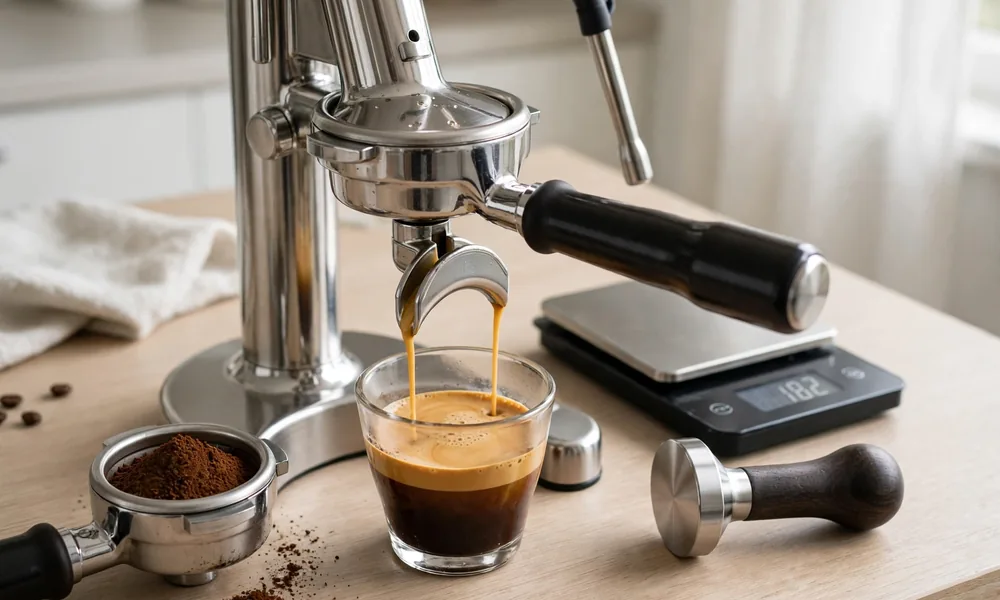
Manual and semi-automatic machines are the choice for people who enjoy the craft of coffee. They cost less than super-automatic machines at the same quality level, they last longer because there is less to break, and they make the best espresso of any home machine when they are used well. The trade is time and learning: expect a week or two of imperfect cups while you learn the grind, the dose and the tamp.
What to Look For
Look for a 58-millimetre portafilter, which is the professional standard and gives you the widest choice of accessories, and a boiler that recovers its temperature quickly between shots. A three-way solenoid valve keeps the coffee puck dry and makes cleanup far easier. A steam wand is essential if you drink milk-based coffee. Budget between $300 and $700 for a good semi-automatic machine, and pair it with a burr grinder, because a blade grinder cannot produce the consistent fine grind that espresso needs.
Best Super-Automatic Espresso Machines
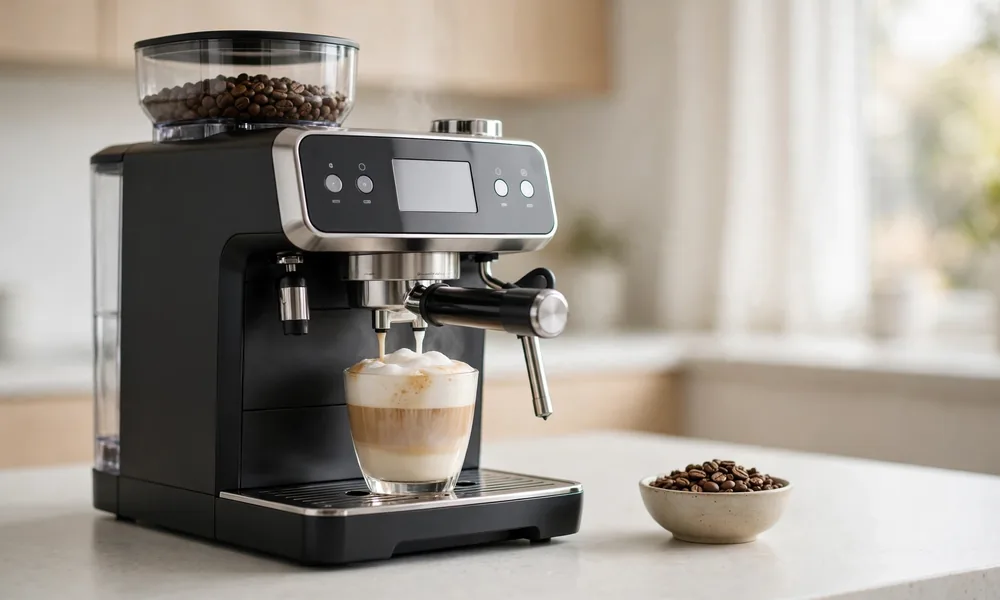
Super-automatic machines are the choice for people who want cafe-quality coffee with no learning curve. You fill the bean hopper and the water tank, press one button, and the machine grinds, doses, brews and froths the milk for you. They cost more than semi-automatic machines, usually $600 to $1,500, but for a busy household they are the most practical option by far.
What to Look For
Look for a ceramic burr grinder built into the machine, a milk system that is easy to remove and rinse, and a water tank large enough for a full day of drinks. Adjustable grind and strength settings matter more than a long menu of preset drinks, because you will use two or three drinks and ignore the rest. Check the descaling routine before you buy: the easiest machines to maintain are the ones that remind you when to clean them.
Who They Suit Best
Super-automatic machines suit busy households, offices, and anyone who drinks three or more cups a day and wants each one to take under a minute. They also suit households where several people make their own coffee, since there is nothing to learn and nothing to get wrong. Our guide to the best espresso machines for offices in 2026 covers higher-capacity models built for back-to-back drinks.
Best Budget Espresso Machines
A good budget espresso machine costs $150 to $300 and makes a far better drink than its price suggests, as long as you pair it with a decent grinder and fresh beans. The compromises at this price are real but manageable: smaller water tanks, slower temperature recovery between shots, and simpler steam wands. None of those matter much if you make one or two drinks at a time. What matters is a stable 9 bars of pressure, a portafilter that takes a proper dose, and a machine you will actually clean.
Where Budget Machines Shine
Budget machines shine for the first-time buyer who wants to learn espresso without spending $700 on a hobby they may not love. The smartest way to spend $250 on espresso is to split it: a $150 machine and a $100 burr grinder will make better coffee than a $250 machine paired with a cheap grinder. See also our guide to the best coffee makers of 2026 for drip, pour-over and cold brew options alongside espresso.
Best Espresso Machines for Milk Drinks
If you drink lattes, cappuccinos or flat whites, the milk system matters as much as the espresso itself. A good steam wand turns cold milk into silky microfoam in under a minute, while a weak wand makes bubbly, lukewarm milk that ruins the drink. Super-automatic machines with automatic milk frothers are the easiest option, and the best ones produce foam that rivals a cafe. Manual machines with a proper steam wand give you more control and better texture once you learn the technique, but they demand practice.
Steam Wands vs Automatic Frothers
A steam wand gives you control over the texture and temperature of the milk, which is why flat white lovers prefer it. An automatic frother gives you consistency with no skill, which is why busy households prefer it. Either way, use cold whole milk for the best foam, and rinse the wand or frother immediately after every use, because dried milk is the fastest way to ruin a machine. Our guide to the best gifts for coffee lovers in 2026 has grinders, tampers and milk jugs that pair with any machine on this list.
Espresso Machine Accessories Worth Buying
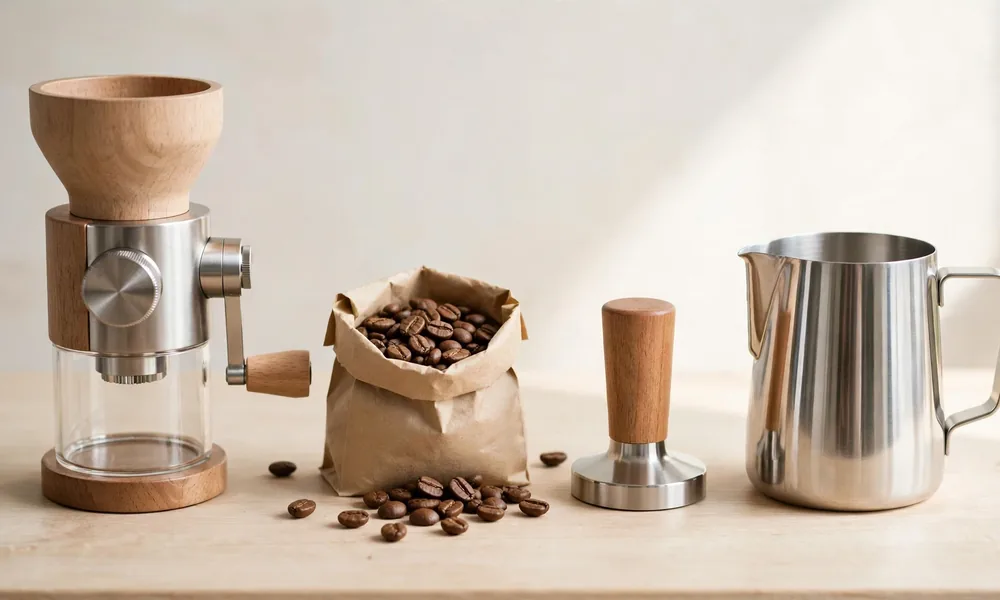
The machine is only half the setup. A burr grinder is the single most important accessory, and it deserves a real share of the budget: a $100 to $200 grinder transforms any machine, while a bad grinder caps the quality of every shot. A good tamper, a small scale, and a knock box for spent pucks are the other essentials, and together they cost less than $80.
Best Espresso Machines Compared
| Machine Type | Best For | Typical Price | Effort per Cup |
|---|---|---|---|
| Manual | Hobbyists, perfectionists | $400–$900 | 10 minutes, full control |
| Semi-automatic | Home baristas learning the craft | $300–$700 | 5–10 minutes |
| Automatic | Busy households, consistent drinks | $500–$1,000 | 2–3 minutes |
| Super-automatic | Families, offices, convenience | $600–$1,500 | Under 1 minute |
| Budget semi-automatic | First-time buyers | $150–$300 | 5–10 minutes |
| Pod espresso | Speed above all else | $100–$250 | Under 1 minute |
Espresso Machine Buying Checklist
- Decide how much time you will give each cup before you compare models, and let that decide the type.
- Check that the machine holds a steady 9 bars of pressure and a stable brewing temperature.
- Budget for a burr grinder first, then the machine, because the grind decides the quality of the shot.
- Choose a milk system that matches your drinks: a steam wand for flat whites, an automatic frother for convenience.
- Measure your counter space and check the water tank size before you order.
- Read the cleaning and descaling routine before you buy, and commit to following it.
Frequently Asked Questions
How much should I spend on a home espresso machine?
A good home espresso machine costs $300 to $700 for a semi-automatic or $600 to $1,500 for a super-automatic, plus $100 to $200 for a burr grinder. Budget machines from $150 to $300 make a very good drink when paired with fresh beans and a proper grinder, so spend more only when you know which features you actually want.
Do I need a separate grinder for espresso?
Yes, unless you buy a super-automatic machine with a grinder built in. Espresso needs a fine, even grind that only a burr grinder produces, and pre-ground coffee goes stale within days. A good grinder matters as much as the machine itself, and it is the first upgrade worth making.
What pressure should an espresso machine have?
Real espresso is made at about 9 bars of pressure. Machines that advertise 15 or 20 bars are quoting the maximum pressure of their pump, not the pressure at the coffee. Stable pressure and stable temperature during the shot matter far more than a bigger number on the box.
How often should I clean my espresso machine?
Rinse the portafilter and wipe the steam wand after every use, backflush a semi-automatic machine weekly, and descale every two to three months or when the machine prompts you. A well-maintained budget machine outlasts a neglected expensive one, and clean machines make noticeably better coffee.
Are pod espresso machines worth it?
Pod machines are the fastest and easiest way to make espresso, and they suit people who value speed above all else. The trade is cost per cup, which is several times higher than beans, and less control over the drink. If you drink one cup a day and want zero effort, a pod machine is a reasonable choice.
Can a home espresso machine match a cafe?
Yes, a good home machine with fresh beans and a proper grinder can match or beat most cafes, because you control the beans, the grind and the freshness. The gap is in milk drinks, where a skilled barista’s steaming technique takes practice to match. With a little patience, home lattes and flat whites get very close.
The Bottom Line
The best espresso machines in 2026 are not the most expensive ones. They are the machines that fit the way you actually drink coffee: the semi-automatic for the morning ritualist, the super-automatic for the busy household, and the budget machine with a good grinder for the first-time buyer. Buy the grinder, buy fresh beans, clean the machine on schedule, and your kitchen will make better espresso than most cafes within a week. That is what a good espresso machine really buys you: not just a drink, but a better start to every day.