
Why a Great Cappuccino Is Worth Making at Home in 2026
A great cappuccino is worth making at home because the café version is not mysterious: espresso, steamed milk and foam in equal thirds, served hot in a small cup, all doable in an ordinary kitchen. The gap between café and homemade is rarely the machine. It is the milk temperature, the foam texture and the ratio, three small things anyone can learn in a week.
This guide explains what makes a cappuccino a cappuccino rather than a small latte, how the café version compares with the homemade one, and the steps that turn a home espresso and a jug of milk into a drink with a thick foam cap and a first sip that tastes of coffee.
Key takeaways
- A true cappuccino is equal thirds: one third espresso, one third steamed milk, one third foam, served in a 150 to 180 millilitre cup.
- The foam is the difference: thick, glossy microfoam that sits in a deep cap, not the stiff bubbles of a badly frothed milk or the thin layer of a latte.
- Milk at 60 to 65 degrees Celsius tastes sweet and holds its foam; hotter milk tastes cooked and the foam collapses.
- Whole dairy milk froths most easily, but barista-style oat milk is the best plant-based option for a stable foam.
- You do not need a café machine: a home espresso maker or a stovetop brewer plus a frother can make a proper cappuccino.
What makes a cappuccino a cappuccino
The cappuccino has a strict definition. The classic recipe is equal thirds: one part espresso, one part steamed milk and one part milk foam, served in a small ceramic cup of about 150 to 180 millilitres. A latte is mostly steamed milk with a thin layer of foam, so it tastes milky and soft. A flat white is a double shot with velvety microfoam and almost no foam cap, so it tastes stronger. A cappuccino is the most structured of the three: the espresso is unmistakable, the milk sweetens it, and the foam sits on top like a cap you drink through.
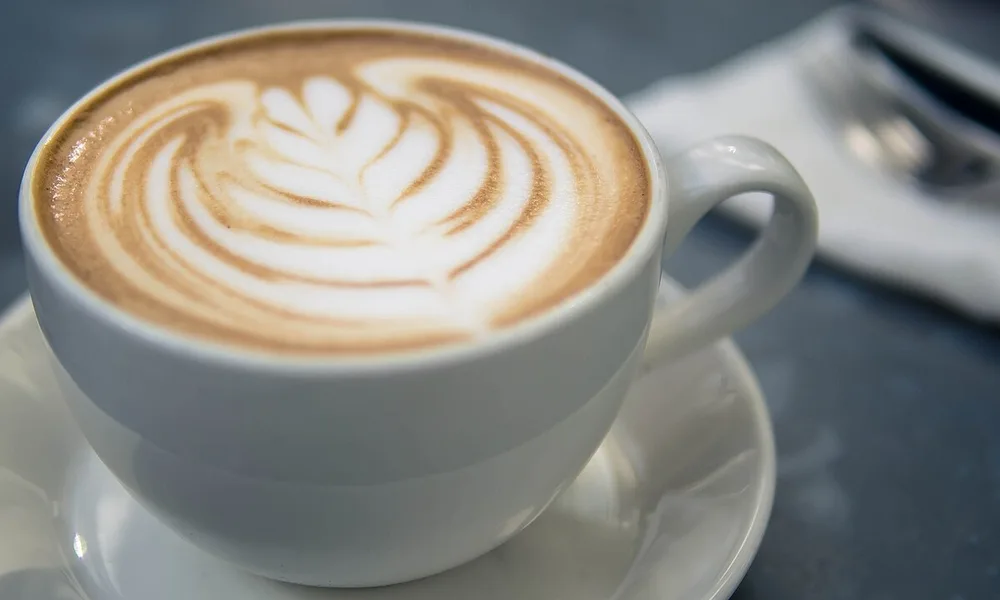
The foam itself is the signature. A good cappuccino foam is thick and glossy, made of tiny, even bubbles that hold their shape for several minutes. Bad foam is easy to spot: large, stiff bubbles like soap suds, or a thin layer that vanishes before the second sip. The difference is the steaming technique, and it is the single skill that turns a decent homemade coffee into a real cappuccino.
Café vs homemade: an honest comparison
The café has real advantages. A commercial espresso machine holds a steadier temperature and pressure than most home machines, the steam wand is more powerful, and the barista has made thousands of drinks. The café also has the ritual: the cup, the saucer, the walk there. None of that is the point of making your own.
| Café cappuccino | Homemade cappuccino | |
|---|---|---|
| Cost per cup | Three to five pounds or dollars | Under one pound or dollar |
| Espresso quality | Steadier temperature and pressure | Very good with fresh beans and practice |
| Foam quality | Excellent from a powerful steam wand | Excellent once the technique clicks |
| Convenience | Walk, queue, wait | Five minutes in your own kitchen |
| Customisation | Limited to the menu | Your beans, your milk, your ratio |
The homemade version wins on what matters daily. It costs a fraction of the café price, hundreds a year for a daily drinker. It takes five minutes instead of a trip out. And it is yours to adjust: a darker roast, a little less milk, oat milk instead of dairy. The café wins on consistency and atmosphere, which is why it is worth keeping for weekends and treating the homemade version as the everyday drink.
The espresso base
Everything in a cappuccino sits on the espresso, and a weak shot will show through the milk no matter how good the foam is. You need a double shot, about 36 grams of liquid from 18 grams of ground coffee, pulled in 25 to 30 seconds. It should pour like warm honey and carry a reddish-brown crema on top. If it pours too fast, the coffee is under-extracted and will taste sour through the milk. If it drips slowly and tastes bitter, the grind is too fine.
Fresh beans matter more than the machine. Buy whole beans roasted within the last two to four weeks and grind just before brewing, because ground coffee loses its aroma within days. A medium to dark roast suits a cappuccino best: its chocolatey notes stand up to milk, while a very light roast tastes sharp under foam. Our guide to the best espresso machines of 2026 covers the home machines that hold temperature well enough for a proper shot.
Without an espresso machine, a stovetop moka pot or an AeroPress can make coffee strong enough to stand in. It will not have true crema, and the drink will be a little softer, but with the right ratio and good foam it is recognisably a cappuccino. What does not work is drip coffee or instant: the coffee is too dilute, the milk takes over, and the result is a latte in disguise.
Milk and foam: where the drink is won
Foam is the part people get wrong, and it is also the part with the clearest rules. Start with cold milk, straight from the fridge, in a cold metal jug filled to about a third. Cold milk gives you the longest time to work, and a metal jug lets you feel the heat. Whole dairy milk is the easiest to froth: its fat and protein make dense, glossy foam that holds its shape. Skimmed milk makes airy foam that collapses quickly. Barista-style oat milk is the best plant-based option; ordinary oat milk and almond milk are much harder to work with.
Steam the milk to 60 to 65 degrees Celsius and stop. Below 55 degrees the milk tastes thin and the foam is unstable. Above 70 degrees it tastes cooked, the sweetness disappears, and the foam breaks down. Without a thermometer, hold the jug: when it is too hot to hold for more than a second or two, it is done. Our guide to the milk frothers worth the counter space in 2026 compares the jug frothers, handheld wands and steam wands that make this step easy.
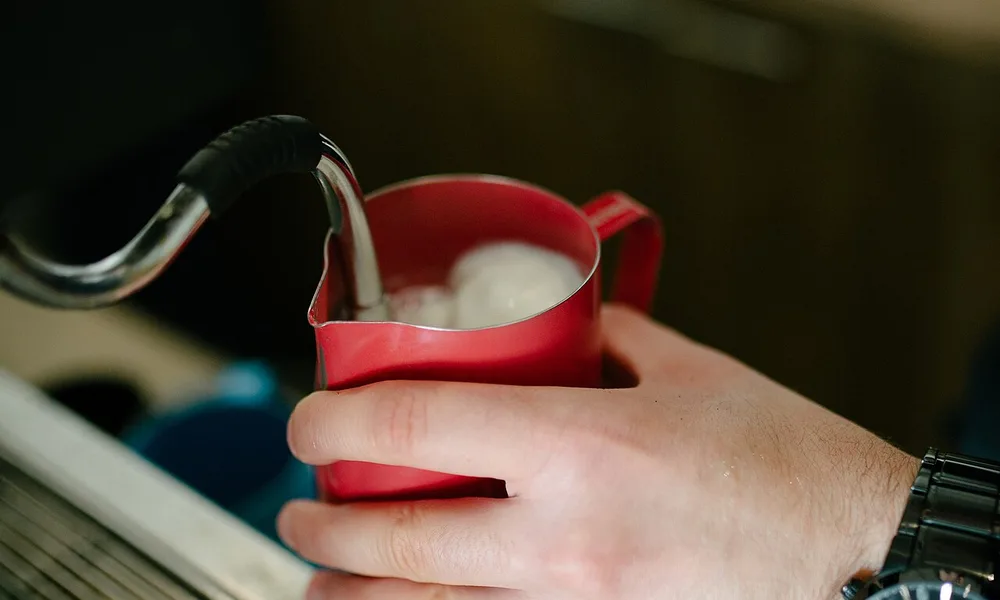
The technique is simple once you feel it. Put the steam tip just below the surface and let it hiss gently for a few seconds; that is the stretching stage, and it builds the foam. Then lower the tip deeper, keep the milk spinning, and let the heat work; that is the texturing stage, and it breaks the large bubbles into tiny ones. When the jug is hot to the touch, stop, tap it once on the counter, and swirl it until the surface looks like wet white paint. That glossy foam is microfoam.
Ratios, serving and the little details
The ratio is the recipe, worth measuring until it becomes habit. For a 150 millilitre cup: a double shot of espresso, about 60 millilitres, then about 60 millilitres of steamed milk, then a 60 millilitre foam cap. Pour the milk slowly into the centre, then spoon the foam over the top so it sits in a deep cap. Finish with a light dusting of cocoa powder or cinnamon, applied so it sits on the foam rather than sinking into it.
Serve it immediately, in a warm cup. A cold cup steals heat from a small drink fast, so rinse the cup with hot water before you brew. Drink it within a few minutes, while the foam is still standing and the milk is sweet. This is a drink that does not wait well.

What you actually need
The equipment list is short: a way to make strong coffee, a way to steam milk, a jug and a small cup. A home espresso machine with a steam wand covers both in one box, and our guide to the best coffee makers of 2026 compares the full range, from drip machines to espresso makers. If you already own a moka pot, a jug frother or a handheld wand is the only extra purchase, and either costs less than a week of café cappuccinos.
Mistakes that ruin a homemade cappuccino
The most common mistake is milk that is too hot. It is tempting to steam until the jug is scalding, but milk past 70 degrees tastes cooked and its foam collapses. The second mistake is too much air: holding the steam tip at the surface for too long makes stiff, soapy bubbles instead of glossy microfoam. Stretch for a few seconds only, then get the tip under the surface.
The third mistake is the cup. A large mug turns a cappuccino into a latte: the same shot and milk spread across twice the volume, with the foam lost in the middle. The fourth mistake is stale coffee. Beans roasted months ago make a flat, ashy shot no foam can rescue. Fresh beans are the cheapest upgrade in the whole routine.
Checklist: a café cappuccino at home
- Use a small cup, 150 to 180 millilitres, warmed with hot water before you brew.
- Pull a double shot from fresh beans, ground just before brewing.
- Start with cold whole milk or barista-style oat milk in a cold metal jug.
- Steam to 60 to 65 degrees Celsius, stretching briefly, then texturing into glossy microfoam.
- Pour equal thirds: espresso, steamed milk, then a deep foam cap on top.
- Serve immediately with a light dusting of cocoa, and drink it while the foam stands.
Frequently asked questions
What is the difference between a cappuccino and a latte?
A cappuccino is equal thirds of espresso, steamed milk and foam, served in a small cup, so the coffee flavour is strong and the foam sits in a deep cap. A latte is mostly steamed milk with only a thin layer of foam, so it tastes milkier and softer.
Can I make a cappuccino without an espresso machine?
Yes. A stovetop moka pot or an AeroPress makes coffee strong enough to stand in for espresso, and a jug frother or handheld wand makes the foam. The result is a little softer, but with the right ratio and good foam it is recognisably the same drink.
What milk is best for a cappuccino?
Whole dairy milk froths most easily and makes the densest foam. Barista-style oat milk is the best plant-based option, because it is formulated for frothing. Skimmed milk makes light foam that collapses quickly, and ordinary almond milk is one of the hardest to foam well.
How hot should the milk be?
Between 60 and 65 degrees Celsius. Below that the milk tastes thin; above 70 it tastes cooked and the foam breaks down. Without a thermometer, stop when the jug is too hot to hold comfortably for more than a second or two.
Why does my foam collapse?
Usually one of three things: milk too hot, too much air, so the bubbles are large and stiff, or the wrong milk. Steam to 60 to 65 degrees, stretch for only a few seconds, and use whole milk or barista-style oat milk.
Is a homemade cappuccino really cheaper than a café one?
Yes, by a wide margin. A café cappuccino costs three to five pounds or dollars; a homemade one costs well under one. For a daily drinker, the saving covers the cost of a home espresso machine or a good frother within a few months.
The bottom line
A great cappuccino is worth making at home because the drink is simple: equal thirds, good foam, a small cup, served hot. The café version is a pleasure, with a professional machine’s atmosphere. But the homemade version is cheaper, faster and yours to adjust, and once the milk technique clicks, the gap is smaller than the price difference suggests. Learn the ratio, respect the temperature, and keep the cup small.


