Best Outdoor Showers 2026
An outdoor shower changes how a garden gets used. After a swim, a muddy walk, or a long afternoon digging in the beds, there is somewhere to rinse off before the dirt reaches the hallway. It is a small luxury that earns its keep every warm day, and a practical one for households with dogs, children, and a pool.
The best outdoor showers of 2026 are the ones that still work well in their third summer: solid fixings, a head that spreads water evenly, a valve that turns smoothly with wet hands, and a base that drains instead of puddling. These are the models and styles worth choosing, and the details that separate a lasting fixture from a seasonal novelty.
Key Takeaways
- Match the shower to its job first, because a poolside rinse, a garden wash-down, and a full outdoor bathing spot need different heights, heads, and privacy.
- Water pressure decides how good the shower feels, so check the flow at the tap before choosing between a wide rain head and a focused handheld sprayer.
- Stainless steel and brass survive outdoors far better than thin chrome over plastic, especially where the shower stays out all winter.
- Drainage matters as much as the shower itself, since standing water rots decking, stains stone, and turns the spot into a mud patch.
- Plan for privacy and a dry towel within reach, because the best outdoor shower is the one people actually use without a second thought.
Outdoor Showers 2026 at a Glance
| Best for | Shower type | Height | Standout strength |
|---|---|---|---|
| Best overall | Freestanding steel column | 210 cm | Sturdy, simple, and easy to place |
| Best for pools | Poolside rinse column | 200 cm | Quick rinse that keeps chlorine out |
| Best for small gardens | Wall-mounted shower | 190 cm | Uses a wall and leaves the floor clear |
| Best for renters | Hose-fed portable shower | Adjustable | No plumbing and no drilling needed |
| Best for privacy | Enclosed wooden shower | 220 cm | Full screening for a proper wash |
| Best on a budget | Simple garden tap shower | 180 cm | Cheap to fit and easy to winterise |
What Makes a Good Outdoor Shower
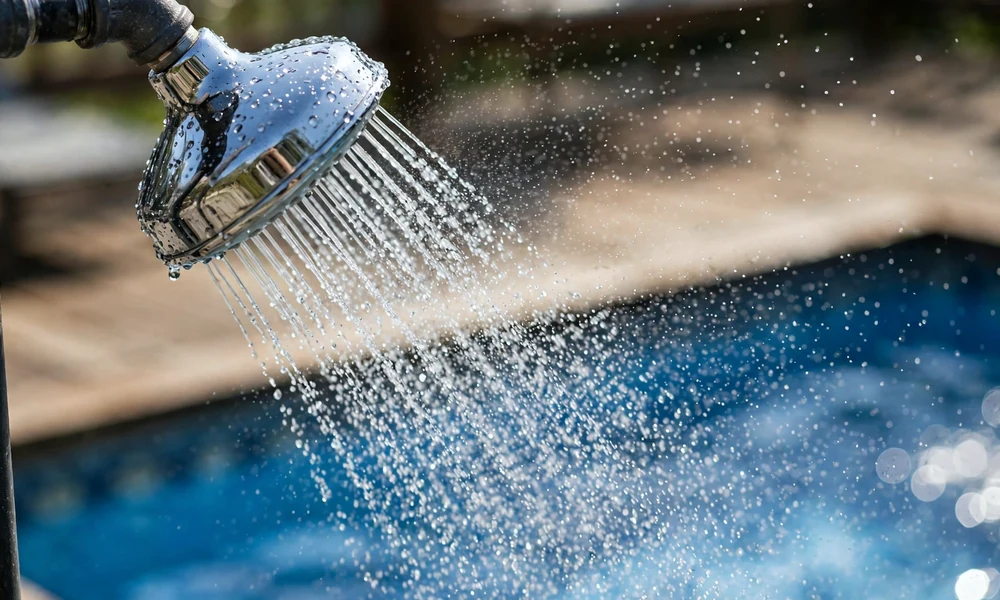
A good outdoor shower starts with the water. It should come out in an even sheet or a steady fan, not a thin jet from one side and a dribble from the other. Wide rain heads feel generous but need decent flow, while smaller heads and handheld sprayers cope better when the pressure is low. The head is the part you feel every time, so it deserves more attention than the shape of the column.
Freestanding Columns: The Best Overall
A freestanding column is the simplest outdoor shower to live with. It stands on its own base, connects to a water supply at the bottom, and needs no wall nearby, so it can go at the end of the garden, beside the pool, or on the patio where the sun hits in the evening. The best columns are a single piece of brushed stainless steel with a fixed rain head on top and a handheld sprayer lower down for feet, dogs, and muddy boots.
Height is worth checking before buying. A column around 210 centimetres suits most adults, with the head high enough that taller users are not ducking. Shorter columns feel cramped and spray the top of the head rather than the shoulders, while very tall ones lose pressure at the head. A foot wash tap near the base is a useful extra, because it rinses sand and mud without a full shower.
Wall-Mounted Showers: Best for Small Gardens
A wall-mounted shower is the right choice when space is tight. It fixes to the house wall, a garden wall, or a sturdy fence post, and it leaves the ground clear for planting or for a path. The pipework runs along the wall or through it from an indoor supply, which keeps the installation neat and protects the pipes from knocks.
Poolside Rinse Showers
A poolside shower has one job: rinse chlorine, salt, and sand off before people go back inside. It does not need hot water, a large head, or privacy screening, but it does need to be close to the pool and easy to reach with wet feet. A short column or a wall-mounted head beside the pool steps works well, and a foot wash at the base gets used more than the head itself on most days.
Place the rinse where the water can drain away from the pool. A shower that drains back into the pool adds soap and dirt to the water the filter then has to clean, and a shower that drains across the patio leaves a wet path to the house. A gravel bed or a drain channel beside the shower keeps the area dry underfoot and the pool cleaner.
Hose-Fed and Portable Showers: Best for Renters
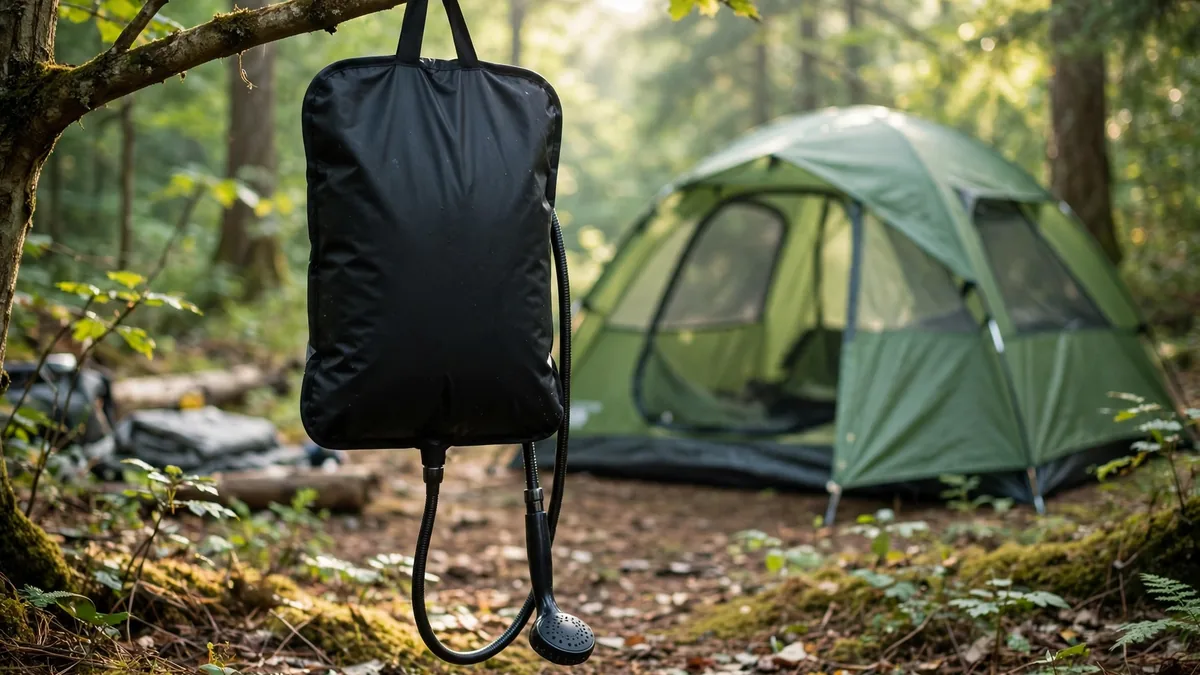
A hose-fed shower is the easiest way into outdoor showering. It screws onto a garden tap, hangs from a hook or a freestanding frame, and needs no plumbing, no drilling, and no permission from a landlord. The best ones have a proper shower head rather than a garden spray nozzle, and a valve at the head so the water can be stopped without walking back to the tap.
A garden hose is the part most people underestimate, because a thin or kinked hose starves the shower head and turns a good spray into a dribble. A wide, good-quality hose on a short run from the tap makes a visible difference, and it is worth reading a guide to garden hoses before choosing one. Keep the hose out of direct sun when it is not in use, since a hose left baking on hot paving can deliver scalding water on the first run.
Enclosed Showers: Best for Privacy
An enclosed outdoor shower turns a rinse into a proper wash. Timber slats, a bamboo screen, or a freestanding enclosure gives privacy without blocking the light or the breeze, and it makes the shower usable for a full wash rather than a quick splash. The enclosure also shelters the shower from wind, which matters on a cool evening when a breeze across wet skin feels far colder than the air temperature suggests.
An enclosed shower needs more thought about drainage than an open one, because the water stays inside the footprint. A slatted wooden deck over a gravel bed drains well and feels good underfoot, while a solid floor needs a fall towards a drain. A small shelf inside the enclosure holds soap and shampoo, and a hook on the outside keeps the towel dry while the shower runs.

Water Pressure and the Shower Head
Water pressure is the single biggest influence on how an outdoor shower feels. A wide rain head needs a strong, steady flow to fill all its nozzles, while a narrow head or a handheld sprayer concentrates a weaker flow into a satisfying spray. Before choosing a head, run the tap or hose into a bucket for thirty seconds and work out the flow; a shower that looks generous in a photograph can feel thin if the supply cannot keep up.
Low pressure is common outdoors, because the water often travels a long way from the house through a hose or a narrow pipe. A head designed for low pressure, with fewer or smaller nozzles, will outperform a large rain head on the same supply, and a handheld sprayer with a trigger gives more control over where the water goes. The same thinking applies indoors, so a guide to shower heads for low water pressure is a useful read before settling on a head.
Drainage and the Ground Underfoot
Drainage decides whether an outdoor shower stays pleasant or becomes a bog. The water has to go somewhere, and the ground under the shower takes every litre. A gravel bed over a membrane drains fast and needs almost no maintenance, while a stone slab with a fall towards a channel looks smarter and is easier to sweep. Grass under a shower turns to mud within a fortnight of regular use, so it is the one surface to avoid.
Materials That Survive Outdoors
Stainless steel is the safest material for an outdoor shower. It resists rust, cleans with a wipe, and keeps its finish through sun and frost. Brass fittings age gracefully and suit a traditional garden, while powder-coated aluminium is light and rust-proof but can chip if it is knocked. Thin chrome over plastic looks bright in the shop and dulls within a season outdoors, so it is the material to avoid for anything that stays outside.
Placement, Privacy, and the Rest of the Garden
Place the shower where people will actually use it. Beside the back door for muddy boots, beside the pool for rinsing, or at the sunny end of the garden for a proper wash: the right spot depends on the household, but the wrong spot is always the one that needs a long walk across wet grass. A shower near the house is also easier to connect to hot water, which matters more than a pretty view.
The shower should sit well with the rest of the garden rather than looking like an afterthought. A steel column beside a stone wall, a timber screen that matches the fence, and a gravel bed that ties into the paths all help, and the same care pays off across the garden. A guide to patio furniture is worth a look when planning the area around the shower, because a chair, a small table, and somewhere to put a towel turn a rinse spot into a place to linger.
How to Choose in Ten Minutes
Start with the job. A poolside rinse needs a short cold column near the pool steps, a garden wash-down needs a taller shower with a handheld sprayer, and a full outdoor wash needs an enclosed shower with hot water and a shelf. Write down the one job that matters most, because a shower that tries to do everything usually does none of them well.
Finally, check the fixings and the winter plan. A solid base, stainless fixings, and a drain valve matter more than a fancy finish, and a shower that can be drained in autumn will still be there in spring. If the shower passes those checks, the style is a matter of taste, and the garden will get far more use out of it than the brochure promised.
Mistakes to Avoid
The most common mistake is putting the shower on grass. It looks natural in a photograph and turns to mud in a week of use, and the mud then travels back into the house on wet feet. A gravel bed or a stone slab costs little and solves the problem from the start.

Final Word
An outdoor shower is a small addition that changes the rhythm of a garden. It keeps the house cleaner, makes the pool more inviting, and gives hot days a cool ending that no indoor shower quite matches. Choose for the job, the water, and the winter, and the shower will earn its place for years. The best ones are not the most elaborate; they are the ones that are still standing, still spraying evenly, and still getting used when the novelty has long worn off.