The best camp showers in 2026 turn a grubby campsite into a place you actually want to stay. A camp shower is a portable washing system you take to camp: a bag, a pump, or a heated unit that gives you running water wherever you pitch your tent. After a dusty hike, a swim in a lake, or a day of cooking over fire, a proper wash is the difference between a good trip and a miserable one. The best are simple to set up, give enough warm water for a real wash, and pack down small. This guide covers the types, the water, the warmth, and the mistakes to avoid.

Key Takeaways
- A camp shower is a portable washing system for camp, not a fixed garden fixture: it packs down, runs off gravity, a battery, or gas, and goes where you go.
- Most people need 10 to 20 litres for a proper wash; low-flow heads and a wet, soap, rinse routine stretch every litre.
- Solar bags are the cheapest and lightest option, but they need sun and time; battery pumps give instant pressure anywhere.
- Warm water is a heating problem: sun, a kettle, or a propane heater all work.
- Wash away from water sources and use biodegradable soap sparingly, because grey water and soap damage streams and lakes.
What a Camp Shower Is, and What It Is Not
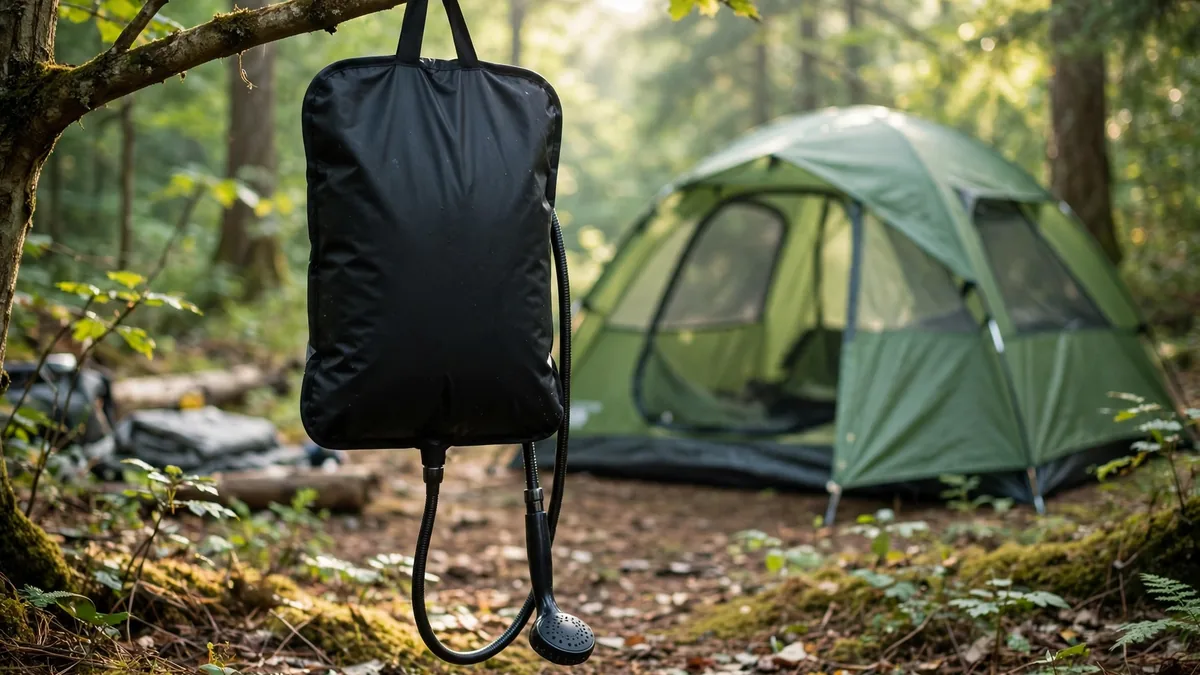
A camp shower is any portable system that delivers running water for washing at camp. The simplest version is a black bag you fill with water, leave in the sun, and hang from a tree. The most elaborate is a propane water heater with a proper shower head that runs off a gas bottle. Between those extremes sit battery-powered pumps that drop into a bucket and push water through a hand-held head. The shower comes with you, sets up in minutes, and packs away when you leave.
That portability is what separates a camp shower from the other kinds of outdoor washing. An outdoor shower is a fixed fixture in a garden or by a pool: plumbed in, bolted down, and built to last for years in one place. You cannot take it to a campsite. A camp shower is the travelling version of the same idea, built to fold, hang, and survive being stuffed in a car boot.
The other neighbours are about water and heat, not washing. A camp kettle boils water over an open fire for tea, coffee, and cooking, and it is also the simplest way to warm water for a wash. A camping stove cooks your food and heats your wash water, but it is not a shower in itself. The stove or kettle makes hot water and the shower delivers it.
How much water do you need? Less than you think. A camp shower uses far less than a home shower, because the head is low-flow and you control the water. A quick wash takes 5 to 10 litres, a thorough wash with hair takes 10 to 20 litres, and a family of four can manage on 40 litres if everyone is disciplined. The trick is the routine: wet down, switch the water off, soap up, then rinse. It halves your water use.
The Main Types of Camp Shower in 2026
There are four main types, each with a clear strength and a clear weakness.
Solar shower bags
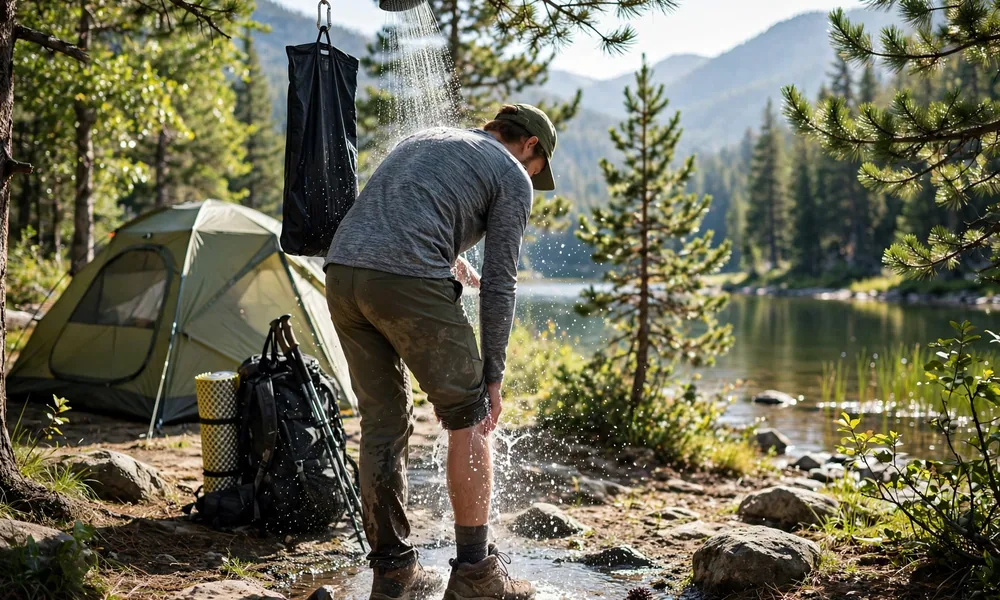
Solar bags are the classic camp shower: a black bag of 10 to 20 litres with a hose and a shower head. You fill it, lay it in the sun for two or three hours, hang it from a tree, and gravity does the rest. They cost little, weigh almost nothing, and have no moving parts. The weaknesses are obvious: no sun means no hot water, pressure drops as the bag empties. They suit summer family camping.
Battery-powered pump showers
Pump showers are the most popular type in 2026, and for good reason. A small rechargeable pump drops into any bucket or water container, pushes water through a hose to a hand-held head, and gives you proper pressure for 30 to 60 minutes per charge. You heat the water separately, often with a kettle, then drop the pump in. Pressure beats gravity, and the kit packs into a small bag. The downsides: you must charge the pump and supply a container.
Pressurised garden-sprayer showers
Pressurised showers look like a garden sprayer: a rigid tank you fill with water and pump up by hand. A few strokes of the pump give you several minutes of steady pressure, and you can add warm water before you pressurise. They need no battery or sun, which suits overlanders and van campers. The trade-off is size: a 10-litre tank is bulky, and pumping gets tedious on a long trip. They suit car campers.
Propane heated showers
Propane showers are the luxury option. A small gas heater, fed by a camping gas bottle, warms water as it flows through, so you get a continuous hot shower at a temperature you can set. They give a family of four a hot wash each without planning. They are also the heaviest, the most expensive, and the most complicated, with gas connections and ventilation to think about. They suit long stays at drive-up sites.

How to Get Warm Water at Camp
Warm water is really a heating problem: the shower only delivers water, and something else must warm it.
Sun heating
The sun is free and it works, given time. A black solar bag in direct sun for two to three hours can reach a comfortable temperature, and the darker the bag, the faster it warms. Lay the bag flat: it catches more sun than a hanging one. On a cloudy day, sun heating fails, so always have a back-up plan if a warm wash matters to you.
Kettle and stove heating
The most reliable method is to heat water on your stove or over the fire and mix it with cold water in a bucket. A kettle of boiling water mixed with cold water gives you a bucket of warm water in minutes, and a pump shower turns that bucket into a proper wash. It works in any weather, at any time of day.
Propane and electric heaters
Propane heaters warm water on demand and are the easiest option for a family, but they need gas, ventilation, and a safe place to run. Electric heaters work only at sites with mains hook-up. Test the temperature with your hand first: camp heaters can run hotter than you expect.
Camp Showers Compared
The table below compares the four main types side by side.
| Type | Water per wash | Pressure | Hot water | Best for |
|---|---|---|---|---|
| Solar shower bag | 10 to 20 litres | Low, gravity fed | Sun only | Summer family camping |
| Battery pump shower | 10 to 20 litres | Good, steady flow | Heat water first | Most campers in 2026 |
| Pressurised sprayer | 8 to 12 litres | Good, then fades | Heat water first | Car and van camping |
| Propane heated | Unlimited, on tap | Excellent | Built in, adjustable | Long stays, families |
| Gravity bucket shower | 5 to 10 litres | Low, gentle flow | Heat water first | Backpacking, ultralight |
A fifth option is worth knowing about: the gravity bucket shower, which is simply a bag or bucket with a shower head that you hang up and let drain. It is the lightest option, little more than a bag and a hose. It gives a gentle wash.
Privacy, Drainage, and Washing Without Harming the Site
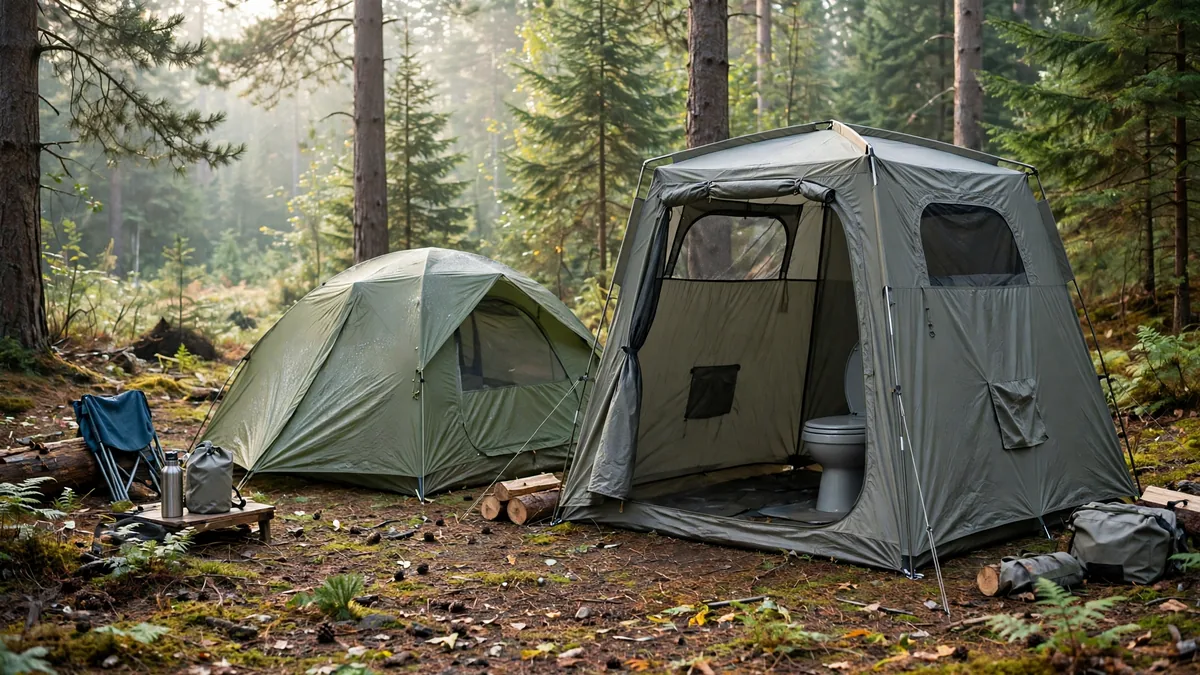
A camp shower needs three things besides water: somewhere to stand, somewhere for the water to go, and a bit of privacy. A pop-up shower tent solves privacy in minutes and doubles as a toilet tent and changing room. A tarp between trees will do. Drainage matters too. Grey water contains soap, skin oils, and dirt, and it should never go straight into a stream or lake, even if the soap says biodegradable. Wash at least 60 metres from any water source, on bare ground or gravel where the water can soak away, and scatter the wash water rather than letting it pool. Use soap sparingly.
The Worst Camp Showers: What to Avoid
Bad camp showers fail in predictable ways. The first is a solar bag with a thin hose that kinks: the water stops, the bag swings, and you end up holding a hose that will not flow. The second is a pump whose battery dies after ten minutes. The third is a shower head that blasts water in one hard jet instead of spreading it: it wastes water, stings, and rinses badly. The fourth warning sign is a propane heater with no temperature control. Water that is too hot is dangerous, and water that swings between hot and cold is miserable, so a heater without a thermostat is a false economy. Finally, avoid any shower you cannot clean: bags and hoses grow mould if packed away wet. Hang everything up to dry before you pack it away, every single time.
Camp Shower Buying Checklist
- Pick the type by your trip: solar bags for summer, battery pumps for most trips, propane for long family stays.
- Plan on 10 to 20 litres per wash and use a wet, soap, rinse routine.
- Sort your hot water first: sun, kettle, or heater, and always test the temperature with your hand before stepping in.
- Check the pump battery runtime and charge it fully.
- Bring a pop-up shower tent or a tarp for privacy.
- Wash at least 60 metres from streams and lakes, scatter grey water on soil, and dry every bag and hose before packing.
Frequently Asked Questions
How much water does a camp shower use?
A quick wash uses 5 to 10 litres and a thorough wash with hair uses 10 to 20 litres. A home shower uses far more, because a camp shower head is low-flow and you switch the water off while you soap. A family of four can manage on 40 litres.
How do you heat water for a camp shower?
Three ways work well: leave a black solar bag in the sun for two to three hours, heat water on a stove or kettle and mix it with cold water, or use a propane heater that warms water as it flows. Heating water on the stove works in any weather and takes minutes.
Can you use a camp shower in winter?
Yes, but you need a plan. Solar bags are useless in winter, so use a battery pump with water heated on a stove, and wash inside a pop-up tent out of the wind. Never leave water in bags overnight: it freezes and splits them.
Is it safe to drink water from a camp shower?
No. Camp shower water is washing water, not drinking water, even if it came from a clean source. Hoses and bags are not food-grade, and standing water grows bacteria quickly. Carry drinking water separately.
Do I need a shower tent?
You do not strictly need one, but most campers end up buying one. A pop-up tent gives you privacy, shelter from wind, and somewhere to stand that is not mud. It also doubles as a changing room and toilet tent.
What soap should I use in a camp shower?
Use a small amount of biodegradable soap and nothing else. Even biodegradable soap harms streams and lakes, so wash well away from water and let the grey water soak into soil. Never pour wash water into a stream.
The Bottom Line
The best camp showers in 2026 are the ones that match your trip: a solar bag for sunny family camping, a battery pump for most campers, and a propane heater for long stays. Plan on 10 to 20 litres per wash, heat the water on your stove when the sun fails, give yourself privacy, and wash well away from streams. Get those right and it becomes the best kit you packed.