How to choose the best camping toilets in 2026 starts with an honest question: where will you actually use one, and who will use it? A camping toilet is the piece of kit nobody wants to talk about and everybody is grateful for at two in the morning, when the alternative is a torch, a long walk, and a cold field. The best camping toilets are stable, easy to clean, and simple enough that nobody dreads using them, and this guide explains the main types, how they handle waste, and how to set one up so a campsite stays pleasant for everyone.
Key Takeaways
- Portable flush toilets are the most comfortable and familiar choice for families and camper vans, with a proper seat and a sealed waste tank.
- Folding toilets with waste bags are the lightest and simplest option for short trips, festivals, and emergencies.
- Composting and separating toilets control smell best on long trips, but they cost more and need the right setup.
- Always pair a toilet with a privacy shelter, hand washing, and a plan for legal, responsible waste disposal.
- Test the seat height and stability before you buy, because a wobbly toilet is one nobody will use twice.
What a Camping Toilet Actually Is
A camping toilet is a portable, self-contained toilet designed for places with no plumbing: campsites, camper vans, boats, festivals, and remote cabins. Unlike a home toilet, it does not connect to a drain. It stores waste in a sealed tank or a disposable bag until you can empty it properly, and the good ones do that without smells, leaks, or mess.
The differences matter because they decide everything else: how heavy the toilet is, how often you empty it, how much it smells, and how much it costs. A flush toilet is the most familiar to use, but it is also the heaviest, because it carries water and a waste tank. A bag toilet is the lightest and cheapest, but you need a steady supply of bags and a place to dispose of them.
Cassette toilets deserve a mention because they are the standard in camper vans and motorhomes. The waste cassette slides out from the side of the vehicle, so it can be carried to a disposal point without moving the whole toilet. They are comfortable and familiar, but they are a fixed installation rather than a portable extra, so they suit a van owner rather than a tent camper.
The Main Types of Camping Toilets Compared
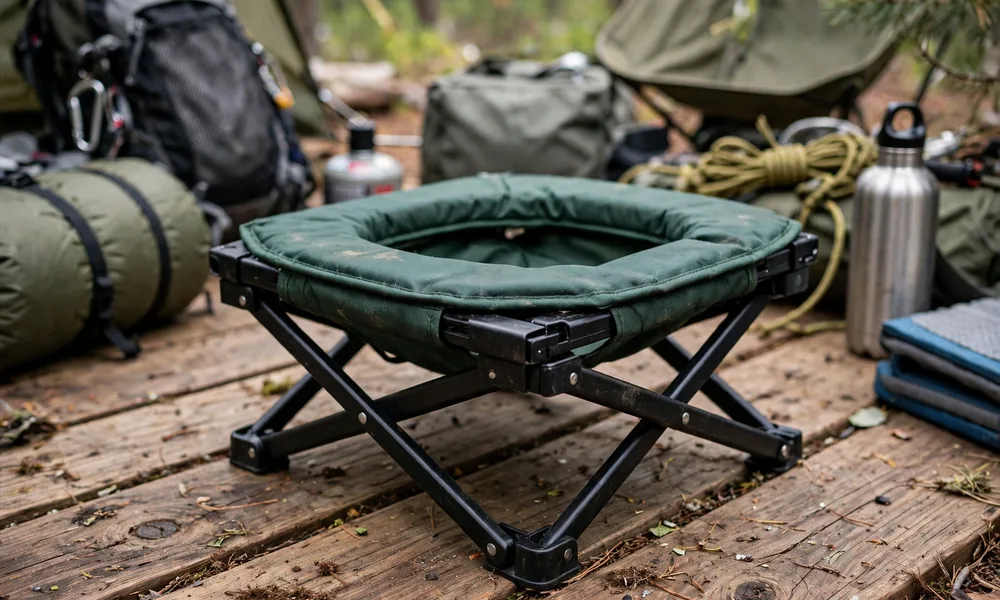
Most camping toilets fall into four types. Portable flush toilets are the closest to a home toilet: a proper seat, a flush pump, a fresh-water tank on top and a sealed waste tank below. They are comfortable, private, and easy for children and older campers to use, and they are the best choice for families, camper vans, and longer stays. Folding bag toilets are a seat on a folding frame, with a waste bag clipped underneath. Bucket toilets are the simplest of all, a seat on a bucket with a bag inside, cheap and tough but the least comfortable. Composting and separating toilets divide liquid from solid waste, which controls odour best over several days, but they cost the most and need the most setup.
| Type | Comfort | Best For | Watch Out For |
|---|---|---|---|
| Portable flush | Highest | Families, camper vans | Heavy, needs emptying point |
| Folding bag toilet | Medium | Short trips, festivals | One bag per use or two |
| Bucket toilet | Low | Budget, emergencies | Least comfortable, least private |
| Composting, separating | High | Long stays, off-grid | Priciest, needs ventilation |
| Cassette toilet | High | Camper vans, motorhomes | Fixed install, heavy when full |
Choosing the Right Size, Height and Capacity
Seat height is the detail that decides whether a camping toilet actually gets used. A seat that is too low is hard for older campers and anyone with stiff knees to get up from, while a seat that is too high leaves shorter users and children with their feet dangling. Most good portable toilets sit at roughly home-toilet height, which is about 40 centimetres, and that is the height to look for if the toilet will be shared.
Weight and pack size are the other half of the decision. A flush toilet with a full tank can weigh over 20 kilograms, which is fine in a camper van and a real burden if it has to be carried across a field. A folding bag toilet weighs a few kilograms and packs flat, which is why walkers and festival-goers prefer it. Think about who will carry it, how far, and where it will live in the vehicle.
Hygiene, Smell and Waste Disposal
Hygiene is where a good camping toilet earns its keep, and it starts with the basics: a sealed waste tank or a tied-off bag, a lid that closes properly, and hand washing within reach. Chemical additives in a flush toilet break waste down and keep smells under control, but they need to be used at the right strength and topped up when the tank is emptied.
Waste disposal is the part that cannot be skipped, and the rule is simple: never empty a camping toilet into a bush, a stream, or an ordinary bin unless the product is specifically designed and labelled for that. Flush and cassette toilets should be emptied at a proper chemical disposal point, which most campsites and motorway services provide, and the tank should be rinsed and recharged with chemical before the next use.

Setting Up a Camping Toilet at Camp
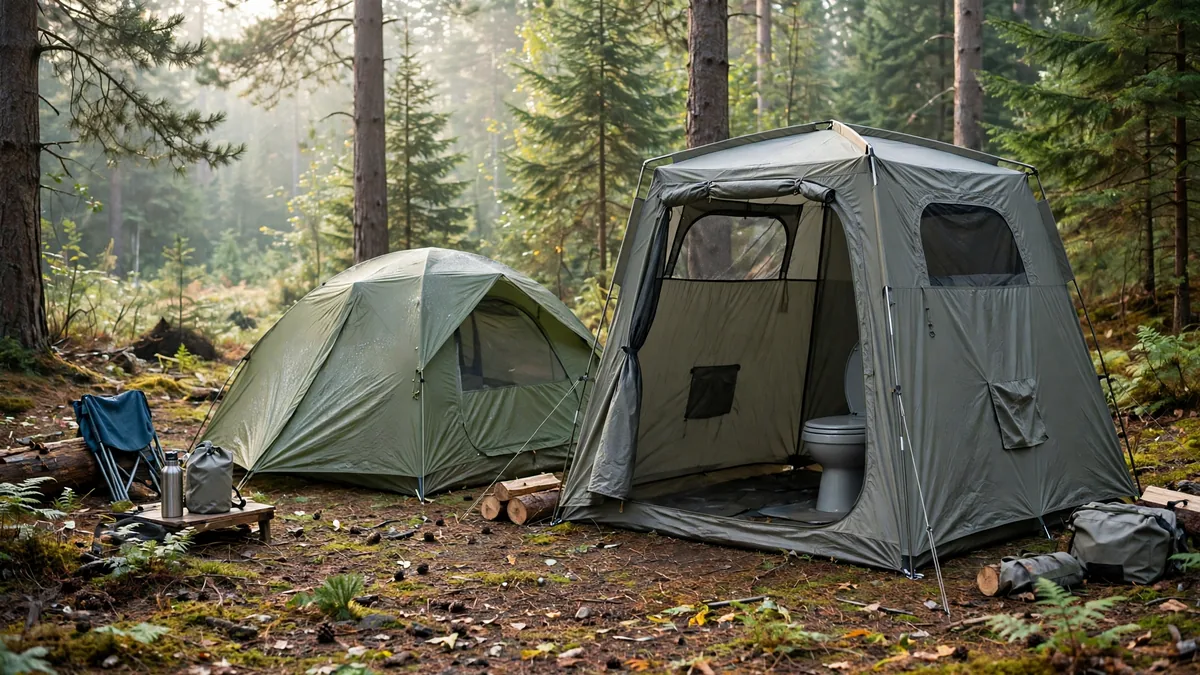
A good setup is a small system, not just a toilet on its own. Start with a privacy shelter: a pop-up tent made for the job, with a floor that can be cleaned and a door that closes properly, placed a short walk from the sleeping tents, on flat ground, downwind of the cooking area. A small camp shower nearby makes the whole setup far more pleasant, and our guide to why the best camp showers in 2026 are worth packing for every trip covers the water side of camp hygiene.
At night, the setup needs to be easy to find and safe to reach. A small solar light or a reflective marker on the shelter door helps, and a clear path without guy ropes or tent pegs in the way prevents trips in the dark.
Store the toilet dry, with the lid closed but the tank empty, in a cool place out of direct sun, because heat and sunlight degrade plastic and seals faster than anything else. Keep the chemical, the bags, and the spare seals together in one box, so nothing is missing when the next trip comes around. A toilet that is cleaned and stored properly will last for years.
Care, Cleaning and Storage
A camping toilet needs cleaning after every trip, and a little care between trips as well. Empty the waste tank or remove the bag, rinse the tank with clean water, and wash the seat and the outside with warm soapy water or a dedicated toilet cleaner. Never use harsh bleach on the seals, because it dries them out and causes leaks, and check the seals every season for cracks or stiffness.
Common Mistakes When Buying Camping Toilets
The first mistake is buying the cheapest toilet on the shelf. A flimsy frame, a thin seat, and a lid that does not seal will make every use unpleasant, and the toilet will be abandoned after one trip. The second mistake is buying a toilet that is too small for the people who will use it, especially for older campers and children, who need a stable seat at the right height. The third mistake is forgetting the privacy shelter, the bags, and the chemical, and discovering on the first night that the toilet is usable only in the open. The fourth mistake is choosing a toilet with no proper disposal plan. The fifth is waiting until the tank is completely full before emptying it, and the sixth is packing the toilet away wet or dirty, which guarantees a smell next time.
Camping Toilet Buying Checklist
- Choose the type for the trip: flush for families, folding bag for short trips, composting for long stays.
- Check the seat height and stability on uneven ground, and favour a seat near home-toilet height.
- Match the waste capacity to the group and the trip length, and know where the nearest disposal point is.
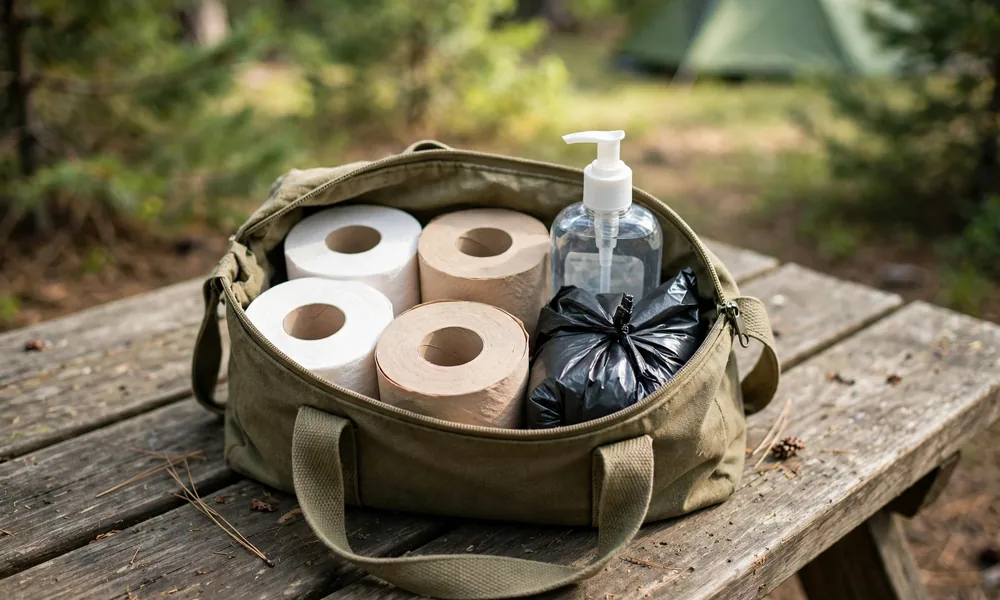
- Buy a privacy shelter, bags or chemical, and a travel toiletry kit at the same time as the toilet.
- Test the toilet at home before the trip, and show everyone in the group how it works on arrival.
- Empty and clean the toilet properly after every trip, and store it dry with the seals checked.
Frequently Asked Questions
Are camping toilets hygienic?
Yes, when they are used and emptied properly. A sealed tank or a tied-off bag, a lid that closes, hand washing nearby, and regular cleaning keep a camping toilet hygienic. The problems start when a toilet is left full, stored wet, or emptied in the wrong place.
Where can I empty a camping toilet?
Flush and cassette toilets should be emptied at a proper chemical disposal point, which most campsites, caravan parks, and motorway services provide. Bag toilets should be sealed and disposed of exactly as the local rules and the bag maker require. Never empty waste into a bush or a stream.
How do I stop a camping toilet smelling?
Use the right chemical or gelling powder at the right strength, keep the lid closed when the toilet is not in use, ventilate the shelter, and empty the tank before it is completely full. A clean toilet with fresh chemical smells very little, even after a few days.
What is the best camping toilet for a family?
A portable flush toilet is usually the best choice for a family, because it has a proper seat at home height, a flush, and a sealed waste tank that children and older campers can use easily. Pair it with a privacy shelter and a tank large enough for the group, and empty it daily.
Can I use a camping toilet in a camper van?
Yes, and many camper vans are built for one. A portable flush toilet or a cassette toilet fits in the van bathroom or a dedicated cupboard, and it should be secured while driving so it cannot slide. Empty it at a disposal point, and keep chemical and spare seals in the van.
Do I need a privacy tent for a camping toilet?
Yes, in almost every case. A privacy shelter gives dignity, keeps insects out, protects the toilet from rain, and keeps the campsite pleasant for everyone else. A pop-up shelter sets up in minutes, and it doubles as a changing room or a shower shelter. Our guide to the best camping chairs for families in 2026 covers the rest of the campsite setup, and a good chair beside the tent makes the whole camp more comfortable.
Bottom Line
How to choose the best camping toilets in 2026 comes down to matching the toilet to the trip: a flush toilet for families and longer stays, a folding bag toilet for short trips and festivals, and a composting toilet for long off-grid stays. Whichever type you pick, buy a proper seat at the right height, pair it with a privacy shelter and hand washing, and plan your waste disposal before you leave.


