Spice Jars That Keep Flavours Fresh for Months in 2026
Spice jars are the smallest upgrade a kitchen can get, and one of the most useful. A good jar keeps paprika bright, cumin fragrant and cinnamon sweet for months, while a bad one lets the flavour drift away in weeks. The difference is the jar itself: seal, glass, lid and size. This guide covers the jars that keep flavours fresh in 2026, the types worth buying, and the mistakes that ruin a collection.
Key Takeaways
- An airtight seal matters most: a jar that lets air in stales a spice in weeks.
- Glass beats plastic: it does not absorb smells, stain, or let air seep through.
- Dark glass or a dark cupboard protects spices from light, which fades flavour fast.
- Match the jar to the spice: small for rarely used spices, larger for daily blends.
- Label every jar: name and fill date — ground spices fade within six months.
Why the Jar Matters More Than the Spice
A spice starts losing flavour the moment it is ground: the oils that carry the aroma escape, and light and heat speed it up. A whole cinnamon stick keeps for years, but ground cinnamon in an open tub tastes like dust within months. The jar is the only thing standing between a fresh spice and a stale one.
Most kitchens store spices badly without knowing it: the tubs and packets they arrive in are made for the shop shelf, not months of storage, with loose lids and a spot above the hob. Proper jars fix that at once.
The Main Types of Spice Jars
The right choice depends on how many spices you keep, where you store them, and how often you cook.
Glass Jars with Screw Lids
A glass jar with a screw lid is the best all-rounder and the type most cooks should buy first. Glass does not absorb smells, so garlic powder never taints cinnamon. The weakness is light, so these jars belong in a cupboard or drawer, not on a sunny shelf. Buy a wide mouth: a narrow neck makes refilling messy and blocks a measuring spoon.

Clamp-Lid Glass Jars
A clamp-lid jar, with a wire bail and rubber gasket, gives the tightest seal of any spice jar. The clamp presses the lid down evenly, and you can feel when it closes properly. These suit bulk buys and long storage: whole peppercorns, bay leaves, dried chillies. The gasket wears out after a year or two, so keep spares; they are heavier and dearer, so use them for favourites, not the whole collection.
Dark Glass and Amber Jars
Dark glass jars, usually amber or cobalt blue, are the best choice if your spices live on an open shelf or a sunny worktop. Light fades paprika and turmeric and dulls dried herbs within weeks; dark glass blocks most of it while still showing how much is left. They cost more than clear glass and make spices harder to tell apart, so labels matter more; in a dark cupboard, clear glass does the job for less.
Stainless Steel Jars
Stainless steel jars block light completely and never break, which makes them the best choice for a busy family kitchen. A steel jar with a tight lid keeps spices as fresh as glass and survives a drop off a shelf. The downside: you cannot see what is inside or how much is left, so every jar needs a label, and cheap ones sometimes have loose lids.
Small Shaker Jars
Small shaker jars, with a sprinkle top under a cap, suit spices used a pinch at a time: chilli flakes, sesame seeds, dried oregano. The shaker top stops you pouring half the jar into a dish, and the small size means the spice is used up before it goes stale. The weakness is the seal: many shaker tops let air in, so they suit spices finished within a month or two, not saffron opened twice a year.
Spice Jars Compared
The table compares the five types on what decides freshness.
| Jar Type | Seal | Light Protection | See Inside | Best For |
|---|---|---|---|---|
| Glass, screw lid | Very good | Poor unless stored dark | Yes | Most spices, everyday use |
| Glass, clamp lid | Excellent | Poor unless stored dark | Yes | Bulk and long-storage spices |
| Dark glass | Very good | Excellent | Partly | Open shelves, sunny kitchens |
| Stainless steel | Good | Excellent | No | Busy kitchens, travel |
| Small shaker | Fair | Poor | Yes | Everyday pinches, fast use |
No type wins on every row: most good collections mix two or three — screw-lid glass for everyday spices, clamp-lid for bulk buys, dark glass for open shelves.
What to Look For Before You Buy
First, test the seal. A good lid closes with a firm twist or a solid click; if it spins freely or wobbles, air is getting in and the spice will stale fast.
Second, check the mouth. A wide mouth makes refilling clean, lets a teaspoon in, and lets you pour out bay leaves without a fight. Narrow-neck jars look elegant and waste spice every time you refill them.
Third, think about size. A half-empty jar holds stale air, so one too big is almost as bad as one that does not seal. Ground spices keep best in 100 to 200 millilitre jars, about a standard packet; whole spices keep longer, so 250 millilitres suits peppercorns and chillies. Buy small for spices used twice a year, larger for salt, pepper and daily blends.
Fourth, look at the material. Thick glass feels solid and does not chip; thin glass cracks at the rim after a few washes. Plastic is light and cheap, but it absorbs smells, stains with turmeric, and lets air through over months. Treat plastic as a short-term home and move precious spices into glass.
Fifth, plan the labels before you buy. Jars without labels are a guessing game, and guessing wrong with chilli powder ruins a dish. Smooth-sided jars take sticky labels easily; ribbed jars do not. Use one method on every jar: name and fill date.
Where to Store Your Spice Jars
Even the best jar cannot save a spice stored in the wrong place. Heat, light and damp are the enemies, and the classic spot above the hob is guilty of all three. The best home is a cool, dark cupboard or drawer near where you cook, away from the hob and sink; a drawer keeps jars flat, dark and easy to see.

If your whole pantry needs a rethink, our guide to the best pantry organizers of 2026 covers the shelves, baskets and bins that keep a kitchen tidy. And if you are setting up the spice area from scratch, our guide to the best spice racks of 2026 covers the racks, carousels and drawer inserts that hold the jars.
Filling and Labelling Your Jars
Filling a jar well takes two minutes and saves months of flavour. Start with a clean, completely dry jar: even a few drops of water make ground spices clump and encourage mould. Use a small funnel and fill just below the rim, so the lid closes without pressing spice into the seal.
Label every jar on the day you fill it: name, month and year. Ground spices are best for about six months, whole spices for a year or more, dried herbs in between. Past its date, do the sniff test: if you must put your nose into the jar to smell anything, the spice has given up.
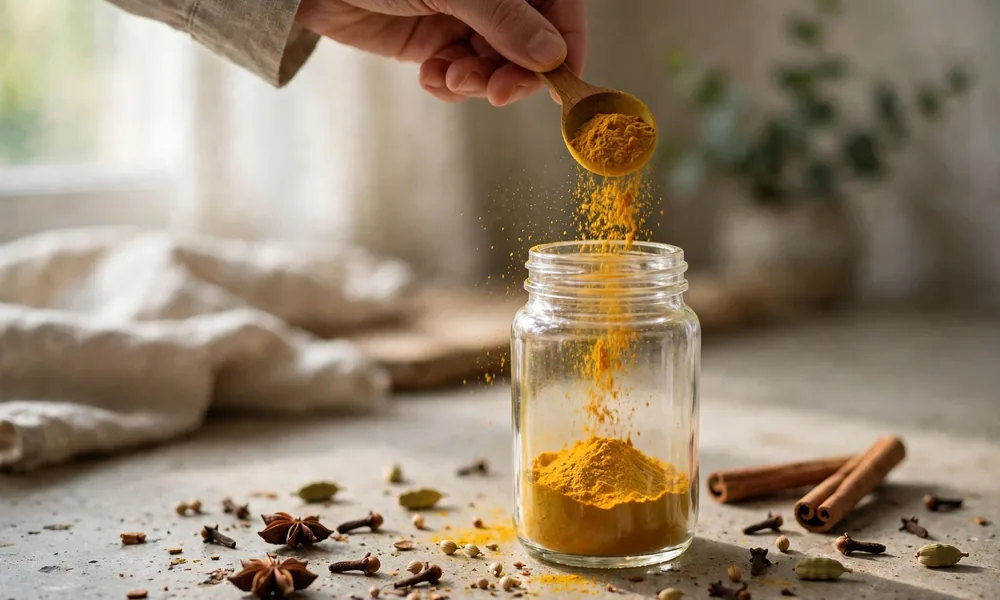
Decanting is the moment to throw out stale spices. Tip each old jar out, smell it, and be honest: keeping flavourless cumin because it cost money is false economy — a small fresh collection beats a large stale one.
Spice Jar Mistakes to Avoid
The most common mistake is buying a matching set that is too big. Twenty identical 300-millilitre jars look wonderful and hold far more spice than most cooks use in six months, so the spice at the bottom goes stale first. Buy the sizes you need, not the set that photographs best.
The second mistake is shaking spice straight from the jar over a steaming pan. Steam rises in, condenses, and turns the spice nearest the lid into a damp clump. Spoon it out instead, or shake it into your hand first: five seconds, and the jar stays dry.
The third mistake is refilling a jar on top of the old spice. The fresh spice sits on top and smells wonderful, while the stale spice underneath never gets used and taints the mix. Empty the jar, wash it, dry it fully, then refill. The same rule applies to second-hand jars: wash them first, or the last owner’s garlic powder will haunt your cinnamon.
The fourth mistake is storing jars in the fridge. Every time a cold jar comes out into a warm kitchen, condensation forms inside. Spices hate damp more than warmth, so a cool cupboard beats a fridge.
Spice Jar Buying Checklist
- Choose glass over plastic for any spice you want to keep longer than a month.
- Test the seal before buying a set: the lid should close firmly with no wobble.
- Pick a wide mouth so refilling is clean and a teaspoon fits inside.
- Match jar size to the spice: 100 to 200 millilitres for ground spices, larger for whole spices.
- Use dark glass, or a dark cupboard, for jars that will sit in the light.
- Label every jar with the name and fill date on the day you fill it.
Frequently Asked Questions
How long do spices stay fresh in a good jar?
Ground spices keep their best flavour for about six months in an airtight glass jar in a cool, dark place; whole spices such as peppercorns and cinnamon sticks keep for a year or more, dried herbs for six to nine months. Trust your nose and replace anything that has lost its smell.
Are glass jars better than plastic jars for spices?
Yes, for anything stored longer than a few weeks. Glass does not absorb smells, stain, or let air seep through. Plastic is lighter and cheaper and fine for a spice finished within a month, but turmeric stains it, chilli oil leaves a smell in it, and the seal is weaker.
Do spice jars need to be airtight?
Yes. Air is the main reason spices go stale: it carries away the aromatic oils that give a spice its flavour. A jar that is not airtight stales a ground spice in weeks, not months. You do not need a vacuum seal, but the lid should close firmly.
Should spice jars be stored in the dark?
Yes, whenever you can. Light fades the colour and flavour of spices, especially paprika, turmeric and dried herbs. A dark cupboard or drawer is ideal; on an open shelf, choose dark glass and keep it out of direct sunlight.
What size spice jar should I buy?
For most cooks, 100 to 200 millilitres suits ground spices, matching a standard packet. Whole spices keep longer, so 250 millilitres works for peppercorns and chillies. Avoid oversized jars for rarely used spices: a half-empty jar holds stale air.
Can I reuse old jam jars as spice jars?
Yes, and they work well. A clean jam jar with a screw lid that still seals is a perfectly good spice jar and costs nothing. Wash it, dry it completely, and check the lid: a damaged seal or a loose lid will not keep spices fresh. The same logic applies to pickles and preserves: our guide to the best pickles for crunch, brine and bold flavour in 2026 is a good reminder of how much a good jar matters.
The Bottom Line
The best spice jars of 2026 are simple: thick glass, a firm-sealing lid, a wide mouth, and the right size for the spice inside. Dark glass suits an open shelf, clamp lids suit bulk storage, steel suits a kitchen where jars get knocked about. Buy the jars your cooking needs, fill them dry, label them with the date, and store them cool and dark.