Herb Scissors That Snip Cleanly Without Bruising in 2026
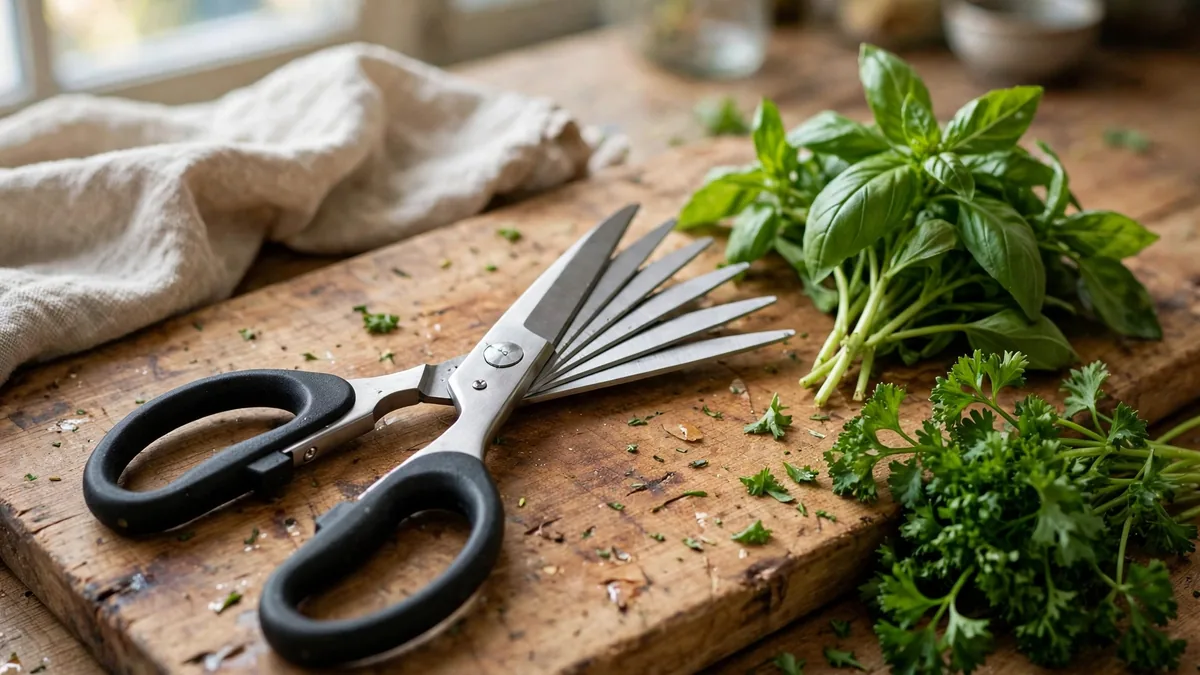
Herb scissors are the small kitchen tool that quietly changes how you cook with fresh herbs. A good pair of herb scissors snips chives, basil, parsley and dill straight over the pan or plate, turning a bunch of leaves into an even, fluffy garnish in seconds, with no chopping board to wash and no bruised, blackened leaves. A bad pair crushes the stems, tears the leaves and leaves you picking damp green clumps off the blade. The difference is not the price or the brand on the handle; it is the number of blades, how sharp they stay, and how easily the tool comes apart for cleaning. This guide explains what makes herb scissors worth buying in 2026, which designs actually cut cleanly, and how to use them so your herbs stay bright, fragrant and evenly cut.
Key Takeaways
- Five blades are the sweet spot for most cooks: they snip a generous handful of herbs in one squeeze without jamming.
- Sharp, tightly aligned stainless steel blades cut rather than crush, which keeps herbs green and fragrant instead of bruised and dark.
- A cleaning comb and take-apart blades matter more than any extra feature, because trapped herbs are the main reason these scissors end up in a drawer.
- Comfortable, spring-loaded handles with a soft grip prevent hand fatigue when you are snipping a large bunch of chives or parsley.
- Herb scissors suit soft, leafy herbs best; woody rosemary and thyme stems still belong under a knife.

What Herb Scissors Actually Are
Herb scissors look like ordinary kitchen scissors at first glance, but instead of one pair of blades they have three, five or sometimes ten thin blades working in parallel. Each squeeze makes several cuts at once, so a bunch of chives becomes a shower of neat pieces in three or four snips. The blades are usually made from stainless steel, the handles are moulded plastic or coated metal, and most pairs come with a small comb that slides between the blades to push out trapped leaves. Some models take apart at the pivot for washing, and a few include a small blade cover so they can live safely in a drawer.
The idea is simple, but it solves a real annoyance. Chopping herbs with a knife means washing a board, gathering a pile of leaves that keeps escaping the blade, and then scraping the chopped herbs into the dish, where the finer pieces stick to the board and your fingers. Herb scissors skip all of that. You hold the bunch over the food and snip, and the pieces fall exactly where you want them. For a weeknight cook who adds herbs to nearly every meal, that saves a surprising amount of time and washing up across a week.
It is worth being clear about what herb scissors are not. They are not a replacement for a good pair of kitchen scissors, which handle heavier jobs such as cutting poultry, opening packaging and trimming fat. Herb scissors are a specialist tool with thin blades designed for soft leaves, and using them on chicken bones or thick stems will bend or blunt them. Think of them as a complement to your main scissors, not a substitute, and they will last for years.
Why Clean Cuts Matter for Fresh Herbs
Fresh herbs bruise easily. When a blade crushes a leaf instead of slicing it, the cell walls break and the aromatic oils escape, the cut edges oxidise, and the herb turns dark and limp within minutes. Anyone who has chopped basil with a dull knife has seen it: the leaves go black at the edges and the bright, peppery scent fades before the dish reaches the table. A sharp, clean cut keeps the oils inside the leaf, so the herb tastes and smells as it should.
That is why blade quality matters more than the number of blades. Five sharp blades that meet tightly will outperform ten dull ones every time. When you test a pair, snip a few leaves of parsley and look at the cut ends: they should look clean and pale green, not crushed and wet. If the leaves come out as a damp clump stuck between the blades, the scissors are squeezing rather than cutting, and no amount of technique will fix that.
Speed matters too, because herbs are almost always added at the last moment. Chives over scrambled eggs, basil over pasta, coriander over a curry: all of these are finished dishes, and the garnish goes on seconds before serving. Herb scissors let you finish the dish at the stove rather than walking back to the board, which means the herbs are fresher and the food is hotter.
How Many Blades Do You Need?
Most herb scissors have three, five or ten blades. Three-blade models are the lightest and easiest to control, and they work well for small amounts of herbs, such as a few sprigs of dill over fish. They are also the easiest to clean, because there are fewer gaps for leaves to hide in. If you only use herbs occasionally, three blades are enough.
Five-blade scissors are the best choice for most kitchens. They cut a generous bunch in one squeeze, they are still light enough to use comfortably, and they are widely available at a fair price. The gap between the blades is wide enough to clean with the comb, but narrow enough that the pieces come out evenly sized. This is the design most cooks end up reaching for daily.
Ten-blade scissors sound impressive, but they are heavier, harder to squeeze, and much harder to clean. The pieces they produce are very fine, which suits a garnish of chives over soup, but the extra blades trap more leaves and the pivot works harder, so they can feel stiff after a few months. They are a good choice for someone who snips large quantities of herbs every day, but for most people they are more tool than they need.
Comparing the Main Herb Scissor Designs
| Design | Blades | Best for | Cleaning | Drawback |
|---|---|---|---|---|
| Three-blade | 3 | Small amounts, delicate herbs | Easy | Slow for large bunches |
| Five-blade | 5 | Everyday cooking, most herbs | Moderate, comb helps | Needs regular cleaning |
| Ten-blade | 10 | Large quantities, fine garnish | Fiddly | Heavy and stiff to squeeze |
| Take-apart five-blade | 5 | Daily use, easy washing | Excellent | Costs slightly more |
| Two-blade with stripper | 2 | Woody stems, stripping leaves | Easy | Not a true herb scissor |
The table shows why the five-blade take-apart design wins for most people: it balances speed, cut quality and cleaning. The two-blade model with a leaf stripper is a different tool altogether, useful for pulling leaves off thyme and rosemary stems, but it does not chop, so it cannot replace a multi-blade pair.
Which Herbs Work Best With Herb Scissors
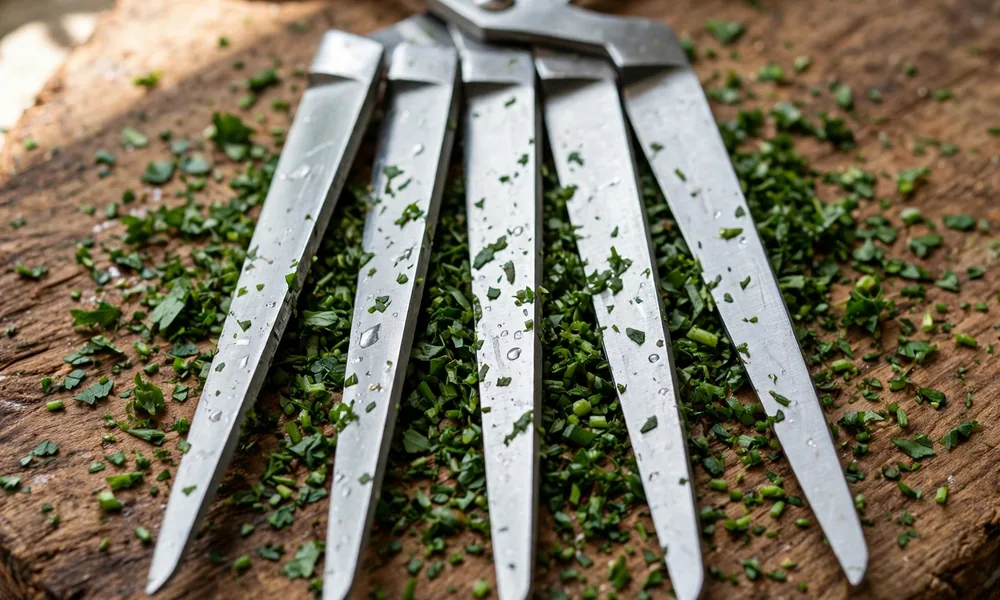
Soft, leafy herbs are where herb scissors shine. Chives are the classic example: they are fiddly to chop with a knife because they roll around the board, but scissors cut them into perfect little rings in seconds. Parsley, coriander, dill, basil, mint and tarragon all behave the same way, turning into an even garnish with very little effort. If you grow your own herbs, a pair of herb scissors is the fastest way to get them from the plant to the plate, and a small herb garden on the windowsill pairs naturally with a pair kept beside it.
Woody herbs are a different story. Rosemary, thyme and sage have tough stems and small, leathery leaves that multi-blade scissors struggle with; the blades can bend, and the leaves come out torn rather than cut. For these, strip the leaves from the stem first and chop them with a knife, or use scissors with a built-in stripper hole. Bay leaves should never go near herb scissors at all: they are too tough and too large, and they are usually removed before serving anyway.
Cleaning and Care
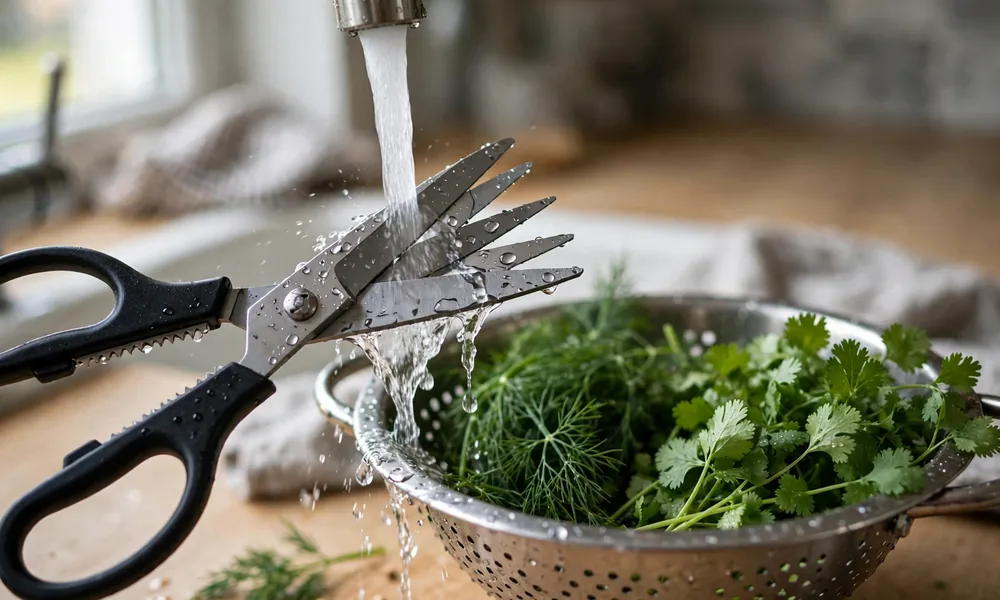
Cleaning is where most herb scissors fail, not cutting. Leaves get trapped between the parallel blades, and if they are left there they dry, stain and eventually affect the cut. The cleaning comb supplied with most pairs is designed to slide between the blades and push the trapped pieces out; use it after every session and the scissors will stay sharp and sweet-smelling.
What to Avoid When Buying
Avoid the cheapest pairs with flimsy plastic handles and blades that flex when you press them: they will crush herbs from the first day and cannot be fixed. Avoid pairs with no cleaning comb and no way to take them apart, because you will spend more time picking leaves out with a cocktail stick than you save by using them. Avoid ten-blade models unless you genuinely snip large quantities every day, because the extra weight and cleaning effort outweigh the finer cut for most cooks.
Finally, do not expect herb scissors to replace your knife. They are a finishing tool for soft herbs, and a cook who tries to use them for everything will be disappointed. Used for what they are good at, though, they are one of the most satisfying small tools in the kitchen, and the bright, evenly cut herbs they produce are visible in every dish they touch. Keeping them near your spice jars and other everyday flavourings means they are always within reach when a dish needs its final flourish.
Herb Scissors Checklist: Before You Buy
- Five blades in stainless steel, sharp and rigid, with a screw pivot you can tighten.
- A cleaning comb included, and blades that come apart for proper washing.
- Soft-grip, spring-loaded handles that feel smooth and comfortable in your hand.
- A blade cover for safe drawer storage.
- Light enough to use for a full bunch without hand fatigue.
- No gimmicky extras that add weight without improving the cut.
Frequently Asked Questions
Are herb scissors worth buying?
Yes, if you cook with fresh soft herbs at least a few times a week. They are faster than a knife and board for chives, parsley, basil and dill, and they keep the cut clean so the herbs stay bright and fragrant.
How many blades should herb scissors have?
Five blades suit most cooks. Three blades are easier to clean but slower, while ten blades cut very finely but are heavy and hard to clean.
Can herb scissors cut rosemary and thyme?
Not well. Woody stems can bend the thin blades and the leaves tear rather than cut. Strip the leaves first and chop them with a knife, or use a scissor with a built-in stripper.
How do you clean herb scissors?
Rinse them straight after use and push the supplied comb between the blades to remove trapped leaves. If the pair comes apart, separate the blades weekly for a thorough wash and dry them before storing.
Do herb scissors bruise herbs?
Sharp, well-aligned blades do not bruise herbs; dull or loose blades do. If your herbs come out dark and damp, the blades are crushing rather than cutting and the pair needs replacing or tightening.
Can you sharpen herb scissors?
Multi-blade scissors are very hard to sharpen at home because of the parallel blades. Buy a sharp pair from the start, keep the pivot tight, and replace them when the cut turns ragged.
The Bottom Line
The best herb scissors for most kitchens in 2026 are a five-blade, take-apart pair in stainless steel, with a cleaning comb, a comfortable spring-loaded handle and a blade cover. They snip soft herbs cleanly without bruising, they are quick to clean, and they turn a fiddly job into a pleasure. Buy for blade quality and cleanability rather than blade count or gimmicks, keep them dry and clean, and they will earn their place beside the stove for years.