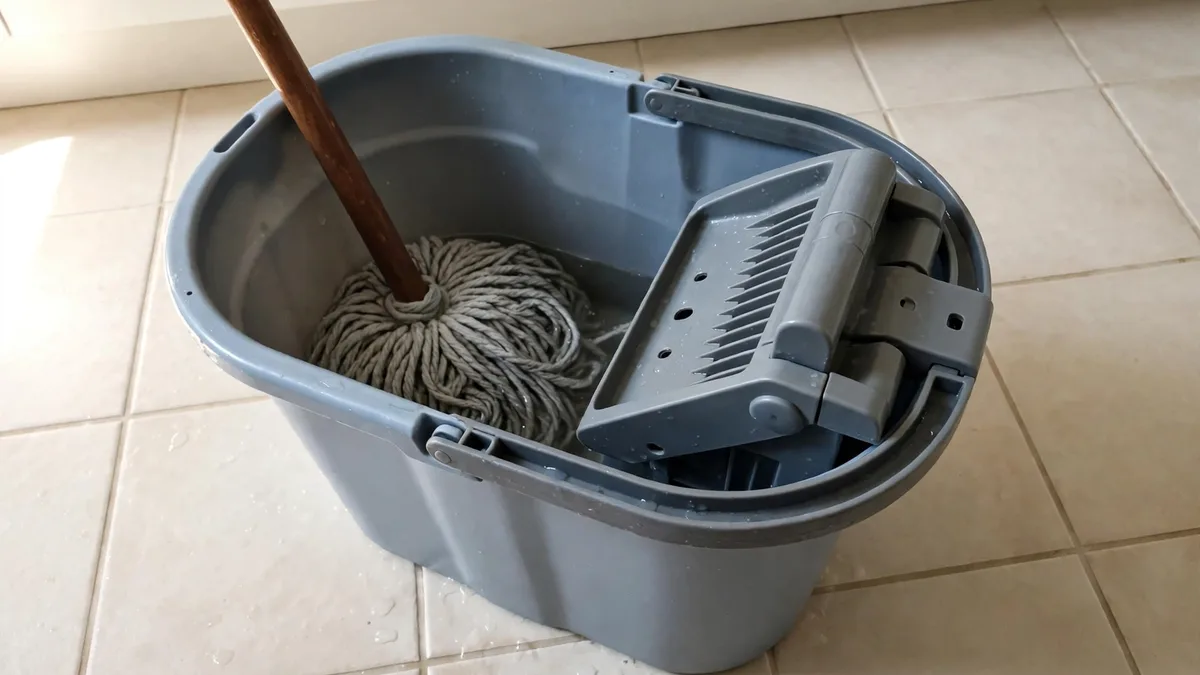
Mop Buckets That Make Floor Cleaning Easier in 2026
The best mop buckets in 2026 make the dullest job in the house feel half as hard: a bucket that wrings the mop nearly dry without your hands touching dirty water, wheels that carry a full load, and a spout that empties it into the sink without a splash. A good mop bucket is not just a tub with a handle: it is the wringer, the water, the wheels and the pour, all working together. This guide covers the mop buckets worth buying, the types that suit different floors, and the mistakes that leave you with streaks and a sore back.
Key takeaways
- A mop bucket is judged by its wringer first: the wringer decides how wet the mop is, and that decides whether the floor dries streak-free.
- Two compartments, one for clean water and one for dirty, keep you from mopping with the dirt you just picked up.
- Wheels and a long handle matter more than they look: a full bucket weighs ten kilos or more.
- Match the bucket to the mop: a string mop needs a press wringer, a flat mop a flat wringer, and a spin mop a spin basket.
- Empty and rinse the bucket after every use, or the next mop starts with yesterday’s dirty water.
How the best mop buckets were chosen
Every bucket below was scored on five measures. Wringing comes first: how dry the wringer gets the mop, without hand-wringing or dripping. Capacity is second, judged on whether the bucket holds enough water for a whole floor without a refill. Movement is third, because wheels, a handle and a stable base decide whether the bucket follows you or fights you. Emptying is fourth: a spout and a shape you can tip without spilling. Value is fifth: the cost against how many years of weekly mopping it survives.
One distinction matters before the list. A mop bucket is a bucket built around a mop: it has a wringer, and usually wheels, a spout and a shape that fits a mop head. A plain bucket is a different product: a general-purpose tub for carrying water, soil or tools, with no wringer and no mop in mind. The mop itself matters too, and our guide to the best spin mops covers the sets where the wringer spins the head dry.
Comparison table: the best mop buckets 2026
| Rank | Bucket type | Best for | Watch out for |
|---|---|---|---|
| 1 | Side-press wringer buckets | String mops, big tiled floors | Heavy when full |
| 2 | Dual-compartment buckets | Clean-water mopping, pet homes | Less water per side |
| 3 | Spin mop buckets | Fast drying, wood floors | Only fits matching mops |
| 4 | Wheeled mop buckets | Large homes, no carrying | Wheels catch on rugs |
| 5 | Flat-mop buckets | Flat mops, small flats | Too small for a house |
| 6 | Compact mop buckets | Small kitchens, cupboards | Frequent refills |
| 7 | Heavy-duty commercial buckets | Large families, daily mopping | Bulky, hard to lift |
The best mop buckets
1. Side-press wringer buckets: the best all-round mop bucket
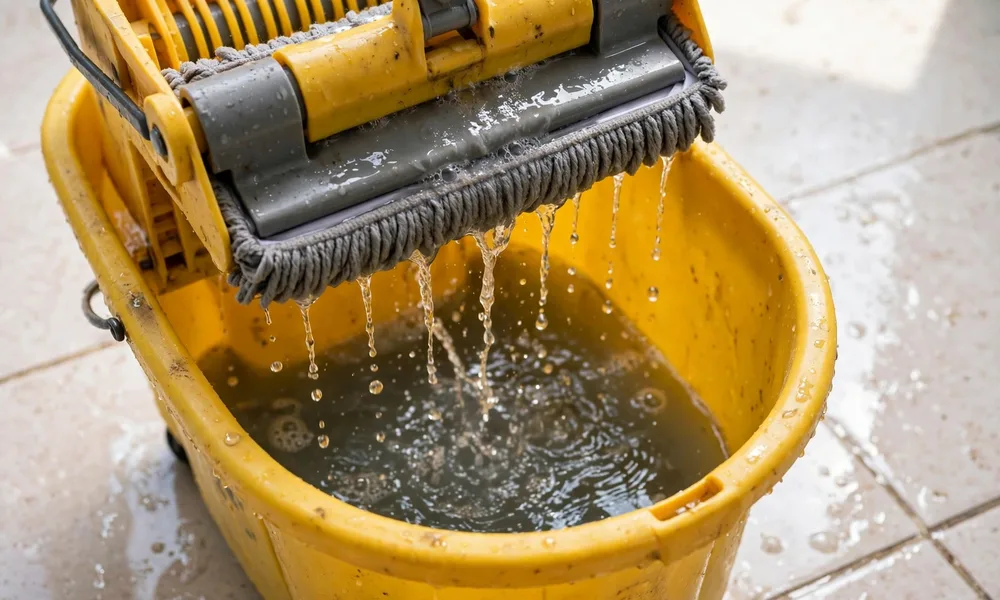
The side-press wringer bucket is the mop bucket most homes should buy first: it squeezes a string mop nearly dry with one press of a lever, without your hands ever touching the dirty water. You dip the mop, lift it into the wringer, press the handle down, and the rollers squeeze the water out. The mop comes out damp rather than dripping, which is the difference between a floor that dries in minutes with no streaks and one that stays wet and grey.
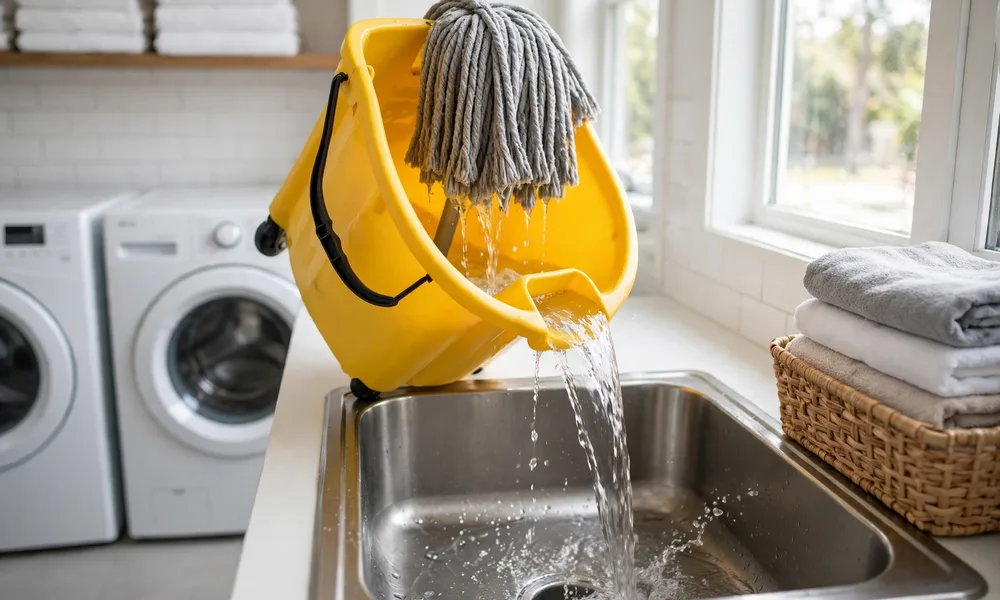
Buy a wringer wide enough for your mop head, because a narrower wringer leaves the edges dripping. The lever should press smoothly with one hand and stay down while the mop drains. The best side-press buckets hold fifteen to twenty litres, enough for a kitchen and a hallway without a refill, and have a spout so you can tip the dirty water out without lifting a sloshing bucket.
2. Dual-compartment buckets: the best for truly clean water
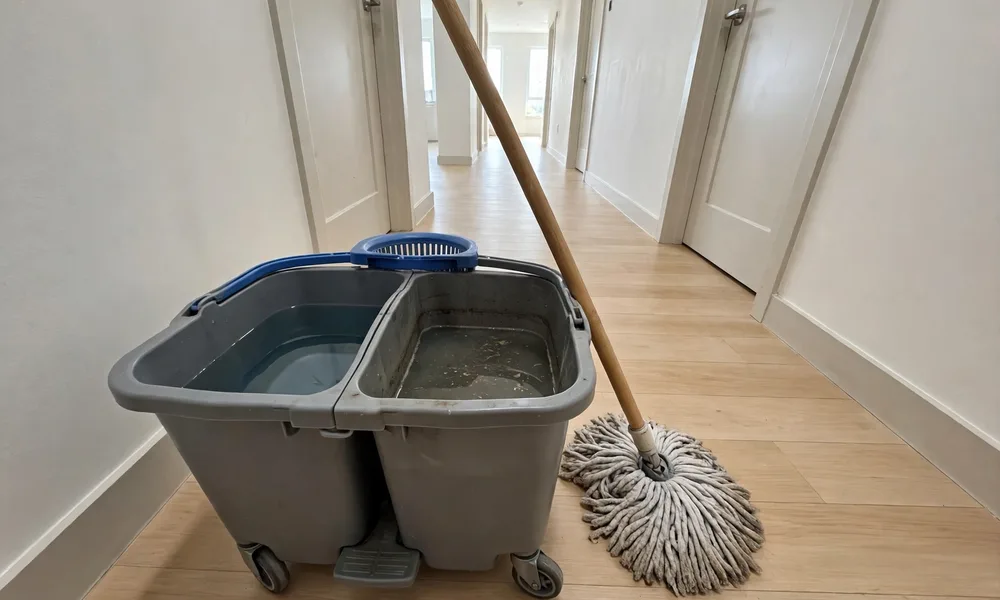
After the first rinse, an ordinary mop bucket has you mopping with dirty water. A dual-compartment bucket splits the tub in two: one side holds clean water, the other the dirty water you wring out. You dip in the clean side, mop, wring into the dirty side, and the water stays clean. In a home with pets or a muddy hallway, the floor dries cleaner.
The trade-off is capacity: two compartments mean each side holds less, so you will refill more often on a big floor. Look for a divider that is fixed and sealed, not a loose insert that lets dirty water leak into the clean side, and a spout on each side.
3. Spin mop buckets: the best for fast-drying floors
A spin mop bucket has a basket that spins the mop head at speed, flinging the water out. The result is a mop drier than any press wringer can manage, which matters most on wood and laminate floors, where too much water seeps into the joints. The barely damp mop picks up dust and hair instead of pushing them around in a puddle, and the spin is worked by a foot pedal or by pumping the handle.
The catch is compatibility: a spin bucket only works with the spin mop it was made for, so you are buying a set, and a replacement head has to match the basket. A good basket spins smoothly and stops quickly, while a cheap one wobbles and throws water over the rim.
4. Wheeled mop buckets: the best for large homes
A full mop bucket weighs ten kilos or more, and carrying it hurts backs and sloshes dirty water onto clean floors. A wheeled bucket puts the tub on four small castor wheels, so you push it along instead of lifting it. In a large home, that is the difference between mopping weekly and putting it off.
Wheels have their own problems: small wheels catch on rug edges and thresholds, and a bucket that rolls too freely drifts away on a smooth floor. Look for wheels at least five centimetres across, with at least two that lock, so the bucket stays put while you wring. A wheeled bucket is wider than a carried one, so measure where it will live before you buy.
5. Flat-mop buckets: the best for flat mops and small flats
Flat mops have a rectangular pad rather than a string head, and need a bucket shaped to match: a flat wringer that presses the pad between two plates, or a slot the pad slides through. A flat-mop bucket is smaller and lighter, which suits a small flat. The wide pad covers a broad strip with each pass, so a small flat can be mopped quickly with very little water.
The limit is capacity: a flat-mop bucket holds eight to twelve litres, enough for a kitchen and a bathroom but not a whole house. Check that the wringer fits your pad, since pads come in several widths, and buy spare pads with the bucket, because pads wear out faster than the bucket does.
6. Compact mop buckets: the best for small kitchens
Not every home needs a twenty-litre bucket. A compact mop bucket, holding six to ten litres, suits a small kitchen, a bathroom and a hallway, and fits in a cupboard or under a sink. The best compact buckets still have a wringer, a handle and a spout, just scaled down.
The price of compact is refills: on a big floor you will empty and refill two or three times. A small bucket tips more easily than a big one, so look for a wide, flat base and a low centre of gravity. A compact bucket is also the best choice for a home with stairs, because a half-full small bucket is the only one you can safely carry up a flight.
7. Heavy-duty commercial buckets: the best for daily mopping
Some homes mop every day: large families, homes with dogs, houses with a muddy garden. For them, a heavy-duty commercial bucket is worth the extra money and storage space: thick plastic that does not crack when knocked against a door frame, twenty-five litres or more, and a wringer built to be pressed hundreds of times.
The trade-off is bulk: a commercial bucket is wide, tall and heavy even when empty, and will not fit in a standard kitchen cupboard. If you cannot lift it comfortably when it is empty, you will not lift it when it is full. Buy one with replacement wringer parts, because the wringer wears out first.
What to avoid when choosing mop buckets
The most common mistake is buying a bucket that does not match the mop: a string mop in a spin basket, a flat pad in a press wringer, and a spin mop in a plain tub all fail the same way, with the mop coming out too wet and the floor drying streaky. The second mistake is buying on capacity alone: a huge bucket you cannot lift, push or store is worse than a smaller one you actually use, and a bucket without a spout spills dirty water every time you empty it.
The third mistake is never cleaning the bucket itself: a bucket that is not rinsed after use grows a film that smells and stains the next lot of water. Rinse it, dry it upside down, and replace a wringer that has gone stiff. The bucket is only half the job, so read our guide to the best and worst mops before you buy, and match the pair to the floors you have.
Checklist: buying mop buckets
- Match the wringer to the mop: press for string mops, flat for flat mops, spin basket for spin mops.
- Choose a capacity you can lift and store, not the biggest on the shelf.
- Pick two compartments for pet or muddy floors, so the clean water stays clean.
- Check for wheels that lock, a handle you can push without hunching, and a spout.
- Test the wringer: it should leave the mop damp, not dripping, with one smooth press.
- Rinse and dry the bucket after every use, and replace a stiff wringer promptly.
Frequently asked questions
What size mop bucket should I buy?
Fifteen to twenty litres suits most homes: enough for a kitchen and a hallway without a refill. Small flats do well with eight to twelve litres, and large homes need twenty-five litres or a wheeled bucket.
Are dual-compartment mop buckets worth it?
Yes, if you mop pet or muddy floors, because the clean water stays clean instead of turning grey after the first rinse. On a lightly used floor, a single compartment is fine.
Do spin mop buckets work on wood floors?
Yes, and they are the best choice for wood and laminate, because the spin leaves the mop drier than a press wringer. Mop with the grain, and never leave standing water on the floor.
How do I stop my mop bucket from smelling?
Empty it after every use, rinse it, and dry it upside down. A bucket left full overnight will smell by morning.
Can I use any mop with any bucket?
No. String mops need a press wringer, flat mops a flat wringer, and spin mops the matching spin basket. Buying the mop and bucket as a matched set is the safest way to get a pair that works.
How long should a mop bucket last?
A good plastic mop bucket lasts three to five years of weekly use. The wringer wears out first, so buy a bucket with replacement wringer parts.
Bottom line
The best mop buckets in 2026 wring the mop dry, keep the clean water clean, and move and empty without a struggle: a side-press bucket for most homes, a dual-compartment bucket for pet and muddy floors, and a spin bucket for wood and laminate. Match the bucket to the mop, buy a size you can lift and store, and rinse it after every use.


