
Spin mops promise something every hard-floor home wants: a mop that wrings itself nearly dry, so floors dry fast and stay streak-free. The best spin mops of 2026 do exactly that, pairing a microfibre head that lifts dirt with a bucket wringer that squeezes out water using a simple spin, not your hands. No more dripping heads, no more puddles drying into grey trails, and no more wringing a filthy mop by hand. This guide explains how spin mops work, which designs suit which floors, and the six setups worth buying this year.
Key Takeaways
- A spin mop is only as good as its wringer: the head must come out damp, not dripping, or streaks return.
- Microfibre heads lift dirt and grease far better than string or sponge heads, and they survive dozens of washes.
- Large tiled areas are where spin mops shine; small flats may be better served by a lighter mop.
- Buy spare heads on day one, because a dirty head moves dirt from one room to the next.
- Spin mops suit tile, vinyl, laminate and sealed wood, but never use a soaking head on unsealed wood.
Spin Mops at a Glance
| Pick | Design | Best for | Standout strength |
|---|---|---|---|
| Best overall | Classic spin mop and bucket | Most homes | Simple, sturdy, easy to wring |
| Best for large floors | Wide-head spin set | Big tiled areas | Covers more floor per pass |
| Best for small homes | Compact spin set | Flats and small kitchens | Small bucket, easy to store |
| Best hands-free | Foot-pedal wringer set | Anyone who hates wringing | No bending, no hand contact |
| Best for pet homes | Heavy-duty spin set | Pet hair and muddy paws | Thick heads trap hair well |
| Best budget | Basic spin mop and bucket | Occasional mopping | Does the job for little money |
What a Spin Mop Is, and How It Works
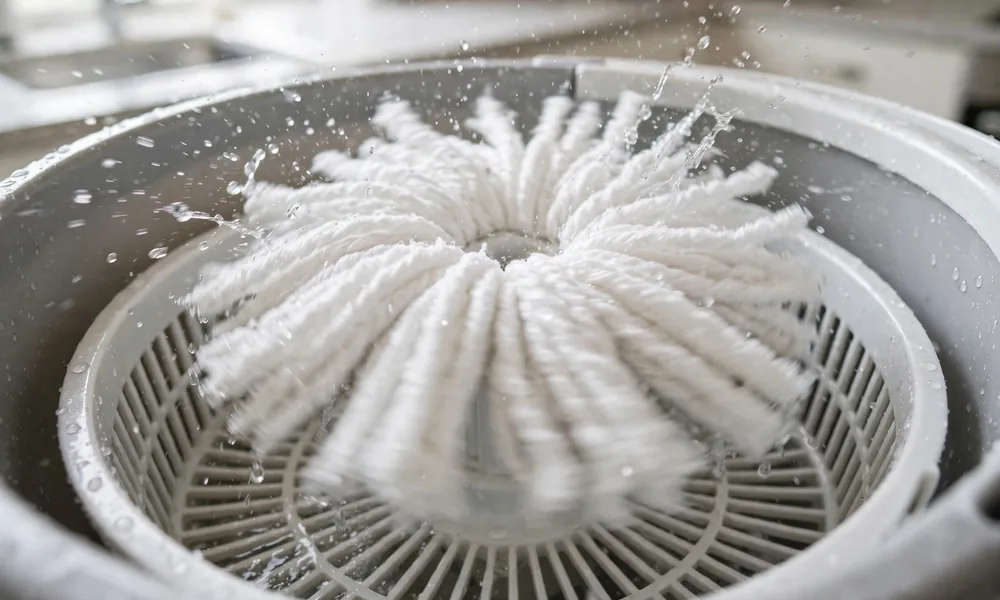
A spin mop is a wet mop with a round microfibre head on a long handle, used with a bucket that has a built-in spinning basket. You dip the head in clean water, place it in the basket, and spin it, either by pumping the handle or pressing a foot pedal. Centrifugal force throws the water out of the fibres, leaving the head damp rather than wet. That dampness is the whole secret: a barely damp microfibre head lifts dirt and dries in minutes, while a soggy head leaves puddles that dry into streaks.
The head itself matters as much as the spin. Microfibre strands are split into tiny fibres that trap dust, grease and pet hair instead of pushing them around. A good head feels thick and plush and clips on and off without a fight. Thin, sparse heads drag across the floor and leave dirt behind.
The Main Types of Spin Mop
Classic Handle-Pump Spin Mops
The classic design wrings by pumping the handle up and down while the head sits in the basket. It is simple, has few parts to break, and gives you direct control over how dry the head gets: a few pumps for a damp head, more for a nearly dry one. The trade-off is effort, since a full clean means pumping the handle dozens of times.
Foot-Pedal Spin Mops
Foot-pedal sets move the work to your foot: press the pedal and the basket spins. Your hands stay clean and dry, and there is no pumping to tire your arms. These suit anyone with sore wrists or a bad back. The bucket is usually larger and heavier, though, and the pedal adds a moving part that cheaper sets sometimes skimp on.
Compact and Flat-Head Spin Mops
Compact sets shrink the bucket and head for small kitchens, flats and bathrooms, where a full-size bucket is awkward to carry and store. Some use a flatter, wider head that still spins dry, covering more floor per pass while fitting under low furniture. They hold less water, so you refill more often, but for a small home that is a fair trade for a bucket that fits in a cupboard.
The Best Spin Mops of 2026
These six picks cover the homes spin mops suit best, from a first flat to a large tiled house with pets. Match the pick to your floors and your storage, not to the price tag alone.
1. Best Overall: A Classic Spin Mop and Bucket Set
The classic set is the safest buy for most homes: a round microfibre head, a sturdy bucket with a spinning basket, and a handle long enough to work without stooping. It wrings reliably and the parts are easy to replace. Look for a splash guard and a basket that spins smoothly without wobbling, since a wobbly basket throws water over the rim.
2. Best for Large Floors: A Wide-Head Spin Set
Large tiled floors need a wider head, or mopping turns into an endless chore. A wide-head spin set covers more floor with each pass and pairs with a bigger bucket, so you rinse less often. The head is heavier when wet, so check that the handle locks firmly.
3. Best for Small Homes: A Compact Spin Set
A compact set trades bucket size for storage: a smaller bucket, a narrower head, and a handle that splits in two for a cupboard. It still spins the head dry, and it is light enough to carry up stairs without sloshing. The smaller tank means refilling halfway through a bigger clean, but in a flat that rarely matters.
4. Best Hands-Free: A Foot-Pedal Wringer Set
If wringing is the part you dread, a foot-pedal set removes it entirely. Press the pedal, the basket spins, and your hands never touch the head. The pedal action also wrings more evenly than pumping, since the spin speed stays steady. Check the pedal feels solid rather than flimsy, and that the bucket has a handle, because a full pedal bucket is heavy to carry.
5. Best for Pet Homes: A Heavy-Duty Spin Set
Pet homes need a head that traps hair instead of dragging it into clumps. A heavy-duty set uses thicker, denser microfibre heads that pick up fur, muddy paw prints and dried food, plus a bigger bucket. Buy two or three spare heads with it, because a head full of pet hair stops cleaning long before it looks dirty.
6. Best Budget: A Basic Spin Mop and Bucket
A basic set does the same job with fewer refinements: a simple basket, a standard head and a lighter bucket. It will not feel as solid as the pricier sets, and the wringer may need an extra spin or two, but for occasional mopping it cleans just as well. Spend the saving on spare heads, which matter more than a fancy bucket.
What to Check Before You Buy
Start with the wringer, because it decides the result. Spin the basket in the shop if you can: it should turn smoothly, without grinding or wobbling, and the head should come out evenly damp all round. Next, look at the head. It should be thick, soft and dense, with fibres that spring back when you press them, and it should detach easily for washing.
Handle length matters more than it looks. A handle that is too short forces you to stoop, which ruins your back long before the floor is clean. Adjustable handles suit shared homes. Also check the bucket: a splash guard keeps water inside and a sturdy carry handle matters when the bucket is full. For more on choosing between mop types, see our guide to the mops that clean floors without the streaks, and if you want a bucket that lasts, read our guide to buckets that carry the load without the spills.
How to Use a Spin Mop Properly
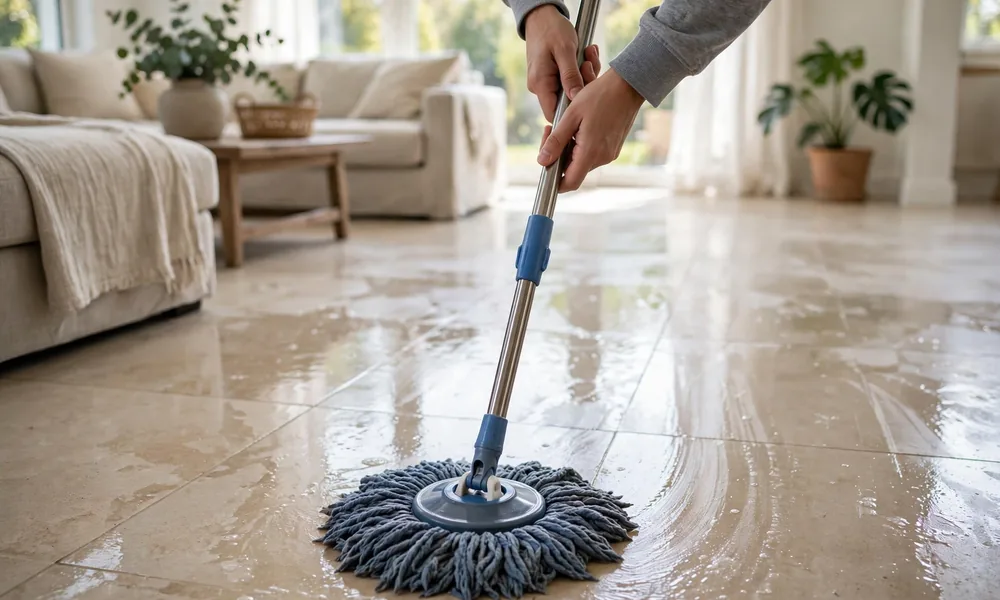
Good technique is half the result. Sweep or vacuum first, because grit dragged under a mop head scratches floors. Fill the bucket with warm water and a small amount of floor cleaner, far less than the bottle suggests, since excess cleaner leaves a film that attracts dirt. Dip the head, spin it until barely damp, then mop in slow, overlapping passes, working backwards towards the door.
Rinse the head often and spin it dry each time. A head that has picked up a room of dirt just spreads that dirt into the next room. When you finish, rinse the head in clean water, spin it dry, and stand the mop upright to air. A head left sitting in dirty water smells within a day.
Common Mistakes to Avoid
The most common mistake is mopping with a head that is too wet. If you can see puddles behind the mop, spin it again; floors should look damp, not wet, and dry within a few minutes. The second mistake is using too much cleaner, which leaves a sticky film that shows footprints. The third is mopping over grit, which scratches hard floors a little more with every pass. The fourth is using the same head for the bathroom and the kitchen; keep separate heads, or wash the head between rooms. Finally, never store a spin mop head-down in a damp bucket, since trapped moisture breeds smell and mildew.
Caring for Your Spin Mop
Microfibre heads last longest when they are washed, not just rinsed. Machine wash them without fabric softener, which coats the fibres and stops them trapping dirt, and let them air dry. Replace a head when it thins or frays. Rinse the bucket after every clean and wipe the wringer basket dry. Spare heads are cheap insurance, and a fresh head cleans noticeably better than a tired one.

Buying Checklist
- Wringer spins smoothly and leaves the head evenly damp, not dripping.
- Head is thick, dense microfibre that detaches easily for washing.
- Handle reaches a comfortable height without stooping or overreaching.
- Bucket has a splash guard, a pouring spout and a sturdy carry handle.
- Spare heads are available and affordable for this exact model.
- Bucket size fits your floors and your storage, not just the shop shelf.
Frequently Asked Questions
Is a spin mop better than a flat mop?
For large tiled floors, yes: the wringer gets the head drier, so floors dry faster with fewer streaks. For small rooms, a flat mop is lighter and faster to grab. Our comparison of spray mops covers the lighter end of the range if a spin set feels like too much kit.
Can I use a spin mop on laminate flooring?
Yes, if the head is wrung nearly dry and the laminate is properly sealed. Never leave standing water on laminate, and skip the spin mop entirely on unsealed or damaged boards, where water seeps into the seams.
How often should I wash the mop head?
Rinse it after every clean and machine wash it every few uses, or after any muddy job. A head that smells or looks grey is overdue a wash; one that stays grey after washing is ready to replace.
Why does my floor look streaky after mopping?
Usually the head was too wet, or there was too much cleaner in the water. Spin the head drier, halve the cleaner, and rinse the head more often, since a dirty head leaves dirty water behind.
Do spin mops work on wood floors?
They work well on sealed wood with a barely damp head, but avoid them on unsealed or waxed wood, where even small amounts of water cause damage. When in doubt, test a hidden corner first.
How long does a spin mop head last?
A good microfibre head lasts several months of weekly use. Replace it when the fibres thin, mat down, or stop picking up hair and dust.
The Bottom Line
The best spin mop is the one whose wringer leaves the head barely damp, whose head is thick enough to trap dirt, and whose bucket fits your home. For most homes that is a classic spin mop and bucket set, with spare heads bought on day one. Sweep first, spin the head dry, mop slowly, and rinse often, and your floors will dry fast and streak-free.


