
A spray mop is the simplest way to keep hard floors clean between deep cleans, and the best spray mops of 2026 prove that a small tool can do a serious job. There is no bucket to fill, no wringing by hand, and no trail of dirty water across the kitchen. You press a trigger, a fine mist lands ahead of the pad, and a damp microfibre head lifts dust, dried spills, and muddy footprints in one slow pass. The floor dries in minutes, the pad goes in the washing machine, and the mop stands in a corner ready for tomorrow. For flats, busy kitchens, and homes with hard floors throughout, that ease is the whole point.
The difference between a good spray mop and a poor one shows up fast, usually within the first week. A good one sprays evenly, glides without sticking, and leaves the floor clean and streak-free. A poor one sprays in a jet or a dribble, leaves wet patches, and pushes dirt into corners. The pad matters more than the brand name, the trigger matters more than the colour, and the tank matters more than any extra gadget on the handle. This guide explains what to look for, which types suit which floors, and how to use a spray mop so it actually works.
What a Spray Mop Is, and How It Works
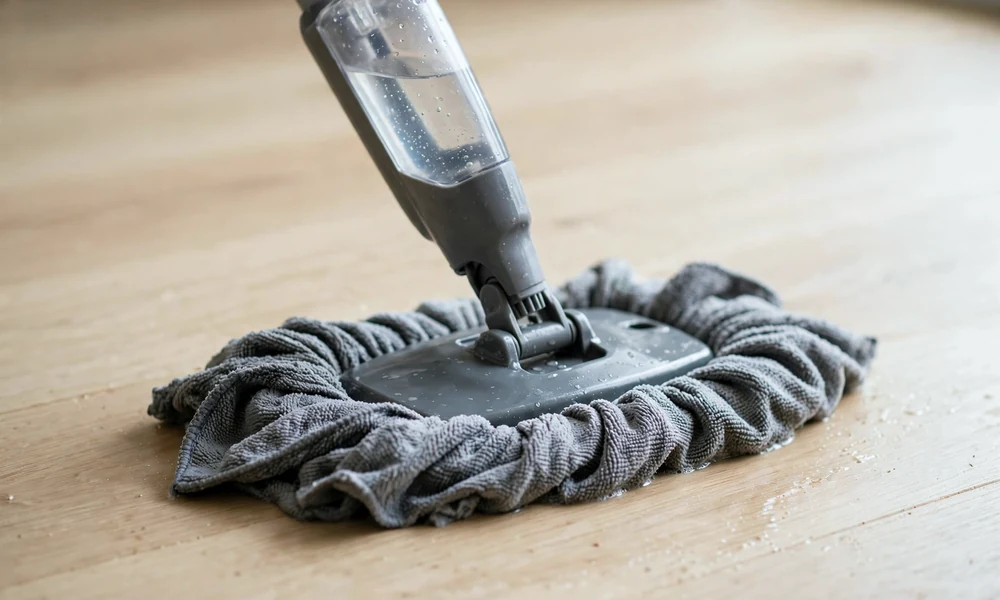
A spray mop is a flat mop with a refillable water tank built into the handle and a trigger that releases a fine mist through a small nozzle near the head. The tank usually holds enough water for one or two rooms, and the pad underneath is a washable microfibre cloth that traps dust and grease. Some models take plain water only, while others accept a small amount of floor cleaner mixed in. The idea is the same either way: wet the floor lightly, just ahead of the pad, and let the pad do the cleaning.
Key Takeaways
The pad matters most, because a thick microfibre pad that stays flat against the floor lifts grime a thin pad only smears. The spray should be a fine, even mist, not a jet that soaks one spot and leaves the next dry. A tank that covers your whole flat without a refill saves time, and a trigger that is easy to squeeze saves your hand. Washable pads beat disposable ones on cost and on cleaning power, and a mop that stands upright on its own is far easier to store. Choose for your floors first, then for your hands, then for your storage space.
The Best Spray Mops of 2026
The best spray mop for most homes is a simple one with a large tank, a wide flat head, and at least two washable pads in the box. The head should swivel so it reaches under low furniture and into corners, and the handle should adjust to your height so you are not bent over after one room. The trigger should sit where your hand naturally rests, and one squeeze should give a light, even mist across the width of the pad. If the mop does those things well, the rest is detail.
For sealed wood and laminate, choose a spray mop that gives a very light mist and a pad that wrings nearly dry. Wood floors dislike standing water, and laminate with open seams dislikes it even more. A gentle spray, a slow pass, and a pad that picks up the moisture it lays down will leave the floor clean without risking damage. Never use a spray mop that floods the floor on wood, and never leave a wet pad sitting on the boards. If you want a deeper clean on sealed tiles, our guide to how to pick a steam mop that actually lifts grime in 2026 explains when heat helps and when it does not.
What to Check Before You Buy
Start with the tank. A tank that is too small means stopping to refill halfway through the kitchen, while a tank that is too large makes the mop top-heavy and awkward to steer. Look for a tank you can remove and fill at the sink without spilling, with a clear window or marking so you can see how much water is left. A wide opening is easier to fill than a narrow one, and a cap that seals properly will not leak down the handle. If the tank is fixed to the handle, check that the opening is big enough for a jug.
Next, check the trigger and the nozzle. The trigger should be easy to squeeze with one finger and should spring back cleanly, without sticking. The nozzle should sit low, close to the pad, and should spray a fan of fine droplets rather than a single stream. A nozzle that clogs easily is a common fault, so look for one you can wipe clean, and avoid models where the nozzle is buried inside the head where you cannot reach it. A quick test in the shop, spraying onto a tile, tells you more than any box claim.
Then look at the pad. A good pad is thick, soft, and full of loops that trap dirt, and it should attach firmly with hook-and-loop strips or a clip that holds through a whole room. Thin pads wear out fast, slip off mid-stroke, and leave streaks. Check how many pads come in the box, what replacements cost, and whether the pads are machine washable. A mop with cheap, washable pads costs far less over two years than one with pricey disposable pads, and it cleans better too. Good cloths matter beyond the mop itself, as our guide to microfiber cloths that clean without chemicals in 2026 shows.

How to Use a Spray Mop Properly
Fill the tank with warm water, and add cleaner only if the maker says you can. Plain water is enough for most daily cleaning, and it leaves no residue to attract dust. If you do add cleaner, use far less than you think you need, because too much cleaner leaves a sticky film that shows footprints. Never use bleach, neat disinfectant, or boiling water in a spray mop tank, because they can damage the seals, the nozzle, and the pad. Rinse the tank out after use, especially if you used cleaner.
Mop in slow, overlapping passes, spraying just ahead of the pad and letting the pad pick up the mist. Work away from the door, so you finish at the exit and do not walk across the damp floor. Spray lightly on wood and laminate, a little more freely on tiles, and never spray the same spot twice in a row. If a spill has dried on, spray it, wait thirty seconds for the water to soften it, then mop over it slowly. Scrubbing hard with a spray mop only pushes the dirt around.
When the pad looks dirty, swap it for a clean one rather than carrying on. A dirty pad cannot lift more dirt, and it will smear what it has already picked up back onto the floor. Rinse the used pad under a hot tap, wring it out, and put it in the wash. Wash microfibre pads without fabric softener, because softener coats the fibres and stops them gripping dirt. Dry them without a tumble dryer if you can, and they will last far longer.
Spray Mops and Other Mop Types
A spray mop is the best choice for quick daily cleaning, but it is not the only mop worth owning. A flat mop with a bucket is better for a full weekly clean of a large area, because you can rinse the pad often and cover ground fast. A spin mop suits big tiled floors, where the wringer leaves the head nearly dry and your hands stay out of the water. A steam mop suits sealed tiles and stone that need a deep clean without chemicals, though steam and unsealed wood do not mix. Our comparison of the best vs worst mops of 2026 puts each type side by side, so you can see where a spray mop wins and where another type does the job better.
Common Mistakes to Avoid
The most common mistake is using too much water. A spray mop is meant to leave the floor barely damp, and a floor that stays wet for ten minutes has been given too much spray. Too much water leaves streaks on tiles, risks damage on wood, and takes far longer to dry. If your floor looks wet after mopping, spray less, move more slowly, and let the pad pick up the moisture. A good spray mop should leave a floor that is dry to the touch within a few minutes.
The second mistake is mopping with a dirty pad. A pad that has already picked up a roomful of dust cannot pick up more, and it will leave grey trails behind it. Swap pads often, wash them properly, and keep spares ready. The third mistake is storing the mop with a wet pad still attached, which lets smells and mildew grow. Take the pad off after every use, rinse it, and let the mop head dry. A mop that smells musty is a mop that has been stored wet.
The fourth mistake is buying a spray mop for the wrong floor. Spray mops are made for hard floors: tiles, sealed wood, laminate, vinyl, and stone. They are not made for carpet, rugs, or unsealed stone, and they will not clean grout lines that need scrubbing. If your home is mostly carpet, a spray mop is the wrong tool altogether. If your floors are hard but very uneven, a spray mop head may skip across the high spots and miss the low ones, and a string or spin mop may suit you better.
Caring for Your Spray Mop
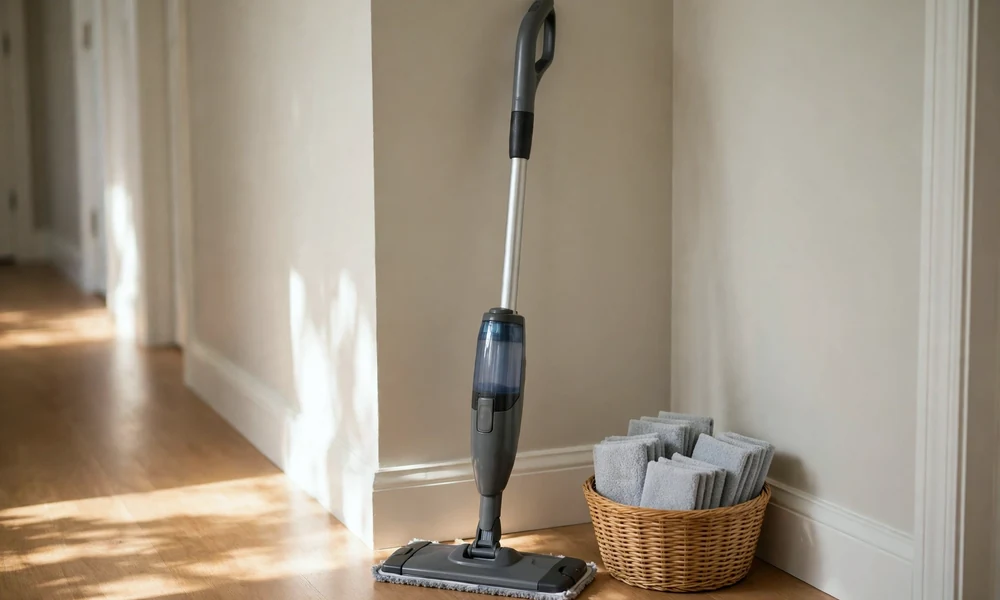
A spray mop lasts for years if you look after it, and the care is simple. Empty the tank after each use, so stale water does not sit in the seals and grow smells. Wipe the nozzle clean now and then, because dried cleaner can block the spray. Wash the pads after every use, and replace them when they go thin or lose their grip. Check the handle joints and the head clip every few months, and tighten anything that has worked loose. A mop that is cleaned and dried after use will always work better than one left damp in a cupboard.
The Verdict
The best spray mops of 2026 are the ones that make daily cleaning so easy you actually do it: a fine, even spray, a thick washable pad, a tank big enough for your home, and a handle that fits your height. They will not replace a deep clean, and they were never meant to, but they will keep hard floors fresh between those cleans with very little effort. Choose for your floors, check the pad and the trigger before you buy, and keep spare pads ready. A good spray mop should still be working well years after a cheap one has been thrown away, and your floors will show the difference every day.


