The best wine openers of 2026 turn a small nightly ritual into something smooth and satisfying: one clean twist, one quiet pop, and the cork comes out whole. A bad opener does the opposite. It shreds the cork, drops crumbs into the glass, and turns a bottle you were looking forward to into a salvage job with a tea strainer.
There is no single opener that suits everyone. A waiter’s corkscrew is the classic choice and fits in a pocket, a lever opener does the hard work for weaker hands, and an electric opener clears a dozen bottles at a party without breaking a sweat. The right pick depends on how often you open wine, how much grip strength you have, and whether you mostly drink young everyday bottles or older ones with fragile corks.
Key Takeaways
- A waiter’s corkscrew with a two-step boot is the best all-round wine opener for most people: small, cheap, and reliable.
- Electric openers are the fastest choice for entertaining, but they need charging and take up counter space.
- Old bottles with crumbly corks need a gentle two-prong puller, not more force.
What Makes a Great Wine Opener
The worm is the spiral that bites into the cork, and it is the single most important part of any opener. A good worm is long enough to reach through most of the cork without poking out the far end, sharp enough to screw in with light pressure, and coated so it slides back out without dragging cork with it. Short, blunt worms are the main reason corks snap in half: they grip only the top of the cork and tear it instead of pulling it.

The Main Types of Wine Openers
Waiter’s Corkscrew
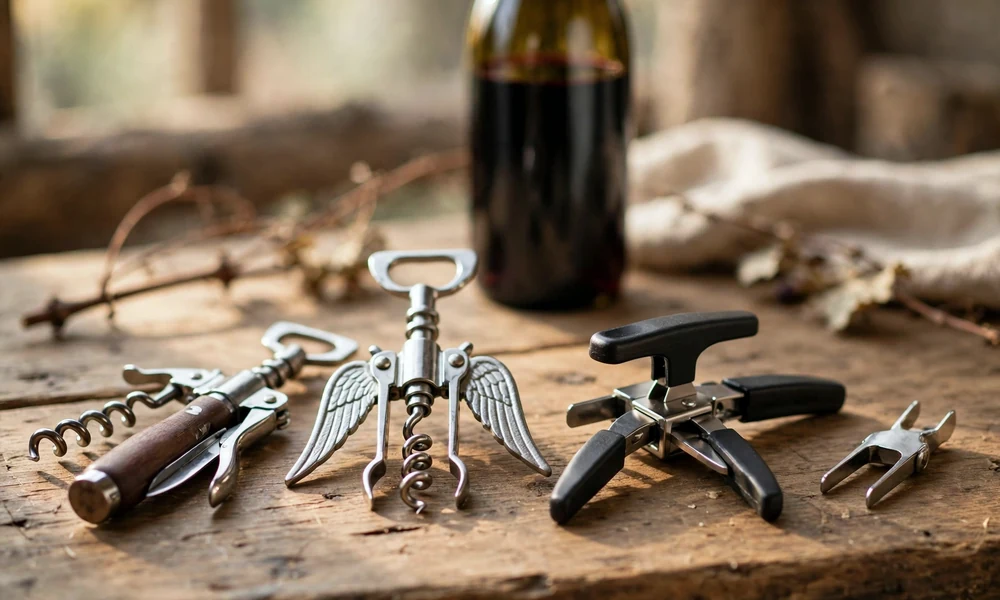
The waiter’s corkscrew is the folding pocket tool that sommeliers carry, and it remains the benchmark everything else is judged against. It packs a worm, a small serrated foil cutter, and a hinged boot into something the size of a pocket knife. Open it, cut the foil, screw in the worm, rest the boot on the bottle lip, and lever the cork out in one or two smooth stages.
Its strengths are size, price, and control. It weighs almost nothing, costs very little, and lets you feel exactly what the cork is doing, which is why it is the safest choice for older bottles. The two-step boot is the feature to insist on: it lets you lift the cork halfway, reposition the boot, and finish the pull without bending the worm. The only real downside is that it asks a little of your hands, so it is not the best pick if grip strength is a problem.
Lever Opener
A lever opener, often called a rabbit-style opener, clamps onto the neck of the bottle and uses a long handle to drive the worm in and pull the cork out in two easy movements. You squeeze the handles to grip the bottle, push the lever down to screw in the worm, then pull it back up to lift the cork. The mechanism does the work, so your hands mostly just guide it.
This is the easiest manual opener to use well, and it is remarkably consistent: the clamp keeps the worm centred, so corks come out straight instead of at an angle. The trade-offs are size and price. A lever opener is too bulky for a drawer and costs several times more than a waiter’s corkscrew. It is the right choice if you open wine most nights, entertain often, or want the most forgiving manual tool available.
Electric Opener
An electric opener is a battery-powered tube that sits over the neck of the bottle and drives the worm in and out at the push of a button. Hold it in place, press down, and the cork winds itself out in a few seconds. Most models come with a charging base and a foil cutter built into the top.
Two-Prong Puller
A two-prong puller, sometimes called an Ah-So, does not pierce the cork at all. Two thin steel prongs slide down between the cork and the neck of the bottle, grip the cork from the sides, and twist it out whole. It was designed for old bottles whose corks have gone soft and crumbly, where a worm would simply chew through the middle.
Which Wine Opener Suits You?
| Type | Effort | Best for | Watch out for |
|---|---|---|---|
| Waiter’s corkscrew | Moderate | Everyday use, older bottles, travel | Needs some grip strength |
| Lever opener | Low | Frequent drinkers, weak grip, entertaining | Bulky and pricier |
| Electric opener | Minimal | Parties, many bottles, no hand strain | Needs charging, takes space |
| Two-prong puller | Low, with practice | Old and fragile corks | Takes practice to use well |
The Best Wine Openers of 2026: Our Picks
Best Overall: A Two-Step Waiter’s Corkscrew
A well-made waiter’s corkscrew with a long, coated worm and a two-step boot is the opener we recommend first. It opens young and old bottles alike, fits in a pocket or a drawer, and costs less than a single decent bottle of wine. Spend a little more than the cheapest option and you get a worm that stays sharp, a boot that does not flex, and a foil cutter that actually cuts. This is the tool to buy if you only buy one opener.
Best for Weak Grip: A Lever Opener
If twisting and pulling hurt your hands, a lever opener changes the whole experience. The clamp holds the bottle steady, the long handle gives you real mechanical advantage, and the cork comes out with two calm movements instead of a struggle. It is the most forgiving manual opener we tested, and it rarely breaks a cork because the worm always goes in straight. Keep it on the counter rather than in a drawer and it will be the opener you reach for every time.
Best Electric: A Rechargeable One-Button Opener
A rechargeable electric opener is the right pick for anyone who opens several bottles in an evening. The best ones open thirty or more bottles on a charge, include a foil cutter in the base, and sit neatly on a charging stand between uses. Look for a model with a visible charge light so you are never caught out, and check that the worm is long enough for the corks you drink. It will not replace a waiter’s corkscrew for travel, but at home it is the fastest tool in the drawer.

How to Open a Bottle of Wine Properly
Good technique matters as much as a good tool. A careful open takes under a minute and protects both the cork and the wine.
- Cut the foil below the lip of the bottle, all the way around, and lift the cap off. Cutting below the lip keeps foil away from the wine as you pour.
- Centre the worm on the cork and screw it in straight, with steady pressure. Stop when one curl of the worm is still visible — going through the end pushes cork into the wine.
- Rest the boot of a waiter’s corkscrew on the lip of the bottle, or seat a lever opener’s clamp firmly on the neck.
- Lift slowly and steadily, keeping the worm straight. If the cork resists, ease it with a gentle twist rather than a hard yank.
- Check the cork before pouring. A clean, damp cork is normal; a dry, crumbly one is a sign the bottle may have been stored badly.
Common Mistakes That Ruin Corks
One more mistake is using the wrong tool for the closure in front of you. Screw caps need no opener at all, and a corkscrew will only chew the cap. Some bottles now use glass or synthetic stoppers that behave differently from natural cork, so check the closure before you reach for the worm. If you also open beer and soft drinks, keep a separate tool for those caps: our guide to bottle openers for every kind of cap explains which opener suits crown caps, twist-offs, and swing-tops.
Care, Storage, and Serving
A good wine opener lasts for years if you look after it. Wipe the worm clean after each use so dried wine does not dull it, and dry the tool before putting it away so the hinge and spring do not rust. A drop of food-safe oil on the hinge once a year keeps a waiter’s corkscrew moving smoothly. Electric openers need their contacts kept clean and their batteries charged every few weeks even when unused, since a flat battery is the most common reason they fail at a party.
Storage matters too. A waiter’s corkscrew lives happily in a drawer, but keep the worm folded or covered so it does not snag or blunt itself. Lever and electric openers deserve a spot on the counter or in a cupboard where they will not be knocked about. And remember that the opener is only part of the ritual: the wine itself should be at the right temperature, which is why it is worth reading our guide to wine chillers for home if your bottles are coming out of a warm kitchen. Once the bottle is open, pour into a proper glass — our guide to wine glasses that make any bottle taste better explains how the shape of the glass changes what you taste.
Checklist: Before You Buy a Wine Opener
- Choose the type by how often you open wine and how much grip strength you have, not by how it looks.
- If you buy a waiter’s corkscrew, insist on a two-step boot.
- If you buy electric, check the battery life and whether it includes a charging base.
- Make sure it handles the closures you actually drink: natural cork, synthetic cork, or screw cap.
Frequently Asked Questions
What is the best wine opener for most people?
A two-step waiter’s corkscrew. It is cheap, compact, and reliable, it handles young and old corks, and it fits in a pocket. Buy a well-made one with a long coated worm and it will last for years.
Are electric wine openers worth it?
Yes, if you open several bottles at a time or have limited hand strength. They are the fastest and easiest option, and a good rechargeable model opens dozens of bottles per charge. They are less useful as a travel tool or a backup, so keep a manual opener as well.
How do I open a bottle without breaking the cork?
Screw the worm in straight and stop before it pokes through the end of the cork, then pull slowly and straight. Most breaks happen because the worm went in at an angle or too far, or because the pull was a sideways yank instead of a steady lift.
The Bottom Line
The best wine opener is the one that pulls corks cleanly without making you think about it. For most people that is a two-step waiter’s corkscrew: small, cheap, and honest. If your hands need help, a lever opener or an electric model does the same job with far less effort. And if you drink older wine, add a two-prong puller to the drawer. Buy the tool that matches how you actually drink, learn the slow straight pull, and every bottle you open in 2026 will start the evening the right way.