
Best Bottle Openers for Every Kind of Cap in 2026
The best bottle opener is the one that matches the cap in front of you. A crown cap, a twist-off, a champagne cork under a wire cage and a swing-top stopper all open in different ways, and the tool that pops one cleanly can struggle badly with another. Most drawers hold a single opener that gets used for everything, which is exactly why so many bottles end in a bent cap, a chipped rim or a small shower of metal flakes. This guide takes the other approach: start with the cap, then pick the opener that suits it, so every bottle in 2026 opens with one smooth movement and no drama.
Key Takeaways
- Crown caps need a deep, hooked lip and a firm lever action; a flat bar blade is the strongest all-round choice for them.
- Twist-off caps need no opener at all, but a rubber grip pad saves sore hands and stuck caps.
- Champagne and sparkling wine need a corkscrew-style opener and a slow twist of the bottle, never a lever that pries the cork.
- Swing-top bottles open by hand once the wire bail is flipped, so the best tool is simply a clean, dry grip.
- Wall-mounted openers suit a home bar or busy kitchen, while a pocket bar blade suits picnics, barbecues and camping.
Start With the Cap, Not the Opener
Walk down any drinks aisle and you will see at least four kinds of closure on glass bottles, often sitting side by side on the same shelf. Beer usually wears a crown cap, the crimped metal disc that needs a lever to lift. Many lagers and sodas now use twist-off crown caps that look identical but unscrew by hand. Sparkling wine hides a mushroom cork under a wire cage, and some craft sodas and European beers use a swing-top stopper held by a wire bail.
The mistake most people make is buying an opener for its looks and then forcing it onto every cap they meet. If most of them are crown-capped beer, buy for crown caps first. If your household drinks sparkling wine at weekends and soda from swing-tops, your priorities are completely different.
There is also a simple test worth applying to any opener, whatever the cap. The lip should catch the edge of the cap firmly on the first try, without hunting around for a grip. The handle should give you leverage without digging into your palm.
Crown Caps: The Classic Beer and Soda Cap
The crown cap is the most common closure on beer and soda, and the one most openers are designed for. It is a thin metal disc crimped over the lip of the bottle, and it comes off when a lip catches under its edge and levers it upward. The best tool for the job is a flat bar blade, a simple strip of thick stainless steel with a hooked lip at one end.
The handled opener is the next best choice for crown caps, and the best choice for anyone with sore hands or a weak grip. The handle, usually wood or soft rubber, gives you something solid to hold, and the weight of the metal does some of the work for you.
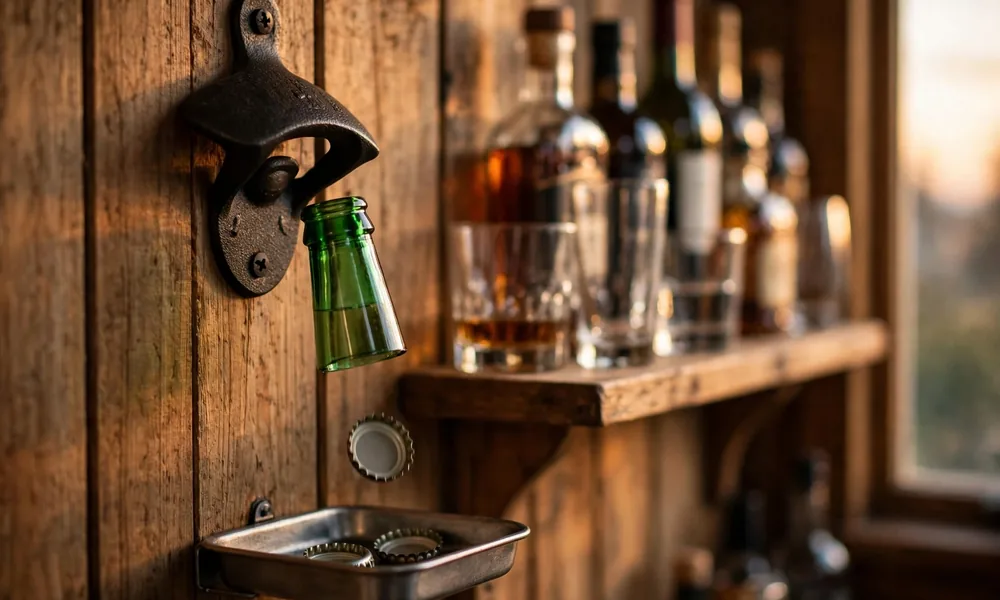
For a home bar or a busy kitchen, a wall-mounted opener turns crown caps into a one-handed job. You screw it to the wall or the side of a cabinet, slide the cap under the lip and pull the bottle down. The cap falls away, often into a small tray underneath, and your other hand stays free. The best wall-mounted openers are made from heavy cast iron or thick steel, with a lip that is machined rather than stamped, so it grips the cap squarely every time.
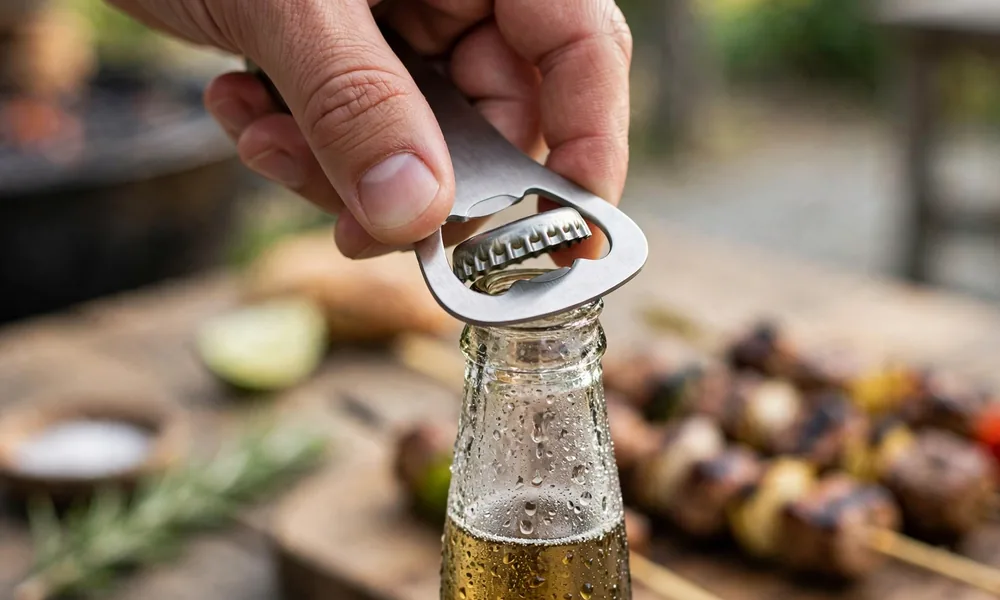
What should you avoid with crown caps? Thin, soft metal is the main problem. Cheap openers stamped from thin steel bend on the first stubborn bottle, and a shallow lip slides off the cap instead of catching it, scratching the rim of the bottle as it goes. A good opener needs one steady lift, not a fight.
Twist-Off Caps: When No Opener Is Needed
Twist-off caps look almost identical to crown caps, which is why so many people reach for an opener they do not need. The difference is in the crimp: a twist-off has a shallower, smoother crimp and a scored thread underneath, so it unscrews with a turn of the wrist.
That said, twist-offs still cause trouble. Caps that have been in the fridge for months can stick fast, and cold, wet hands struggle to grip smooth metal. The best tool here is not a lever at all but a rubber grip pad, a silicone jar opener, or even a damp tea towel, anything that adds friction between your hand and the cap. If a twist-off will not budge, run the cap under warm water for a few seconds. The metal expands slightly, the seal loosens, and the cap usually turns easily after that.
Champagne Corks and Wire Cages
Sparkling wine is the cap that most often goes wrong, because it is not really a cap at all. Under the foil sits a mushroom-shaped cork held down by a wire cage, and behind the cork is pressure strong enough to launch it across a room. The opener you need here is a corkscrew-style tool, the kind with a spiral worm and a lever arm,
Start by peeling the foil and loosening the wire cage, but keep your thumb on top of the cork and keep the cage on while you work. Point the bottle away from people, windows and anything breakable, at roughly a 45-degree angle. Hold the cork still with one hand and twist the bottle slowly with the other, letting the pressure ease the cork out with a soft sigh rather than a loud pop. Our guide to the best and worst corkscrews covers the shapes worth buying and the ones that snap corks in half.
Never use a crown-cap lever on a champagne cork. A bar blade has nothing to catch on, and prying at a cork under pressure is a good way to break the neck of the bottle or send the cork flying.
Swing-Top Bottles and Screw Caps
Swing-top bottles, the ones with a ceramic or plastic stopper held down by a wire bail, are the easiest closure of all once you know the trick. Flip the wire lever upward and the stopper lifts off with a soft hiss. No opener is needed, and no opener helps.
Screw caps on glass bottles, common on some sodas and flavoured waters, are even simpler: grip and turn. Like twist-offs, they sometimes stick, and the same rubber grip pad solves the problem. The one closure where a small opener genuinely helps is the pull-tab on some aluminium bottles, where a keychain opener gives your finger the leverage to lift the tab without tearing a nail.
Comparison Table: The Right Opener for Every Cap
| Cap type | Best opener | Why it works | Watch out for |
|---|---|---|---|
| Crown cap | Flat bar blade | Deep hooked lip and long lever lift the cap cleanly in one movement | Thin metal bends; shallow lips slip and scratch the rim |
| Crown cap, sore hands | Handled opener | Wood or rubber grip adds comfort and the weight does some of the work | Short handles give poor leverage on stubborn caps |
| Crown cap, home bar | Wall-mounted opener | One-handed opening with the cap caught in a tray below | Needs a solid fixing; useless away from home |
| Twist-off cap | Rubber grip pad | Extra friction turns a stuck cap without tearing the metal | Never lever a twist-off; it tears and leaves sharp edges |
| Champagne cork | Waiter’s corkscrew | Controlled, slow release of pressure with the bottle twisted, not the cork | Never pry with a lever; keep the bottle pointed away from people |
| Swing-top stopper | No opener needed | Flip the wire bail and the stopper lifts off by hand | Stiff bails need warm water; worn seals should be replaced |
| Screw cap | Rubber grip pad | Turns a stuck cap without damaging the thread | Wet hands slip; dry them first |
The Opener Types, Side by Side
A good household owns two openers, not one: a bar blade or handled opener for the kitchen, and a small keychain opener for picnics and barbecues. That pair covers every crown cap you are likely to meet, and a waiter’s corkscrew covers the rest.
An opener is a small part of serving drinks well, and the glass matters just as much as the tool that opens the bottle. Once the cap is off, the right glass keeps the flavour and the fizz where they belong, and our comparison of the best and worst beer glasses shows which shapes suit which drinks. For outdoor drinking, the whole kit travels together, and a well-packed basket makes the difference between a relaxed afternoon and a fiddly one, which is why our round-up of the best picnic baskets is worth a look before your next trip out.

Checklist: Buying the Best Bottle Opener
- List the caps you actually open each week, and buy for the most common one first.
- Choose a lip that is deep and slightly hooked, so it catches the cap edge on the first try.
- Pick a handle long enough for leverage and comfortable enough for wet hands.
- Buy thick stainless steel or cast iron, never thin stamped metal that bends.
- Own two openers: a main one for the kitchen and a small one for picnics and travel.
- Check that it rinses clean easily, with no hidden crevices where sticky drink can collect.
Frequently Asked Questions
What is the best bottle opener for beer?
A flat stainless steel bar blade is the best all-round opener for crown-capped beer. Its deep hooked lip catches the cap cleanly, its length gives good leverage, and it has no moving parts to break.
Can I use a bottle opener on a twist-off cap?
You should not. Twist-off caps are designed to unscrew by hand, and levering one tears the thin metal and can chip the glass rim.
How do I open champagne without a loud pop?
Keep your thumb on the cork, loosen the wire cage without removing it, and hold the cork still while you twist the bottle slowly. The pressure will ease the cork out with a soft sigh.
Are wall-mounted bottle openers worth it?
Yes, if you have a fixed spot for one, such as a home bar or a busy kitchen. They open crown caps one-handed and catch the caps in a tray.
What is the best bottle opener to carry every day?
A small keychain opener or a slim bar blade. Both fit in a pocket or on a keyring and handle crown caps well enough for occasional use.
How do I clean a bottle opener?
Rinse it under warm water after use and dry it before putting it away. Wash handled openers with warm soapy water and avoid soaking wooden handles. Wipe under a wall-mounted opener regularly, since spilled drink collects there.
The Bottom Line
The best bottle opener for every kind of cap in 2026 is not one tool but the right tool for the cap in your hand: a bar blade or handled opener for crown caps, a rubber grip for twist-offs and screw caps, a waiter’s corkscrew for champagne, and nothing at all for a swing-top. Do that, and every bottle opens with one smooth lift, a clean cap and no fuss.


