Pour the same beer into a thick mug and into a proper beer glass and you will taste two different beers. The beer has not changed, but the glass has changed how much foam it holds, how its aroma gathers, and how it lands on your tongue. That is why a beer glass matters far more than most people expect, and why the difference between the best beer glasses of 2026 and the worst is something you can feel in the first sip, long before you have thought about the shape of the glass or the thickness of its rim.
The gap between the best and the worst shows up in five places: the shape, the rim, the base, the weight, and the clarity of the glass. A great beer glass has a shape made for the beer inside it, a rim that lets the foam settle into a proper head, a base wide enough to stand steady on the table, and glass clear enough to show the colour of the beer. A bad one has a shape that kills the foam, a rim so thick that it feels clumsy, and glass so cloudy or heavy that it hides the beer altogether. This comparison puts them head to head the way you would actually use them: a lager with friends on a warm evening, a pale ale at the dinner table, and a dark stout on a cold night.
Key Takeaways
- A good beer glass has a shape made for the beer, a smooth rim, and a base wide enough to stand steady.
- Tall pilsner glasses suit lagers, tulip glasses suit pale ales, and wide goblets suit dark stouts.
- The worst beer glasses are thick, heavy, and cloudy, with shapes that kill the foam and hide the beer.
- A frosted glass looks cold but dulls the flavour, and a plastic cup flattens the aroma in minutes.
- The same honest approach sits behind our guide to the best and worst beers of 2026, which looks at what goes into the glass in the first place.
How We Judged the Beer Glasses
We judged every beer glass on five things that matter at the table rather than on the box. First, the shape: whether it holds a proper head of foam and gathers the aroma, or lets the foam collapse and the scent escape. Second, the rim: whether it feels smooth and comfortable on the lip, or thick, rolled, and clumsy. Third, the pour: whether the glass takes a full bottle without overflowing, and whether it is easy to pour into without making a mess. Fourth, stability: whether the base is wide enough that the glass stands steady and does not tip at the slightest knock. Fifth, clarity and care: whether the glass is clear enough to show the true colour of the beer, and whether it survives washing without clouding, scratching, or chipping.

The Best Beer Glasses of 2026
The best beer glasses share one quality that you notice the moment you lift them: they feel balanced in the hand, and the beer inside them smells like more of itself. The glass is clear, the rim is smooth, and the foam sits in a neat, creamy head that lasts to the last sip. There is no wobble, no heavy base dragging at your wrist, and no thick edge getting in the way of the first mouthful. These are the glasses that make an ordinary beer feel like a proper drink, and they are the ones guests reach for again without thinking about it.
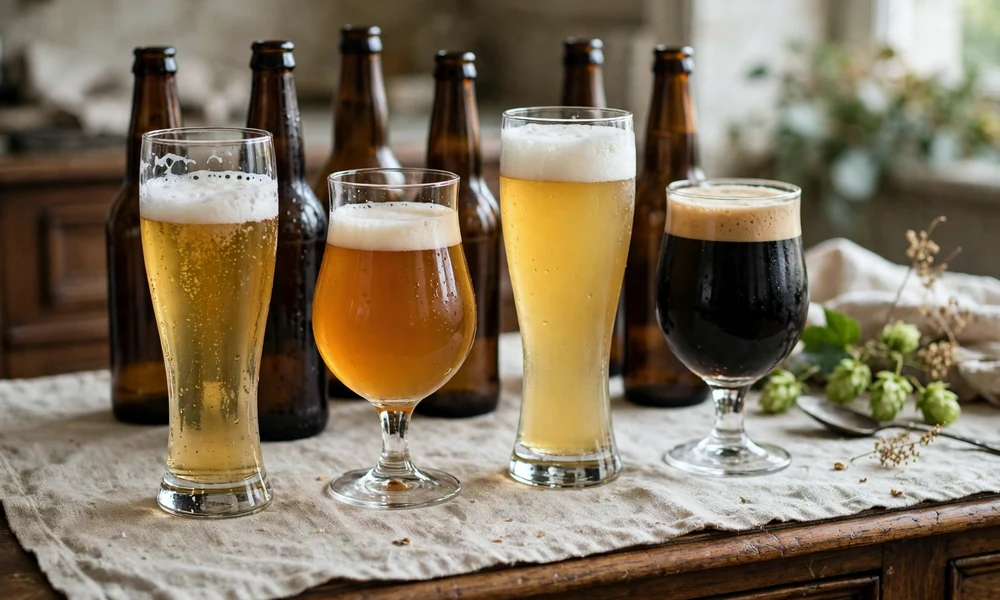
The tall pilsner glass is the strongest all-round choice for lager, and it is the one most people should buy first. Its tall, narrow shape shows off the golden colour and the stream of bubbles, keeps the beer cold, and holds a generous head of foam. The best ones are made from thin, clear glass, light in the hand but steady on the table, with a base wide enough to stand firm. They also suit a light ale, and they are generous enough for a full bottle without overflowing onto the table.
The tulip glass is the best choice for pale ales and hoppy beers, because its flared top gathers the aroma and lets the hop scent reach you before the first sip. A pale ale tastes brighter and more fragrant from a tulip glass than from a straight mug, where its aroma spreads out and fades. The best tulip glasses have a short stem and a bowl that holds a modest pour, so the beer is finished while it is still cold and fresh. They are also the friendliest shape for a dinner table, since they look elegant and take up little room.
The wide goblet is the best choice for dark stouts and strong ales, because its broad bowl lets the rich, roasted aroma open up and gives the thick foam room to settle. A good goblet shows off the deep colour of a stout, holds the chill, and delivers the beer in a slow, satisfying sip. The best ones are sturdy without being heavy, with a stem short enough to feel safe in the hand, and they feel generous without being clumsy. For a cold evening, nothing else drinks quite the same, and a narrow glass that suits a lager will flatten a stout before you have finished it.
The tall wheat beer glass is the best choice for cloudy wheat beers, because its curved shape holds the soft, pillowy foam that these beers are known for and keeps the pale, hazy beer looking its best. A good wheat beer glass is tall without being top-heavy, with a base that flares just enough to stand steady, and it suits a lazy afternoon as well as a dinner table. It is the glass most people forget to buy, and the one they miss most once they have tried it.
The Worst Beer Glasses of 2026
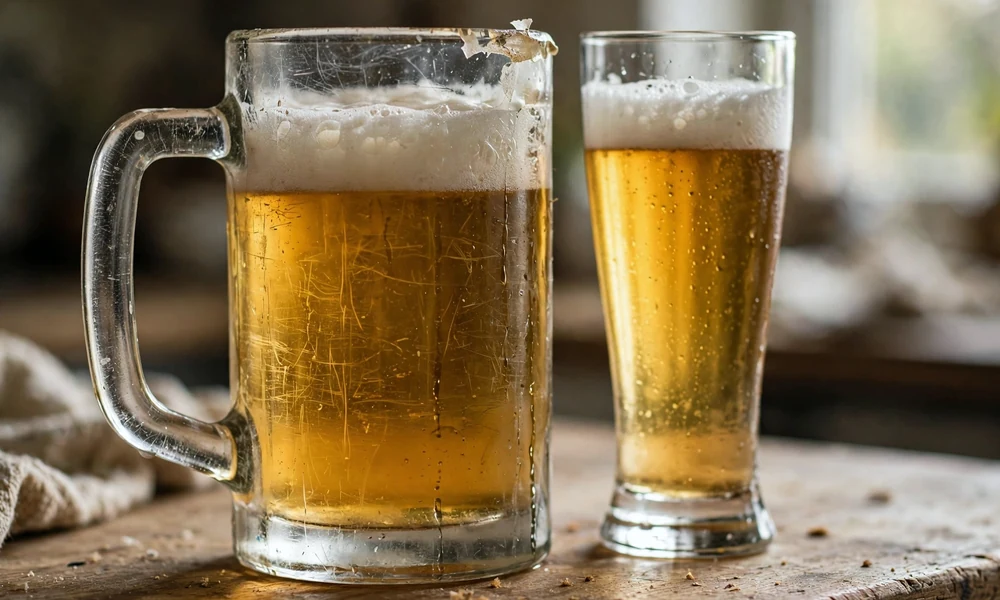
The worst beer glasses fail in ways that are small, annoying, and surprisingly hard to forgive. The most common failure is the thick, heavy mug, a glass so bulky that every sip feels like work. Instead of the beer flowing smoothly onto your tongue, it arrives over a blunt, rolled rim, and the foam collapses before you have taken a second mouthful. Once you have drunk from a thin, well-shaped glass, a heavy mug is hard to go back to, because the difference is there in every single sip.
The second common failure is the cloudy, scratched glass. Cheap glasses are often made from thick, soft glass that clouds after a few washes, scratches at the slightest touch, and never looks clean even when it is. The beer inside looks dull, its colour hidden behind a milky haze, and the whole glass feels tired and second-hand. Some of these glasses are so heavy that they tire your wrist, and so badly balanced that they tip over if you look at them the wrong way.
The third failure is the wrong shape for the beer, and the most common version is the single straight pint glass used for everything. A tall, straight glass that suits a lager will flatten a hoppy ale, and a narrow glass that suits a pale beer will hide the aroma of a dark stout. The shape is not decoration: it decides how much foam the beer keeps, how its scent gathers, and how long it stays at its best. A glass that tries to do every job usually does none of them well, and the worst of them are sold in sets that look generous and drink badly.
Pilsner Glasses vs Tulip Glasses
The choice between a pilsner glass and a tulip glass comes down to the beer you drink most. A pilsner glass is made for lagers, with a tall, narrow shape that shows off their golden colour and keeps the foam neat, and it flatters a crisp lager like nothing else. A tulip glass is made for pale ales, with a flared top that gathers their hoppy aroma, and it is the sensible choice for anyone who drinks more ale than lager. Most households are happiest starting with a pilsner set and adding tulip glasses later, once they know they drink enough ale to justify them.
The pilsner glass wins on lager, and the tulip glass wins on aroma. If you only buy one set, buy the pilsner one, because it covers the beer most people drink most often and it keeps the cupboard tidy. If you already have a pilsner set and you drink a lot of pale ale, a set of tulip glasses is the upgrade that makes the biggest difference. The two shapes do not compete with each other so much as cover different parts of the same job, and the worst mistake is to buy neither and drink good beer from a plastic cup instead. For a closer look at the other tools that open beer at the table, our comparison of the best and worst bottle openers of 2026 shows the same pattern: simple, well-made tools beat clever, flimsy ones every time.
Cleaning and Caring for Your Beer Glasses
A beer glass needs gentle care, but the little it needs matters. Rinse it soon after use, because dried beer leaves a film that kills the foam on the next pour and dulls the glass. Wash it by hand with warm water and a little washing-up liquid, and dry it with a soft cloth rather than leaving it to drip dry, since hard water leaves spots that cloud the glass over time. Never put a beer glass in the dishwasher with greasy dishes, because even a trace of grease will flatten the head on your next beer. If the rim ever chips, do not keep using the glass, because a chipped edge is sharp and the glass will only get worse. Replace it, and buy a thinner, better-made one next time.
How Much Should You Spend?
You do not need to spend much on beer glasses, and spending more does not always buy a better one. A good pilsner set costs a modest amount and will last for years if you look after it, a good tulip set costs a little more, and a good set of goblets costs more still but serves every cold evening. The worst glasses are often the cheapest, but they are also the most expensive in the long run, because you replace them again and again and they spoil a beer or two along the way. Spend enough to get thin, clear glass and a proper shape, and stop there.
The Verdict
The best beer glasses of 2026 are the simple, well-shaped ones: a tall pilsner glass for lager, a tulip glass for pale ales, and a wide goblet for dark stouts, with a wheat beer glass as the sensible everyday choice. They are light, clear, and smooth-rimmed, they hold a proper head of foam, and they last for years. The worst are the thick, cloudy, and badly shaped glasses that kill the foam, hide the colour, and turn a good beer into an ordinary drink. Buy the right shape, keep it clean, and the glass will never be the weak part of the evening. The same rule holds across the table, as our comparison of the best and worst wine glasses of 2026 shows: the tools that do one job properly are the ones you reach for again and again.