
A bottle opener is the smallest tool in the kitchen drawer, and the one that decides whether a drink starts well or starts with a struggle. A good opener lifts a crown cap off a beer or soda bottle with one easy movement, leaving the cap whole and the rim of the bottle clean. A bad one slips, bends, or tears the cap into sharp little pieces, and suddenly everyone is watching you wrestle with a bottle instead of enjoying it. It is a tool with almost nothing to it, a small lip of metal and a handle, and that is exactly why the difference between the best and the worst is so easy to feel and so hard to see on the shelf.
The gap between the best bottle openers of 2026 and the worst is wider than the price tags suggest, and it shows up in four places: the lip, the leverage, the grip, and the build. A great opener has a lip that catches the edge of the cap firmly and lifts it straight off, a handle long enough to give you leverage without hurting your hand, and metal thick enough to hold its shape for years. A bad one has a shallow lip that slides off the cap, a handle so short or so thin that it digs into your palm, and metal so soft that it bends on the first stubborn bottle. This comparison puts them head to head the way you would actually use them: opening a cold beer at a barbecue, a soda for the children at a picnic, and a bottle with a cap that has been on too tight since the day it was filled.
Key Takeaways
- A good bottle opener has a deep, sharp lip that grips the cap edge and lifts it off in one smooth movement.
- Flat bar blades suit most people and most bottles, while wall-mounted openers suit a busy kitchen or a home bar.
- The worst bottle openers bend, slip off the cap, and leave torn metal and sharp edges behind.
- An opener made from thin, soft metal will fail on the one bottle you most wanted to open without a fuss.
- The same honest approach sits behind our guide to the best and worst beers of 2026, which looks at what goes in the glass once the cap is off.
How We Judged the Bottle Openers
We judged every bottle opener on five things that matter at the table rather than on the box. First, the lip: whether the working edge catches the cap firmly and lifts it off cleanly, or slips and chews the edge of the cap. Second, leverage: how much effort the opening takes, and whether the handle does the work or your wrist does. Third, grip: whether the handle stays comfortable in your hand and suits small hands as well as large ones, wet hands as well as dry ones. Fourth, tough caps: whether the same opener copes with a cap that is stuck fast, a rusty edge, or a bottle that has been in the fridge for months. Fifth, the build: whether the metal holds its shape after dozens of openings and whether the opener is easy to keep clean and safe in the drawer.
The Best Bottle Openers of 2026
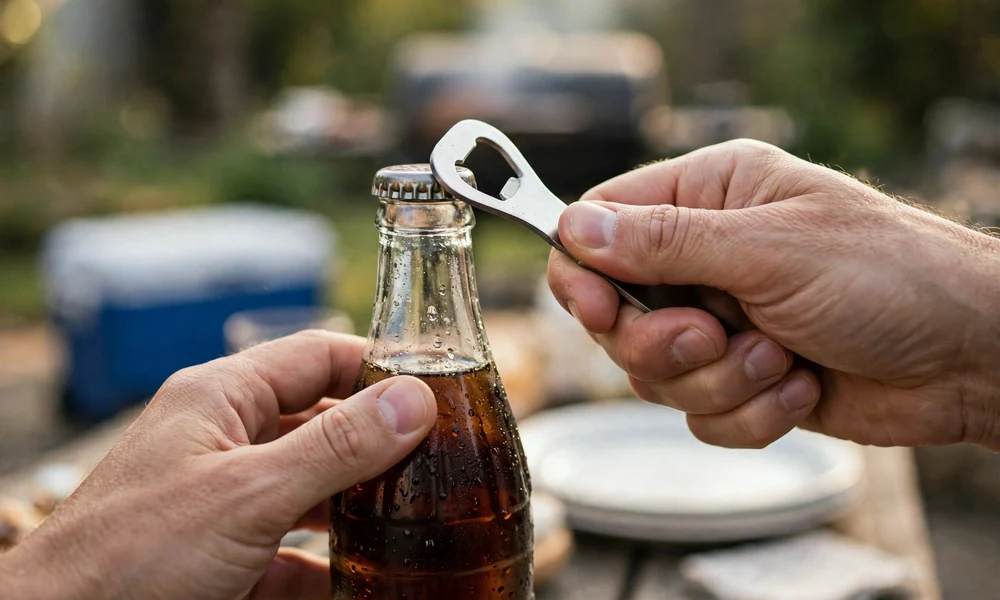
The best bottle openers share one quality that you notice the moment you use them: they feel certain. The lip finds the edge of the cap without hunting for it, the handle sits comfortably in your palm, and the cap comes off with a single smooth lift and a satisfying pop. There is no slipping, no second try, and no little shower of metal flakes. These are the openers that live on the kitchen counter because someone reaches for them every day, not the ones buried at the back of the drawer.
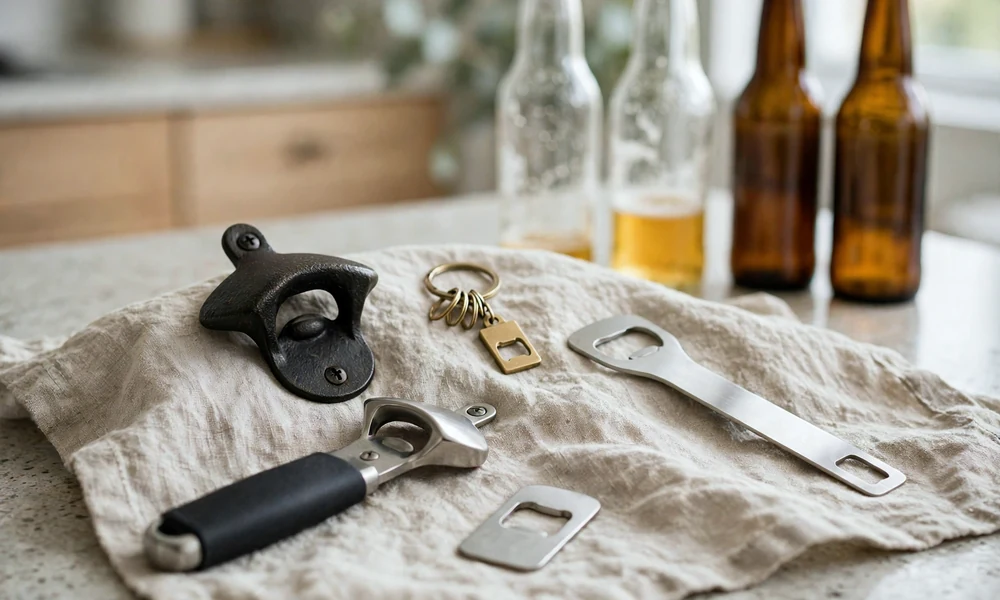
The flat bar blade is the strongest all-round choice, and it is the one most people should buy first. It is a simple strip of thick stainless steel with a lip at one end, long enough to give real leverage and thin enough to slip into a pocket or an apron. The best ones have a lip that is deep and slightly hooked, so it catches the cap edge and holds it while you lift. They are also the easiest to clean, since there are no moving parts and nowhere for sticky beer or soda to hide. A good bar blade will open hundreds of bottles without bending, and it costs so little that there is no excuse for putting up with a bad one.
The wall-mounted opener is the best choice for a home bar or a busy kitchen, because it turns opening a bottle into a one-handed job. You screw it to the wall or the side of a cabinet, slide the cap under the lip, and pull the bottle down. The cap falls away, often into a little tray or a bin underneath, and your other hand stays free. The best wall-mounted openers are made from heavy cast iron or thick steel, with a lip that is machined rather than stamped, so it grips the cap squarely every time. They are also the most forgiving for guests, since there is nothing to learn and nothing to hold the wrong way round.
The handled opener, the classic shape with a grip like a small tool handle, is the best choice for anyone with sore hands or a weak grip. The handle gives you something solid to hold, the weight of the metal does some of the work, and the lip is usually set at an angle that makes the lift feel natural. The best ones have a handle made from wood or soft rubber rather than bare metal, so they do not slip when your hands are wet or cold. They are also the friendliest shape for children learning to open their own soda, since the handle tells them exactly where to hold it.
The Worst Bottle Openers of 2026
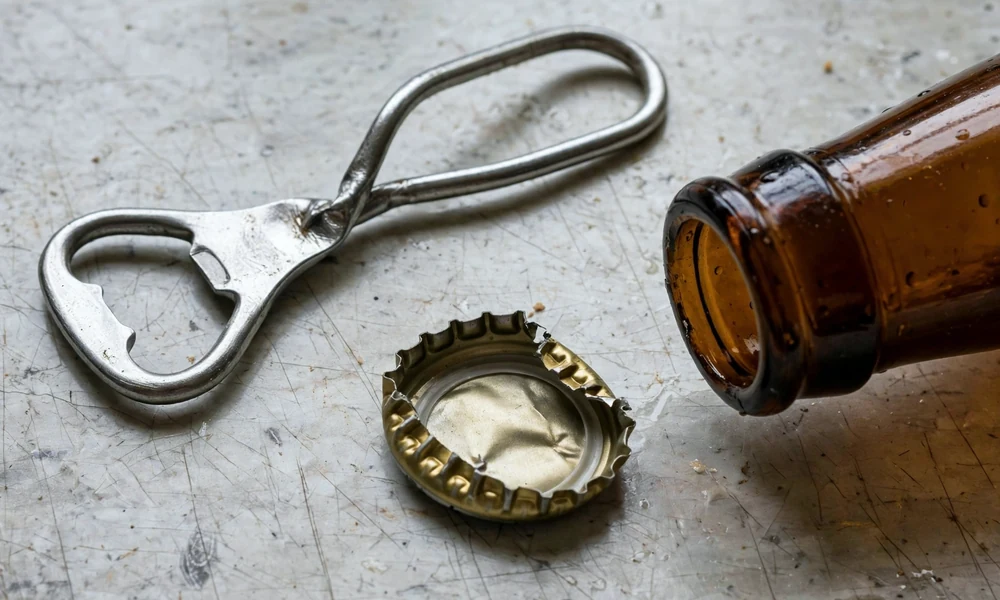
The worst bottle openers fail in ways that are small, annoying, and surprisingly hard to forgive. The most common failure is the shallow lip, a working edge so flat that it slides off the cap instead of catching it. You press down, the opener slips, and the cap stays put while the rim of the bottle gets scratched. After two or three tries you are pressing harder, the bottle is wobbling, and someone is offering to open it with their teeth, which is a worse idea in every way.
The second common failure is soft metal. Cheap openers are often stamped from thin steel or cast from a soft alloy that looks solid in the shop and bends the first time it meets a tight cap. Once the lip has bent even slightly, the opener never works properly again, because the angle is wrong and the cap edge slips out. Some of these openers bend so easily that they feel more like a toy than a tool, and the only honest thing to do with them is to throw them away rather than keep fighting them.
The third failure is the novelty opener, the one shaped like an animal, a car, or a cartoon character. These are sold as gifts and jokes, and they open bottles about as well as they look, which is to say badly. The shape gets in the way of the grip, the lip is an afterthought, and the metal is often hollow or plated over something soft. They are fun to receive and miserable to use, and they belong on a shelf as a decoration, not in the drawer as a tool. If you want an opener that works, buy one shaped like an opener.
Flat Bar Blade vs Wall-Mounted Openers
The choice between a flat bar blade and a wall-mounted opener comes down to where you drink. A bar blade travels with you, to the barbecue, the picnic, and the friend’s house, and it costs almost nothing. A wall-mounted opener stays in one place and makes opening a bottle effortless, but it is useless anywhere else. Most households are happiest with both, a bar blade in the drawer for everyday use and a wall-mounted opener by the fridge or the home bar for guests and busy evenings.
The bar blade wins on versatility, and the wall-mounted opener wins on ease. If you only buy one, buy the bar blade, because it works everywhere and it will last for years. If you already have a bar blade and you open a lot of bottles at home, a wall-mounted opener is the upgrade that makes the biggest difference. The two tools do not compete with each other so much as cover different parts of the same job, and the worst mistake is to buy neither and rely on a novelty opener instead. For a closer look at the other tools that open bottles in the kitchen, our comparison of the best and worst can openers of 2026 shows the same pattern: simple, solid tools beat clever, flimsy ones every time.
Cleaning and Caring for Your Bottle Opener
A bottle opener needs almost no care, but the little it needs matters. Rinse it after use, especially after opening beer or sweet soda, because dried sugar makes the lip sticky and the metal dull. Dry it before you put it away, since even stainless steel can spot if it is left wet in a drawer. A wall-mounted opener deserves a wipe now and then, and a drop of oil on the screws will keep it tight for years. If the lip ever bends, do not try to bend it back, because the metal will be weaker and the angle will never be quite right. Replace it, and buy a thicker one next time.
How Much Should You Spend?
You do not need to spend much on a bottle opener, and spending more does not always buy a better one. A good bar blade costs a few pounds and will last for years, a good handled opener costs a little more, and a good wall-mounted opener costs more still but serves the whole household. The worst openers are often the cheapest, but they are also the most expensive in the long run, because you replace them again and again and they ruin a bottle or two along the way. Spend enough to get thick steel and a proper lip, and stop there.
The Verdict
The best bottle openers of 2026 are the simple ones: a thick steel bar blade for everyday use, a wall-mounted opener for the home bar, and a handled opener for anyone who wants a kinder grip. They open a bottle in one smooth lift, they do not bend or slip, and they last for years. The worst are the thin, soft, and novelty openers that bend, tear caps, and turn a simple job into a struggle. Buy the simple one, keep it where you can reach it, and the bottle will never be the hard part of the evening. The same rule holds across the kitchen, as our comparison of the best and worst corkscrews of 2026 shows: the tools that do one job properly are the ones you reach for again and again.


