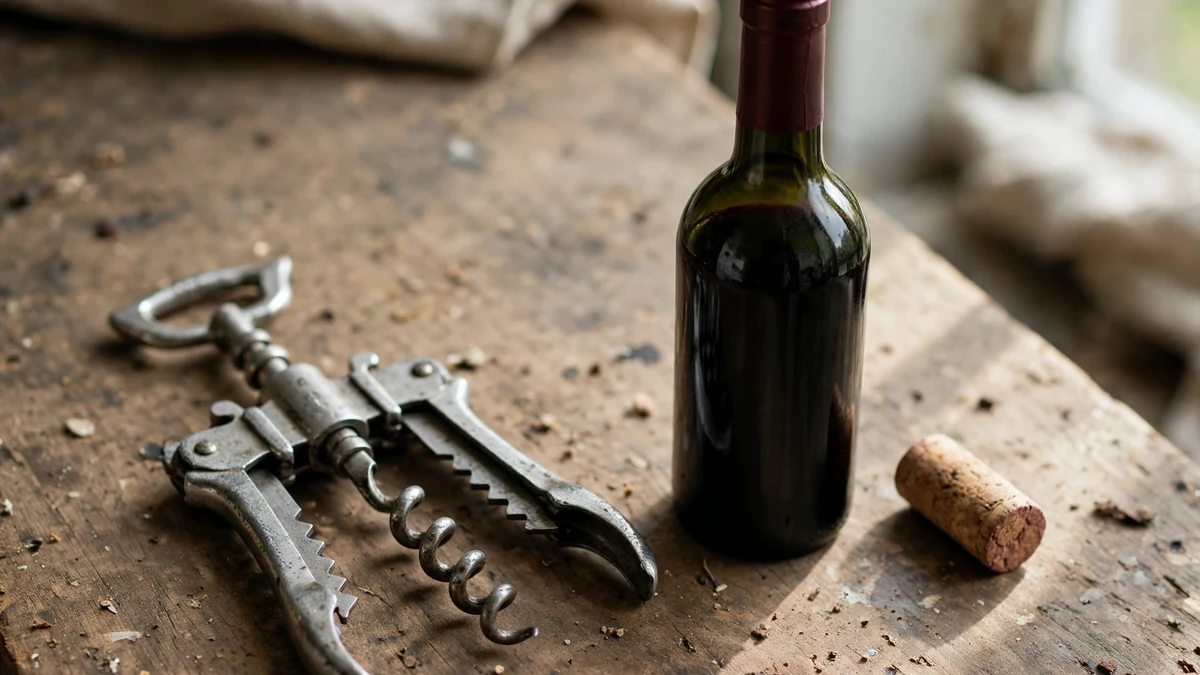
A corkscrew is the smallest tool on the dinner table, and the one that decides whether the evening starts well or starts with a struggle. A good corkscrew pulls the cork out cleanly in a few steady turns, with no crumbs in the glass and no broken cork stuck in the neck. A bad one drills through the cork, snaps it in half, or bends its own worm, and suddenly everyone is watching you wrestle a bottle instead of enjoying it. It is a tool with almost nothing to it, a spiral, a handle, and a little leverage, and that is exactly why the difference between the best and the worst is so easy to feel and so hard to see on the shelf.
The gap between the best corkscrews of 2026 and the worst is wider than the price tags suggest, and it shows up in four places: the worm, the leverage, the grip, and the foil cutter. A great corkscrew has a long, open spiral that bites into the cork without tearing it, a lever or step that does the pulling for you, and a handle that stays steady in your hand. A bad one has a short, tight spiral that chews the cork to crumbs, arms that bend under pressure, and a foil cutter that tears the capsule instead of slicing it. This comparison puts them head to head the way you would actually use them: opening a bottle on a Friday night, a bottle with an old, fragile cork, and a bottle when your hands are tired, then pouring the first glass.
Key Takeaways
- A good corkscrew has a long, open worm that grips the cork without tearing it, and a lever that does the pulling for you.
- Waiter’s corkscrews suit most people and most bottles, while winged lever corkscrews suit anyone who wants less effort.
- The worst corkscrews drill through the cork, snap it in half, and leave crumbs floating in the glass.
- A corkscrew with a flimsy worm or bending arms will fail on the one bottle you most wanted to open properly.
- The same honest approach sits behind our guide to the best wine openers for home in 2026, which looks at the same tools from the buying side.
How We Judged the Corkscrews
We judged every corkscrew on five things that matter at the table rather than on the box. First, the worm: whether the spiral bites cleanly into the cork and pulls it out whole, or chews it into crumbs. Second, leverage: how much effort the pull takes, and whether the tool does the work or your wrist does. Third, grip: whether the handle stays steady in your hand and suits small hands as well as large ones. Fourth, old corks: whether the same corkscrew copes with a dry, fragile cork from an older bottle without snapping it. Fifth, the extras: whether the foil cutter slices cleanly and the corkscrew folds away safely for the drawer.

The Best Corkscrews of 2026
The best corkscrews of 2026 share one quality that has nothing to do with price: the cork comes out whole, and you barely notice the effort. A good waiter’s corkscrew with a long, open worm screws into the cork in a few smooth turns, the stepped lever rests on the lip of the bottle, and a gentle lift draws the cork out cleanly. The foil cutter slices the capsule in one pass instead of tearing it. You can open a bottle in under a minute without thinking about the tool at all, and the cork comes out dry, whole, and ready to be sniffed, which is half the pleasure of opening a good bottle.
Winged lever corkscrews earn their place too, and the best of them are superb for anyone who wants the tool to do the lifting. You twist the worm down, the arms rise, and a push on both arms draws the cork out with almost no effort. The best lever models are solid metal, with arms that do not flex and a worm long enough to grip a full-length cork. Electric corkscrews deserve a mention as well, because for anyone with weak hands or arthritis they are not a gadget, they are the difference between opening a bottle and not opening one. The best electric models pull the cork straight and true, and they stop before they push the cork through.

The Worst Corkscrews of 2026
The worst corkscrews of 2026 fail in ways that are obvious within ten seconds of picking them up. The worm is the usual culprit. A short, tight spiral does not grip the cork, it drills through it, so the cork splits, the bottom half stays in the neck, and you are fishing crumbs out of the wine with a teaspoon. Cheap thin metal is the worst offender: the worm bends under pressure, the arms flex instead of lifting, and the whole tool feels like it might fold in your hand. Flimsy winged corkscrews are nearly as bad, because arms that bend cannot pull, and every bottle becomes a wrestling match.
Novelty corkscrews are the other great disappointment. Corkscrews shaped like animals, corkscrews built into bottle stoppers, corkscrews that promise to open a bottle with a puff of air: they look fun in the shop and fail at the table. The clever shape is impossible to hold properly, the worm itself is usually an afterthought, and the air-pump models push the cork out by forcing gas into the bottle, which is the last thing a good wine needs. A corkscrew that tries to be a party trick is rarely even one good tool. The same goes for corkscrews with handles so small and smooth that they spin in your hand; grip is not a luxury when the worm is sharp, it is the difference between opening a bottle and dropping it.
The worst corkscrews also ruin wine, which is the quiet cost nobody counts. A cork that crumbles into the bottle leaves crumbs in every glass, and a cork pushed through into the wine has to be fished out with a straw or a fork, which is no way to treat a bottle you were looking forward to. Add in the embarrassment of struggling in front of guests, and the cheapest corkscrew in the shop turns out to be the most expensive one you own. The worst corkscrews do not just open bottles badly; they make you slower, spoil the wine, and put the evening on hold, all for the sake of saving a few pounds at the till.
Waiter’s vs Winged Lever Corkscrews
Most people only ever need one corkscrew, and for most people that should be a waiter’s corkscrew. It folds flat, fits in a pocket or a drawer, and does the whole job with a worm, a stepped lever, and a foil cutter. The stepped lever is the clever part: it rests on the lip of the bottle and gives you the leverage to lift the cork out in two easy stages, even from a tight bottle. It suits everyday bottles, dinner parties, and picnics, which is most of what a corkscrew ever meets. Winged lever corkscrews have their fans, and fairly so: the arms do the lifting for you, which suits anyone with less hand strength, and the whole thing feels effortless on a standard bottle.
The honest answer is that the type matters less than the worm and the build. A solid waiter’s corkscrew with a long, open worm will beat a flimsy winged model every time, and a solid winged corkscrew will beat a cheap waiter’s one. Buy the type that feels right in your hand, then check the worm: long, open, and sharp enough to bite, with a lever or arms that do not flex. If the worm is short or the arms bend, no type will save it. Keep an electric opener as a second tool if opening bottles is ever painful, and you will have every bottle covered.

Cleaning and Caring for Your Corkscrew
A corkscrew is the easiest tool in the house to look after, and the easiest to ruin by neglect. Wipe the worm clean after each bottle, and it stays sharp and free of cork dust. Leave it sticky with wine in the drawer, and the hinge stiffens, the foil cutter dulls, and the whole tool picks up a smell you do not want near your next bottle. Most good corkscrews can be rinsed under the tap, but dry the worm properly before you fold it away, because a damp worm in a closed drawer is how rust starts. A drop of oil on the hinge once a year keeps the lever moving smoothly.
When the worm finally goes dull or bent, replace the corkscrew rather than trying to straighten it. A bent worm will never grip a cork properly again, and a dull one tears instead of biting. The good news is that a decent corkscrew costs so little that replacing it every few years is no hardship, and a fresh worm transforms the job. Store it folded, somewhere the worm cannot catch on other tools, because a blunted worm is what turns a good corkscrew into a bad one overnight. The same care applies across the house, and our comparison of the best and worst can openers of 2026 shows how much difference a sharp edge and a little looking-after make to any small kitchen tool.
How Much Should You Spend?
A good corkscrew costs less than a bottle of decent wine, and spending more rarely buys a better corkscrew. The sweet spot is a solid waiter’s corkscrew with a long worm and a stepped lever, which you will find for the price of a couple of coffees. Cheaper corkscrews cut corners on the worm and the metal, and they fail within months. More expensive corkscrews add nicer handles and prettier finishes, which are pleasant but do not pull a cork any better. The worm is the whole tool, and a long, open worm on a cheap handle still beats a short worm on a beautiful one.
The one reason to spend more is if you open bottles every day. A heavy, well-made waiter’s corkscrew with a long handle is kinder on your hands over years of use, and an electric opener is worth the extra cost if your hands ever ache. For everyone else, a mid-priced steel corkscrew is the right buy. The bottle matters more than the tool: if you are choosing what to open rather than how to open it, our comparison of the best and worst wines of 2026 covers the bottles worth the occasion and the ones to leave on the shelf.
The Verdict
The best corkscrews of 2026 are the ones that respect the simplicity of the job: a long, open worm that grips the cork without tearing it, a lever that does the pulling for you, and a foil cutter that slices cleanly in one pass. The worst are short, tight, flimsy, and crumb-making, and they turn a one-minute pleasure into a fiddly struggle that leaves half the cork in the neck. Buy the corkscrew with the longest worm, the sturdiest lever, and the handle that feels most secure in your hand, wipe it clean after each bottle, and keep an electric one beside it if your hands ever ache. A good corkscrew does not need gadgets or gimmicks to earn its place in the drawer; it only needs a proper worm, a solid lever, and just enough care to keep it clean.