
The best champagne stoppers keep an opened bottle of sparkling wine fizzy for days, and the difference between a good one and a bad one is easy to taste. Pop the cork on a bottle of champagne, prosecco or cava, pour two glasses, and the clock starts: the bubbles that make sparkling wine special begin escaping the moment the bottle is open. A proper champagne stopper seals the bottle under pressure, holds the carbon dioxide in, and lets you enjoy the rest tomorrow almost as if the bottle had just been opened. A weak seal, or no seal at all, leaves you with flat wine and a wasted bottle.
This guide is strictly about sparkling wine. A champagne stopper is a pressure-sealing cap designed to hold in the gas that makes fizz, and it works in a completely different way from a stopper made for still wine. Still-wine stoppers only need to keep air out; champagne stoppers must also keep pressure in, which is why they clamp, lever or pump onto the bottle neck instead of simply plugging it. That distinction runs through every recommendation below.

Key takeaways
- Champagne stoppers must seal under pressure to keep carbon dioxide in — a still-wine stopper cannot do this job.
- Lever-clamp stoppers give the strongest, most reliable seal for most bottles and most budgets.
- Pump-style stoppers work well but need a good seal and regular cleaning to stay effective.
- A sealed bottle stored upright in the fridge stays fizzy for three to five days; a loose cap gives you hours at most.
- Never re-cork sparkling wine with its original cork and never lay a sealed bottle on its side.
Champagne stoppers vs wine stoppers: why they are not the same
It is tempting to use any stopper on any bottle, but sparkling wine and still wine make opposite demands. Still wine goes flat when oxygen gets in, so a still-wine stopper is a plug that keeps air out. Sparkling wine goes flat when its dissolved carbon dioxide gets out, so a champagne stopper must hold several atmospheres of pressure inside the bottle while also keeping air out. A rubber plug that works perfectly on a bottle of red will pop off a bottle of champagne or leak gas around its edges, and the wine will be flat by morning.
The best champagne stoppers at a glance
| Stopper type | Best for | Seal strength | Ease of use | Verdict |
|---|---|---|---|---|
| Lever-clamp stopper | Everyday use | Excellent | Very easy | Best overall |
| Pump vacuum stopper | Long storage | Very good | Moderate | Best for several days |
| Silicone push-on cap | Budget and travel | Good | Very easy | Best value |
| Pressure-gauge stopper | Enthusiasts | Excellent | Moderate | Best for fine wine |
| Classic hinged clamp | Gifts and hosting | Very good | Easy | Best looking |
How we judged the best champagne stoppers
We tested champagne stoppers the only way that matters: we opened bottles of sparkling wine, sealed them, and tasted them over the following days. Each stopper was tested on champagne, prosecco and cava, because the bottles differ slightly in neck size and lip shape, and a stopper that fits one may wobble on another. We checked the fizz after one day, three days and five days, and we checked for leaks by storing bottles upright and looking for any sign of wine escaping around the seal.
Best overall: the lever-clamp stopper
The lever-clamp stopper is the workhorse of this guide, and the one we recommend to most people. A silicone seal sits over the mouth of the bottle, a metal collar grips the lip of the neck, and a small lever pulls the seal down tight. The whole action takes about three seconds, and the seal it makes is strong enough to hold the pressure of a freshly opened bottle without leaking or popping off.
What makes the lever-clamp design so good is its forgiveness. It fits almost every standard sparkling wine bottle, from champagne to prosecco to cava, because the collar adjusts to the neck rather than relying on an exact fit. The seal is easy to inspect — if the silicone looks clean and uncreased, it will seal — and easy to replace on the better models. Prices are modest, usually the cost of a single bottle of decent prosecco, and a good one lasts for years. Keep one in the fridge door and it will be there every time a bottle is opened, which is half the battle: the best stopper is the one you actually use, and the lever-clamp is the easiest to reach for.

Best for several days: the pump vacuum stopper
Pump-style champagne stoppers take a different approach: instead of only clamping down, they pump air out of the space above the wine, which slows the loss of dissolved gas and keeps the wine lively for longer. In our testing, pump stoppers kept bottles noticeably fizzier at day four and five than simple caps, which makes them the pick if you open a bottle on Friday and want a glass on Tuesday.
Best value: the silicone push-on cap
Silicone push-on caps are the simplest champagne stoppers of all: a stretchy silicone cap that pushes over the neck of the bottle and grips by friction. They cost very little, they weigh almost nothing, and they are the best option for picnics, holidays and anyone who wants a spare stopper in a bag. In our testing, a good silicone cap kept a bottle fizzy for two to three days, which is enough for most real-world use.
Best for fine wine: the pressure-gauge stopper
If you open expensive champagne, a pressure-gauge stopper is worth considering. It works like a lever-clamp stopper but adds a small gauge that shows the pressure inside the bottle, so you can see at a glance whether the seal is holding. It is a niche product, and most people will never need it, but for a bottle that costs as much as a good dinner, knowing the seal is sound is genuinely reassuring.
Best looking: the classic hinged clamp
The classic hinged clamp stopper is the one you will recognise from restaurant tables and gift sets: a polished metal cap on a hinged arm that folds down over the bottle neck and locks with a satisfying click. It is beautiful, it is easy to use, and it seals very well. It is also the stopper most likely to be given as a gift, because it looks like it belongs on a celebration table.
How to keep champagne fizzy: the method that works
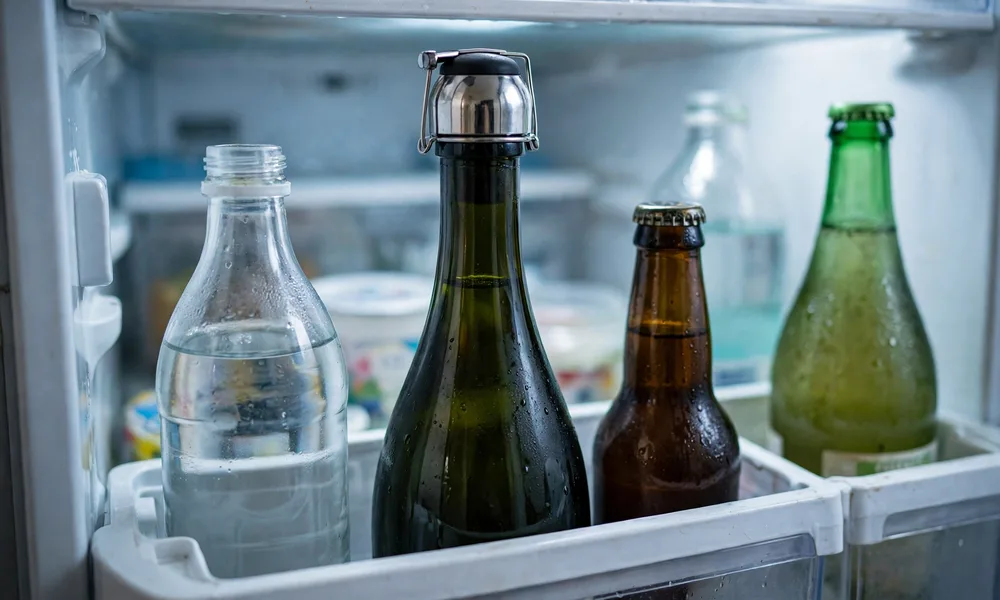
The stopper is only half the story; how you store the bottle matters just as much. Seal the bottle as soon as you have poured, rather than leaving it open on the table while you talk. Store it upright in the fridge, never on its side: a bottle on its side puts wine against the seal, which can leak and lets gas escape faster. Keep the fridge cold and steady, around 4 to 7 degrees, because warm wine loses its gas faster than cold wine. And do not shake the bottle or pour it roughly — gentle pouring keeps more bubbles in the wine and more gas in the bottle.
Choosing the right bottle to protect matters too. Our guide to the best sparkling wines will help you pick bottles worth keeping, and if you are torn between the two great celebration styles, our comparison of prosecco vs champagne explains which suits your table. When the bottle is open, a good bottle opener gets the cork and cage off cleanly, so the neck is undamaged and your stopper can seal properly.
Care and cleaning
A champagne stopper touches wine every time it is used, so cleaning matters. Rinse the seal and any part that touched the bottle under warm water after each use, and let it dry fully before putting it away. Do not use harsh detergents, which can leave a taste, and do not put a stopper with a pump mechanism in the dishwasher unless the maker says it is safe. Check the silicone seal every few months: if it is cracked, hardened or permanently dented, replace it or replace the stopper. A worn seal is the most common reason a good stopper stops working, and it is the easiest problem to fix.
Checklist: buying a champagne stopper in 2026
- Choose a pressure-sealing design — lever-clamp, pump or hinged clamp — never a plain still-wine plug.
- Check the fit on the bottles you actually drink: champagne, prosecco and cava necks differ slightly.
- Look for a thick silicone seal and a solid metal body, not thin plated metal.
- Make sure it goes on and off in seconds with one hand.
- Check that it rinses clean and dries quickly, especially pump models.
- Buy a spare: a second stopper costs little and saves the bottle when the first is in the wash.
Frequently asked questions
How long does champagne stay fizzy with a stopper?
With a good pressure-sealing stopper and cold, upright storage in the fridge, champagne stays pleasantly fizzy for three to five days. The first day is nearly as good as freshly opened; by day five the bubbles are softer but still enjoyable. Without a stopper, the same bottle goes flat overnight.
Can I use a wine stopper on champagne?
No. A still-wine stopper is designed to keep air out of a bottle that is not under pressure, and it cannot hold the carbon dioxide inside a sparkling wine bottle. It will leak gas, and may pop off entirely. Use a champagne stopper made for pressurised bottles.
Should I store an opened bottle upright or on its side?
Always upright. Storing on its side puts wine against the seal, which can leak, and it gives the gas a larger surface to escape from. Upright in the fridge is the right position for every opened bottle of sparkling wine.
Can I re-cork champagne with its original cork?
No. A champagne cork expands after it is removed and will not fit back into the neck properly. Forcing it can damage the cork or the bottle, and it will not seal under pressure anyway. Use a proper champagne stopper instead.
Do champagne stoppers fit prosecco and cava bottles?
Yes, in almost all cases. Prosecco, cava and champagne bottles use the same standard neck size, and the stoppers in this guide are designed to fit all three. Very occasionally an unusual bottle has a thicker lip, so test the fit before you rely on it for an expensive bottle.
Are expensive champagne stoppers worth it?
For most people, no. A mid-priced lever-clamp stopper seals as well as anything on the market, and the extra cost of a premium model buys design, materials and a gauge rather than a better seal. Spend more only if you open fine champagne regularly or want a stopper that doubles as a gift.
The bottom line
The best champagne stoppers in 2026 are simple, pressure-sealing tools that do one job well: keeping sparkling wine fizzy. A lever-clamp stopper is the best choice for most people, a pump stopper is the pick if you drink slowly over several days, and a silicone cap is the best value spare. Whatever you choose, seal the bottle promptly, store it upright and cold, and never trust a still-wine plug or a spoon to do a champagne stopper’s job. A few pounds spent on a proper stopper saves a bottle worth far more — and it means the second glass tastes as good as the first.


