The best sparkling wines in 2026 offer something for every table, every budget and every occasion. From classic Champagne to bright Prosecco, crisp Cava and the quietly excellent sparkling wines of England, the choice has never been wider, and the quality at modest prices has never been better. A good bottle no longer needs a special occasion, and the best sparkling wines prove that celebration can be an ordinary Tuesday as easily as a wedding.
Choosing well is less about memorising famous names and more about knowing what you enjoy. Some drinkers love fine, persistent bubbles and a dry, mineral finish. Others prefer softer fruit, a gentle sweetness or a creamy texture that comes from longer ageing. The best sparkling wines in 2026 cover all of those tastes, and this guide explains how each style is made, what it tastes like and when it shines.
Below, you will find the styles that stood out this year, a simple comparison table, practical advice on serving and storing, and food pairings that actually work. Whether you are buying one bottle for dinner or stocking up for the festive season, these are the sparkling wines worth your money in 2026.
Key takeaways
- Champagne remains the benchmark for fine bubbles and complex, aged flavour, but it is no longer the only serious choice.
- Prosecco is the best value for easy, fruity fizz, while Cava offers Champagne-style depth at a much lower price.
- Look for Brut on the label if you prefer dry sparkling wine, and Extra Dry if you like a touch of softness.
- Serve sparkling wine well chilled, between 6 and 8 degrees, in a tall flute or a tulip-shaped glass.
- Buy from a recent vintage or a trusted non-vintage blend, store bottles cool and dark, and drink most styles within two years.

What Makes a Sparkling Wine Great
A great sparkling wine balances three things: bubbles, acidity and flavour. The bubbles should feel fine and lively rather than harsh or foamy. Acidity keeps the wine fresh and appetising, cutting through rich food and lifting fruit flavours. Flavour should be clean and clear, whether that means green apple and citrus, ripe pear and peach, or the toasty, nutty notes that come from ageing.
How the bubbles get into the bottle matters a great deal. The traditional method, used for Champagne, Cava and Crémant, creates the second fermentation inside the bottle itself. This produces smaller, longer-lasting bubbles and deeper flavour. The tank method, used for most Prosecco, ferments the wine in a large pressurised tank, preserving fresh fruit and keeping prices low.
The Bubbles Tell the Story
Fine, steady streams of tiny bubbles are a sign of careful winemaking and good ageing. When you pour, the mousse, the foam on top, should settle quickly into a neat ring. Large, aggressive bubbles that fade fast often mean a simpler wine, though that is not always a fault. A light, fruity Prosecco is meant to be fresh and immediate, not complex and brooding.
Sweetness Levels Explained
Most sparkling wine labels state a sweetness level, and Brut is the most common. Brut means dry, with very little residual sugar, while Extra Brut is drier still. Extra Dry sounds drier than Brut, but it is actually slightly sweeter, a quirk of wine labelling that catches many buyers out. Sec and Demi-Sec are noticeably sweet and suit desserts. If you are unsure, Brut is the safest starting point for most meals.
The Best Sparkling Wines of 2026
The bottles below represent the best sparkling wines across the main styles in 2026. They were chosen for flavour, consistency, value and availability, not for famous labels alone. Each one earns its place by tasting good in the glass, not merely by reputation.
Champagne: The Classic Choice
Champagne remains the reference point for sparkling wine. Made in the Champagne region of France from Chardonnay, Pinot Noir and Pinot Meunier, it offers fine bubbles, bright acidity and layers of citrus, apple, brioche and toast. Non-vintage Brut Champagne is the best place to start, offering house character at a fairer price than vintage bottles. Serve it with smoked salmon, oysters or simply on its own.
Prosecco: The Easy Favourite
Prosecco, from north-east Italy, is light, fresh and fruit-driven, with flavours of green apple, pear and white flowers. It is made by the tank method, which keeps it affordable and aromatic. A good Prosecco Superiore DOCG, from the hills around Valdobbiadene, tastes noticeably finer than the cheapest bottles. It is ideal for aperitifs, light lunches and spritz-style drinks.
Cava: The Smart Value Pick
Cava is Spain’s answer to Champagne, made by the traditional method, usually from Macabeo, Xarel-lo and Parellada grapes. It has a similar fine mousse and toasty character, but at a fraction of the price. Reserva Cava, aged for at least fifteen months, offers real depth and complexity. It pairs beautifully with tapas, cured meats and fried foods.
Crémant: France Beyond Champagne
Crémant is traditional-method sparkling wine from other French regions, such as Alsace, Burgundy and the Loire. Crémant d’Alsace is often crisp and floral, while Crémant de Loire can be soft and generous. These wines deliver much of Champagne’s elegance for far less money, making them excellent choices for parties and large gatherings.
English Sparkling Wine: The Rising Star
English sparkling wine has become genuinely world-class, with producers in Sussex, Kent and Hampshire winning major awards. Cool-climate Chardonnay and Pinot Noir give these wines sharp acidity, fine bubbles and flavours of green apple, lemon and biscuit. They are often priced like Champagne, but the best bottles justify the cost. Try one with fish and chips or a creamy seafood dish.
Franciacorta and Other Hidden Gems
Franciacorta, from Lombardy in Italy, is a traditional-method wine of real finesse, often compared with Champagne. Beyond it, look for Pét-Nat, a rustic, naturally sparkling style with gentle fizz and cloudy charm, and for Lambrusco, a lightly sparkling red that is perfect with pizza and cured meats.
Best Sparkling Wines at a Glance
Use this table to compare the main styles quickly. Prices vary by shop and vintage, but the relative order holds: Prosecco and Cava are the most affordable, while Champagne and top English wines sit at the premium end.
| Style | Typical Flavour | Sweetness | Best For |
|---|---|---|---|
| Champagne | Citrus, apple, brioche | Brut | Special occasions |
| Prosecco | Green apple, pear | Extra Dry | Aperitifs, parties |
| Cava | Lemon, toast, almond | Brut | Tapas, value |
| Crémant | Floral, orchard fruit | Brut | Everyday elegance |
| English sparkling | Apple, lemon, biscuit | Brut | Fine dining |
| Franciacorta | Peach, citrus, pastry | Brut | Italian food |
How to Choose the Right Bottle
Start with the occasion. For a casual evening, a good Prosecco or Cava is more than enough. For a milestone, choose Champagne, Franciacorta or a top English sparkling wine. For food, match the wine’s weight to the dish: light wines with salads and seafood, richer wines with roast chicken, creamy pasta and soft cheese.
Check the label for clues. The region, the grape varieties and the sweetness level tell you more than the brand name. A recent disgorgement date, where shown, is a good sign for traditional-method wines. Avoid bottles stored upright in bright light or near heat, and prefer shops that store wine cool and dark.
How to Serve and Store Sparkling Wine
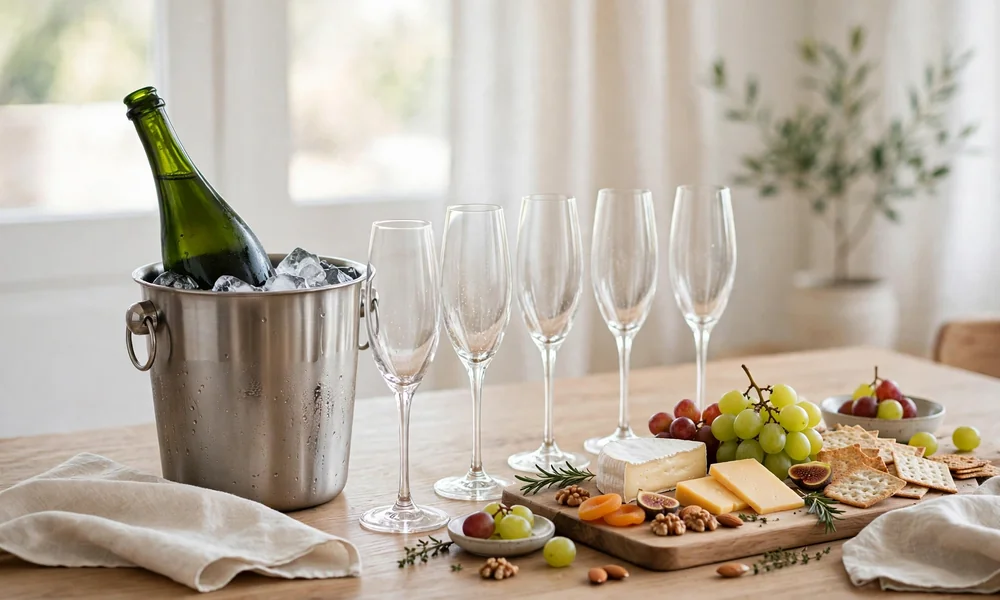
Chill sparkling wine for at least two hours in the fridge, or for thirty minutes in an ice bucket with water and ice. The ideal serving temperature is between 6 and 8 degrees. Too warm, and the wine tastes flabby and the bubbles fade. Too cold, and the flavours close down, though the wine will warm in the glass.
Open the bottle gently, holding the cork and twisting the bottle, not the cork. Pour slowly down the side of the glass to preserve the bubbles. The right glass matters more than many people think, and the best wine glasses for home include flutes and tulip shapes that keep fizz lively while letting aromas gather. Store unopened bottles on their side in a cool, dark place, and finish an opened bottle within a day or two, sealed with a proper sparkling wine stopper.
Food Pairings That Work
Sparkling wine is one of the most food-friendly wines of all. Its acidity and bubbles cut through fat, refresh the palate and lift delicate flavours. It works with fried food, salty snacks, sushi, soft cheese and even spicy dishes that would overwhelm a still white wine.
Try Champagne with oysters, smoked salmon or truffle fries. Pair Prosecco with prosciutto, melon and light salads. Serve Cava with patatas bravas, jamón and fried calamari. For a heartier meal, a richer sparkling wine can stand up to roast poultry and creamy sauces, and the debate over red vs white wine with steak shows how much the right match matters, though a bold sparkling rosé can also work with grilled meat. Keep the pairings simple, and let the wine’s freshness do the work.
When Sparkling Wine Shines Most
Sparkling wine suits far more than New Year’s Eve. It is perfect for birthdays, weddings, promotions and housewarmings, but it also lifts a quiet dinner at home. A single glass before a meal wakes up the appetite, and a bottle shared with friends turns an ordinary gathering into a small celebration.
For larger parties, choose value styles such as Cava, Crémant or Prosecco, and buy by the case where the price is better. For intimate dinners, spend a little more on one excellent bottle rather than two average ones. The comparison in wine vs spirits for a dinner party is a useful reminder that wine, and sparkling wine in particular, keeps the focus on the food and the conversation.
Your Sparkling Wine Checklist
Use this short checklist before you buy, so every bottle you open is a good one.
- Choose the style to match the occasion, from Prosecco for casual drinks to Champagne for milestones.
- Pick Brut for dry sparkling wine, or Extra Dry for a slightly softer taste.
- Check that the bottle has been stored cool and dark, away from bright light.
- Chill the bottle to between 6 and 8 degrees before serving.
- Use a clean flute or tulip glass, and pour slowly to keep the bubbles.
- Pair the wine with food that suits its weight, from oysters to fried snacks.
Frequently Asked Questions
What is the best sparkling wine for beginners?
Prosecco is the best starting point for beginners. It is affordable, widely available, light and fruity, and it does not need food or a special occasion to enjoy.
Is Champagne always better than Prosecco?
Not always. Champagne is usually more complex and age-worthy, but a good Prosecco is fresher and fruitier, and it suits many occasions better, especially in warm weather.
How long does sparkling wine keep?
Most non-vintage sparkling wine is best drunk within two years of purchase. Vintage Champagne and top traditional-method wines can age for five to ten years or more in good conditions.
Can sparkling wine be stored in the fridge?
Yes, for a few weeks, but long-term fridge storage can dry out the cork. For longer storage, keep bottles in a cool, dark place on their side.
What food goes best with sparkling wine?
Fried foods, salty snacks, seafood, sushi and soft cheeses all pair well. The bubbles and acidity cleanse the palate, making sparkling wine unusually versatile at the table.
How do I keep leftover sparkling wine fizzy?
Use a proper sparkling wine stopper, keep the bottle upright in the fridge, and drink it within one or two days.
The Bottom Line
The best sparkling wines of 2026 prove that great fizz is no longer reserved for rare occasions or large budgets. Choose Champagne for depth and ceremony, Prosecco for easy pleasure, Cava and Crémant for smart value, and English sparkling wine or Franciacorta when you want something special. Chill the bottle well, pour it slowly, share it with people you like, and let the bubbles do the rest.