
The best wine glasses for home in 2026 are the ones that make an ordinary dinner feel a little more considered, without turning your kitchen into a glassware museum. A good glass needs a balanced bowl, a comfortable stem, a smooth rim, and a size that suits the wine you actually drink.
Most home collections grow by accident: one set arrives as a gift, another comes from a supermarket offer, and a third is bought in a hurry before guests arrive. The result is a cupboard of mismatched shapes that chip easily or make a lovely red taste flat.
This guide looks at the best wine glasses for home in 2026 by shape, size, material, and everyday practicality. It covers red, white, sparkling, and universal glasses, explains when a specialist shape is worth it, and shows how to care for good glassware simply.
Key takeaways
- Start with a universal glass if you drink both red and white wine, then add a large red glass only if red is your regular choice.
- Choose a bowl of about 450 to 600 millilitres for red wine, and a smaller, narrower bowl for white wine.
- Thin, smooth rims improve flavour and comfort far more than heavy decoration or coloured glass.
- Machine-washable crystal is the most practical choice for everyday home use in 2026.
- Buy six of one shape before you buy two of everything, and store glasses upright or hanging, never stacked.

Why the Shape of a Wine Glass Matters
A wine glass is not just a container. Its shape controls how much air reaches the wine, how aromas gather at the top, and how the wine flows onto your tongue. A wide bowl gives a bold red room to breathe, while a narrow bowl keeps a chilled white cool.
At home, shape also affects comfort. A glass that is too tall for your cupboard, too heavy for a relaxed evening, or too wide for a small table will stay in the cupboard. The best glasses balance flavour with real life.
How Much Wine Should a Glass Hold
A glass rated at 600 millilitres is not meant to be filled to the top. A normal pour is about 125 to 150 millilitres, which leaves plenty of space for swirling and for aromas to collect. A larger bowl gives the wine room, not a larger pour.
The Best Wine Glasses for Home in 2026 at a Glance
The table below gives a quick way to compare the main shapes. Use it to narrow the choice, then think about the wines you open most often, because your habits matter more than any single recommendation.
| Glass type | Best for | Bowl size | Best feature |
|---|---|---|---|
| Large red wine glass | Bold reds such as Cabernet and Syrah | 550 to 650 ml | Wide bowl for air and aroma |
| Medium red wine glass | Pinot Noir and lighter reds | 450 to 550 ml | Gentle taper that gathers aroma |
| White wine glass | Chilled whites such as Sauvignon Blanc | 350 to 450 ml | Narrow bowl that stays cool |
| Sparkling wine glass | Champagne and Prosecco | 200 to 300 ml | Tall shape that keeps bubbles lively |
| Universal wine glass | Red and white at home | 450 to 550 ml | One shape that suits most wines |
| Stemless wine glass | Relaxed evenings and outdoor use | 350 to 450 ml | Stable base and easy storage |
If you only buy one set, buy the universal glass. If you drink red wine most nights, add a large red glass next. White wine drinkers should add a proper white glass first, because the smaller bowl makes a real difference.
Best Red Wine Glasses for Home
Red wine benefits most from a generous bowl. The extra space lets the wine meet air, softens firm tannins, and gives aromas room to rise. A large glass also makes swirling easy without spilling, which matters more at home than in a restaurant.
Large Bordeaux Glasses for Bold Reds
A Bordeaux glass is the workhorse of a red wine collection. Its tall bowl holds a generous pour with room to spare, and its shape suits Cabernet Sauvignon, Merlot, Syrah, and Malbec. Look for a bowl that narrows gently towards the rim, so aromas are held in.
At home, a Bordeaux glass also works well for richer red blends and for full-bodied wines served with roast meat or hearty pasta. If your cellar is mostly bold reds, this is the glass to buy first, and a set of six will cover most dinners.
Medium Burgundy Glasses for Lighter Reds
A Burgundy glass is broader and more rounded, which gives delicate aromas more surface area and more room to develop. It suits Pinot Noir, Gamay, and lighter reds from cooler climates, where fragrance matters more than power. The tapered rim focuses those aromas.
The trade-off is size: Burgundy glasses are wide, so they take up more cupboard space and can feel large on a small table. Buy them if lighter reds are your regular choice, not as a first set for everyone.
Best White Wine Glasses for Home
White wine needs a different shape. A smaller, narrower bowl keeps the wine cool for longer, because less surface is exposed to warm air and to your hand. It also focuses the lighter aromas of white wine, which can be lost in a large red glass.
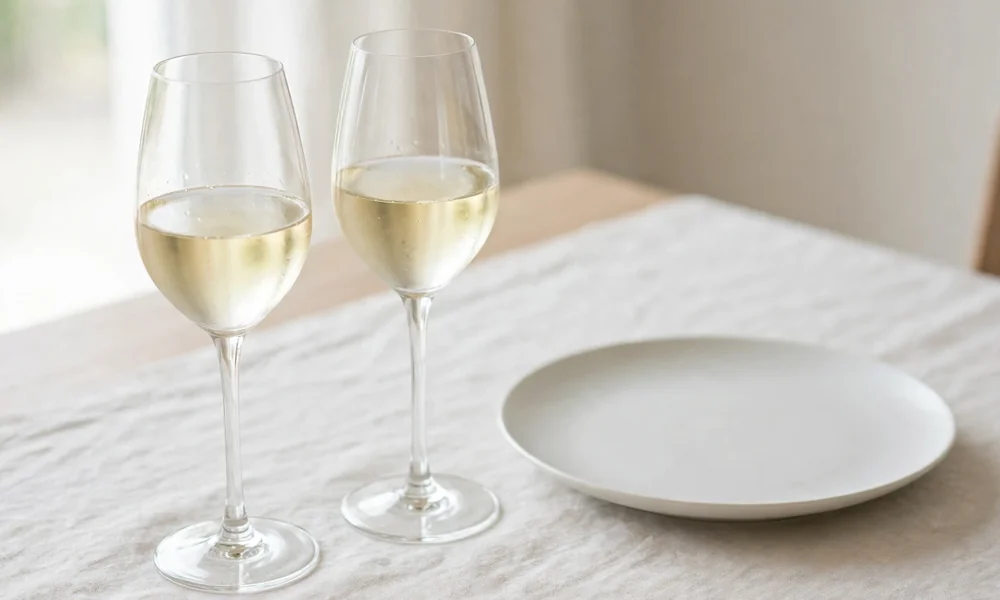
Temperature is the other half of the story. White wine served too warm tastes flat, while white wine served too cold tastes muted. A smaller glass helps because you pour less at a time and refill more often, so each glass stays cool.
Best Sparkling Wine Glasses for Home
Sparkling wine is about bubbles and freshness, and the glass should protect both. A tall, narrow flute keeps bubbles rising in a fine stream, while a tulip shape, slightly wider in the middle, also preserves aroma. The wide coupe looks elegant, but it lets bubbles escape quickly.
Best Universal Wine Glasses for Home
A universal wine glass is designed to suit red, white, and rosé reasonably well, without being perfect for any one of them. It is usually a medium bowl of about 450 to 550 millilitres, with a gentle taper and a comfortable stem. For most homes, it is the smartest first purchase.
Stemless Wine Glasses: A Practical Choice
Stemless glasses are stable, easy to store, and less likely to be knocked over, which makes them popular for relaxed evenings, outdoor dining, and homes with children or pets. They also fit easily in a dishwasher and take up less height in a cupboard.
How to Choose the Best Wine Glasses for Your Home
Start with your habits, not with a shopping list. Note the wines you open most often over a month, and let that guide the first set you buy. A household that drinks mostly red needs a large red glass first; a household that drinks mostly white needs a white glass first.
Next, think about your kitchen. Measure the height of your cupboard shelves and the space in your dishwasher before you buy tall or wide glasses. A beautiful set that does not fit is a set you will resent, and a set that must be washed by hand will be used less often.
What to Avoid When Buying Wine Glasses
Avoid glasses with thick, rolled rims, because they feel clumsy and dull the flavour. Avoid coloured glass, which hides the colour of the wine. Avoid heavy decoration inside the bowl, and avoid glasses that wobble or have a rough seam on the rim. The worst cocktail glasses for home bars show how easily a stylish shape can fail in everyday use, and wine glasses are no different.
How to Care for Wine Glasses at Home
Good care is simple, and it makes a real difference to how long glasses last. Rinse glasses soon after use, especially after red wine, so stains do not set. Wash them in warm water with a small amount of mild washing-up liquid, and dry them with a clean, lint-free cloth.
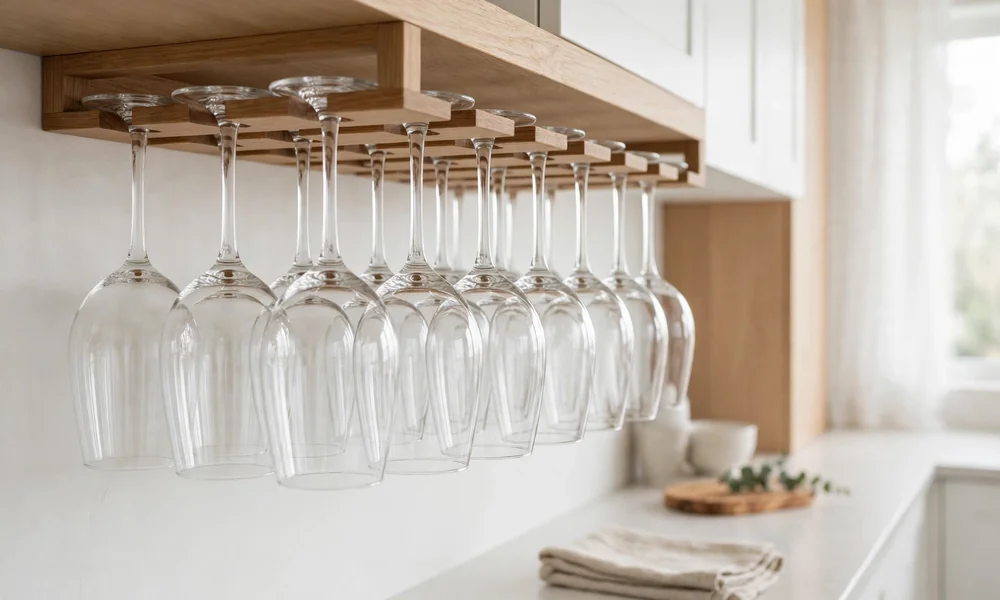
Hold a glass by the bowl when you wash it, not by the stem alone, because the stem is the weakest point. Never twist the bowl and the base in opposite directions, and never stack glasses inside each other. Store glasses upright, or hang them from a rack.
Wine Glass Buying Checklist
Use this checklist before you buy, and you will avoid the most common mistakes. It takes a minute to run through, and it saves the cost of a set that does not suit your home.
- Choose the shape that matches the wine you drink most often, not the wine you wish you drank.
- Check that the rim is thin, smooth, and free of rough seams all the way around.
- Hold the glass and check that it feels balanced, steady, and comfortable in your hand.
- Measure your cupboard shelves and dishwasher space before you buy tall or wide glasses.
- Confirm that the set is dishwasher safe if you want everyday glasses, not special-occasion glasses.
- Buy six of one shape first, then add a second shape only if you truly need it.
Frequently Asked Questions About Wine Glasses
What is the best all-round wine glass for home?
A universal wine glass is the best all-round choice for most homes. It suits red, white, and rosé reasonably well, it is easy to store and wash, and a set of six covers most dinners. Add a large red glass later, once you know which wine you drink most.
How big should a red wine glass be?
A red wine glass should hold about 450 to 650 millilitres, with a normal pour of 125 to 150 millilitres. The extra space is for air and aroma, not for a larger pour. A Bordeaux glass suits bold reds, while a Burgundy glass suits lighter reds.
Are stemless wine glasses good for home use?
Stemless glasses are good for relaxed, everyday use, especially for red wine and outdoor dining. They are stable and easy to store, but they warm white and sparkling wine more quickly, and they make swirling harder. Keep a stemmed set for formal dinners.
Is crystal better than glass for wine glasses?
Lead-free crystal is usually better, because it can be made thinner and lighter, with a finer rim. It feels more elegant and shows the wine well. A well-made ordinary glass set is still a good choice on a tight budget, and it is better than a poor crystal set.
Can wine glasses go in the dishwasher?
Many modern wine glasses are dishwasher safe, and the label should say so clearly. Place them securely, leave space between them, use a gentle cycle, and avoid overloading the rack. Hand washing is still gentler, and it is worth doing for your best glasses.
How should I store wine glasses at home?
Store wine glasses upright on a clean shelf, or hang them upside down from a rack, with a small gap between each glass. Do not stack them, do not place anything on top of them, and keep them away from the edge of the shelf.
The Bottom Line
The best wine glasses for home in 2026 are not the most expensive or the most decorative. They are the glasses that suit the wine you drink, fit your kitchen, and feel good in your hand every time you use them. Start with a universal set, add a red or white shape that matches your habits, and choose thin-rimmed, dishwasher-safe crystal that you will actually use. For dinner, the right glass also helps the wine sit well with food, as red wine vs white wine for seafood shows. Buy six, care for them simply, and let the glass do its quiet work. A good glass will not make a poor wine great, but it will let a good wine taste as it should. When the glass, the wine, and the meal agree, as in wine vs beer for dinner pairing, an ordinary evening at home becomes a small pleasure worth repeating.