The best travel blankets for airplanes turn a cold, restless flight into something close to comfortable. Cabin temperatures on long flights usually sit between 18 and 22 degrees Celsius, and that steady chill, combined with dry recycled air and an upright seat, is enough to keep most travellers awake for hours. A blanket made for travel solves the problem in a way the thin airline blanket never does: it is warmer, softer, cleaner, and it packs down small enough to live in your carry-on.
Airline blankets are a compromise: thin by design, shared between hundreds of passengers, and handed out only on long-haul routes. On short flights and budget carriers there is often no blanket at all. Bringing your own means you are never left shivering through a red-eye.
We compared the most popular travel blankets of 2026 on warmth, weight, packed size, fabric feel, washability, and how well they work in a cramped economy seat. The nine blankets below are the ones that earned a place in a carry-on.
Key takeaways
- The best travel blanket for most flyers is a mid-weight fleece or cashmere blend that covers shoulders to knees.
- Look for a packed size smaller than a paperback and a weight under 400 grams.
- Machine-washable fabric matters more than luxury fibres.
- A blanket with a carry pouch or strap is far easier to manage at security, boarding, and baggage claim.
- Pair your blanket with a good pillow and a sleep mask and you have a complete sleep kit for overnight flights.
Why the Airline Blanket Is Not Enough
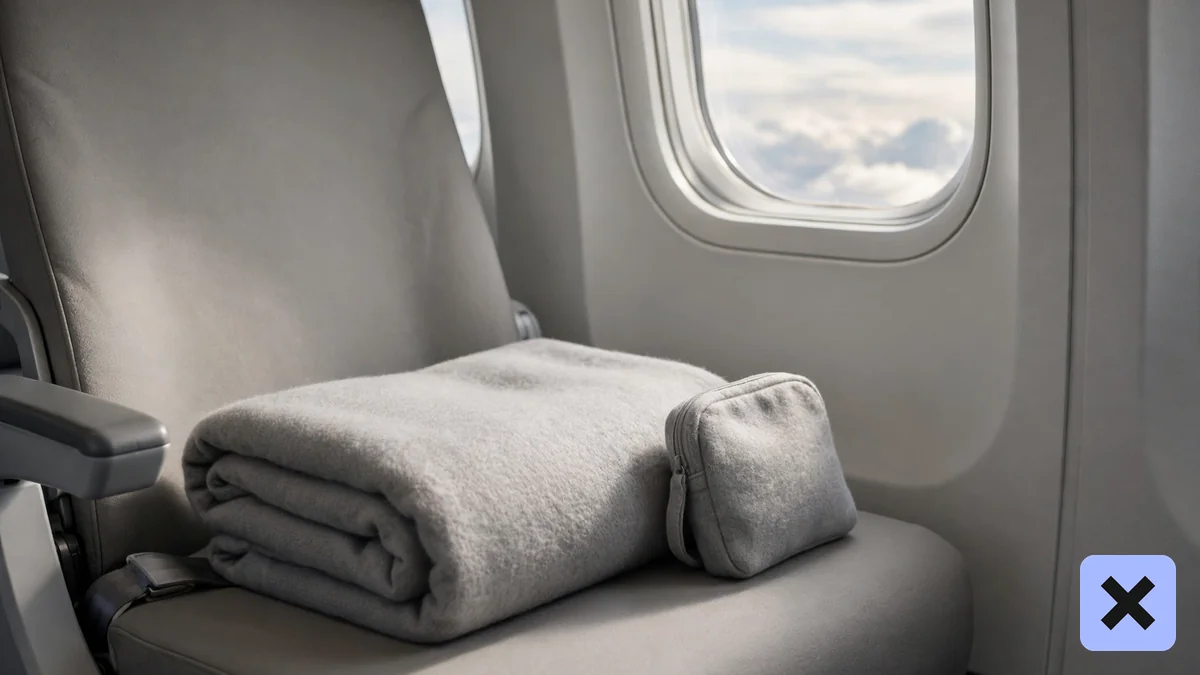
Most airline blankets are made from thin polyester fleece. They are light and cheap to launder in bulk, which is exactly why airlines like them, but they trap very little heat. On an overnight flight, that thin layer is rarely enough, especially near a door or an air vent.
Hygiene is the other issue. Airline blankets are reused across flights and handled by many people between washes. A personal travel blanket removes that uncertainty entirely. It touches only you, it goes straight into your own washing machine when you get home, and it smells like your laundry, not like a storage cupboard.
Budget airlines rarely provide blankets at all, and even full-service carriers have cut back on short routes. If your flight is under four hours, assume no blanket will be offered. A travel blanket that lives in your carry-on means you are covered on every flight.
The 9 Best Travel Blankets for Airplanes 2026
These nine blankets cover every kind of flyer, from the minimalist who counts every gram to the comfort-first traveller who wants the softest thing in the cabin. Each one is judged on warmth in a cool cabin, comfort against skin, packed size, weight, durability, and ease of washing.
1. CloudRest Cashmere Blend Travel Blanket
The CloudRest is the best all-rounder on this list. The cashmere blend feels soft against bare arms and the neck, it breathes well enough that you do not overheat when the cabin warms up, and it folds into a pouch roughly the size of a paperback. At around 320 grams, it adds almost nothing to a carry-on.
2. AeroSoft Microfleece Travel Blanket
The AeroSoft is the warmest blanket here for its weight. The dense microfleece traps heat quickly, which makes it the right choice for overnight flights and for anyone who always feels cold on planes. It packs into its own attached pouch and survives dozens of machine washes without pilling.
3. WanderWool Merino Travel Blanket
Merino wool regulates temperature better than any synthetic on this list, staying warm when the cabin is cold and comfortable when it warms up. It resists odours naturally, so it stays fresh across a multi-leg trip. It costs more than fleece, but it is the blanket that lasts for years.
4. SkyNap Compact Travel Blanket with Pillow
The SkyNap is two products in one: a soft blanket that unrolls from a compact cushion, which doubles as a lumbar pillow when the blanket is in use. The blanket is a mid-weight fleece, and the package clips to a bag handle. If you already own one of the best travel pillows for long flights, you may not need the pillow function, but for everyone else it is a clever space saver.
5. FeatherLite Down-Alternative Travel Blanket
The FeatherLite feels like a miniature duvet. The down-alternative filling gives it a lofty, cloud-like warmth without the bulk of a real duvet, and it compresses into a stuff sack smaller than a water bottle. It is the warmest option here, ideal for winter flights and long-haul overnights.
6. TerraTrek Recycled Travel Blanket
The TerraTrek is made from recycled polyester, and it proves that sustainable does not mean second-rate. It is light, quick-drying, and surprisingly warm for its thin profile. It packs flat, so it slips into a laptop sleeve or the front pocket of a backpack.
7. CozyCabin Sherpa-Lined Travel Blanket
The CozyCabin is the comfort-first choice. One side is smooth microfleece, the other is plush sherpa, and together they create the warmest, softest blanket on this list. It is heavier and bulkier than the others, so it suits travellers with a roomy carry-on.
8. JetSet Bamboo Travel Blanket
Bamboo fabric is naturally soft, breathable, and gentle on sensitive skin, and the JetSet makes the most of it. This is the best travel blanket for warm cabins and summer flights, where a heavy fleece would be too much. It stays cool to the touch and does not trap heat.
9. NomadNest Hooded Travel Blanket
The NomadNest adds a hood, and on a bright, noisy flight that small addition makes a real difference. Pull the hood up and you block light and draughts at the same time. The blanket is a warm mid-weight fleece that folds into a compact roll with a strap.
Travel Blanket Comparison Table
Weight and packed size matter most for hand luggage only; warmth matters most on overnight and winter flights.
| Blanket | Material | Weight | Packed Size | Best For |
|---|---|---|---|---|
| CloudRest Cashmere Blend | Cashmere blend | 320 g | Paperback | All-round use |
| AeroSoft Microfleece | Microfleece | 380 g | Small pouch | Cold cabins |
| WanderWool Merino | Merino wool | 350 g | Small roll | Temperature control |
| SkyNap Blanket with Pillow | Fleece | 450 g | Cushion | Two-in-one value |
| FeatherLite Down-Alternative | Down-alternative | 400 g | Water bottle | Maximum warmth |
| TerraTrek Recycled | Recycled polyester | 280 g | Flat pack | Light packing |
| CozyCabin Sherpa-Lined | Fleece and sherpa | 520 g | Medium roll | Comfort first |
| JetSet Bamboo | Bamboo blend | 300 g | Small roll | Warm cabins |
| NomadNest Hooded | Fleece | 420 g | Compact roll | Overnight flights |
How to Choose the Right Travel Blanket
A blanket that is perfect at home can be a poor travel companion if it is too big, too heavy, or too hard to wash. Focus on the four factors below.
Size and Coverage
A good travel blanket should cover you from shoulders to knees when seated, which usually means around 130 by 100 centimetres. Smaller leaves you cold; larger is hard to manage in a narrow seat.
Material and Warmth
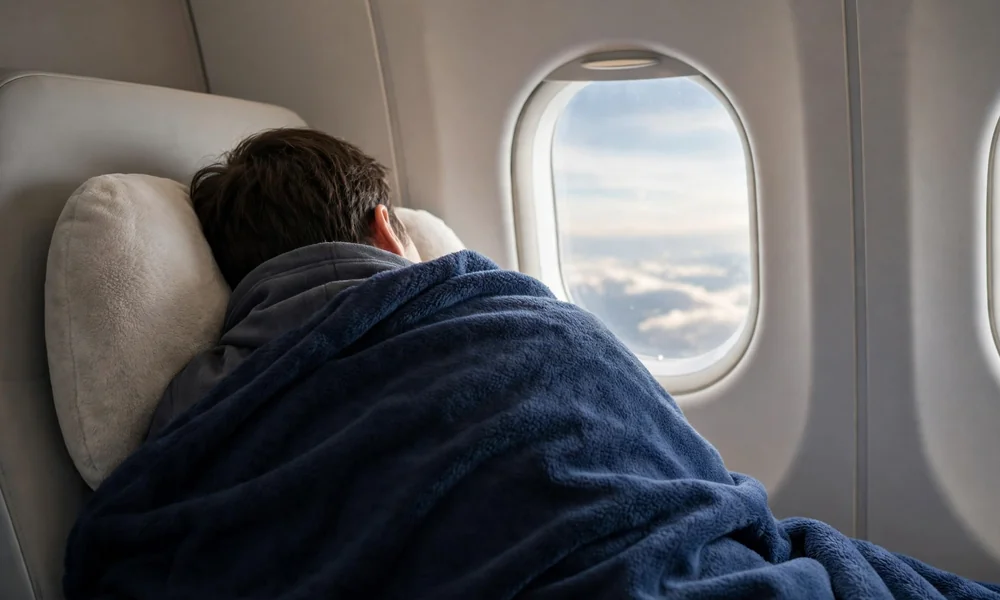
Material decides how warm a blanket feels and how it behaves against your skin. Fleece and microfleece are warm, cheap, and easy to wash, which is why they dominate this list. Wool and cashmere blends breathe better and regulate temperature, Bamboo is the coolest option and kindest to sensitive skin, while down-alternative gives the most warmth for its weight but needs more care in the wash.
Packability and Weight
A travel blanket earns its place in your bag by packing small. The best options compress to the size of a paperback or a water bottle and weigh under 400 grams. A built-in pouch or strap is a genuine advantage: it keeps the blanket contained at security and stops it unravelling in your bag.
Washability and Durability
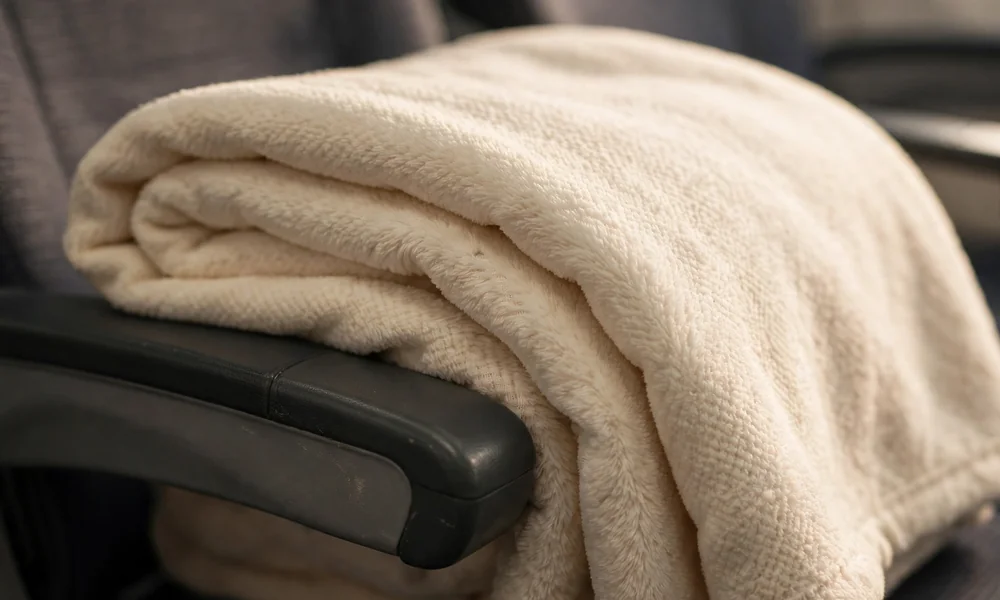
A travel blanket should go in the washing machine without a second thought. Machine-washable, quick-drying fabrics will save you time and money over the life of the blanket, so avoid anything that needs dry cleaning or special care.
How to Sleep Better on a Plane
A blanket is only one part of sleeping well at altitude. The travellers who actually rest on overnight flights treat sleep as a small system: warmth, support, darkness, and quiet, each handled by one piece of kit. Get all four right and even an economy seat becomes workable.
Start with warmth, which your blanket handles, then add neck support so your head does not tip forward every time you drift off. Darkness comes next: a comfortable sleep mask blocks cabin lights and the glow of nearby screens far better than an eye shade handed out by the crew. The best sleep masks for travel are contoured, so they sit lightly on your eyes without pressing on them. Finally, earplugs or noise-cancelling headphones cut the drone of the engines.
Packing Your Blanket Without Wasting Space
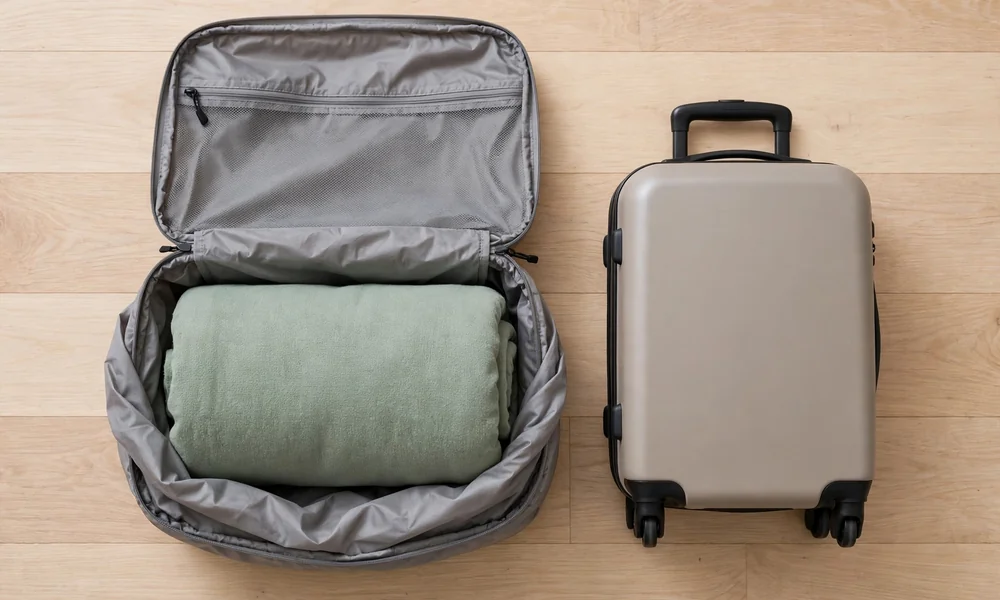
The most common reason people leave a travel blanket at home is that it seems too bulky. Treat it as part of your packing system rather than an extra item. Roll it tightly instead of folding it, use a compression sack or a packing cube to squeeze out the air, and slip it into the gaps in your bag rather than giving it its own compartment.
Many travellers keep their blanket in the outer pocket of their carry-on or clipped to the handle. If you use travel packing cubes to organise your bag, a rolled blanket fits neatly alongside them and doubles as padding for fragile items.
Travel Blanket Checklist
- Choose a blanket that covers shoulders to knees, around 130 by 100 centimetres.
- Keep the weight under 400 grams if you travel with hand luggage only.
- Pick machine-washable fabric that dries quickly between trips.
- Make sure it packs into its own pouch, strap, or stuff sack.
- Test the blanket at home first, so you know how warm it feels before you fly.
- Wash it after every few trips and store it in its pouch, ready for the next flight.
Frequently Asked Questions
Can I bring a travel blanket on a plane?
Yes. A travel blanket is allowed in both hand luggage and as a personal item on almost every airline. It counts as clothing rather than a separate bag, and security staff will not ask you to remove it. Keep it accessible once you are seated.
Are travel blankets better than airline blankets?
For most travellers, yes. A personal travel blanket is thicker, warmer, and cleaner than the thin blankets handed out on board, and you can use it on any flight, including short routes where no blanket is offered. The only advantage of an airline blanket is that you do not carry it.
What is the best material for a travel blanket?
It depends on how you sleep. Fleece and microfleece are the warmest and easiest to wash. Merino wool and cashmere blends regulate temperature best and feel the most luxurious. Bamboo is the coolest and kindest to sensitive skin. A mid-weight fleece or cashmere blend is the safest single choice.
How do I wash a travel blanket?
Most travel blankets are machine washable on a gentle cycle with mild detergent. Wash yours after every two or three trips. Air dry where possible, because tumble drying can damage fleece and down-alternative filling over time.
What size travel blanket should I buy for a plane?
A blanket around 130 by 100 centimetres covers most adults from shoulders to knees while seated. Taller travellers should look for longer options.
Do I need a travel blanket for short flights?
It depends on the airline and the season. Budget carriers rarely provide blankets, and cabins can feel cold even on two-hour flights, especially in winter. A compact blanket that lives in your carry-on costs you almost no space.
The Bottom Line
The best travel blanket for airplanes is the one you will actually carry, and that means warm, soft, light, and easy to wash. For most flyers, the CloudRest cashmere blend is the pick that does everything well, while the AeroSoft microfleece suits anyone who always feels cold and the WanderWool merino suits travellers who want one blanket for every climate. Pair it with a good pillow and a sleep mask, and your next flight will feel noticeably more comfortable.