The worst cocktail glasses for home bars do more damage than most people realise. A drink that took five minutes to measure, shake and strain can fall flat in seconds when it lands in the wrong vessel. The glass decides how cold the drink stays, how much aroma reaches your nose and how the first sip feels.
Home bars invite this mistake because glassware is sold as decoration first and as a tool second. Shelves are full of oversized bowls, novelty shapes and chunky bases that photograph beautifully and perform terribly.
This guide names the worst offenders, explains why each one fails, and shows what to buy instead.
Key takeaways
- The worst cocktail glasses for home bars are oversized, unbalanced or badly shaped vessels that warm drinks, mute aroma and spill easily.
- A glass that is too big forces oversized pours, dilutes flavour and makes a single drink feel heavy before it is finished.
- Thick rims, chunky bases and novelty shapes look fun on a shelf but make drinking awkward and cleaning miserable.
- Cheap plastic and thin novelty glass break, scratch and cloud quickly, and never keep a drink cold the way real glass does.
- You only need four good shapes to cover almost every cocktail: a coupe, a rocks glass, a highball and a small stemmed glass.
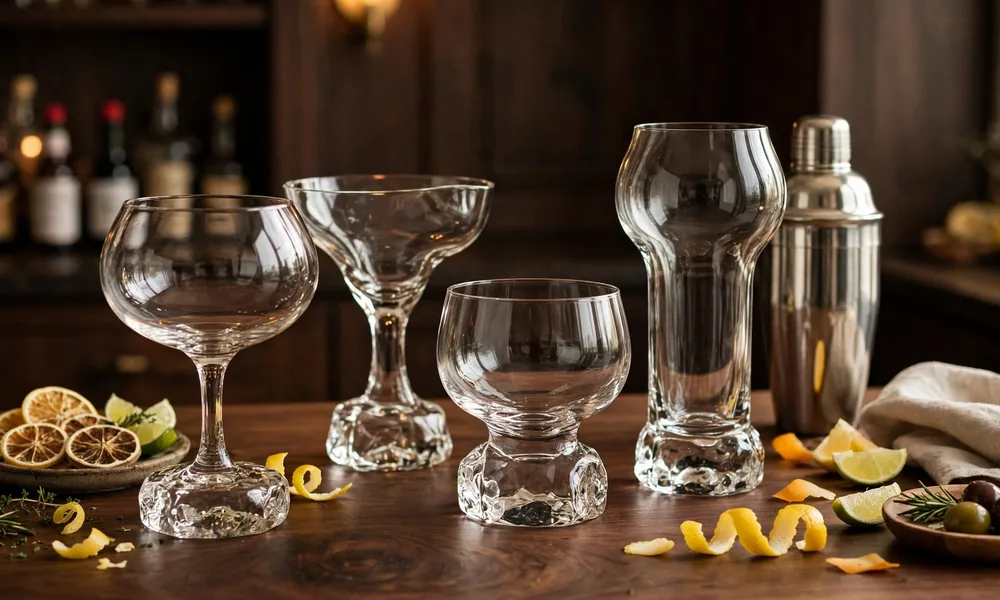
Why the Wrong Glass Ruins a Good Drink
A cocktail is a small, cold, balanced thing. Most recipes produce between 90 and 150 millilitres of liquid, served over ice or straight up, and meant to be finished while it is still properly chilled. The glass is the only thing standing between that drink and the warm air of the room, the heat of your hand and the surface of the table.
Aroma matters more than most home bartenders expect. Much of what we call flavour arrives through the nose, and the shape of the bowl decides whether those aromas gather or scatter. A wide, flat bowl lets the scent escape before you lift the glass, while a narrow, tall vessel traps it where you cannot reach it.
The Worst Cocktail Glasses for Home Bars
Not every bad glass fails in the same way. Some are too big, some are too clever, and some were never designed for drinks at all.
Oversized Balloon Glasses
The giant balloon glass is the most common mistake in a home bar. Its bowl can hold 600 millilitres or more, which looks generous and feels luxurious when you pick it up empty. In practice it forces you to pour far too much, or to serve a normal drink rattling around in a cavernous bowl where it looks lost. A large surface area warms the drink faster, a huge rim lets the aroma escape, and a long stem on a narrow base makes it easy to knock over.
Novelty and Gimmick Glasses
Skull-shaped glasses, boot-shaped mugs, glasses with flashing lights in the base and vessels shaped like laboratory flasks all belong in the same category: fun once, annoying forever. They are hard to hold, harder to clean and almost impossible to stack or store, and many have uneven rims that make sipping uncomfortable. Worse, novelty glasses dictate the drink instead of serving it: a boot holds far too much and a skull hides how much you have poured. The same instinct that makes people chase cocktail trends that already miss the mark in bars is what fills cupboards with glasses nobody reaches for twice.
Thick, Heavy Pub-Style Tumblers
A heavy tumbler can feel reassuring in the hand, but there is a point where weight stops being quality and starts being a burden. The worst offenders have bases so thick that a 300-millilitre glass holds barely 200 millilitres of drink, and walls so chunky that the rim feels like a ledge against your lip. They are tiring to hold through a long evening and they make a delicate drink feel like a chore.
Stemless Wine Glasses Used for Cocktails
Stemless glasses look modern and casual, and they are genuinely useful for wine at a picnic. In a home bar they cause two problems at once. First, your hand wraps around the bowl and warms the drink within minutes, which is fatal for a cocktail served without ice. Second, the wide, open rim lets the aroma scatter and makes spills far more likely when the glass is full.
Cheap Plastic and Acrylic Glasses
Plastic has a place at a pool party or a garden gathering where broken glass would be dangerous, and for those occasions it is the sensible choice. As everyday home bar glassware, it is a poor substitute. Plastic scratches within weeks, turns cloudy with washing, and picks up odours from the dishwasher that no amount of rinsing removes.
Mismatched Sets and Orphan Glasses
A cupboard full of single glasses from different sets, charity shops and souvenir trips is not a collection; it is a storage problem. Mismatched glasses make serving a round of drinks feel untidy, and they make it impossible to learn what you actually like, because every drink arrives in a different shape. Some are too tall for the shelf, some are too wide for the dishwasher, and none of them stack.
How Bad Glasses Change Taste, Temperature and Aroma
Temperature is the first casualty. A drink served at the right chill tastes brighter, cleaner and more balanced, because cold suppresses harsh alcohol notes and keeps sweet and sour elements in proportion. A glass with a huge bowl, a warm hand wrapped around it or a thick base that holds heat will push the drink out of that window within minutes.
Dilution follows temperature. Ice melts faster in a warm, wide glass, and each extra millilitre of water softens the drink further. A cocktail that started crisp and punchy becomes watery and vague, and no amount of stirring will bring it back. Aroma goes the same way: a flat, wide bowl lets volatile compounds escape, a tall narrow tube traps them below the rim, and a thick rim puts a barrier between the drink and your lips.
The Buying Traps That Fill Home Bars With Bad Glassware
Most bad glassware is bought, not inherited. It arrives through traps that feel like good deals at the time.
The Giant Matching Set
A boxed set of twelve glasses in six different shapes looks like instant expertise. In practice you will use two of the shapes and ignore the rest, and the set will have cost more than buying the two good shapes separately. Buy shapes one at a time and test them with real drinks.
The Souvenir and Gift Glass
Glasses arrive as gifts, holiday souvenirs and freebies with bottles, and politeness keeps them in the cupboard long after their novelty fades. A glass etched with a resort logo or a brand slogan is advertising, not barware, and it rarely matches anything else you own.
The Bargain Bin Find
Very cheap glassware is cheap for a reason. The rims are often uneven, the bases wobble, and the glass itself may be thin enough to crack with a hot wash or a firm stir. A wobbling glass is not a minor flaw: it spills, it chips, and it makes every drink feel precarious.
What to Buy Instead
A good home bar needs far less glassware than the shops suggest. Four shapes cover almost everything, and buying them well beats owning twenty mediocre glasses.
| Glass | Best for | What to look for | Avoid |
|---|---|---|---|
| Coupe | Martinis, daiquiris, drinks served up | 150–180 ml bowl, thin rim, stable foot | Oversized bowls over 220 ml |
| Rocks glass | Old fashioneds, negronis, spirits on ice | 250–300 ml, modest base, straight sides | Chunky bases that steal capacity |
| Highball | Gin and tonic, long mixed drinks | 300–350 ml, tall and slim, thin walls | Wide tumblers sold as highballs |
| Small stemmed glass | Spritzes, wine-based cocktails | 250–300 ml, narrow bowl, balanced stem | Balloon bowls over 500 ml |
Start with the coupe and the rocks glass, since those two cover the largest share of classic cocktails. Add the highball next, then the small stemmed glass. Buy two of each to begin with, learn which shapes you reach for, and only then expand. The same attention to detail that separates a good dinner from a disappointing one applies here, and it is easy to see the parallel in the wine pairing mistakes that ruin a dinner — small choices, made early, decide how the whole evening tastes.
Home Bar Glassware Checklist
Use this checklist before you buy, keep or throw away any cocktail glass.
- Hold it empty: it should feel balanced, not top-heavy, and comfortable through a whole drink.
- Check the rim: run a finger around it — it should be smooth, even and thin enough to sip from.
- Check the base: set it on a flat surface — it should sit flat with no wobble or rocking.
- Check the capacity: a coupe should hold 150–180 ml, a rocks glass 250–300 ml, a highball 300–350 ml.
- Check the bowl: it should suit the drink — narrow enough to hold aroma, wide enough to sip comfortably.
- Check the cupboard: if you already own two of that shape, do not buy a third unless it replaces a worse one.
Frequently Asked Questions
How many cocktail glasses does a home bar really need?
Four shapes, two of each, covers almost every classic cocktail: a coupe, a rocks glass, a highball and a small stemmed glass. That is eight glasses in total, and a better home bar than a cupboard holding thirty mismatched vessels.
Are expensive crystal glasses worth the money?
Good crystal is thinner, lighter and more pleasant to drink from than ordinary glass, and the difference is real. But a mid-priced, well-made glass beats an expensive badly shaped one every time.
Can I use wine glasses for cocktails?
A small wine glass works well for spritzes and wine-based cocktails, and a coupe is itself a close cousin of the wine glass. Large balloon wine glasses do not work for cocktails: they are too big, they warm the drink and they lose the aroma.
Should cocktail glasses go in the dishwasher?
Most modern glassware survives the dishwasher, but thin-rimmed and crystal glasses last longer hand-washed. The bigger risk is chipping from other items in the rack, so load glasses where they cannot knock against plates or cutlery.
What is the single worst glass for a home bar?
The oversized balloon glass, because it fails on every measure at once: it warms the drink, loses the aroma, forces over-pouring and tips over easily. It is also the glass most often bought by people starting a home bar, which is why it causes more disappointment than any novelty shape.
Is it worth keeping novelty glasses for parties?
One or two novelty glasses can be fun at a party, and there is no rule against enjoying them. The mistake is letting them take over the main rotation or crowd out good glassware. The same principle applies to the rest of the kitchen: just as there are kitchen tools beginners should skip, there are glasses that earn their shelf space and glasses that only take it up.
The Bottom Line
The worst cocktail glasses for home bars are the ones that work against the drink: too big, too heavy, too clever or too cheap to do the job properly. Replace them with four good shapes, chosen for balance, rim, capacity and comfort, and every cocktail you make will taste colder, brighter and more deliberate.