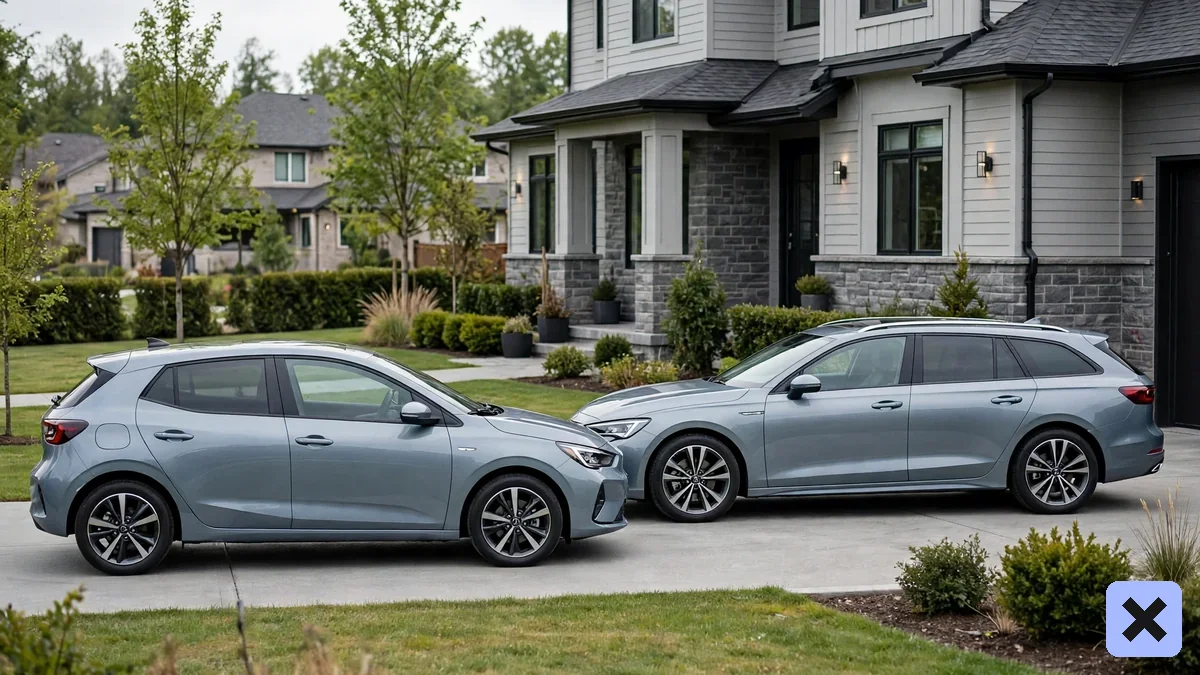
Choosing a family car often comes down to two familiar shapes in the showroom: the hatchback and the estate. Both are practical, both are comfortable, and both can carry a family without the bulk of a large SUV. The hatchback vs estate question is really about how your family lives day to day. A hatchback feels nimble on the school run, while an estate swallows a pushchair, a dog, and a week of holiday luggage without a second thought.
Many families start with a hatchback because it is the car they already know. It is easy to drive, cheap to run, and big enough for a surprising amount of family life. Then children grow, weekends involve bikes and camping gear, and the boot suddenly feels too small. That is when the estate starts to look like the sensible answer.
This guide compares the two body styles on space, comfort, driving, running costs, and safety. A family of three in a city has very different needs from a family of five in the countryside, so match the car to the life you actually lead.
Key takeaways
- Estates offer far more boot space than hatchbacks, usually 500 to 650 litres against 300 to 400 litres, which matters most for pushchairs, holidays, and large dogs.
- Hatchbacks are shorter, lighter, and easier to park, making them the better choice for city driving and tight streets.
- Rear-seat space is often similar in both, but estates usually give taller passengers more headroom and a wider rear bench.
- Running costs are close, although estates can cost slightly more to buy, insure, and fuel because of their extra size and weight.
- The best choice depends on your weekly routine: choose the hatchback for easy city life and the estate for regular long trips and heavy loads.
What Makes a Hatchback a Hatchback
A hatchback has a rear door that opens upwards to reveal the boot, with the rear window built into that door. The body is compact and the rear overhang is short. Most family hatchbacks are around four to four and a half metres long, which makes them easy to place on the road and simple to park.
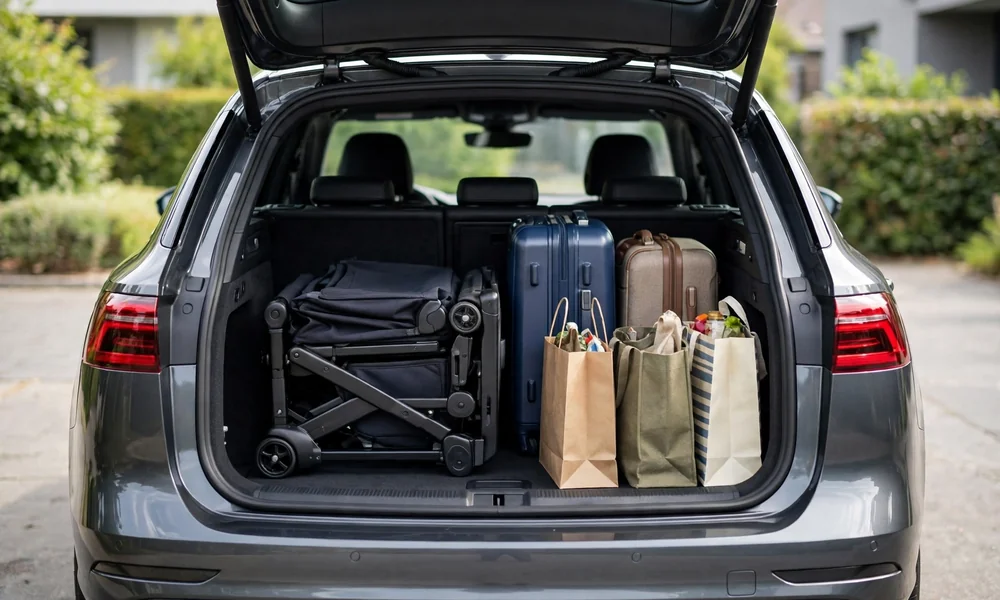
Inside, a hatchback makes clever use of a small footprint. The rear seats fold flat, and the tall roofline gives decent headroom. A typical family hatchback offers 300 to 400 litres of boot space with the seats up, enough for a weekly shop, a folded pushchair, or two medium suitcases.
What Makes an Estate an Estate
An estate is a longer version of a hatchback or saloon, with the roofline extended to the rear of the car. That extra length creates a much larger boot, usually 500 to 650 litres, with a long, flat load area, a low loading lip, and a wide tailgate opening.
The estate also tends to offer more rear-seat space, because the longer body often comes with a longer wheelbase. That means more legroom for growing teenagers and more shoulder room for three across the back, plus generous headroom and bright rear windows.
Space and Boot Capacity Compared
Boot space is the clearest difference, and the reason most families choose an estate. A hatchback boot is deep but short, so it fills up quickly with bulky items like pushchairs. An estate boot is long and flat, so the same items fit easily. On a family holiday, the hatchback needs careful packing and perhaps a roof box, while the estate takes everything in its stride.
The shape of the load area matters as much as its size. Estates have a low, flat loading lip, so heavy items can be slid in without lifting them high. The tailgate opening is wide and tall, which makes it easy to load a dog crate or a bicycle. Both offer folding rear seats, but the estate gains more, with 1,500 to 1,700 litres against 1,100 to 1,300 litres.
| Feature | Hatchback | Estate |
|---|---|---|
| Boot space, seats up | 300 to 400 litres | 500 to 650 litres |
| Boot space, seats down | 1,100 to 1,300 litres | 1,500 to 1,700 litres |
| Typical length | 4.0 to 4.4 metres | 4.6 to 4.9 metres |
| Rear-seat room | Good for two children | Good for three children |
| Parking ease | Excellent in towns | Good, needs more space |
| Running costs | Lower price and fuel use | Slightly higher price and fuel use |
Family Life in the Back Seats
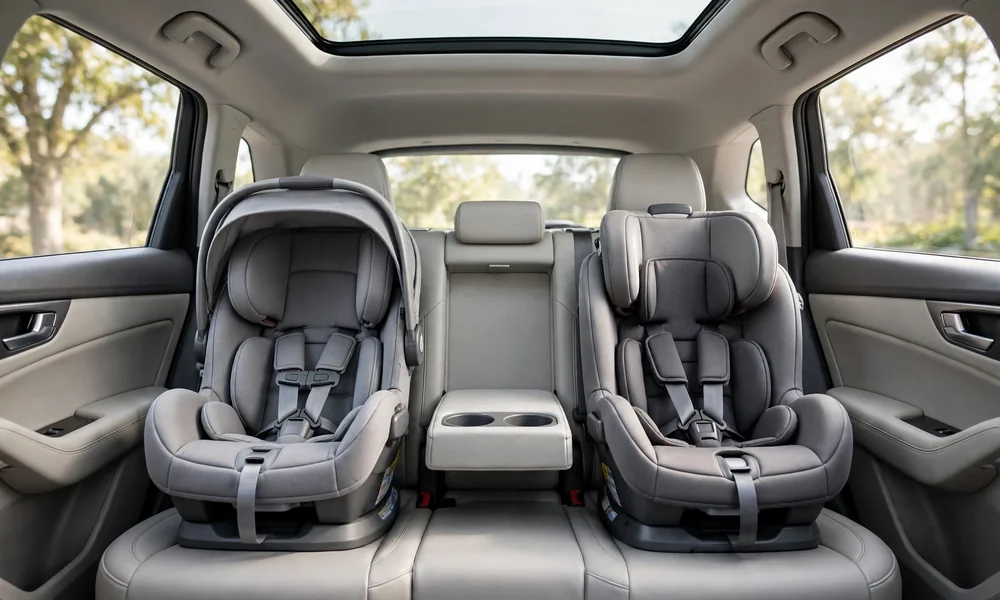
Rear-seat comfort matters more than most buyers expect, because children grow quickly. In a hatchback, two child seats usually fit comfortably, with room for a small adult or an older child in the middle, and the doors open wide enough for fitting a baby seat.
An estate usually offers more of everything in the back: more legroom, more headroom, and a wider bench. That extra space matters when child seats are bulky, leaving room for an adult between two seats. The wider doors also make it easier to lift a child in and out several times a day.
Driving, Parking and Everyday Ease
Daily driving is where the hatchback shines. Its shorter length and lighter weight make it feel agile in traffic, and it is easy to judge the corners of the car. A hatchback slips into gaps that an estate cannot use, and it turns around in streets where an estate needs a three-point turn.
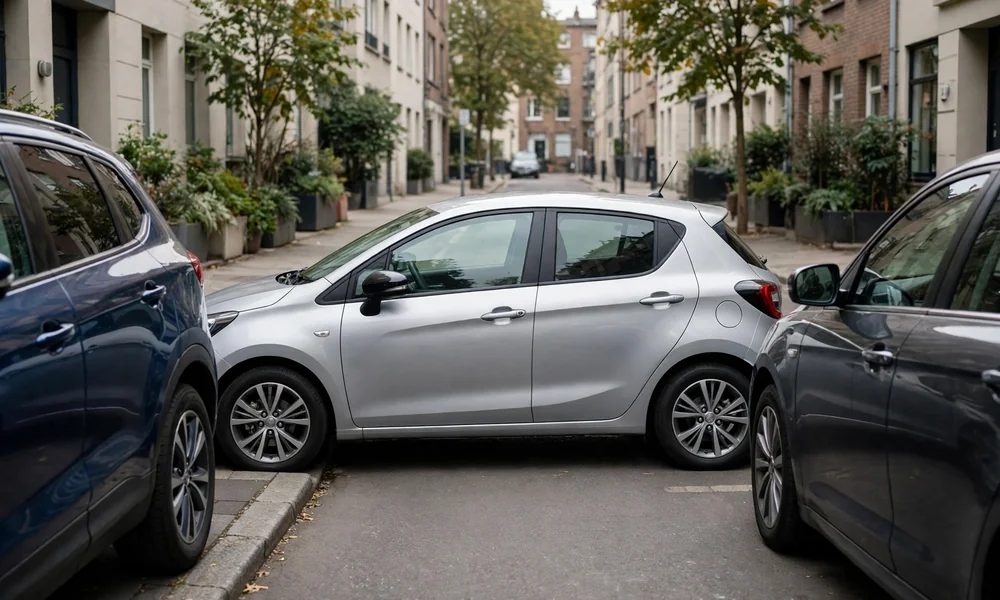
Fuel economy is close, because most hatchbacks and estates share the same engines. The estate is heavier, so it typically uses a little more fuel, by a few pounds a month for average drivers. A sedan versus hatchback comparison shows how much body shape affects city driving: a shorter, lighter car is easier and cheaper to run around town.
Visibility is good in both body styles, although the estate has an advantage at the rear. The large rear window and long roofline give a clear view backwards, while the hatchback rear window can feel small and high. Both cars benefit from parking sensors and a reversing camera, which are worth choosing as options if they are not fitted as standard. Good visibility makes every journey safer and less stressful, especially with children in the car, and it helps when you are reversing out of a driveway or into a busy car park. Estates often come with roof rails as standard too, which makes fitting a roof box or bike rack simple, and they usually have a higher towing limit than the equivalent hatchback if you ever need to pull a small trailer.
Running Costs and Fuel Economy
The estate usually costs more than the equivalent hatchback, often by one to three thousand pounds for the same trim and engine. That premium buys the extra space, and for many families it is a fair price. Estates can also hold their value well, because they are popular with families who need space but do not want an SUV.
Fuel and maintenance costs are also close. The estate uses a little more fuel because of its extra weight, and its tyres can cost slightly more. Servicing costs are usually identical, because the two cars share engines, brakes, and most parts. Over five years, the difference is real but modest, and it is usually outweighed by the practical benefits if you need the space. Families weighing electrified options can learn more from our guide to electric and hybrid SUVs for families.
Safety and Practical Details
Safety ratings are usually identical for hatchback and estate versions of the same model, because they share the same structure, airbags, and driver assistance systems. Both score well in crash tests and offer automatic emergency braking, lane assistance, and blind-spot monitoring, so safety alone should not decide the choice.
Which One Fits Which Family
A hatchback makes the most sense for a family of three or four who live in a town or city, travel light, and value easy parking above maximum space. It suits narrow streets, tight car parks, and short journeys, and it costs less to buy, insure, and run.
An estate makes the most sense for a family of four or five who travel with a lot of luggage, own a large dog, or regularly carry sports equipment, camping gear, or pushchairs. It suits long motorway journeys and full cars, and the extra rear-seat room keeps tall teenagers comfortable.
Some families fall between the two, and the decision comes down to how often the extra space is used. If you need a large boot once a month, a hatchback with a roof box may be enough. If you need it every week, the estate will save you time and frustration. A sedan versus SUV for daily driving guide makes the same point about matching the car to your routine.
Before You Buy: A Quick Checklist
- Measure your pushchair, largest suitcase, and dog crate, then test them in the boot of both cars.
- Fit your child seats in both cars and check that an adult can still sit comfortably beside them.
- Drive both cars in a tight car park and try reversing into a bay you use every day.
- Check insurance quotes, fuel economy, and servicing costs for the exact versions you are considering.
- Look at rear-seat headroom and legroom with the front seats set for the tallest driver in your family.
- Ask about roof rails, towing limits, and load covers if you plan to carry bikes, a roof box, or a trailer.
Frequently Asked Questions
Is an estate better than a hatchback for a family?
An estate is better if you need maximum boot space and rear-seat room; a hatchback is better if you value easy parking and lower running costs. It depends on how much you carry and where you drive.
How much bigger is an estate boot than a hatchback boot?
A typical estate boot holds 500 to 650 litres, against 300 to 400 litres for a hatchback: roughly 200 litres extra, enough for a large pushchair, several suitcases, or a big dog crate.
Are estates more expensive to run than hatchbacks?
Estates usually cost slightly more to buy, insure, and fuel because they are larger and heavier. The difference is modest, often a few hundred pounds a year, and worth paying if you use the extra space regularly.
Can three child seats fit in a hatchback?
Three child seats can fit in some wider hatchbacks, but it is often tight. Estates offer more width across the rear bench, making three seats easier to fit. Always test your exact seats before you buy.
Is a hatchback easier to park than an estate?
Yes, a hatchback is easier to park because it is shorter and lighter, with a smaller turning circle. Parking sensors and a reversing camera make the difference smaller, but the estate still needs more space.
Should I choose a hatchback or an estate for long journeys?
An estate is usually better for long journeys, with more boot space, more rear-seat room, and a smoother ride. A hatchback is comfortable too, provided you can fit all your luggage without overpacking.
The Bottom Line
For most families, the estate makes more sense when space is used every week, and the hatchback makes more sense when easy city driving matters most. If your boot is regularly full, or your weekends involve dogs, bikes, and holidays, choose the estate. If you live in a city, park in tight spaces, and travel light, choose the hatchback. Either way, test both cars with your real luggage and child seats before you decide.