The shower gel vs bar soap debate has been running for years, and most bathrooms have quietly picked a side without weighing the evidence. One is a liquid in a pump bottle, the other a solid bar on a dish, and both promise the same thing: clean skin.
Shower gel feels modern and convenient. It pumps out in a measured dose, lathers quickly, rinses away cleanly, and comes in formulas for every skin type. Bar soap feels classic and simple. It costs less per wash, lasts for weeks, needs no plastic bottle, and a good bar can be every bit as gentle as a bottle of gel.
This guide compares the two on what matters: cleaning power, skin kindness, cost, hygiene, and everyday convenience.
Key takeaways
- Both clean well when used properly; the difference is skin feel, cost, and convenience, not basic hygiene.
- Shower gel usually suits dry and sensitive skin better, thanks to its skin-friendly pH.
- Bar soap is usually cheaper per wash and produces far less plastic waste.
- Bar soap needs a draining dish and dry air between uses, or it turns soft and soggy.
- There is no single winner: the best choice depends on your skin type, your budget, and how you shower.

What Shower Gel Actually Is
Shower gel is a liquid cleanser made from water, surfactants that lift dirt and oil from the skin, and a mix of moisturisers, fragrances, and preservatives. Because it is a liquid, manufacturers can fine-tune its pH, thickness, and lather to suit a particular skin type.
Most shower gels are slightly acidic or pH-balanced, which matters because healthy skin sits at a mildly acidic pH of around 5.5. A cleanser that matches that level is less likely to strip the skin’s natural oils, which is why so many people with dry or reactive skin find gels gentler than traditional soap.
What Bar Soap Actually Is
Bar soap is the oldest cleanser still in daily use, and its recipe has barely changed in centuries. It is made by combining fats or oils with an alkali in a process called saponification, which produces soap and glycerin. The result is a solid bar that cleans exactly as a gel does, but with no bottle, no pump, and no preservatives.
Traditional bar soap is naturally alkaline, with a pH of around 9 or 10, well above the skin’s natural level. That alkalinity is why some people find bars drying. Modern bars, however, are often reformulated with added moisturisers or shea butter, so the gap between a good bar and a good gel is much smaller than it used to be.
Shower Gel vs Bar Soap: Cleaning Power
When it comes to actually getting you clean, there is very little between the two. Both rely on surfactants to lift dirt, sweat, and oil so water can carry them away, and both do the job properly when you use enough product and rinse well. Neither one sterilises the skin, and neither needs to: ordinary washing removes the vast majority of germs.
Where they differ is in how they feel while they work. Shower gel produces a light, airy lather that spreads easily and rinses off fast, which makes it quick to use. Bar soap produces a denser, creamier lather, and you can work it directly onto a dirty area with more friction after gardening or a muddy run. The broader question of how you wash matters too, and our guide to the shower vs bath for your daily routine looks at which format suits different lifestyles best.
Which Is Kinder to Your Skin?
Skin kindness is where the contest gets interesting, because the answer changes with your skin type. Shower gel has a structural advantage: it is easier to make at a skin-friendly pH and to load with moisturisers, so the average gel is gentler than the average bar.
Dry Skin
Dry skin usually does better with shower gel. Gels are more likely to be pH-balanced and to contain humectants such as glycerin that draw moisture into the skin. A moisturising gel, used with lukewarm water and followed by a body lotion, is one of the simplest ways to stop the tight, flaky feeling that dry skin brings after a hot shower.
Oily Skin
Oily skin is more forgiving, and either option can work well. A bar of soap can be a good match because its stronger cleansing action cuts through excess oil effectively, leaving skin feeling properly clean rather than coated. Shower gel works fine too, especially a gel made for oily or combination skin.
Sensitive Skin
Sensitive skin needs the gentlest option available, and that usually means a fragrance-free shower gel with a short ingredient list. Gels give manufacturers the most control over pH and irritation, so the mildest products on the market tend to be gels rather than bars.
Cost, Value and How Long Each Lasts
Bar soap wins the value contest by a clear margin. A single bar typically costs less than a bottle of gel and lasts two to four weeks of daily showers, which works out to only a few pence per wash. A bottle of shower gel usually lasts two to three weeks for one person.
| Factor | Shower Gel | Bar Soap |
|---|---|---|
| Typical price per item | Moderate, varies widely | Low to moderate |
| How long one lasts | About 2 to 3 weeks | About 2 to 4 weeks |
| Cost per wash | Higher | Lower |
| Packaging waste | Plastic bottle, pump | Minimal, often paper |
| Best for dry skin | Usually better | Good if moisturising |
| Best for travel | Leak risk in luggage | Solid, no leak risk |
| Storage needs | Stands upright, simple | Needs a draining dish |
The table above makes the trade-off easy to see. Gel costs more per wash and creates more waste, but it is easier to use and kinder to dry skin. Bar soap costs less and wastes less, but it asks more of you in storage and daily handling.
Hygiene and Storage
Hygiene is the area where bar soap attracts the most doubt, because a bar sits out in the open and gets handled by everyone in the household. In practice, the risk is small. Studies have found that bacteria can live on a used bar, but they do not transfer to the skin in meaningful amounts, because lathering and rinsing wash them away.
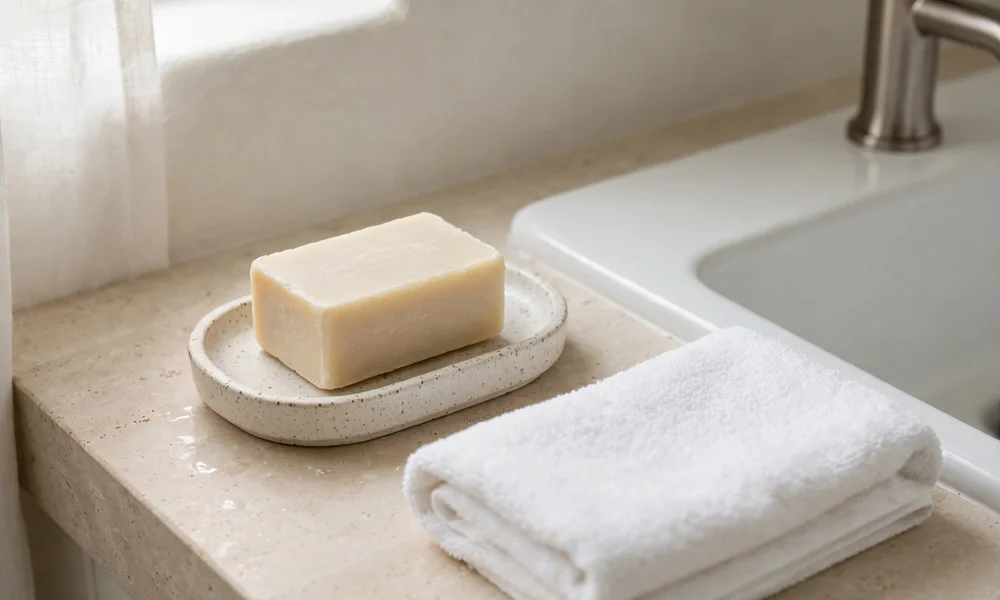
What matters far more is how you store the bar. A bar left sitting in a puddle turns soft, dissolves quickly, and becomes a breeding ground for germs. A slatted or draining soap dish that lets air circulate keeps the bar firm, dry, and hygienic between uses. Shower gel has the edge here purely because it is sealed in a bottle and dispensed without touching the product itself. A damp bathroom can still cause problems for both, and if your shower area struggles with damp, our roundup of the worst shower curtains for mould is a useful warning about what to avoid.
The Environmental Question
Bar soap is the greener choice by a wide margin. A bar typically comes wrapped in a small piece of paper or cardboard, or with no packaging at all, while every bottle of shower gel means a plastic container, a pump mechanism, and often a box as well. Pumps are particularly wasteful because they mix plastic and metal parts that most recycling systems cannot separate, so they usually end up in landfill even when the bottle itself is recycled.
Travel, Gym and Everyday Convenience
Travel is where bar soap quietly shines. A bar is solid, so it cannot leak, it does not count towards liquid limits on flights, and it takes up almost no space in a wash bag. A small travel tin keeps it dry and contained, and one bar can cover a whole holiday. Shower gel, by contrast, must be decanted into a travel bottle and can leak all over your luggage if the cap works loose.
At home, convenience favours the gel. A pump bottle is faster to use one-handed, easier for children, and simpler for anyone with limited grip or mobility. A bar can be slippery, hard to hold when wet, and awkward to pick up if it is dropped.
How to Choose: A Simple Checklist
Choosing between shower gel and bar soap does not need to be complicated. Work through the checklist below, and the right answer will usually make itself clear. If you find yourself split down the middle, there is nothing wrong with using both.
- Know your skin type: dry or sensitive skin usually does better with a pH-balanced gel, while oily or normal skin is happy with either.
- Read the ingredients: look for glycerin and mild surfactants, and avoid heavy fragrance if your skin reacts easily.
- Test before committing: try a new product for a week and check how your skin feels an hour after showering.
- Fix your storage: if you choose a bar, buy a draining dish first, because a soggy bar is a wasted bar.
- Count the real cost: compare price per wash, not price per item, and remember that a pump often dispenses more than you need.
- Think about your routine: frequent travellers may prefer a solid bar, while busy households may prefer the speed of a pump bottle.
Your bathroom routine is part of a bigger picture. If you are reviewing your daily habits, our comparison of manual vs electric toothbrushes applies the same practical test, weighing cost, convenience, and results.
Frequently Asked Questions
Is shower gel or bar soap better for dry skin?
Shower gel is usually better for dry skin, because it is easier to formulate at a skin-friendly pH and to include moisturisers such as glycerin. A moisturising bar can work well too, but avoid basic bars that leave your skin feeling tight after washing.
Does bar soap spread germs?
Bacteria can live on the surface of a used bar, but normal washing rinses them away and they do not transfer to your skin in meaningful amounts. Keep the bar on a draining dish and let it dry between uses.
Which is cheaper in the long run?
Bar soap is almost always cheaper per wash. A bar costs less than a bottle of gel and lasts as long or longer, so a household that switches to bars usually saves money over a year.
Can I use shower gel on my face?
You can, but it is not ideal. Facial skin is thinner and more sensitive, so a dedicated face wash is a better choice.
Why does my bar of soap go soft and mushy?
A bar goes soft when it sits in water or in a humid spot with no airflow. Use a slatted or draining soap dish, keep the dish away from the direct spray of the shower, and let the bar dry fully between uses.
Is shower gel bad for the environment?
Shower gel creates more plastic waste than bar soap, because each bottle needs a container and usually a pump that cannot easily be recycled. Larger bottles and refill options reduce the impact, but a bar of soap remains the lower-waste choice.
The Bottom Line
Shower gel and bar soap both do the fundamental job well, and the real differences lie in skin feel, cost, convenience, and waste. Shower gel is the better pick for dry or sensitive skin, speed, and ease. Bar soap is the better pick for the lowest cost per wash, the least plastic waste, and travel.
For most people, the honest answer is that either one works, and the best product is the one that suits your skin and that you will use properly every day. If you are still undecided, buy one good bar and one good gel, use each for a fortnight, and let your skin decide.