The best robot vacuums for pet hair in 2026 finally do the job properly. Pet hair is one of the hardest things a robot vacuum has to deal with: it wraps around brush rolls, clogs filters, fills small dustbins in a single run, and settles into carpet fibres where weak suction cannot reach it. The latest models tackle all of that with stronger suction, tangle-free brush designs, larger self-emptying docks, and sensors that can tell the difference between a sock and a sleeping dog.
Living with a shedding dog or cat means hair appears everywhere, every day. It gathers in corners, drifts under sofas, and coats rugs. A robot vacuum that runs daily changes that completely, because it catches hair before it builds up into visible clumps. The trick is choosing a machine built for the job rather than a general-purpose model that struggles the moment a long-haired breed starts moulting.
This guide compares the best robot vacuums for pet hair in 2026 by what actually matters in a pet home: suction power, brush design, dustbin and dock capacity, filtration, and obstacle avoidance. Every recommendation is judged on real-world pet-hair performance, so you can pick the right machine for your floors, your pets, and your budget.
Key takeaways
- Suction of at least 5,000 Pa handles pet hair on hard floors, while thick carpet needs 8,000 Pa or more to pull hair from deep in the pile.
- Tangle-free rubber brush rolls beat bristle brushes in pet homes, because hair slides off instead of wrapping tight.
- A self-emptying dock is the most useful upgrade for pet owners, since a small onboard dustbin can fill up in one run.
- HEPA filtration matters for allergy-prone households, trapping fine dander and dust instead of blowing it back into the room.
- Good obstacle avoidance protects both the vacuum and your pets, steering around toys, bowls, and cables.
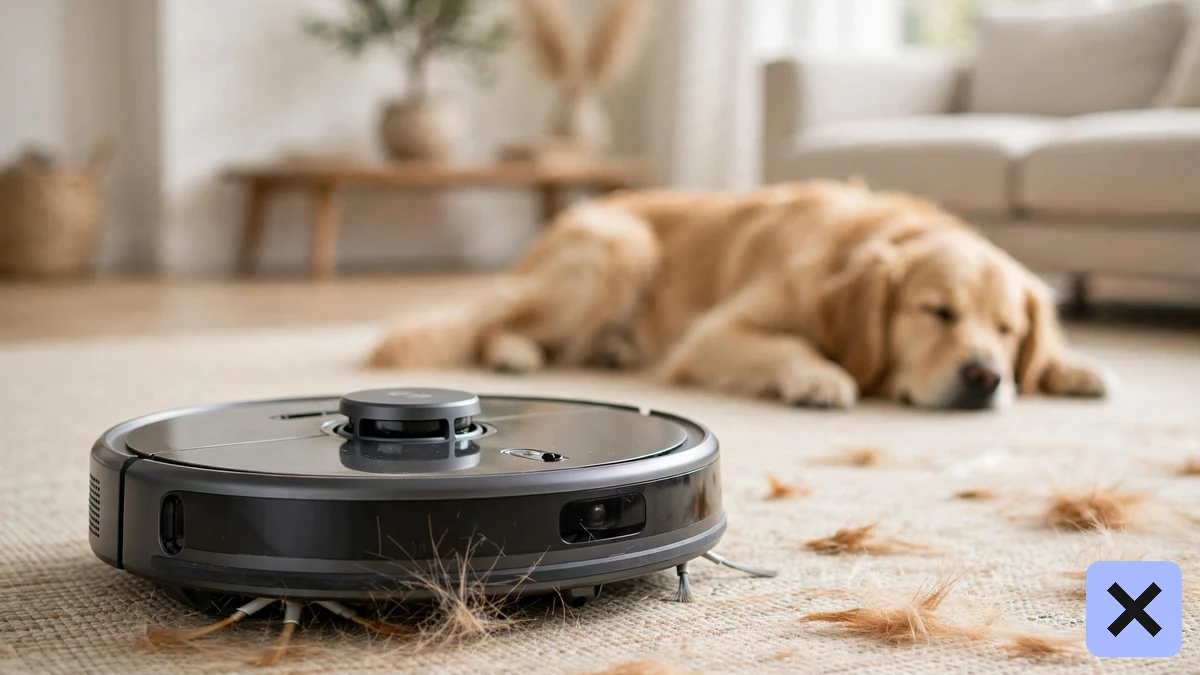
What Makes a Robot Vacuum Good for Pet Hair
Not every robot vacuum copes with pet hair, even when the box promises otherwise. Pet hair is light enough to blow around, long enough to tangle, and sticky enough to cling to fabric. A machine that cleans a tidy flat beautifully can still fail in a home with two shedding dogs.
The first thing to check is suction, measured in pascals. For mostly hard floors and a short-haired pet, around 5,000 Pa is enough to lift loose hair in a single pass. Homes with medium or thick carpet need considerably more, because hair works its way down into the fibres. The best models in 2026 offer 8,000 to 12,000 Pa.
Suction, Brushes, and Carpet Performance
Suction alone is not the whole story, because a vacuum also needs airflow that reaches the floor. Look for carpet boost, which automatically increases suction when the vacuum detects carpet, and a floating brush head that stays in contact with uneven surfaces.
The brush roll is where pet hair causes the most trouble. Traditional bristle brushes grab hair and wind it into a tight coil that slowly strangles the brush and forces you to cut it free with scissors. Rubber brush rolls solve this by giving hair nothing to grip, so it slides along the fins and into the dustbin instead. Dual rubber brushes work even better, agitating carpet from two directions and feeding hair straight into the intake.

The Best Robot Vacuums for Pet Hair in 2026
The best choice depends on your home, your pets, and your budget, but the strongest models share the same strengths: high suction, tangle-free brushes, and a self-emptying dock.
Best Overall for Pet Hair
The best overall pick is a flagship model with suction above 10,000 Pa, dual rubber brushes, a self-emptying dock with a large dust bag, and LiDAR navigation with obstacle avoidance. It handles thick carpet and hard floors equally well, empties itself after every run, and only needs the dust bag changed every month or two. It maps your home room by room, and you can set no-go zones around water bowls and pet beds.
This type of machine suits owners who want to set a schedule and forget about vacuuming entirely. It costs more than a basic model, but the time it saves justifies the price in a home where hair appears daily.
Best for Thick Carpet and Heavy Shedding
Homes with thick carpet and a heavy-shedding breed need maximum suction and the most aggressive brush design available. The best models for this situation pair suction of 11,000 Pa or more with dual rubber brushes and a carpet boost mode that digs deep into the pile. They also need a large dustbin or a self-emptying dock, because a thick carpet full of hair can fill a small bin before the room is finished.
Best Vacuum and Mop Combo
If your home is mostly hard floor with a few rugs, a mid-range vacuum-and-mop model with 6,000 to 8,000 Pa and a single rubber brush is often the smarter buy. The mopping pad picks up the fine dust and dander that vacuuming leaves behind, which matters in homes where pets track in dirt from the garden. Many of the best robot mops of 2026 share the same navigation and docking technology as the leading vacuums, so a combination machine can cover both jobs in one run.
Best Robot Vacuums for Pet Hair Compared
The table below summarises the main differences between the types of robot vacuum that work best in pet homes. Use it to match a machine to your floors and your pets before you compare prices.
| Type | Suction | Brush | Dock | Best for |
|---|---|---|---|---|
| Flagship self-emptying | 10,000 Pa and above | Dual rubber | Self-emptying, 60 days | Heavy shedding, large homes |
| Carpet specialist | 11,000 Pa and above | Dual rubber | Self-emptying | Thick carpet, long-haired pets |
| Vacuum and mop combo | 6,000 to 8,000 Pa | Single rubber | Self-emptying or manual | Hard floors, mixed surfaces |
| Quiet model | 5,000 to 6,000 Pa | Single rubber | Self-emptying or manual | Nervous or anxious pets |
Notice that every row specifies a rubber brush. That is deliberate: in a pet home, the brush type affects daily life more than any other single feature.
How to Choose the Right Model for Your Home
Start with your floors. Count how much of your home is carpet, rug, and hard floor, and note the thickness of the carpet. Thin, low-pile carpet is easy for almost any decent robot vacuum, while thick carpet needs the strongest suction and the best brush design.
Next, think about your pets. A short-haired dog that sheds lightly is a very different challenge from a long-haired cat or a double-coated breed in moulting season. Long hair tangles more and sheds in larger volumes, so it demands a tangle-free brush and a bigger dustbin.
Allergies and Air Quality
Pet hair itself is not the main allergen; the dander and fine dust that travel with it are. A robot vacuum with a sealed HEPA filtration system traps those particles instead of exhausting them back into the room, which makes a real difference for allergy sufferers.
Filtration works best as part of a wider approach to air quality. Running a vacuum daily keeps hair and dander off the floor, while the best air purifiers for homes with pets handle the fine particles that stay airborne.

Navigation and Smart Home Features
Good navigation is what separates a robot vacuum that cleans your whole home from one that bumps around the same corner for an hour. LiDAR navigation builds an accurate map, cleans in efficient straight lines, and lets you set room-by-room schedules and no-go zones.
App control, voice control, and scheduling are genuinely useful in a pet home, because they let you run the vacuum when it suits the animals rather than when you remember. Schedule a quiet run while you are out walking the dog, or start a spot clean from your phone when you notice hair gathering in the hallway. These features fit naturally into a wider smart home setup, including the best smart locks for homes that let the dog walker in without a spare key.
Living With a Robot Vacuum and Pets
The first week with a robot vacuum is an adjustment period for everyone, pets included. Most dogs and cats are wary at first, then curious, then indifferent, especially if the machine follows a predictable routine. Let the pets watch it from a safe distance and keep their beds and bowls in no-go zones.
Maintenance is simple but regular. Empty the dustbin or check the dock bag weekly, clean the brush roll and side brush once a week, wipe the sensors monthly, and wash or replace the filter on the schedule in the manual. Before each run, pick up charging cables, small toys, and pet bowls, or mark them as no-go zones.

Mistakes to Avoid When Buying
The most common mistake is buying on suction numbers alone. A machine with very high suction but a bristle brush and a tiny dustbin will perform worse in a pet home than a mid-range model with a rubber brush and a self-emptying dock. Another mistake is choosing a vacuum that is too tall for your furniture, since pet hair gathers under sofas, beds, and low cabinets, exactly where a tall robot cannot reach. Finally, do not ignore the cost of consumables: dust bags and filters all need replacing, and a cheap machine with expensive bags can cost more over two years than a pricier model with washable parts.
Pet Hair Robot Vacuum Checklist
Use this checklist before you buy, and again when you set the machine up.
- Suction of at least 5,000 Pa for hard floors, or 8,000 Pa and above for carpet.
- Rubber, tangle-free brush roll, ideally dual rubber brushes for heavy shedding.
- Self-emptying dock with a sealed dust bag, sized for your number of pets.
- Sealed HEPA filtration for dander and fine dust.
- LiDAR navigation with obstacle avoidance for toys, cables, and pet messes.
- Height low enough to clean under your sofas, beds, and low furniture.
Frequently Asked Questions
Are robot vacuums good for pet hair?
Yes, provided they have strong suction, a tangle-free rubber brush, and a large enough dustbin or self-emptying dock. They work best when run daily, because they catch hair before it builds up.
How often should a robot vacuum run in a pet home?
Daily is ideal in a home with a shedding pet, and twice daily during shedding season in the rooms the pets use most. A short daily run keeps hair under control with far less effort than a long weekly clean.
Do robot vacuums work on pet hair on carpet?
Yes, but only with enough suction and the right brush. Thick carpet needs 8,000 Pa or more plus a rubber brush roll and carpet boost mode. Thin carpet and rugs work well with mid-range models.
Will a robot vacuum scare my dog or cat?
Most pets adjust within a week, especially if the vacuum runs on a predictable schedule and at a moderate noise level. Start with short runs on quiet mode and let the pet observe from a distance.
Is a self-emptying dock worth it for pet owners?
For most pet owners, yes. A small onboard dustbin can fill in a single run in a heavy-shedding home, which means the vacuum stops cleaning until you empty it. A self-emptying dock holds weeks of hair in a sealed bag.
How do I stop pet hair from tangling the brush?
Choose a model with a rubber, tangle-free brush roll, because hair slides off rubber instead of winding around it. Brush your pets regularly, especially during shedding season, and check the brush roll weekly.
The Bottom Line
The best robot vacuum for pet hair in 2026 is the one that matches your floors, your pets, and your tolerance for maintenance. Prioritise a tangle-free rubber brush, suction suited to your carpet, a self-emptying dock, and obstacle avoidance that keeps both the machine and your pets safe. Get those four things right, run it daily, and pet hair stops being a daily chore.