
The best wine chillers for home hold every bottle at the temperature it was meant to be served at. A bottle that is too warm tastes flat and alcoholic, while one that is too cold loses its aroma and feels thin. A good chiller removes that guesswork, keeping reds cool, whites crisp, and sparkling wine properly cold.
Choosing the best wine chillers for home is not about buying the largest cabinet. It is about matching the chiller to how you live: how many bottles you keep, whether you drink mostly red or white, and how much space you have. A countertop chiller can suit a flat, while a dual-zone cabinet suits a household that keeps both reds and whites.
This guide compares the main types, explains the temperatures that matter, and covers capacity, noise, placement, and running costs, so you can choose with confidence.
Key Takeaways
- The best wine chillers for home hold bottles at a steady serving temperature, usually between 7°C and 18°C depending on the style of wine.
- Dual-zone chillers suit homes that keep both red and white wine, while single-zone models are simpler and cheaper for one style.
- Thermoelectric chillers run quietly and suit small spaces, while compressor chillers cool more powerfully and handle warm rooms better.
- Capacity is measured in standard 750 ml bottles, so always allow room for larger bottles and future purchases.
- Good placement, steady temperature, and protection from light matter just as much as the chiller you choose.
What a Wine Chiller Actually Does
A wine chiller is a dedicated cooling unit designed around the needs of wine. Unlike a kitchen fridge, which keeps food cold at around 3°C to 5°C, a wine chiller holds a warmer, steadier temperature and controls humidity and vibration far more carefully. Wine is sensitive to temperature swings, light, and movement, and even a few degrees can change how it smells and tastes.
Most let you set a precise temperature and hold it within a degree or two. Many have UV-protected glass and shelves that cradle bottles on their sides, so every bottle is ready to pour when you open it.
Wine Chiller vs Kitchen Fridge vs Wine Cellar
A kitchen fridge is too cold for most wine and too dry for long storage. Corks can dry out, and constant opening creates temperature swings. A fridge is fine for a few hours before dinner, but not as a long-term home for a collection.
A wine cellar offers the most stable conditions, but few homes have the space or budget for one. A chiller sits in the middle: far better than a fridge, far more practical than a cellar, and sized to fit under a counter or on a worktop.
Why Serving Temperature Matters So Much
Temperature shapes flavour more than most drinkers realise. Serve a red wine at 22°C or higher in a warm house and the alcohol dominates while the fruit fades. Chill the same red to around 16°C to 18°C and it feels fresher and more balanced. White wines show the opposite problem: served too cold, straight from a fridge at 4°C, their aromas close down and they taste sharp rather than fragrant.
Sparkling wine needs 6°C to 8°C to keep its bubbles lively, and rosé needs 8°C to 12°C. An adjustable chiller hits each range without juggling bottles between fridge and freezer.
The Main Types of Wine Chillers for Home
Each type suits a different home, depending on how many bottles you keep, how much space you have, and whether you want a permanent fixture or something for dinner parties.
Thermoelectric Wine Chillers
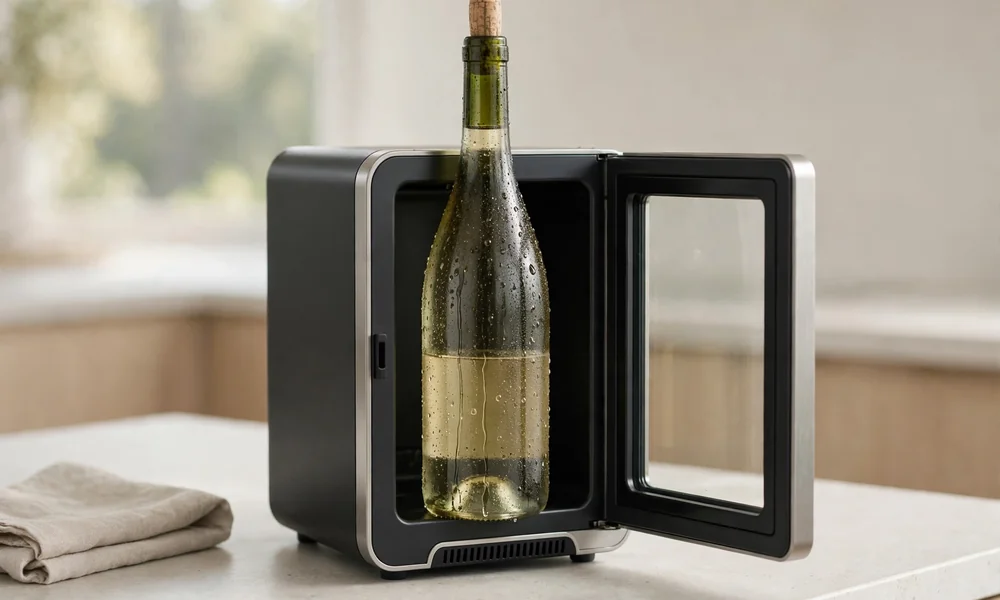
Thermoelectric chillers use a solid-state system with no compressor and almost no moving parts. They are quiet, vibration-free, and energy efficient, making them popular for small flats and open-plan rooms. They cool steadily in a normal room but struggle in very warm kitchens, and usually hold 6 to 18 bottles as single-zone units.
Compressor Wine Chillers
Compressor chillers work like a small fridge, cooling faster and reaching lower temperatures even when the room is warm, which suits larger collections and hot kitchens. The trade-off is a low hum as the compressor cycles on and off, which most people barely notice in a kitchen.
Dual-Zone Wine Chillers
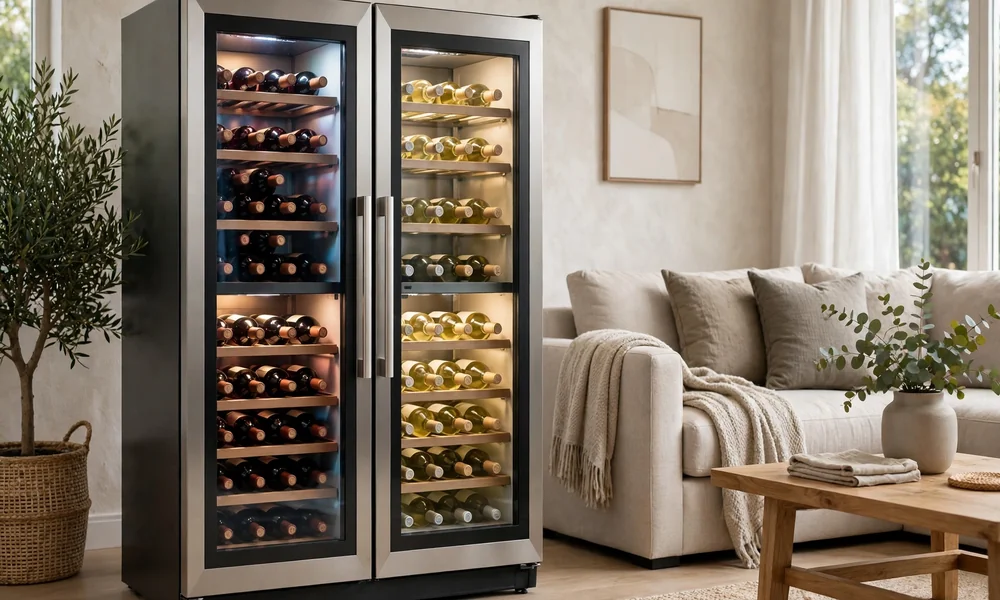
Dual-zone chillers split the cabinet into two compartments, each with its own control. One zone can hold reds at 16°C to 18°C while the other keeps whites at 7°C to 12°C. They are larger and cost more, and each zone holds fewer bottles, but they are the most practical choice if you regularly serve both styles.
Countertop and Single-Bottle Chillers
Countertop chillers hold one to six bottles. Some are electric, cooling a single bottle in 15 to 30 minutes, while others are insulated sleeves or rapid chillers. They suit small kitchens, renters, and anyone who buys wine to drink within days.
Ice Buckets and Non-Electric Chillers
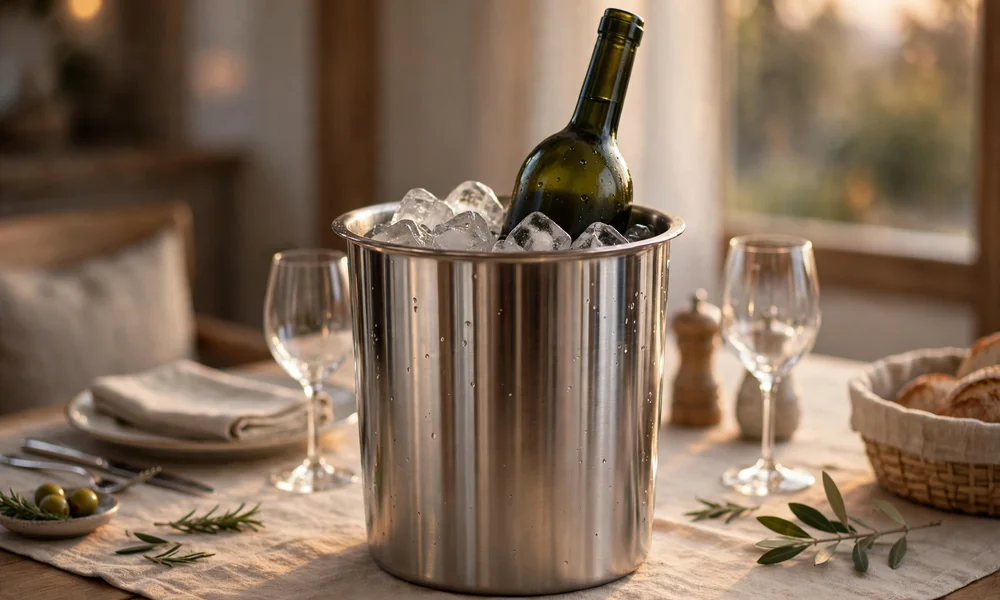
The classic ice bucket remains one of the best wine chillers for a dinner party. Fill it with ice and cold water, stand the bottle in it for 20 to 30 minutes, and white or sparkling wine reaches serving temperature quickly. Ice buckets cost little and need no power, but they cannot hold a precise temperature for hours, so they work best alongside an electric chiller.
Wine Chiller Comparison Table
Use this table to compare the main types at a glance. Capacity figures assume standard 750 ml Bordeaux-style bottles; wider Burgundy bottles and Champagne bottles take up more space, so treat every capacity figure as a maximum.
| Type | Typical Capacity | Best For | Noise Level | Price Range |
|---|---|---|---|---|
| Thermoelectric cabinet | 6–18 bottles | Small flats, quiet rooms, one wine style | Very quiet | Low to medium |
| Compressor cabinet | 12–50+ bottles | Larger collections, warm rooms | Low hum | Medium to high |
| Dual-zone cabinet | 18–46 bottles | Homes serving red and white wine | Low hum | Medium to high |
| Countertop / single-bottle | 1–6 bottles | Small kitchens, occasional drinkers | Very quiet | Low |
| Ice bucket / non-electric | 1–2 bottles | Dinner parties, serving at the table | Silent | Low |
How to Choose the Best Wine Chiller for Your Home
Start with an honest count of the bottles you keep, then add room to grow. A cabinet rated for 12 bottles feels cramped within a year if you buy by the case. Measure your space too: freestanding models need ventilation gaps at the back and sides, while built-in models vent from the front.
Capacity and Bottle Size
Manufacturers count capacity using slim Bordeaux bottles. In real life, wider bottles and Champagne reduce usable capacity by 20 to 30 percent, so choose a unit rated for at least a third more bottles than you plan to store. Adjustable shelves help fit taller bottles.
Temperature Range and Control
A useful home chiller should reach 7°C for whites and sparkling wine and 18°C for reds. Digital controls with a clear display make setting the temperature easy, and a memory function that restores it after a power cut is worth having. Some cheaper models only cool to 12°C, too warm for a crisp white.
Noise, Vibration, and Placement
Most home wine chillers sit between 35 and 45 decibels; below 40 is quiet enough for most living spaces. Vibration matters for long-term storage because shaking disturbs sediment, so look for rubber-mounted compressors and wooden shelves. The best wine racks for home show how to keep bottles horizontal, stable, and easy to reach.
UV Protection and Energy Use
Ultraviolet light damages wine over time. A solid door protects best, but if you prefer glass, choose double-glazed, UV-treated glass and keep the chiller out of direct sunlight. A small chiller uses 80 to 150 kilowatt-hours per year, while a large dual-zone cabinet can use 200 or more.
Best Wine Chillers by Home and Lifestyle
There is no single best chiller for every home. The options below match the most common situations.
Best for Small Flats and Kitchens
A compact thermoelectric unit holding 8 to 12 bottles fits on a counter, runs almost silently, and uses very little power. Add an ice bucket for dinner parties and a small household is covered.
Best for Collectors and Entertainers
A compressor cabinet holding 30 to 50 bottles suits anyone who buys by the case or ages bottles for years, while a dual-zone cabinet keeps reds and whites ready at the same time for entertainers. The best wine openers for home make serving quick and clean for every guest.
Where to Place and How to Look After Your Chiller
Place your chiller on a flat, level surface away from ovens, radiators, and direct sunlight. Leave the ventilation gaps the manufacturer recommends, usually 5 to 10 centimetres at the back and sides for freestanding models.
Wipe the door seal regularly, clean the shelves every few months, and check the temperature with a separate thermometer to confirm the display is accurate. Vacuum the vents every six months, avoid overloading shelves, and store bottles on their sides so corks stay wet.
Common Mistakes to Avoid
The most common mistake is buying purely on capacity and ignoring temperature range, noise, and placement. A 50-bottle cabinet that cannot cool below 12°C is useless for white wine. Opening the door constantly also lets warm air in, so take out the bottle you need and close it promptly.
Do not set the temperature and forget it: a setting that worked in winter may need adjusting in summer, so check the display weekly in hot weather. The best wine glasses for red wine help a properly chilled red show its full aroma and flavour.
Wine Chiller Buying Checklist
- Count your bottles honestly, then choose a capacity at least a third larger than your current collection.
- Confirm the temperature range covers 7°C for whites and sparkling wine and 18°C for reds.
- Choose dual-zone if you regularly serve both red and white wine, or single-zone if you drink mostly one style.
- Measure your space and check whether the model is freestanding or built-in, with the right ventilation gaps.
- Check the noise level in decibels and pick a quieter model if the chiller will sit in a living space.
- Look for UV-protected glass, wooden shelves, a tight door seal, and a clear digital temperature display.
Frequently Asked Questions
What temperature should a wine chiller be set to?
Set a single-zone chiller to 12°C to 14°C for mixed bottles, 16°C to 18°C for reds alone, or 7°C to 12°C for whites and sparkling wine. Dual-zone models let you set each zone separately.
Is a wine chiller better than a regular fridge?
Yes, for wine. A fridge is too cold, too dry, and too unstable for more than a few hours. A chiller holds a warmer, steadier temperature and protects bottles from light and vibration.
How many bottles should my wine chiller hold?
Choose a capacity at least a third larger than the number you usually keep: 18 bottles for a household with 12, or 40 or more for a collector with 30.
Do wine chillers use a lot of electricity?
No. Small units use roughly 80 to 150 kilowatt-hours per year, and larger cabinets use 150 to 250. Good insulation, a tight seal, and a cool location keep costs low.
Can I put a wine chiller in a garage?
Compressor chillers cope better with garages than thermoelectric models, but very hot summers and freezing winters still strain them. Check the operating temperature range, and prefer indoors if your garage regularly goes above 30°C or below 5°C.
How long does wine last in a chiller?
A chiller suits bottles you plan to drink within weeks or months. For ageing over several years, a dedicated cabinet with humidity control is better.
The Bottom Line
The best wine chillers for home fit your space, your drinking habits, and your budget without fuss. A quiet thermoelectric unit suits a small flat, a dual-zone cabinet suits a household serving both red and white wine, and an ice bucket still earns its place at dinner. Measure your space, check the temperature range, and allow room to grow.


