A Guide to Cookie Cutters That Keep Their Shape in 2026
The best cookie cutters in 2026 are the ones that keep their shape: a cutter that presses cleanly through chilled dough, lifts away without dragging the edges, and still looks the same after a hundred bakes. A good cutter gives you crisp stars, hearts and trees with sharp points and smooth curves. A poor one bends under your palm, tears the dough at the corners, and leaves cookies that spread into blobs in the oven.
Most bakers buy cutters the wrong way round: they fall for a big box of a hundred shapes, use six of them, and discover the cutters are so thin they flex, so light they skate across the dough, and so awkward to clean that they rust in the drawer. A smaller set of well-made cutters beats a novelty box every time.
Key takeaways
- Stainless steel is the best all-round material: it holds a sharp, straight edge, resists rust, and does not bend under pressure the way thin tinplate and plastic do.
- Look for a cutting edge that is thin and even all the way round, with a wall at least 25 mm deep, so the cutter slices rather than squashes the dough.
- A rolled or folded top edge protects your palm and stops the cutter flexing; a raw, sharp top edge is a sign of a cheap cutter.
- Buy the shapes you will actually bake — rounds, hearts, stars, trees and gingerbread figures — before collecting novelty shapes used once a year.
- Chill the dough, flour the cutter lightly, and cut straight down without twisting; most torn edges come from technique, not from the cutter.
Why some cutters tear dough and others cut cleanly
Cutting cookie dough is a small act of engineering. The cutter has to push through a soft, cold sheet of dough and separate one shape from the rest without dragging or compressing the edges. Three things decide whether it succeeds: the sharpness of the cutting edge, the stiffness of the wall, and the depth of the cutter. A thin, even edge concentrates the pressure of your palm into a narrow line and slices the dough. A thick, blunt edge spreads the pressure and leaves a ragged rim that bakes into a thick, uneven edge.
Stiffness matters just as much. A flimsy cutter flexes outward when you press, so the shape it cuts is wider at the bottom than at the top and the points of a star come out rounded. A stiff cutter holds its geometry. Depth matters too: a shallow cutter, under about 20 mm, cannot cut through a normally rolled sheet in one press, so you rock it or press twice, which tears the edges.
Stainless steel, tinplate, copper and plastic
Stainless steel is the material to buy first. It is stiff, it takes and keeps a clean edge, it does not rust when dried properly, and it is heavy enough to sit still on the dough rather than skating. Good stainless cutters have a rolled top edge that is comfortable to press and a cutting edge ground thin and even. They cost more than tinplate, but a stainless set bought once will still be cutting cleanly in ten years.
Tinplate is the traditional material, and it cuts well when new. Its weakness is rust: tinplate is steel with a thin tin coating, and once the coating is scratched or the cutter is left damp, rust starts at the seam and spreads. Tinplate cutters must be washed and dried immediately, every time. Copper cutters look beautiful on a kitchen wall, but copper is softer than steel, so fine points bend, and it tarnishes and needs polishing.
Plastic cutters have their place: they are safe for children, come in bright colours, and cannot rust. But plastic dulls quickly, flexes under pressure, and cannot hold a fine point — a plastic star comes out with soft, rounded tips. Use plastic for baking with children and for soft doughs rolled thick. For crisp gingerbread and shortbread, where the shape is the point of the bake, metal wins.
Shapes worth owning — and the novelty trap
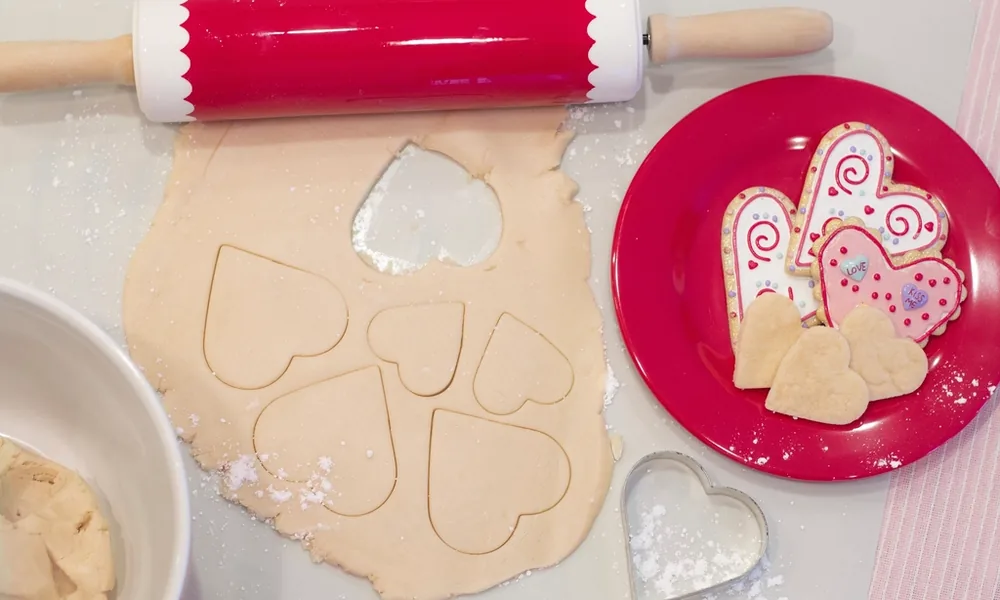
The shapes that earn their drawer space are the ones that work for more than one occasion. A set of plain rounds in several sizes is the most useful cutter set any baker owns: rounds make plain cookies, jam sandwich cookies, and the bases for decorated cookies at any time of year. After rounds, the workhorses are hearts, stars, trees, gingerbread figures and fluted squares. A heart works for Valentine’s Day and anniversaries; a star works at Christmas, for birthdays and for celebration bakes all year.
The novelty trap is the hundred-piece set. It looks like wonderful value until you realise ninety of the shapes — the saxophone, the high-heeled shoe, the tiny aeroplane — are used once, cut badly because their detail is too fine for dough, and then live in the drawer forever. Worse, novelty sets are usually made from the thinnest tinplate, so even the useful shapes in the box are poor cutters. Buy a small set of good cutters in the shapes you bake, then add one or two special shapes a year, in stainless steel, when you need them.
How to cut cleanly: dough, flour and pressure
Even the best cutter will tear warm, soft dough. The single biggest improvement any baker can make is to chill the dough. Roll it, chill the sheet on its tray for fifteen to twenty minutes until it is firm to the touch, and then cut. Cold dough holds its edge, releases from the cutter cleanly, and keeps its shape in the oven instead of spreading. If the kitchen is warm, work in batches: cut one tray, put it back in the fridge, and roll the next while the first chills.
Flour the cutter, not just the work surface. Dip the cutting edge in flour and tap off the excess before each cut. Too much flour dries the surface and stops the cookies browning evenly, so use a light hand. Press straight down with even pressure from the palm, all the way through the dough, and lift straight up. Do not twist the cutter — twisting drags the edge sideways and tears the shape, especially at points and corners. Cut the shapes close together to waste as little dough as possible.
Cleaning, drying and storing cutters so they last
Cookie cutters fail in the drawer, not in the dough. The rule is simple: wash, dry, store dry. Wash metal cutters in hot soapy water straight after baking, rinse, and dry them immediately with a tea towel, then leave them on a rack for ten minutes before putting them away. Cutters left damp in a closed drawer rust at the seam, and rust stains dough and weakens the edge.
Plastic cutters can go in the dishwasher, but metal cutters should not: the long, hot, damp cycle is the fastest way to rust tinplate and dull a stainless edge. Hand washing takes a minute and adds years to a set. For fine detail, a soft brush — an old toothbrush kept for the kitchen — gets into corners where dough dries. Never use a scouring pad; it scratches tinplate and roughens a stainless edge.
Cookie cutters compared
The table below sums up the main choices. There is no single best cutter for every baker — the right choice depends on how often you bake and whether the cutters are tools or decoration as well.
| Type | Best for | Edge and shape | Care | Watch out for |
|---|---|---|---|---|
| Stainless steel | Regular baking, crisp shapes | Sharp, stiff, holds points | Hand wash, dry at once | Cheap sets can have rough seams |
| Tinplate | Occasional and traditional baking | Good when new, bends over time | Dry immediately, keep dry | Rusts at the seam if left damp |
| Copper | Display and festive baking | Good, softer than steel | Hand wash, polish to keep shine | Tarnishes; fine points bend |
| Plastic | Children, play dough, soft dough | Soft edges, rounded points | Dishwasher safe | Flexes and dulls quickly |
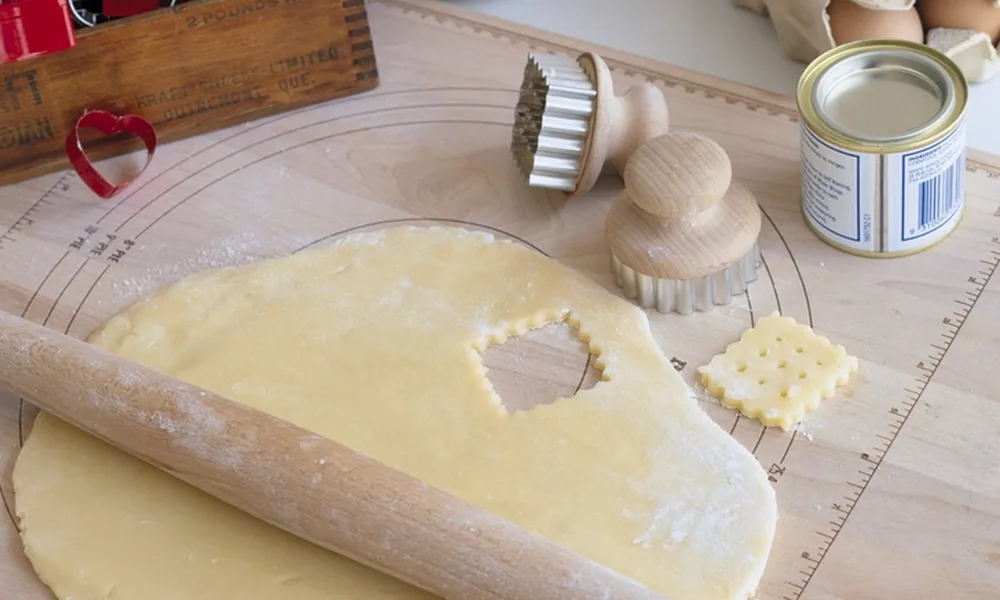
| Plunger and stamp cutters | Embossed and iced cookies | Cut and pattern in one press | Clean pattern grooves well | Dough sticks in the pattern |
Plunger cutters cut and emboss in one press, but dough catches in the pattern — buy them as a second set, not a first.
What to look for when you buy a set
Before you buy, hold the cutter if you can. Press it against your palm: a good cutter has a rolled top edge that spreads the pressure, and the wall does not flex when you squeeze it gently between thumb and finger. Look at the cutting edge in the light: it should be a single, even line, with no wobble, no gap at the seam and no burr that catches your finger. Check the seam, because a rough seam snags dough and is the first place rust starts. The price difference between a poor set and a good one is small, and it is paid back in the first Christmas bake. For the rest of the bake, the tray they land on matters too: a good baking sheet that browns evenly is what turns a well-cut shape into a well-baked cookie.
Choosing well: a quick checklist
- Choose stainless steel for the cutters you will use most; keep tinplate for occasional sets and dry it at once.
- Check the cutting edge is thin, even and free of burrs, and the top edge is rolled so it does not dig into your palm.
- Pick a wall depth around 25 to 30 mm, and a size between 5 and 9 cm for everyday baking.
- Start with rounds, hearts, stars, trees and gingerbread figures before buying novelty shapes.
- Chill the rolled dough, flour the cutter lightly, press straight down and never twist.
- Wash metal cutters by hand, dry them immediately, and store them flat in a tin or a divided drawer.
Frequently asked questions
Why do my cookies lose their shape in the oven?
Usually the dough was too warm when cut. Chill the cut shapes for fifteen minutes before baking, and use a recipe made for cut-out cookies.
Should I buy stainless steel or tinplate cookie cutters?
Stainless steel for the set you use regularly: it holds its edge, resists rust and lasts for years. Tinplate is fine for an occasional set if you dry it immediately after every wash.
How do I stop dough sticking in the cutter?
Chill the dough until firm, dip the cutter in flour and tap off the excess before each cut, and press straight down without twisting. If dough still sticks, chill it again rather than adding more flour.
Can children use metal cookie cutters safely?
Yes, with supervision, for older children — the edge is thin but not knife-sharp. For younger children, plastic cutters are safer.
How many cookie cutters do I actually need?
Fewer than you think. Rounds in three sizes, plus a heart, a star, a tree and a gingerbread figure, cover almost every occasion. Add shapes one at a time when a bake calls for them.
How do I clean cutters with fine detail?
Wash in hot soapy water straight after use, brush dough from corners before it dries, and dry immediately. Never soak metal cutters.

The bottom line
The best cookie cutters in 2026 are stainless steel, around 25 mm deep, with a thin even cutting edge, a rolled top edge and a shape simple enough to hold. The dough itself starts in the bowl, so good mixing bowls that let you cream butter properly are the quiet partner to a good cutter set — and the proof is on the plate, as any round-up of the best vs worst cookies will show: crisp edges, even browning and a shape you can recognise are what separate a good cookie from a forgettable one.