
A good wine rack does more than hold bottles. It protects your wine, saves space, and turns a collection into a feature of your home. The best wine racks for home in 2026 combine solid construction, smart storage, and designs that suit everything from a small apartment kitchen to a dedicated dining room.
Choosing the right rack means thinking about how many bottles you own, where the rack will live, and how your collection might grow. The sweet spot is a rack that fits your space today and still has room for a few extra bottles tomorrow.
This guide covers the main types of wine racks, what to look for before you buy, and the strongest options for every home and budget.
Key takeaways
- Store wine bottles horizontally so the cork stays moist and the seal stays tight.
- Count your bottles, then buy a rack with room for at least 25 percent more.
- Wall-mounted racks save floor space, while freestanding cabinets suit larger collections.
- Wood and metal racks last longest; avoid flimsy plastic or thin wire frames.
- Keep your rack away from heat, direct sunlight, and vibration for the best-tasting wine.
Why a Wine Rack Matters
Wine is a living product. Heat, light, and movement all change how it ages, and poor storage can turn a good bottle into a disappointment. A proper rack holds bottles on their side, keeps them still, and places them in a stable spot in your home.
Beyond protection, a rack brings order to a collection. Bottles stacked in a cupboard are hard to find and easy to knock over. A rack shows every label at a glance, so you can pick the right bottle without digging through a pile, and it frees up cupboard and counter space.
Types of Wine Racks
Wine racks come in several distinct styles, and each suits a different home.
Wall-Mounted Racks
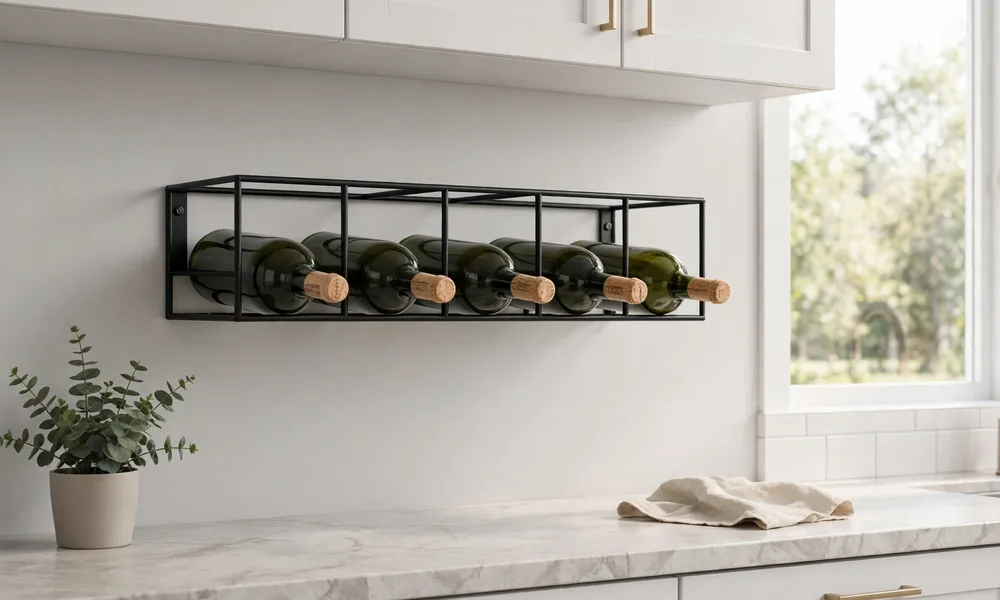
Wall-mounted racks bolt to the wall and hold bottles horizontally in metal or wooden rails. They use no floor space, which makes them ideal for apartments and small kitchens, and they double as decoration. Most hold six to twenty-four bottles, and installation needs solid wall fixings.
Freestanding Racks
Freestanding racks stand on the floor and range from slim towers to wide cabinets. They hold the most bottles per square foot and suit collectors who want everything in one place. Many include a tabletop for glasses and accessories.
Countertop Racks
Countertop racks sit on a counter or sideboard and hold four to twelve bottles. They are perfect for everyday wine you will open within a few weeks, but they cannot hold a growing collection and they take up counter space.
Wine Cabinets and Credenzas
Wine cabinets combine bottle storage with enclosed cupboards and drawers, hiding the collection behind doors that protect bottles from light and dust. They suit larger homes and formal dining rooms, cost more than open racks, and often become a centrepiece of the room.
Stackable and Modular Racks
Stackable racks are units that lock together, so you can start small and add capacity as your collection grows. Buy a system with matching units available over time, so later additions line up neatly.
How to Choose the Best Wine Rack for Your Home
The right choice depends on your bottles, your space, and how you drink wine.
Capacity and Growth
Count the bottles you own right now, then add room for growth. If you own twelve bottles, a twenty-bottle rack is a sensible minimum. Buying slightly larger than you need is almost always cheaper than replacing a rack a year later.
Material and Build Quality
Solid wood, steel, and wrought iron are the materials that last. Wood suits traditional interiors, while metal suits modern spaces and holds heavier loads without flexing. Check the joints and rail thickness: a rack should feel rigid, not wobbly. Avoid thin wire racks that bend under a full load.
Space and Placement
Measure twice. A rack needs clearance for bottles to slide in and out, and a wall rack needs a wall that can take the weight of full bottles. The best spot is a cool, dark corner away from the oven, radiators, and sunny windows. Placing the rack near the dining area is convenient, and pairing it with the best wine glasses for red wine keeps everything for the evening in one place.
Bottle Size and Shape
Standard 750 ml bottles fit almost every rack, but magnums, champagne bottles, and wide Burgundy shapes need wider slots. If your collection includes larger formats, look for racks with adjustable or oversized compartments.
Best Wine Racks for Home 2026
These picks cover every style and budget, from a simple countertop rack to a full cabinet.
Best Overall: Solid Wood Freestanding Rack
A solid wood freestanding rack is the most versatile choice for most homes. It holds twenty to forty bottles, stands steady on any floor, and suits both traditional and modern rooms. Look for hardwood construction with smooth, sanded slots that will not scratch labels, and a top surface for a decanter or glasses.
Best Wall-Mounted: Slim Metal Rail Rack
A slim metal rail rack is the best choice when floor space is tight. It mounts securely to the wall, holds bottles horizontally in a clean line, and turns your collection into wall art. Installation takes under an hour with the right fixings, and the rack can grow by adding a second rail beside the first.

Best for Small Spaces: Compact Countertop Rack
A compact countertop rack holds six to eight bottles in a footprint smaller than a toaster. It is the right pick for flats, small kitchens, and anyone who keeps a short rotation of everyday wines. Wood and bamboo versions look far better than wire ones. Keep it away from the stove, where heat rises.
Best Cabinet: Glass-Door Wine Credenza
A glass-door wine credenza combines storage with display. Bottles sit safely behind glass, protected from dust and light, while still visible. Most hold thirty to sixty bottles and include drawers for corkscrews and stoppers. They cost more than open racks, but they replace a sideboard and a rack in one piece. In a living room, a credenza pairs naturally with the best coffee tables for small living rooms, keeping the entertaining corner tidy.
Best Modular: Stackable Wooden Cube System
A stackable cube system starts as a single unit and grows with your collection. Each cube holds eight to twelve bottles, and the units lock together into a stable tower or a wide low unit. Buy the same brand for every cube, so the joints and finishes match as the stack rises.
Best Budget: Simple Metal Tower Rack
A simple metal tower rack proves that good storage does not need a big budget. A slim steel tower holds twelve to twenty bottles, fits into a narrow gap beside a fridge or a counter, and assembles in minutes. It lacks the warmth of wood, but it is sturdy and easy to clean. For a first rack, it is hard to beat.
Best Statement Piece: Wrought Iron Floor Rack
A wrought iron floor rack is for homes where the rack is part of the decor. Curved ironwork, a dark finish, and a tall silhouette make it a focal point. It holds twenty to thirty bottles and suits entryways and dining rooms with classic styling. Its weight keeps it stable, even when fully loaded.
Wine Rack Comparison Table
| Rack Type | Typical Capacity | Best For | Price Range |
|---|---|---|---|
| Wall-mounted rail | 6–24 bottles | Small spaces, display | Low to medium |
| Freestanding wood rack | 20–40 bottles | Most homes, everyday use | Medium |
| Countertop rack | 4–12 bottles | Flats, short rotations | Low |
| Glass-door credenza | 30–60 bottles | Larger collections, dining rooms | High |
| Stackable cube system | 8–12 per cube | Growing collections | Medium |
| Metal tower rack | 12–20 bottles | Budget buyers, narrow gaps | Low |
| Wrought iron floor rack | 20–30 bottles | Statement decor | Medium to high |
Where to Place Your Wine Rack
Placement matters as much as the rack itself. Wine ages best in a cool, dark, stable spot. Avoid placing a rack above a radiator, beside an oven, or in a sunny window, where temperatures swing through the day.
Think about how you use the room too. A rack beside the dining table is convenient for dinner, while a rack in the kitchen keeps bottles within reach while you cook. In a small kitchen, the same planning that goes into the best stand mixers for small kitchens applies here: measure the space and keep the essentials close.
Common Mistakes to Avoid
The most common mistake is buying too small. A rack that holds exactly the bottles you own today leaves no room for the bottle you buy next week. The second is storing bottles upright for months, which lets corks dry out and air seep in. Bottles meant to age should always lie flat.
Another mistake is ignoring the weight. A full rack of twenty bottles is heavy, and a wall rack fixed with the wrong plugs can pull away from plasterboard. Use fixings rated for the load, or choose a freestanding rack instead.
Finally, do not place a rack where it becomes a hazard. A tall rack in a narrow hallway will be knocked, and a rack beside a door will lose bottles to swinging handles.

Wine Rack Buying Checklist
- Count your bottles and add at least 25 percent spare capacity.
- Measure the space, including clearance to slide bottles in and out.
- Choose solid wood, steel, or wrought iron over thin wire or plastic.
- Check that your largest bottles, including champagne, fit the slots.
- Pick a cool, dark spot away from heat, sunlight, and vibration.
- Confirm wall fixings are rated for the full weight if mounting on a wall.
Frequently Asked Questions
Should wine bottles be stored horizontally or upright?
Horizontally, for any bottle with a cork. Lying flat keeps the cork moist and swollen, which seals the bottle against air. Screw-cap bottles can be stored either way, but horizontal storage keeps the collection uniform.
How many bottles should a home wine rack hold?
For most homes, twenty to forty bottles is the right range. It covers everyday drinking plus a few bottles kept for special occasions. If you buy wine by the case, look at racks that hold sixty or more, or choose a modular system that can grow.
Can I store wine in a warm room?
Short term, yes; long term, no. Wine kept above 24 degrees Celsius ages faster and loses freshness, and temperature swings are worse than steady warmth. A cool corner is fine for bottles you will drink within a few months, but valuable bottles deserve the coolest, most stable spot in the house.
Is a wall-mounted wine rack safe?
Yes, when it is fixed correctly. Use wall plugs rated for the combined weight of the rack and full bottles, and fix into studs or solid masonry wherever possible. If your walls are plasterboard with no stud behind the spot, choose a freestanding rack instead.
Do I need a wine fridge instead of a rack?
A rack suits bottles you will drink within a year. A wine fridge controls temperature and humidity precisely, which matters for bottles you plan to age for years. Many collectors use both: a rack for everyday wine and a fridge for bottles they are saving.
What is the best material for a wine rack?
Solid wood is the classic choice: warm, strong, and kind to labels. Steel and wrought iron suit modern rooms and hold heavy loads without flexing. Avoid thin wire and plastic, which bend and age poorly under a full load.
Bottom Line
The best wine rack for your home is the one that fits your bottles, your space, and the way you drink. A solid wood freestanding rack suits most homes, a wall-mounted rail saves space in small rooms, and a glass-door credenza is the right call for a serious collection. Buy slightly larger than you need and place it in a cool dark corner.


