
Finding the best camping tents for couples means balancing two things that rarely agree: enough room to sleep comfortably together, and a packed size light enough to carry without dread. The sweet spot is a two-person or three-person tent with a smart floor plan, two doors, and a rainfly you can trust when the weather turns.
Couples camp differently from solo hikers. You share one sleeping area, one gear pile, and one morning routine, so door placement, vestibule space, and headroom matter far more than they do on a spec sheet. A tent that lets both people get in and out without climbing over each other is worth more than one that saves half a pound.
This guide covers the tents that earned their place in 2026, what to look for before you buy, and the mistakes couples make most often on their first trips.
Key Takeaways
- A two-person tent rated for two people usually fits two sleeping pads with almost no spare room, so many couples prefer a light three-person tent.
- Two doors and two vestibules are the single biggest comfort upgrade for couples, because nobody has to climb over anyone else at 3 a.m.
- Look for a peak height of at least 40 inches and a floor width of at least 52 inches.
- A full-coverage rainfly, taped seams, and a bathtub floor are non-negotiable where rain is possible.
- Practice pitching your tent at home before your first trip, and always pack a footprint to protect the floor.
What Makes a Tent Great for Two People
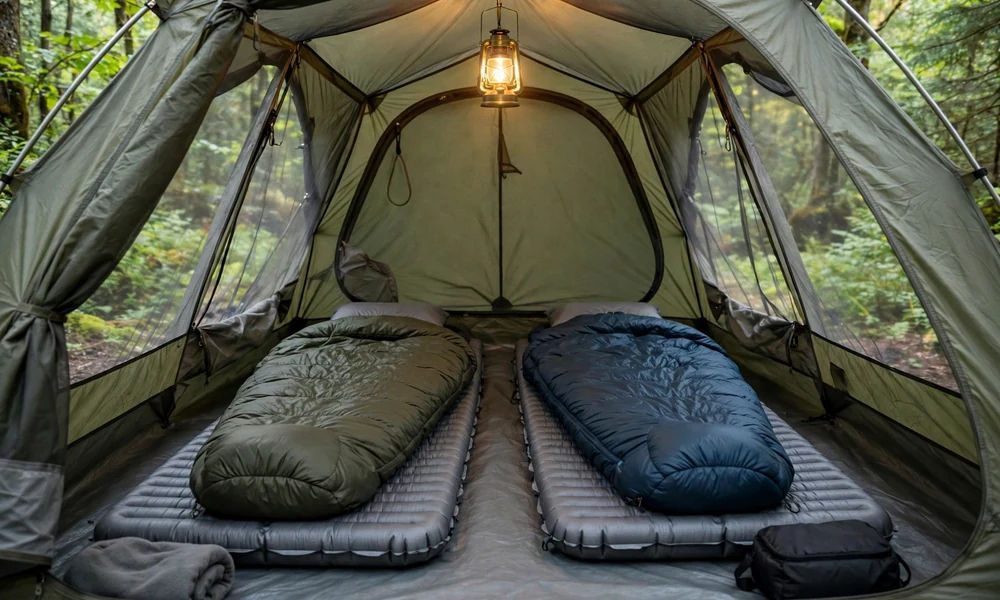
A good couples tent is a shelter designed around the way two people live in a confined space, and the floor plan, door layout, ventilation, and storage all have to work for two bodies moving at the same time.
Floor Space and Peak Height
Two standard sleeping pads side by side need 40 to 44 inches of width, and two wide pads need closer to 50 inches. A floor 52 inches wide gives you room for both pads plus a small gap for a phone or water bottle. Most adults also need at least 84 inches of interior length so their sleeping bag does not press against the walls, where condensation collects overnight. A peak height of 40 to 44 inches lets most people sit upright.
Two Doors, Two Vestibules
Buy a tent with two doors. A single-door tent forces one person to climb over the other every time nature calls. Two doors give each person their own exit, and two vestibules give each person covered storage for boots, packs, and wet gear outside the sleeping area. A vestibule of 8 to 10 square feet per side holds boots and a daypack without blocking the door.
Weight Versus Comfort
Weight is a trade-off. Ultralight two-person tents can weigh under three pounds, but they use thin fabrics and floors so narrow that two wide sleeping pads will not fit. For car camping, a tent in the five to seven pound range is usually better, because it buys thicker fabric, sturdier poles, and a roomier floor plan. Backpacking couples should check packed weight, which includes stakes and stuff sacks, and split the tent between two packs.
The Best Camping Tents for Couples in 2026
The tents below cover the full range of couples camping, from ultralight backpacking to roomy car camping.
| Tent | Floor Area | Peak Height | Packed Weight | Best For |
|---|---|---|---|---|
| REI Half Dome SL 2+ | 33.3 sq ft | 44 in | 5 lb 1 oz | All-round weekend camping |
| Big Agnes Copper Spur HV UL2 | 29 sq ft | 40 in | 3 lb 2 oz | Backpacking couples |
| MSR Elixir 2 | 29 sq ft | 40 in | 5 lb 15 oz | Bad weather and beginners |
| Marmot Tungsten 2P | 32.2 sq ft | 42 in | 5 lb 6 oz | Roomy car camping |
REI Half Dome SL 2+: The Best All-Rounder
The Half Dome SL 2+ gets the fundamentals right. Its 33.3 square feet of floor space is generous, the 44-inch peak height is among the tallest in its class, and the two large vestibules hold a serious amount of gear. Near-vertical walls mean the advertised space is space you can actually use, and colour-coded poles make setup straightforward. At just over five pounds packed, it suits short backpacking trips and car camping weekends alike. If you only buy one tent as a couple, this is the safest choice.
Big Agnes Copper Spur HV UL2: The Best Backpacking Tent
For couples who hike to their campsite, the Copper Spur HV UL2 is the benchmark. At barely over three pounds packed, it is one of the lightest genuinely comfortable two-person tents available, and its high-volume pole design keeps the walls steep. Two doors and two vestibules come standard. The trade-off is fabric thickness: it uses lightweight materials that demand a footprint and care on rocky ground, and it costs more than heavier tents. But if you regularly walk miles to camp, the weight saving is worth it.
MSR Elixir 2: The Best Tent for Bad Weather
The MSR Elixir 2 is built for couples who camp where the forecast cannot be trusted. Its rainfly extends close to the ground, the poles handle wind from any direction, and the bathtub floor is deep enough to keep out standing water. The interior is a touch narrower than the Half Dome, but the 40-inch peak height keeps it livable. It pitches fly-first, so you can set it up in rain without soaking the inner tent. At just under six pounds it is heavier than the backpacking options, but for shoulder-season trips, that weight buys real peace of mind.
Marmot Tungsten 2P: The Roomiest Budget Pick
The Marmot Tungsten 2P gives couples a lot of space for the money. Its 32.2 square feet of floor area and 42-inch peak height rival tents that cost significantly more, and each vestibule offers 14 square feet of storage. The pole design is simple and strong, and the tent handles wind well for its price. It is not the lightest tent here, so it suits car campers and short hikes better than long backpacking trips. For couples who want maximum room per pound spent, the Tungsten is hard to beat.
How to Choose the Right Size
Tent capacity ratings are optimistic by design. A tent labelled as a two-person tent is sized for two people lying shoulder to shoulder with no extra gear inside, and many manufacturers measure capacity using narrow sleeping pads. Couples who use wide pads, bring a dog, or keep gear inside should consider a three-person model. The weight penalty is usually one to two pounds, and the extra space turns the tent into a place you can spend a rainy afternoon.
Measure your pads before you choose: two standard 20-inch pads fit in a 40-inch-wide tent, but two 25-inch wide pads need 50 inches. If either of you is over six feet tall, look for at least 88 inches of interior length. When in doubt, lie down in the tent with your partner before buying.
Weather Protection That Actually Matters
A tent that leaks ruins a trip faster than any other piece of gear. A full-coverage rainfly is the first requirement: it should reach close to the ground on all sides, because a fly that stops halfway up lets wind-driven rain onto the inner tent. Check that the fly has vents, because a sealed tent traps humid air and creates condensation that drips on you.

Factory-taped seams should cover every stitched joint on the rainfly and floor. The floor should be a bathtub design, curving up the sides by at least four inches, with a hydrostatic head rating of 3,000 millimetres or more. In wind, use all the guy lines, staked at a 45-degree angle. A footprint adds waterproofing, and a campsite on slightly high, well-drained ground keeps water from pooling underneath you. Never pitch in a hollow or a dry riverbed. For a broader look at how tent camping compares with the alternatives when the weather turns, see our tent versus RV camping comparison.
Setup, Ventilation and Condensation
Two people produce a surprising amount of moisture overnight: each person exhales roughly a litre of water vapour while sleeping, and that vapour condenses on the cold inner surface of the rainfly. Look for mesh inner walls and vents in the rainfly, and keep at least one vent open on cool nights so airflow carries moisture out before it can condense.
Setup speed matters more for couples, because one person usually pitches the tent while the other handles everything else. Freestanding tents are the easiest: set them up, move them into position, then stake them out. Practice at home and time yourselves; a tent you can pitch together in under ten minutes will not cause an argument at the end of a long day. Keep wet gear in the vestibule, and agree on a system before the trip: one side each, with your own door, vestibule, and pocket.
Couples Camping Checklist
Use this checklist before every trip, and you will catch the forgotten items while you are still at home.
- Tent, footprint, stakes, and guy lines: count the stakes, check the poles for cracks, and make sure the footprint matches the tent.
- Sleeping pads and bags: two pads that fit the tent floor side by side, and bags rated for the coldest night you expect.
- Lighting: two headlamps, one lantern for the tent, and spare batteries for both.
- Camp chairs: a comfortable chair each makes evenings at the campsite far more enjoyable, so pick a pair from our guide to the best camping chairs for couples before you go.
- Cooking and water: stove, fuel, a pot, two mugs, two bowls, and a water filter.
- Clothing and weather gear: a rain jacket each, warm layers, dry socks in a sealed bag, and a small repair kit.
Frequently Asked Questions
What size tent is best for two people?
A tent with at least 30 square feet of floor space, a width of 52 inches, and a peak height of 40 inches suits most couples. If you use wide pads, bring a dog, or spend time inside during bad weather, a light three-person tent is often more comfortable.
Is a 2-person tent big enough for a couple?
Yes, provided you choose one with two doors and enough floor width for your sleeping pads. Check the real floor dimensions rather than trusting the capacity label, because some two-person tents are only 48 inches wide.
Do couples need a 3-person tent?
Not always, but many couples prefer one. A three-person tent adds roughly 10 square feet of floor space, which makes room for gear, a dog, or more elbow room. The weight penalty is usually one to two pounds, easy to split between two packs.
What is the best tent for couples who backpack?
The Big Agnes Copper Spur HV UL2 is the strongest backpacking choice, at just over three pounds packed. The REI Half Dome SL 2+ is best if you want more room and will carry two extra pounds.
How do I stop condensation in a tent for two?
Ventilate. Keep a rainfly vent open, use the mesh inner tent rather than sealing everything up, and avoid cooking inside the tent. Pitch with the doors facing any breeze. Two people produce twice the moisture of one, so ventilation matters twice as much.
What sleeping setup works best inside a couples tent?
Two sleeping pads side by side with individual bags is the most flexible setup, because each person can regulate their own temperature. A double sleeping bag or two-person quilt works well for couples who sleep close together. Pair your tent with bags from our guide to the best sleeping bags for camping.
The Bottom Line
The best camping tent for couples is the one that fits your sleeping pads, gives you both a door, and keeps you dry when the weather turns. For most couples, that means a two-person tent with at least 30 square feet of floor space and a peak height of 40 inches, or a light three-person tent for extra room. The REI Half Dome SL 2+ is the best all-round choice, the Big Agnes Copper Spur HV UL2 is the best for backpacking, and the MSR Elixir 2 is the best for bad weather.


