A Guide to Shadow Boxes for Keepsakes in 2026
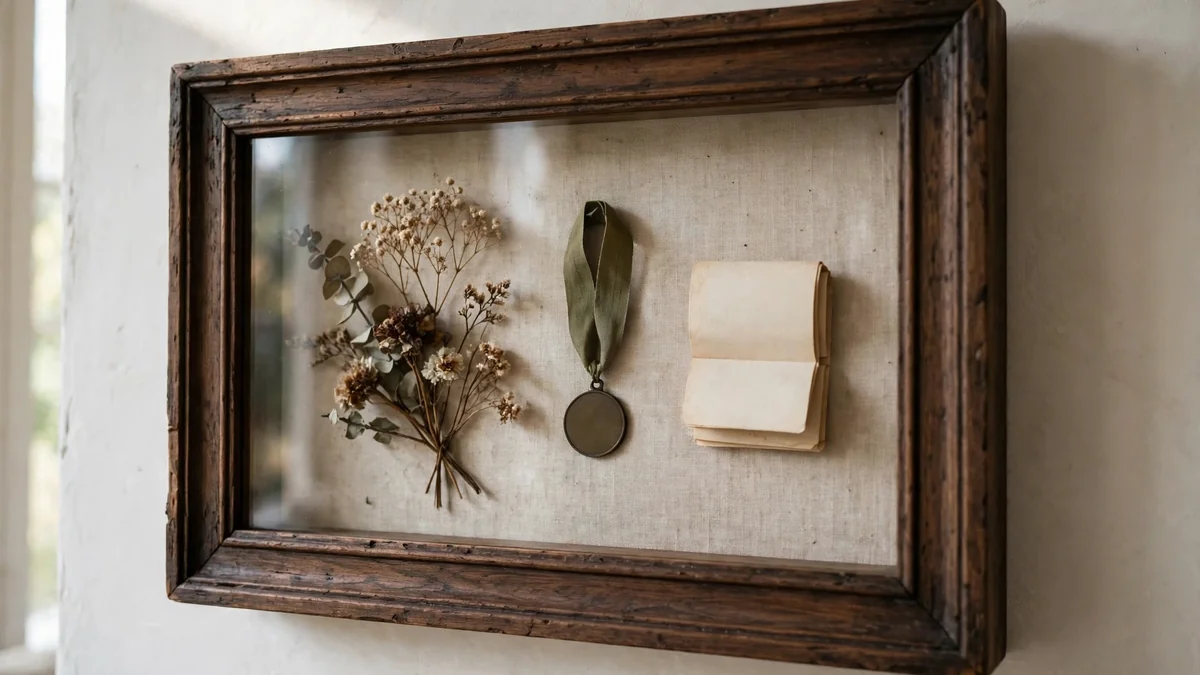
A shadow box is a deep picture frame with space behind the glass for three-dimensional objects, and it is the best way to turn keepsakes into wall art. A flat frame can hold a photograph; a shadow box can hold the photograph, the ticket stub from the day it was taken, a dried flower from the bouquet, and a small medal, all behind glass. The depth is the whole point: usually 3 to 8 centimetres of it, enough for real objects to sit in layers instead of being pressed flat.
Shadow boxes suit the things that matter too much to live in a drawer but are too awkward to frame in the usual way: a baby’s first shoes, a grandfather’s medals, seashells from a honeymoon beach, a signed programme from a concert, a child’s first drawing next to the crayon that made it. This guide explains what a shadow box is, how it differs from an ordinary picture frame, and which types suit which keepsakes.
Key Takeaways
- A shadow box is a deep frame, 3 to 8 centimetres deep, made to display three-dimensional keepsakes behind glass.
- Choose the depth by the thickest object: the box must be at least a centimetre deeper than what goes inside it.
- Three or four objects make a good box; more than that turns a display into clutter.
- Use acid-free backing and mounts, keep the box out of direct sun, and never glue an irreplaceable keepsake.
- Hang a shadow box with two fixings, because it is heavier than a flat frame of the same size.
What Is a Shadow Box?
A shadow box is a frame with a deep rebate, the channel inside the frame that holds the contents, and a glass front set well forward of the backing board. The gap between the glass and the backing is where the keepsakes live. The name comes from the soft shadows the objects cast on the backing, which give the display its depth.
Most shadow boxes are square or rectangular, from about 20 by 20 centimetres for a single small keepsake to 60 by 80 centimetres for a whole collection. Wood frames suit traditional rooms; black and white frames suit modern rooms; deep white boxes suit weddings, where the contents are pale and delicate. Glass is standard, but acrylic is lighter and safer for large boxes and children’s rooms.
Shadow Box vs Picture Frame: the Difference That Matters
A shadow box and a picture frame look alike from the front, but they hold different things. A picture frame is shallow, usually less than 2 centimetres deep, and it is made for flat art: a print, a photograph, a certificate. Anything thicker than a sheet of paper has to be pressed against the glass, and pressed objects crease, stick and fade. Our guide to the best and worst photo frames covers flat frames in detail, and it is the right place to start if all you need to display is photographs.
A shadow box is built for depth: the objects inside keep their shape, cast shadows, and can be arranged in layers, with small things in front and tall things at the back. A baby shoe stands upright in a shadow box; in a flat frame it would be crushed. The rule is simple: if it is flat, frame it; if it has thickness, box it. Trying to force a thick keepsake into a flat frame is the fastest way to damage both the keepsake and the frame.
The Main Types of Shadow Box Compared
Five types cover almost every shadow box you will find in 2026. The right one depends on what you are keeping, how heavy it is, and whether the box will hang on a wall or stand on a shelf.
| Shadow box type | Best for | Typical depth | Notes |
|---|---|---|---|
| Wood frame, linen backing | Medals, letters, dried flowers | 4 to 6 cm | Warm, classic, suits most rooms |
| Black frame, white backing | Photos, tickets, small objects | 3 to 5 cm | Clean, modern, strong contrast |
| Deep display case | Baby shoes, toys, sports items | 6 to 10 cm | Heavy, needs two fixings |
| Compartment box | Shells, coins, badges, collections | 3 to 5 cm | Divided into small squares |
| Tabletop shadow box | Desks, shelves, gifts | 3 to 5 cm | Stands on an easel back |
A wood frame with a linen backing is the best all-rounder, and it is the type we recommend first. The linen gives pins and stitches something to grip, the wood suits both traditional and modern rooms, and the neutral backing makes almost any keepsake look good. A deep display case suits bulky objects, but check the weight: a case holding baby shoes, a toy and a book can weigh 3 kilograms or more, and it needs two screws into a stud or a proper anchor.
Which Shadow Boxes Hold Keepsakes Best in 2026
The best shadow box for most keepsakes in 2026 is a wood frame, 30 by 40 centimetres, 5 centimetres deep, with a linen backing, a hinged front that opens, and acrylic glazing. That size fits a photograph, a ticket, a medal and a dried flower without crowding,: a hinged front lets you lay the box flat and arrange the objects before closing the glass.
Check the depth before you buy, and measure the thickest object, not the average one. A baby shoe is about 6 centimetres thick at the heel, a folded letter is thin, and a medal on its ribbon needs room to hang. The box must be at least a centimetre deeper than the thickest object, or the glass will press on it and mark it. Also check the backing: it should be acid-free, because ordinary card and cheap fabric slowly yellow and stain paper keepsakes.
What to Put in a Shadow Box
Start with the keepsakes themselves, and gather them before you buy the box. Spread everything on a table and sort it into three groups: the things that must be in the box, the things that would be nice, and the things that belong somewhere else. The first group is usually small: one photograph, one object, one piece of paper. A wedding box might hold a photograph, a dried flower and the invitation; a baby box, the first shoes, the wristband and a photograph.
The test for each object is simple: does it tell part of the story, and can you see it from a metre away? A ticket stub tells a story and reads clearly; a faded receipt does not, and it will look like litter behind glass. Small objects need a mount: a pin through a ribbon, a stitch through fabric, a small dab of museum putty on the back of a coin. Never glue an irreplaceable keepsake: glue yellows and cannot be undone, while a pin or a stitch can be removed in a minute. If you need a photograph for the box, print a fresh copy and keep the original safe elsewhere, and our guide to photo printers that turn phone photos into keepsakes covers printers that produce prints good enough to display.
How to Arrange a Shadow Box So It Looks Good
Arrange the box flat on a table, with the glass open, and do not fix anything down until the whole layout looks right. Put the largest object slightly off centre, not in the middle: a box with one big thing in the exact centre looks like a museum label, while the same thing a little to one side looks like a display. Put the photograph next, then the paper items, then the small objects in the gaps.
Give every object breathing room. The most common mistake is filling every square centimetre, which makes the box look like a drawer that was never tidied. Leave at least a third of the backing visible, and keep a clear gap between the objects and the glass, so nothing touches the glazing. Step back a metre: if your eye does not know where to look, take one thing out. Colour matters too: pick one colour from the keepsakes and repeat it in the backing, and if the keepsakes clash, a plain neutral backing calms them down. Our guide to choosing wall art that fits your home covers sizing and colour matching for the wall itself.
How to Hang a Shadow Box Safely
A shadow box is heavier than a flat frame of the same size, and it hangs differently, because the weight sits forward of the wall. Always use two fixings, spaced across the width of the box, even for a small one: two hooks share the load and stop the box tilting, while one hook lets it swing. Hang it at eye level, with the centre about 145 to 150 centimetres from the floor, and keep it out of direct sunlight, and away from radiators and steamy bathrooms.
Before you hang it, check the hardware on the back. Cheap boxes often come with a single sawtooth hanger and a thin wire, which is not enough for a loaded box: replace it with two D-rings and a proper picture wire, and test the fixings by hanging the empty box first.
Shadow Box Checklist
- Gather the keepsakes first and sort them into must-include, nice-to-have, and leave-out.
- Choose a box at least a centimetre deeper than the thickest object, with an opening front and acid-free backing.
- Arrange the box flat with the glass open, largest object slightly off centre, three or four objects, and a third of the backing left empty.
- Fix objects with pins, stitches or museum putty, never glue, and print a fresh copy of any irreplaceable photograph.
- Hang with two fixings at eye level, out of direct sun and away from radiators and steam.
- Check the box once a year for staining, condensation and dust, and store originals flat if they start to fade.
Shadow Box FAQ
What is a shadow box?
A shadow box is a deep picture frame, usually 3 to 8 centimetres deep, with space behind the glass for three-dimensional objects such as medals, baby shoes and tickets, which would be crushed in a flat frame.
How is a shadow box different from a picture frame?
A picture frame is shallow and made for flat art, while a shadow box is deep and made for objects with thickness. A photograph belongs in a frame; a baby shoe, a medal or a shell belongs in a shadow box, where it keeps its shape.
How deep should a shadow box be?
At least a centimetre deeper than the thickest object inside it. For most keepsakes, 5 centimetres is enough; for baby shoes, toys and sports items, look for 6 to 10 centimetres.
What should I put in a shadow box?
Three or four things that tell one story: a photograph, one object, and one piece of paper, such as a ticket or a letter.
How do I keep keepsakes safe in a shadow box?
Use acid-free backing and mounts, never glue an irreplaceable keepsake, and keep the box out of direct sunlight and damp.
Can I hang a shadow box in a bathroom?
No. Steam warps wood, fogs glass and encourages mould on paper and fabric. Hang shadow boxes in living rooms, bedrooms and hallways, away from radiators and strong sun.
The Bottom Line
A shadow box is the best home a keepsake can have on a wall: a deep wood frame, a linen backing, three or four objects that tell one story, and glass that keeps the dust off. Measure the thickest object, leave a third of the backing empty, fix things with pins and putty instead of glue, and hang it with two fixings out of the sun.