
Beef jerky belongs in your snack drawer in 2026 because it does a job almost no other snack can: it is high in protein, it keeps for months without refrigeration, and it survives being tossed into a bag, a drawer or a glove box without turning to crumbs. A good strip of jerky is chewy, savoury and deeply satisfying, the kind of snack that ends a craving rather than starting a second one. A bad strip is a different story. It is tough as leather, salty enough to make you thirsty for an hour, or so sweet it tastes like meat-flavoured candy.
Jerky has come a long way from the gas-station strips of twenty years ago. There are now small-batch brands, grass-fed options, lower-sodium recipes, and flavours that go well beyond original and teriyaki. This guide explains how jerky is made, how the main types compare, what to look for on the label, and how to keep a bag fresh once it is open.
Key Takeaways
- Good jerky is chewy but not tough: it should tear cleanly and soften as you chew, never feel like leather.
- Read the ingredient list first: beef, salt and spices should lead, and sugar should sit well down the list, not in second place.
- Protein is the point: a good jerky carries around 9 to 12 grams of protein per 30-gram serving.
- Sodium is the trade-off: many bags carry more than a gram of salt per serving, so check the label if you eat jerky often.
- Seal the bag and eat it within a few days of opening, because jerky hardens fast once air gets in.
What Makes Good Beef Jerky
Jerky is beef that has been sliced thin, seasoned, and dried until most of the moisture is gone. That is what gives jerky its two great strengths: it is dense with protein, and it keeps. A good jerky starts with a lean cut, usually top round or flank, sliced against the grain so it tears easily. Sliced with the grain, the same meat turns into long, stringy fibres that are hard to chew, which is the most common fault in cheap jerky.
Texture is the first test, and you can judge it in seconds. Take a strip and pull it apart. Good jerky tears with a little resistance, then softens as you chew, releasing flavour as it goes. Bad jerky either snaps like a twig, which means it was dried too hard, or it bends like rubber, which means it was under-dried. Neither is worth finishing.
Flavour is the second test, and it should taste of beef first. The marinade is there to season the meat, not to hide it: salt, black pepper, garlic, a little smoke. The best jerky tastes savoury and meaty with the seasoning in the background. If the first thing you taste is sugar, or a chemical smokiness that coats your mouth, the jerky is covering something up. Eat a strip plain, with nothing else, before you decide whether the bag is worth buying again.

The Main Types of Beef Jerky, Compared
Most jerky falls into a few clear families. Original is the plainest: beef, salt, pepper, a little garlic and smoke. It is the best test of a brand, because there is nowhere to hide, and it is the most versatile, pairing well with anything from a beer to a handful of nuts. If a brand cannot make a good original, its flavoured bags will not save it.
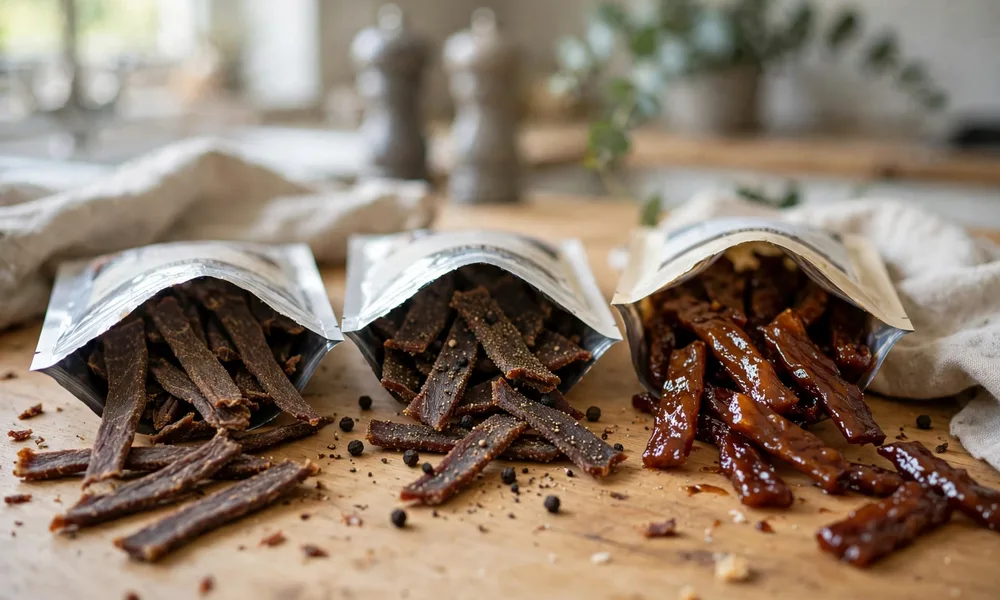
Peppered jerky is the classic second flavour: the same base with a heavy crack of black pepper, sometimes with a little chilli heat. It is the best choice if you like a savoury, warming bite, and it travels well because the pepper holds up in the heat. Teriyaki is the sweet-savoury option, marinated in soy, sugar and ginger. It is the most popular flavour in many shops, and also the one most likely to be too sweet, so check the sugar before you buy.
Spicy jerky covers everything from a gentle chilli warmth to a full habanero burn. A good spicy jerky builds heat slowly and lets the beef flavour come through first; a bad one hits you with heat and nothing else. Sweet and honey jerky is the dessert end of the range: pleasant in small amounts, but closer to a treat than a snack. Meat sticks, the soft, sausage-like cousins of jerky, are softer and fattier, with less protein per bite and a shorter shelf life once opened.
| Type | Flavour | Chew | Best use |
|---|---|---|---|
| Original | Savoury, smoky, beef-first | Firm, clean tear | Everyday snacking, tasting a brand |
| Peppered | Warm, peppery, savoury | Firm, slightly dry | Travel, pairing with drinks |
| Teriyaki | Sweet-savoury, soy, ginger | Softer, a little sticky | First-timers, sweeter palates |
| Spicy | Chilli heat, smoky | Firm, chewy | Heat lovers, cold days |
| Sweet and honey | Sweet, sticky, mild | Soft, tender | Occasional treats |
| Meat sticks | Mild, sausage-like | Soft, easy | Kids, quick bites |
Cuts, Marinades and Chew
The cut of beef decides the chew more than anything else. Top round is the most common choice: lean, even-grained, and consistent from bag to bag. Flank steak is a little richer, but it varies more, and a bad batch can be stringy. Brisket jerky is softer and fattier, which some people love and others find greasy. Grass-fed beef is leaner and more intensely flavoured, but it dries harder, so it needs a careful hand.
Marinades fall into two camps. A dry rub coats the meat in salt and spices and draws moisture out before drying, which gives a firm, intensely seasoned strip. A wet marinade soaks the meat in soy, Worcestershire sauce and spices, which gives a softer, more even flavour through the whole strip. Dry-rub jerky is usually firmer and drier; wet-marinated jerky is usually softer and a little stickier.
How the jerky is dried matters too. Traditionally it was air-dried or smoked over low heat for hours, which gives a deep, even flavour. Most modern jerky is dried in low ovens or dehydrators, which is faster and more consistent, and a good dehydrator does the job well. If you have ever thought about making your own, a dehydrator is the place to start: it controls the temperature, dries evenly, and costs far less than a smoker. Our guide to the best food dehydrators covers the features that matter for jerky, including temperature control and drying space.
Protein, Sodium and the Health Question
Jerky earns its place in the snack drawer on protein. A 30-gram serving of good beef jerky usually carries 9 to 12 grams of protein, which is more than an egg, and it does it in a handful of strips with no preparation and no refrigeration. That is why it works so well as a bridge between meals, after exercise, or on a long day when lunch is hours away.
The trade-off is sodium. Drying and curing need salt, and most jerky carries 400 to 600 milligrams of sodium per serving, with some bags passing a gram. That is a lot of salt for a small handful, and it adds up fast if you eat jerky every day. Lower-sodium options exist, and they are worth seeking out if jerky is a regular snack for you: look for bags under 350 milligrams per serving, and check whether the salt is listed early in the ingredients.
Jerky works best as part of a snack, not the whole of it. A few strips with a piece of fruit, or a small handful of nuts, is more satisfying than a whole bag on its own, and it keeps the salt in check. The same balance rules apply to the other portable snacks: our trail mix guide explains how to judge a blend that fuels rather than fades, and our round-up of the best road trip snacks shows where jerky sits among the snacks that survive heat, bumps and long drives.

How to Store and Pack Beef Jerky
Jerky keeps well unopened: most bags last six months or more in a cool, dry cupboard, and the vacuum seal does the work. Once the bag is open, the clock starts. Air dries the strips further, they harden, and the flavour flattens. Reseal the bag tightly after every handful, squeeze the air out, and eat it within three to four days. If your bag has no reseal, move the strips into a zip bag or a small airtight tub the day you open it.
Beef Jerky Shopping Checklist
- Pull a strip apart: good jerky tears cleanly and softens as you chew, never snaps like a twig or stretches like rubber.
- Read the ingredient list: beef first, salt and spices next, and sugar well down the list, not in second place.
- Check the protein per serving: aim for 9 grams or more per 30 grams, which is what makes jerky filling.
- Check the sodium: under 350 milligrams per serving is good, and over a gram is a bag to eat rarely.
- Buy the smallest bag first when you try a new brand, and only buy big once the first three strips pass the chew test.
- Reseal tightly after every handful, and finish an opened bag within a few days, or move it to the fridge.
Frequently Asked Questions
Is beef jerky healthy?
Beef jerky is high in protein and low in fat, which makes it a filling snack, but it is also high in sodium. It is best as an occasional, portion-controlled snack rather than an everyday staple: a small handful after exercise or between meals, not a whole bag at your desk.
How much protein is in beef jerky?
A 30-gram serving of good beef jerky usually carries 9 to 12 grams of protein, which is more than an egg. Cheaper or sweeter bags can be lower, around 7 grams, because sugar takes the place of meat, so check the nutrition panel rather than the front of the packet.
How long does beef jerky last once opened?
An opened bag lasts three to four days at room temperature if resealed tightly, and a week or more in the fridge. Unopened, most bags last six months or longer in a cool, dry cupboard. If the strips turn brittle or smell stale, they are past their best.
Why is my beef jerky so tough?
Tough jerky usually means the meat was sliced with the grain, dried too hard, or made from a tougher cut. Good jerky is sliced against the grain so it tears easily. If a whole bag is tough, the brand’s drying is the problem, not your teeth.
Can you make beef jerky at home?
Yes, and it is one of the easier cured meats to make: slice lean beef thinly against the grain, marinate it overnight, and dry it at a low, steady temperature until it bends without breaking. A food dehydrator makes the process far more reliable than an oven, because it holds a steady temperature.
What is the difference between beef jerky and meat sticks?
Jerky is whole strips of dried beef, firm and chewy, with a long shelf life. Meat sticks are ground, seasoned meat formed into a soft, sausage-like stick, which makes them easier to eat but fattier, with less protein per bite. Jerky is the better travel snack; sticks are the easier snack.
The Bottom Line
Beef jerky belongs in your snack drawer in 2026 because it is the most practical high-protein snack there is: it keeps for months, needs no fridge, survives a bag or a drawer, and a few strips genuinely fill you up. The best bags are beef-first, moderately salted, and chewy without being tough. Skip the bags that are mostly sugar, and the ones where the first thing you taste is not beef.
Buy small, buy original, check the salt, and reseal the bag. Do that, and a strip of jerky stops being a gas-station gamble and becomes what it has always been at its best: simple, savoury, portable food that is there exactly when you need it.


