
Trail mix that actually fuels a hike is a careful balance, not a random handful from a bag. The best trail mix in 2026 mixes nuts, seeds and dried fruit in proportions that deliver steady energy for hours, packs flat without crushing, and still tastes good on the third day of a walk. A poor mix is mostly cheap peanuts and sweetened cereal, leaves you hungry an hour later, and turns to crumbs at the bottom of your pack.
The difference is easy to miss in the shop. Bags promise energy and mountain-tested goodness, and the picture always shows a mountain. What matters is inside: which ingredients lead the list, how much sugar hides behind the fruit, and whether the blend was built for walking or for sitting on a sofa. This guide explains how to judge a trail mix on blend ratios, energy and portability.
Key Takeaways
- A good trail mix leads with nuts and seeds, not peanuts, sweetened cereal or candy, and the first three ingredients tell you the truth about the bag.
- Blend ratio matters more than brand: roughly half nuts and seeds, a third dried fruit, and only a small share of extras like chocolate or pretzels keeps energy steady.
- Dried fruit gives quick energy, nuts and seeds give lasting energy, and a mix with only one of the two will fade fast or sit heavy.
- Portability is part of quality: a mix that crushes, melts or goes stale in a warm pack is a bad hiking snack, however good it tastes at home.
- Buy small bags, seal them well, and check the date: stale nuts taste bitter and rancid, and no amount of chocolate can hide it.
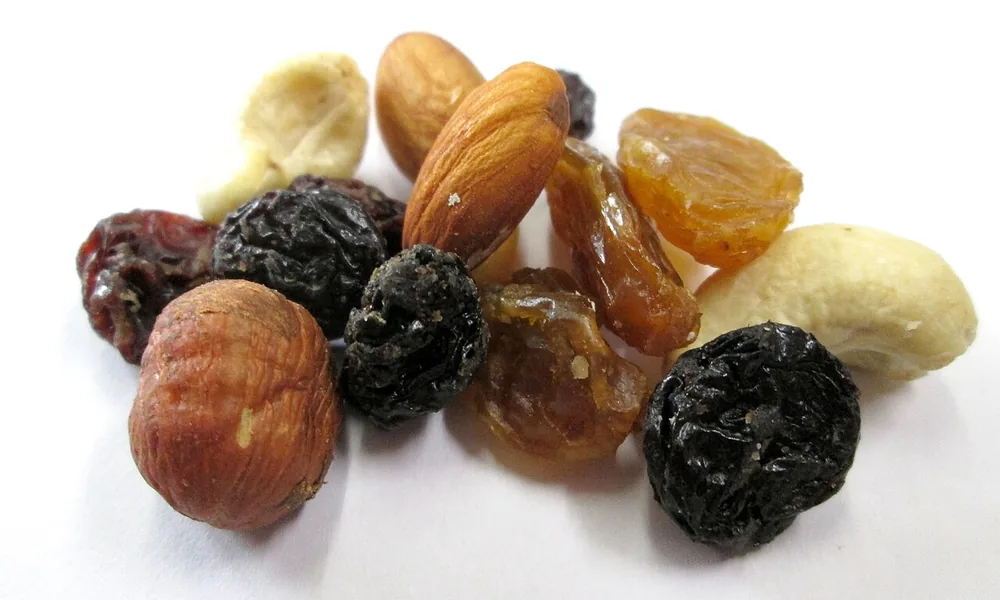
What Makes a Trail Mix a Hiking Snack, Not Just a Snack
A hiking snack has a harder job than a desk snack. It must deliver energy you can feel, survive being carried for hours, and be eaten with one hand while you are walking, thirsty and a little tired. Trail mix earns its place in a pack because it does all three: it is dense with calories, it needs no preparation, and it keeps for days without refrigeration. It also has to hold its shape: whole nuts, seeds and firm dried fruit survive being shaken in a pack, while chocolate melts, yoghurt coatings clump and pretzel twists snap into crumbs. The same qualities make it useful on a long drive, but the hiking test is the strictest.
The first thing to check is density. A handful of trail mix should feel substantial, roughly 150 to 200 calories in a small palmful, and it should keep hunger away for at least an hour. Nuts and seeds are what make a mix dense, because their fat carries more than twice the energy per gram of carbohydrate. Dried fruit adds quick carbohydrate your body can use within minutes, which is why a good mix pairs the two rather than choosing one.
The Main Types of Trail Mix, Compared
Most bags fall into a few clear families, and knowing them makes choosing faster. Each has a strength and a weakness, and the best choice depends on how far you are walking and how much sweetness you want.
| Type | Main ingredients | Best for | Watch out for |
|---|---|---|---|
| Classic | Peanuts, almonds, raisins, seeds | Everyday walking | Peanut-heavy cheap blends |
| Nut-heavy | Almonds, cashews, walnuts | Long hikes | High price, high salt |
| Seed-forward | Pumpkin, sunflower, chia | Nut-free groups | Less protein per handful |
| Chocolate | Nuts, fruit, dark chocolate | Short walks, treats | Melting, added sugar |
| Savoury | Chickpeas, pretzels, spiced nuts | Hot days, salty cravings | Very high sodium |
Classic Trail Mix
The classic mix is the one most people picture: peanuts, almonds, raisins and a scattering of seeds, sometimes with a few chocolate pieces. It is the cheapest family and the easiest to find, and a good classic mix is genuinely useful on a short walk. The problem is that the cheapest versions are mostly peanuts, the least expensive nut, with a handful of almonds on top for the photograph. If peanuts are first on the list and almonds are fourth or fifth, you are paying for peanuts.
Nut-Heavy Mix
A nut-heavy mix leads with almonds, cashews, walnuts and pecans, with fruit and seeds in supporting roles. It is the most filling family and the best for a long day, because nuts release their energy slowly. It is also the most expensive, and the salt can be high, so check the label if you are watching sodium. If you already buy good mixed nuts, you will recognise the same rules here: variety, freshness and a short ingredient list matter more than the brand on the front.
Seed-Forward Mix
Seed-forward mixes build on pumpkin seeds, sunflower seeds and sometimes chia or flax, with dried fruit and a few nuts alongside. They suit nut-free groups, school trips and anyone who finds heavy nut mixes hard to digest. The trade-off is protein: seeds carry less of it per handful than nuts, so a seed mix fades faster on a long climb. Choose one that still includes a decent share of almonds or cashews, and it works well for a morning walk.
Chocolate and Sweet Mix
Chocolate trail mix adds dark chocolate pieces, sometimes with coconut or dried berries, and it is the most enjoyable family to eat. It is also the one that fails the hiking test most often, because chocolate melts in a warm pack and turns the whole bag sticky. Keep it for cool days and short walks. A bag that lists sugar or glucose syrup among its first ingredients is a bag of sweets with nuts in it, not a trail mix.
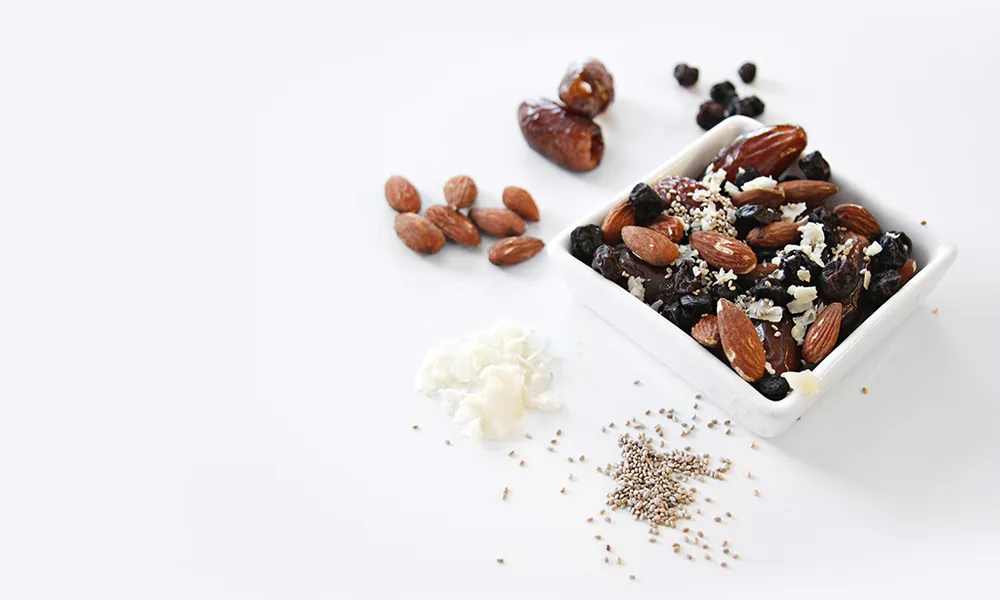
Blend Ratios: How Much of Each Thing
The ratio is the heart of a trail mix, and it is where most bags go wrong. A useful rule is roughly half nuts and seeds, a third dried fruit, and no more than a sixth of extras such as chocolate, coconut or pretzels. When the fruit share climbs past half, the mix becomes a sugar rush followed by a slump. When the extras climb past a fifth, it becomes a dessert.
You can judge the ratio without a scale. Pour a handful into your palm: nuts and seeds should dominate, fruit should be clearly present but not the majority, and chocolate or pretzel pieces should be occasional. If every handful is mostly raisins, or mostly chocolate, the bag is unbalanced however good its label sounds. A good shop-bought bag follows the same rule, and the ingredient order on the packet will confirm it.
Energy on the Trail: What Actually Fuels a Hike
Energy on a hike is about timing. Dried fruit gives you carbohydrate your body can use within minutes, which is why a few raisins at a rest stop feel like a lift. Nuts and seeds give you fat and protein that digest slowly, which is why a handful keeps you going an hour later. A mix with only fruit will lift you and drop you; a mix with only nuts will feel heavy and slow to help.
Salt matters more on a hot day than most walkers expect. Sweating loses salt as well as water, and a lightly salted mix helps replace it while making the food taste better. Very salty mixes do the opposite: they make you thirstier and leave you reaching for water you may not have. For shorter outings, a good granola bar can do a similar job, but it crushes more easily and dries out faster once opened.
Reading the Packet
The packet tells you almost everything in about thirty seconds. Ingredients are listed by weight, so the first three matter most: named nuts and seeds at the top, unsweetened dried fruit next, and a short list overall. A list that runs to twenty ingredients with syrups, oils and flavourings is a processed snack, not a simple mix.
Sugar is the number to check next. Dried fruit contains natural sugar, so a trail mix will never be sugar-free, but added sugar is a different matter. Look for glucose syrup, honey coating, sweetened cranberries and yoghurt coating, all of which add sugar without adding energy that lasts. Good dried fruit is fruit and nothing else, and a mix built on it tastes sweet enough without help. Finally, check the date and the seal: nuts go rancid with age and heat, and a bag that has sat on a warm shelf for a year will taste bitter whatever the label promises.
Portability and Packing
A trail mix that cannot survive a pack is a poor trail mix. The best bags are small, resealable and tough enough to sit at the bottom of a rucksack without splitting. A large family bag is cheaper per gram but awkward on a walk: once opened it goes stale, and decanting it into a pocket means crumbs everywhere. Buy the size you will actually carry, and if you buy large, split it into small portions at home in sealed bags or a small tub. Heat is the enemy, so keep the mix in the middle of your pack, away from direct sun, and on a hot day choose a savoury or nut-heavy mix with no chocolate at all.

Checklist: Buying Trail Mix
- Nuts and seeds lead the ingredient list, with fruit second and extras a small share.
- No added sugar in the first few ingredients, and no yoghurt or honey coating.
- The mix looks balanced in your palm: mostly nuts and seeds, fruit present, chocolate occasional.
- It smells sweet and nutty, never bitter, stale or paint-like.
- The bag is small, resealable and in date, and the nuts snap rather than bend.
- It suits the day: no chocolate for hot weather, a little salt for long sweaty walks.
Frequently Asked Questions
Is trail mix healthy?
It can be, when the blend is built on unsweetened nuts, seeds and dried fruit, which bring fibre, protein and minerals in a compact form. A mix that is mostly sweetened cereal, candy and coated fruit is closer to a dessert, so the answer depends on the bag, not the name.
How much trail mix should I eat on a hike?
A small handful, about 30 to 40 grams, every hour or so is a good rhythm. That gives steady energy without a heavy stomach, and spreads the food across the whole walk.
Can I make my own trail mix?
Yes, and it is often the best option. Mix your favourite nuts and seeds, add unsweetened dried fruit, and keep extras to a small share. Homemade mix costs less and lets you set the ratio.
Does trail mix need to be refrigerated?
Not for a day or two on a walk, but nuts keep far better in a cool, sealed container at home. In warm weather, keep the mix out of direct sun, and store an opened bag in the fridge if you will not finish it within a week.
Is trail mix safe for children?
Whole nuts are a choking risk for very young children, so a mix with whole nuts is not suitable for toddlers. For older children, a mix with smaller pieces is a practical lunchbox snack.
Why does my trail mix taste bitter?
Bitterness usually means the nuts are stale or rancid, often because the bag is old or was stored warm. Fresh nuts smell sweet and taste clean, so if a bag tastes bitter, throw it away.
The Bottom Line
The best trail mix in 2026 balances nuts, seeds and dried fruit in sensible proportions, stays fresh in your pack, and keeps your energy steady across the whole walk. Judge the bag by its first three ingredients and its ratio in your palm, and you will rarely go wrong. Pack small portions, seal the bag, and save the chocolate for a cool day.


