The best raisins for snacking and baking in 2026 are plump, soft and deeply sweet, with a flavour that tastes of the grape they came from rather than of added sugar. A good raisin bends when you press it and melts into a warm, wine-like sweetness when you bite it. A poor one is small, hard and gritty, and tastes of very little. The difference is easy to spot once you know what to look for, and it is worth learning, because raisins are the hardest-working dried fruit in the cupboard: they go into baking, porridge, salads and trail mix, and straight into the mouth as a snack.
Raisins have been around for thousands of years, and the way they are made has barely changed: a grape is dried until most of its water is gone, leaving the sugar, fibre and flavour concentrated into a small, chewy package. Nothing needs to be added, and the best bags still list a single ingredient. This guide covers the kinds worth buying, how to tell a fresh bag from a stale one, and how to use and store them.
Key takeaways
- Buy raisins with one ingredient on the label: raisins.
- Plump and soft beats big and glossy: a raisin that bends is fresh; a hard, gritty one is stale.
- Dark raisins are best for baking; golden raisins are best for salads and light cakes.
- Soak hard raisins in warm water for ten minutes before baking, so they plump up.
- A small handful, about 30 grams, is a sensible snack portion; pair raisins with nuts to stay full longer.
What makes a good raisin
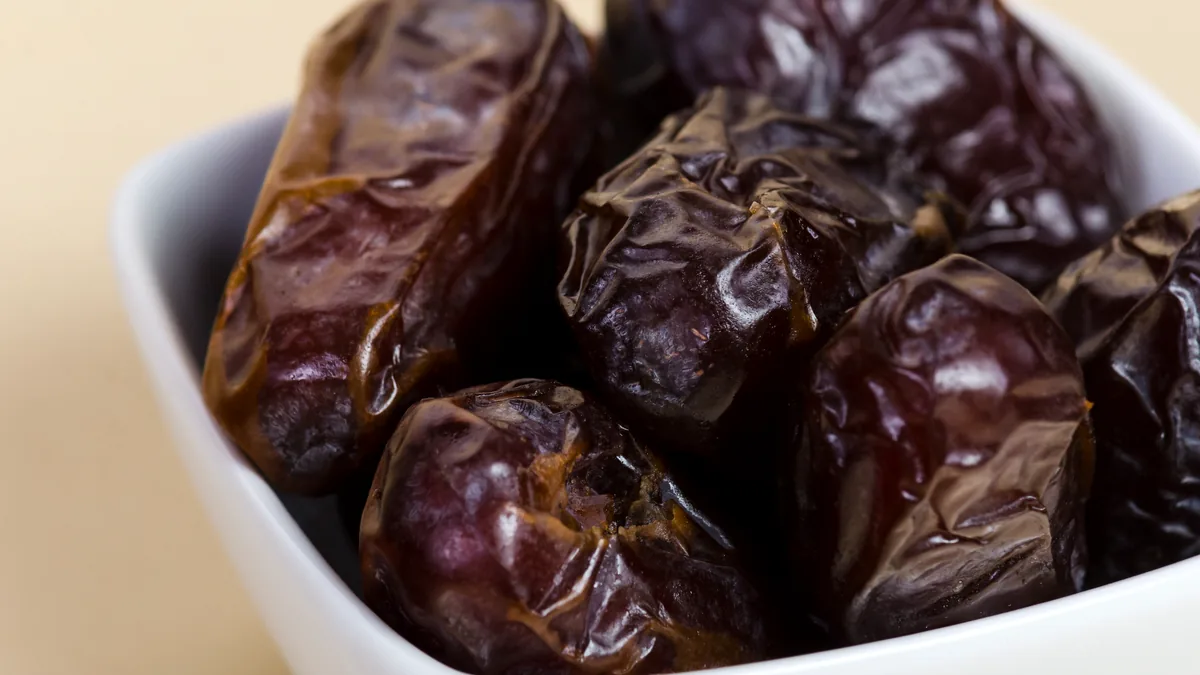
A raisin is a dried grape, and its quality comes back to the grape and the drying. The best raisins start as ripe, sweet grapes, usually Thompson seedless, dried slowly enough to keep their moisture and flavour. The result is soft and pliable, dark and glossy, and deeply flavoured. They should feel slightly sticky and heavy for their size, and the bite should give easily, then turn sweet and warm, with a faint tang.
Stale raisins fail on every count: small and hard, dry and gritty inside, tasting mostly of sugar, with none of the grape character that makes a good raisin worth eating. Staleness is usually a matter of age and storage: a bag left open in a warm cupboard dries out within weeks. That is why the softness test matters more than the brand on the bag. Squeeze a raisin between finger and thumb: if it yields and springs back, it is fresh; if it stays dented or cracks, it is past its best. Size matters less than plumpness: a small, plump raisin beats a large, dry one every time.
The kinds of raisins worth knowing
Most shoppers meet only one kind of raisin, the dark one in the box, but there are four worth knowing, and they are not interchangeable. Each has its own flavour and best use, and picking the right one is the simplest way to get better results.
Dark raisins
Dark raisins, usually Thompson seedless grapes dried in the sun, are the classic: deep brown to almost black, with a rich, wine-like sweetness and a soft, chewy bite. They are the most versatile raisin, and the one to buy if you only buy one bag. They hold their flavour through long baking, which makes them the first choice for fruit cakes, hot cross buns, bread pudding and rice pudding, and they are just as good eaten on their own.
Golden raisins
Golden raisins come from the same grape, but they are dried in a tunnel and treated with sulphur dioxide to keep their pale colour. The result is lighter, fruitier and slightly tangier, with a softer, almost juicy bite. They suit salads, couscous and stuffings, where their colour stands out, and scones and light cakes, where a dark raisin would look heavy. If you are sensitive to sulphur dioxide, buy unsulphured golden raisins, which are darker but taste more of the fruit.

Sultanas
Sultanas come from the sultana grape, and they are larger, softer and juicier than dark raisins, with a lighter brown colour and a milder flavour. They are the raisin of choice in much of Europe and Australia, and they stay moist even in a long bake. In a fruit cake or tea loaf they give a softer crumb than dark raisins, and need less soaking.
Currants
Currants, also sold as Zante currants, are the smallest of the family, made from tiny Black Corinth grapes: dark, intensely flavoured and slightly tart, and used in small amounts rather than by the handful. A spoonful lifts a scone, a fruit bun or a stuffing in a way a larger raisin cannot, because their flavour is so concentrated. They are also the traditional raisin for Eccles cakes and Christmas mincemeat. Buy them in small bags and use them where you want a burst of flavour rather than bulk.
How the kinds compare
| Kind | Flavour | Texture | Best use |
|---|---|---|---|
| Dark raisins | Deep, wine-like, mellow | Soft and chewy | Baking, porridge, snacking |
| Golden raisins | Light, fruity, slightly tangy | Soft, almost juicy | Salads, couscous, light cakes |
| Sultanas | Mild, sweet, gentle | Large, soft, juicy | Fruit cakes, tea loaves |
| Currants | Intense, dark, slightly tart | Small, firm, chewy | Scones, buns, mincemeat |
Raisins for snacking
Raisins are at their simplest as a snack. A small handful, about 30 grams, with a handful of nuts, makes a snack that is sweet, filling and easy to carry: the classic trail mix, where the raisins give quick sweetness and the nuts give fat and protein that keep you full. Our guide to trail mix that actually fuels the hike covers the balance in more detail, and raisins are the dried fruit it comes back to most often.
The portion matters, because raisins are dense in natural sugar: a whole bag is far too much at once. The 30-gram portion, roughly two tablespoons, gives you the fibre and flavour without a large amount of sugar at once. Raisins also earn their place in salads and grain dishes, where a spoonful tossed through a carrot salad or a couscous adds sweetness and chew, and golden raisins are the best choice there.

Raisins for baking
Baking is where raisins earn their keep, and where a stale raisin does the most damage: a hard raisin stays hard, and it draws moisture out of the crumb around it, leaving dry pockets in an otherwise good bake. The fix is simple: soak the raisins before you use them. Cover them with warm water and leave them for ten to fifteen minutes. Drain them well, pat them dry, and fold them into the dough or batter. They will bake soft and plump instead of taking moisture from the cake.
Tossing the soaked raisins in a spoonful of the recipe’s flour is an old baker’s trick worth keeping: the coating stops them sinking to the bottom, the most common fault in a fruit cake or a tea loaf. Dark raisins suit most baking, because their deep flavour survives the oven: fruit cakes, hot cross buns, bread pudding and oatmeal cookies all depend on it. Golden raisins suit lighter bakes, and sultanas are best for a long, slow bake such as a Christmas cake, because they stay soft where a dark raisin would dry out. Do not overload the recipe: a cake that is more raisin than crumb will not rise properly.

Reading the label and storing raisins
The ingredient list should start with raisins, and ideally end there. Some bags add a little vegetable oil to stop sticking, which is harmless, but a bag listing sugar or glucose syrup has been sweetened: sweetened raisins are a sweet in disguise. Sulphur dioxide appears on the label of most golden raisins: it keeps the fruit pale and soft, and it is harmless for most people, though some are sensitive to it and should buy unsulphured raisins. Our parent guide to what makes great dried fruit worth stocking covers the sulphur question across the whole dried fruit shelf. Judge the bag by the fruit you can see through the packaging and by the ingredient list, not by the price tag.
Raisins keep well if stored properly: the enemies are air, light and heat, which dry the fruit out. The best storage is a sealed glass jar in a cool, dark cupboard, where raisins stay soft for six months or more. If raisins harden, they are not ruined: cover them with warm water for ten minutes and they will soften again. Drain them well, and do not soak more than you need, because soaked raisins do not keep. A large bag bought on offer freezes well in small portions, and keeps for a year. If raisins ever smell sour or show visible mould, throw them away.
Checklist: buying raisins in 2026
- Choose bags where raisins are the first ingredient, and ideally the only ingredient on the list.
- Squeeze a few through the bag: fresh raisins feel plump and soft, not hard, dry or gritty.
- Pick dark raisins for baking and golden raisins for salads, couscous and light cakes.
- Soak raisins in warm water for ten minutes before baking, then toss them in a little flour so they do not sink.
- Keep the snack portion to about 30 grams, and pair raisins with nuts so the snack keeps you full.
- Store raisins in a sealed jar in a cool, dark cupboard, and freeze any large bag you will not finish within a few months.
Frequently asked questions
Are raisins healthy?
Unsweetened raisins are healthy in small amounts: whole fruit, with fibre, potassium and iron, and no added sugar. But they are dense in natural sugar, so a small handful is a snack and a whole bag is too much. Our guide to the best dried cherries for snacking and baking makes the same point for a close cousin of the raisin.
What is the difference between raisins, sultanas and currants?
Raisins are Thompson seedless grapes, dark and wine-like. Sultanas are sultana grapes, larger, softer and milder. Currants are Black Corinth grapes, tiny, dark and intensely flavoured. They can stand in for each other, but the flavour and texture will change, so match the kind to the dish.
Do raisins need to be washed?
They do not need washing from a sealed bag, but a quick rinse removes dust from loose raisins bought at a market. Soaking is different: a ten-minute soak in warm water softens hard raisins for baking.
Why are some raisins golden and others dark?
Golden raisins are tunnel-dried and treated with sulphur dioxide, which keeps them pale. Dark raisins are usually sun-dried, which darkens them and gives them their deep, wine-like flavour. The choice is a matter of flavour and of the dish.
How long do raisins last?
Unopened, raisins keep for a year or more. Once opened, they stay soft for several months in a sealed jar in a cool, dark cupboard. If they harden, soak them in warm water; if they smell sour or show mould, throw them away.
Can I use raisins instead of dates in baking?
Partly. Raisins give sweetness and chew, but they do not melt into a paste the way dates do, so they cannot replace dates as a natural sweetener. Use raisins where you want fruit you can bite into, and dates where you want sweetness that disappears into the bake.
The bottom line
The best raisins for snacking and baking in 2026 are the simplest ones: plump, soft, dark or golden, with nothing on the label but raisins. Buy dark for baking, golden for salads and light cakes, sultanas for a long bake, currants for a burst of flavour. Soak them before they go into the oven, keep the snack portion small, and store them in a sealed jar away from heat and light. Do that, and a bag of raisins is one of the most useful things in the cupboard.