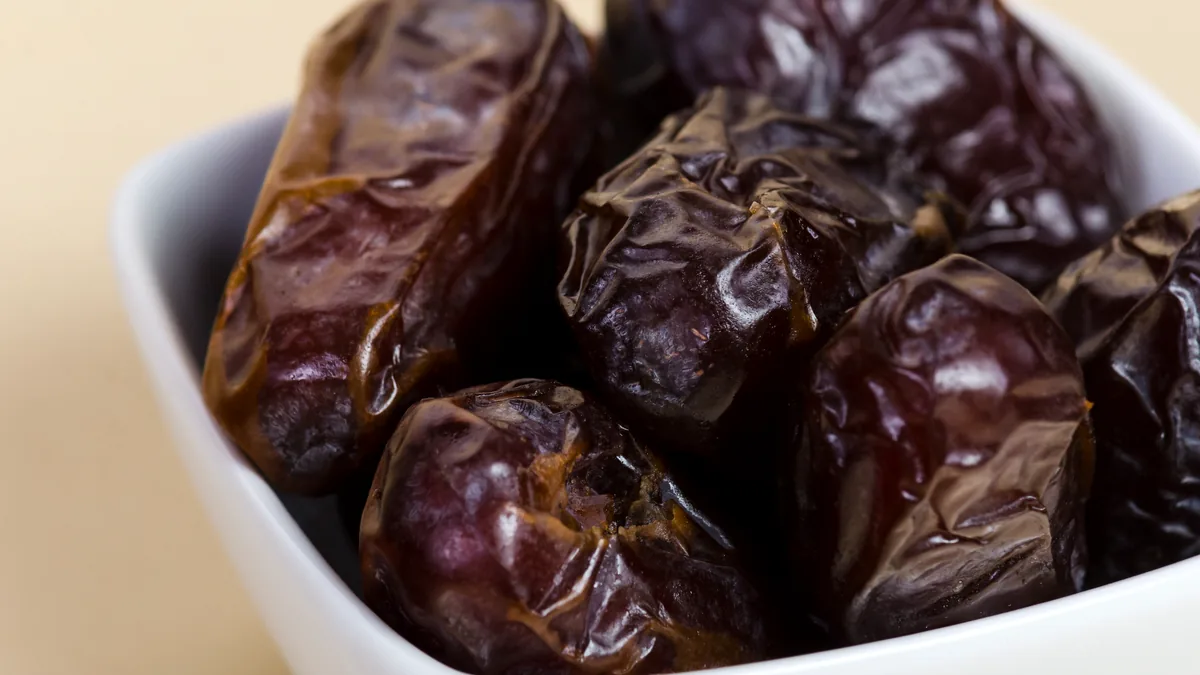
The best dates for snacking and baking in 2026 are soft, sticky and deeply caramel-sweet, with a flavour somewhere between toffee and dark honey. A good date gives gently when you press it, pulls apart in soft strands and melts on the tongue. A poor one is dry, hard and dull, and tastes mostly of sugar. The difference is easy to feel once you know what to look for: dates are a snack on their own, a natural sweetener that replaces sugar in baking, and a filling that turns a plain cake or porridge into something worth remembering.
Dates are the fruit of the date palm, eaten for thousands of years across the Middle East and North Africa. Unlike most dried fruit, a date is not really dried at all: it ripens on the palm until it is soft, dark and sticky, and the best ones are sold exactly as they come off the tree, with nothing added. This guide covers the kinds worth buying, soft versus dry, and how to use and store them.
Key takeaways
- Buy dates with one ingredient on the label: dates.
- Soft beats dry for eating whole: a date that yields to a gentle squeeze is fresh; a hard, brittle one is stale.
- Medjool dates are best for eating whole and baking; Deglet Noor dates suit chopping into salads and stuffings.
- Chop dates small and toss them in flour before baking, so they do not sink or clump.
- Two or three dates, about 30 grams, is a sensible snack portion; pair them with nuts to stay full longer.
What makes a good date
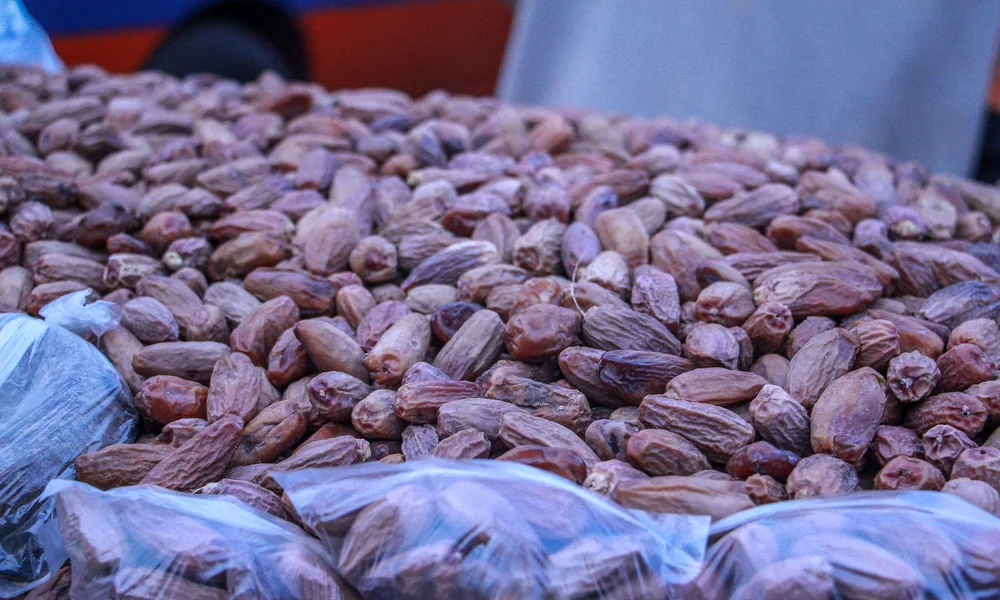
A good date is judged first by touch. Squeeze one gently: it should yield, feel slightly sticky and spring back a little. Pull it apart and it should separate in soft, moist strands, glossy and dark rather than pale and dusty. The bite should be tender all the way through, with a rich, caramel flavour, and the skin thin and tender, not tough or papery.
A stale date fails on every count: hard and dry, tough and wrinkled, tasting flat and sugary, with none of the caramel depth that makes a good date worth eating. Staleness is usually a matter of age and storage: a box left open in a warm cupboard dries out within weeks. That is why the squeeze test matters more than the brand on the box. A date with fuzzy spots, a sour smell or visible mould should be thrown away.
Medjool vs Deglet Noor
Most shoppers meet only two kinds of date, and they are very different fruits. Knowing which one you are buying is the simplest way to get better results.
Medjool dates
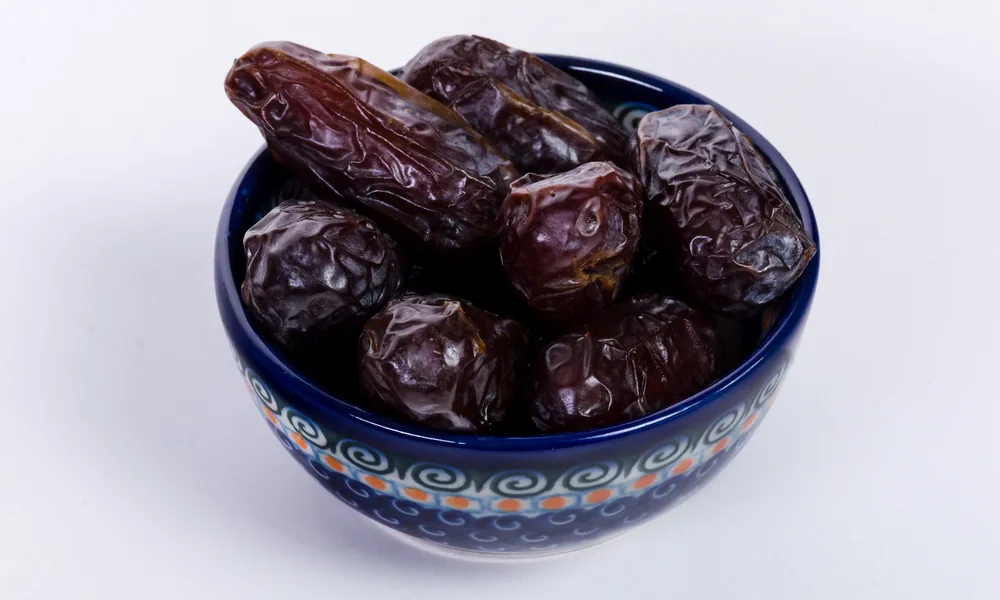
Medjool dates are the large, soft kind, and the best dates for most purposes. A Medjool is almost like a toffee: big, sticky, rich and deeply caramel-flavoured, with a soft flesh that melts rather than chews. They are the best dates for eating whole, and the best for baking, because they blend into a smooth paste that sweetens cakes, porridge and smoothies without any added sugar. Look for dates that are plump, dark and glossy, with a soft skin.
Deglet Noor dates
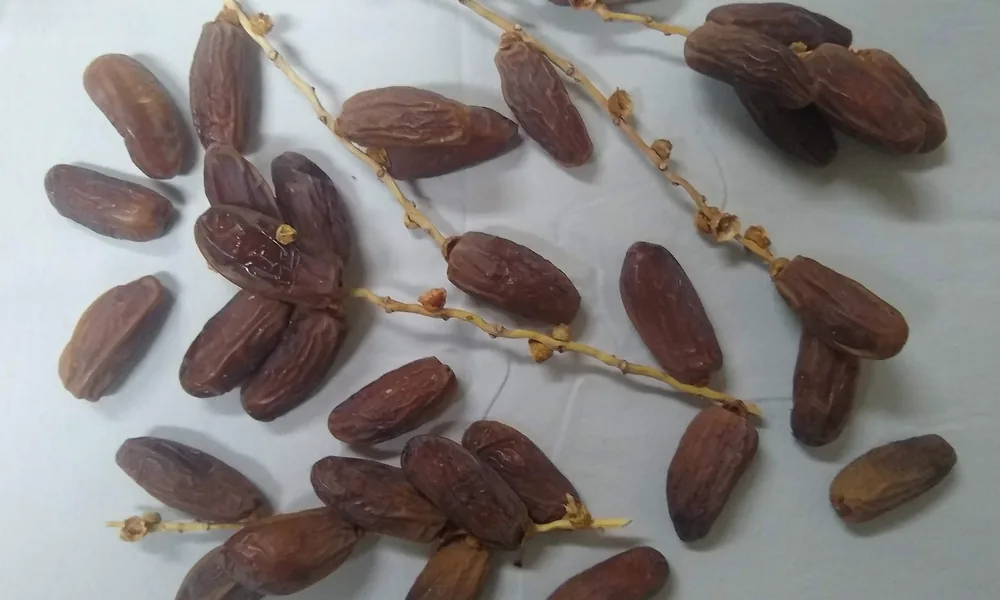
Deglet Noor dates are smaller, firmer and less sweet than Medjool, with a lighter amber colour and a drier, chewier bite. Their name means finger of light, and their flesh is translucent held up to the light. They are less good eaten whole, but excellent chopped into salads, stuffings, tagines and baked goods, where their firmness means they hold their shape.
Other dates worth knowing
Beyond the two main kinds, there are dates worth seeking out. Ajwa dates, from Medina, are dark, soft and mildly sweet, with a faint liquorice note. Sukkari dates are golden, very sweet and almost crumbly, with a caramel flavour that rivals Medjool. Khalas dates are small, firm and toffee-like. You will find these in Middle Eastern grocers and online, and they are worth trying once. For everyday use, Medjool for eating and Deglet Noor for chopping will cover almost everything.
Soft vs dry dates
Dates fall into two broad groups, soft and dry, and the difference matters more than the variety name. Soft dates, such as Medjool and Ajwa, are moist, sticky and rich, with a deep, caramel-like flavour: the dates to eat whole, to stuff with nuts or cheese, and to blend into a paste for baking. Dry dates, such as Deglet Noor and Khalas, are firmer, drier and chewier, with a milder sweetness: the dates to chop into salads, stuffings and cakes, where you want pieces you can bite into.
How the kinds compare
| Kind | Flavour | Texture | Best use |
|---|---|---|---|
| Medjool | Rich, caramel, toffee-like | Large, soft, sticky | Eating whole, baking, sweetening |
| Deglet Noor | Mild, honeyed, delicate | Firm, chewy, drier | Chopping, salads, stuffings |
| Ajwa | Dark, mild, faint liquorice | Soft, tender | Eating whole |
| Sukkari | Very sweet, caramel, golden | Soft, almost crumbly | Eating whole, desserts |
Dates for snacking
Dates are at their simplest as a snack. Two or three Medjool dates, about 30 grams, with a handful of nuts, makes a snack that is sweet, filling and easy to carry: the classic trail mix partner, where the dates give quick sweetness and the nuts give fat and protein that keep you full. Our guide to trail mix that actually fuels the hike covers the balance in more detail, and dates are the dried fruit it leans on for a long walk, because they are the most filling.
The portion matters, because dates are the sweetest dried fruit there is, and the most filling: three dates hold the sugar of a whole piece of fruit in a fraction of the size, and it is easy to eat six without noticing. The 30-gram portion, roughly two or three Medjool dates or five or six Deglet Noor, gives you the fibre and flavour without a large amount of sugar at once. For a treat, stuff a Medjool date with a walnut or peanut butter, or fill one with soft cheese: the salt and fat balance the sweetness, and one stuffed date is a complete snack.
Dates for baking
Baking is where dates earn their keep, because they do something no other dried fruit does: they melt into a paste that sweetens a cake without any added sugar. Soak pitted dates in warm water for ten minutes, drain them, and blend them into a smooth paste: a natural sweetener for cakes, muffins, porridge, smoothies and energy balls. A date paste keeps in the fridge for a week, and a spoonful in a cake batter gives sweetness and moisture at once.
For cakes where you want pieces of date rather than sweetness that disappears, chop the dates small and toss them in a spoonful of the recipe’s flour first. The coating stops the dates sinking to the bottom and clumping together, the most common fault in a date cake or loaf. The same trick works for raisins and dried figs, and our guide to dried figs that are worth the price makes the same point for a close cousin of the date. Medjool dates are the best choice for most baking: they blend smoothly and their caramel flavour survives the heat. Do not overload the recipe: a cake that is more date than crumb will not rise properly.
Reading the label and storing dates
The ingredient list should start with dates, and ideally end there. Some boxes add a little glucose syrup to make the dates look glossy, which is harmless in a small amount, but a box listing sugar or glucose syrup second has been sweetened: sweetened dates are a sweet in disguise. Medjool costs more to grow and pick than Deglet Noor, so price is a fairer guide with dates than with most dried fruit. The cheapest box is often small, dry dates, fine for chopping but disappointing eaten whole. Judge the box by the fruit you can see and by the ingredient list. Our parent guide to what makes great dried fruit worth stocking covers the same label rules across the whole dried fruit shelf.
Dates keep well if stored properly: the enemies are air, light and heat, which dry the fruit out. The best storage is a sealed jar or box in a cool, dark cupboard, where dates stay soft for six months or more. Do not store soft dates in the fridge: the cold makes them hard faster and dulls their flavour. If dates harden, they are not ruined: cover them with warm water for ten minutes and they will soften again. Drain them well, and do not soak more than you need, because soaked dates do not keep. A large box bought on offer freezes well in small portions, and keeps for a year. If dates ever smell sour or show mould, throw them away.
Checklist: buying dates in 2026
- Choose boxes where dates are the first ingredient, and ideally the only ingredient on the list.
- Squeeze a few through the box: fresh dates feel soft and slightly sticky, not hard, dry or brittle.
- Pick Medjool dates for eating whole and for baking, and Deglet Noor dates for chopping into salads and stuffings.
- Chop dates small and toss them in a little flour before baking, so they do not sink or clump together.
- Keep the snack portion to about 30 grams, and pair dates with nuts so the snack keeps you full.
- Store dates in a sealed jar in a cool, dark cupboard, and freeze any large box you will not finish within a few months.
Frequently asked questions
Are dates healthy?
Unsweetened dates are healthy in small amounts: whole fruit, with fibre, potassium and magnesium, and no added sugar. But they are the sweetest dried fruit, and dense in natural sugar, so two or three dates is a snack and a whole box is too much.
What is the difference between Medjool and Deglet Noor dates?
Medjool dates are large, soft, sticky and caramel-sweet, best for eating whole and for baking. Deglet Noor dates are smaller, firmer and less sweet, best for chopping into salads, stuffings and baked goods. They can stand in for each other, but the flavour and texture will change.
Do dates need to be washed?
They do not need washing from a sealed box, but a quick rinse removes dust from loose dates bought at a market. Soaking is different: a ten-minute soak in warm water softens hard dates for baking.
Why do some dates have a white coating?
The white coating is sugar crystallising as the date dries out, and it is harmless. The date is still fine to eat, especially in baking, where it softens in the heat. Fuzzy spots or a sour smell mean the date should be thrown away.
How long do dates last?
Unopened, dates keep for a year or more. Once opened, they stay soft for several months in a sealed jar in a cool, dark cupboard. If they harden, soak them in warm water; if they smell sour or show mould, throw them away.
Can I use dates instead of sugar in baking?
Yes. Soak pitted dates in warm water, blend them into a smooth paste, and use it in place of some or all of the sugar in a cake, muffin or flapjack. The result is moister and less sweet than a sugar bake, with a caramel flavour of its own. Start by replacing half the sugar.
The bottom line
The best dates for snacking and baking in 2026 are the simplest ones: soft, sticky and caramel-sweet, with nothing on the label but dates. Buy Medjool for eating whole and for baking, Deglet Noor for chopping, and try Ajwa or Sukkari once if you find them. Chop them small, toss them in flour, keep the portion to two or three, and store them sealed away from heat and light. Do that, and a box of dates is one of the most useful things in the cupboard.