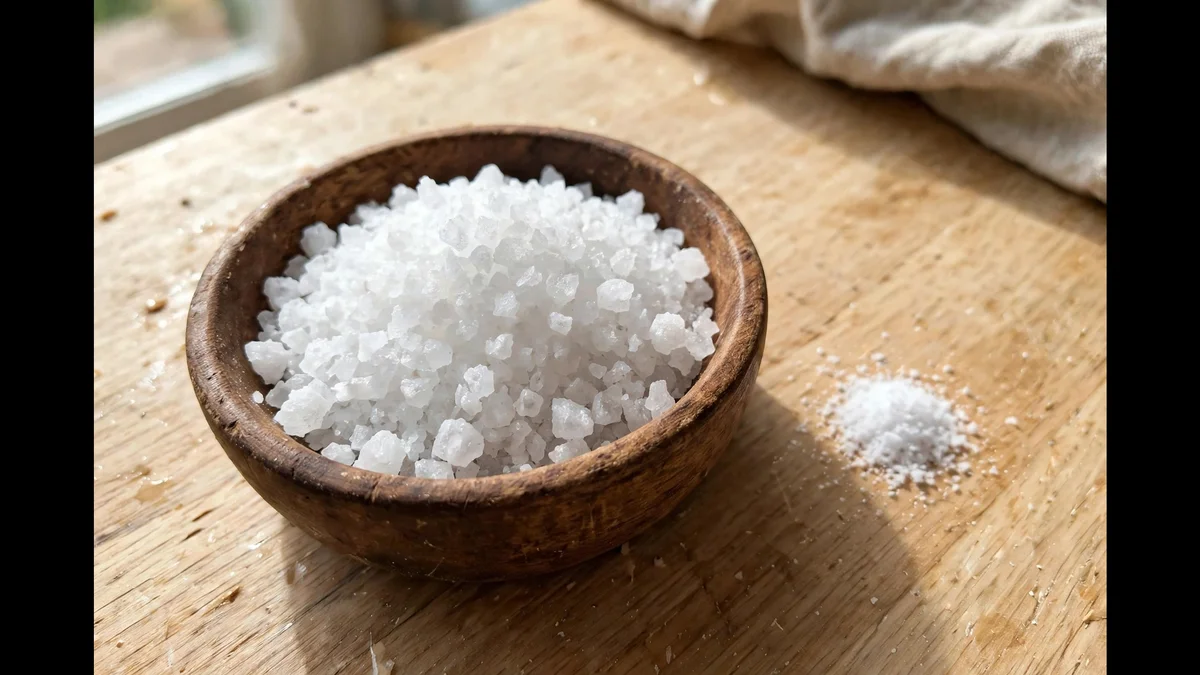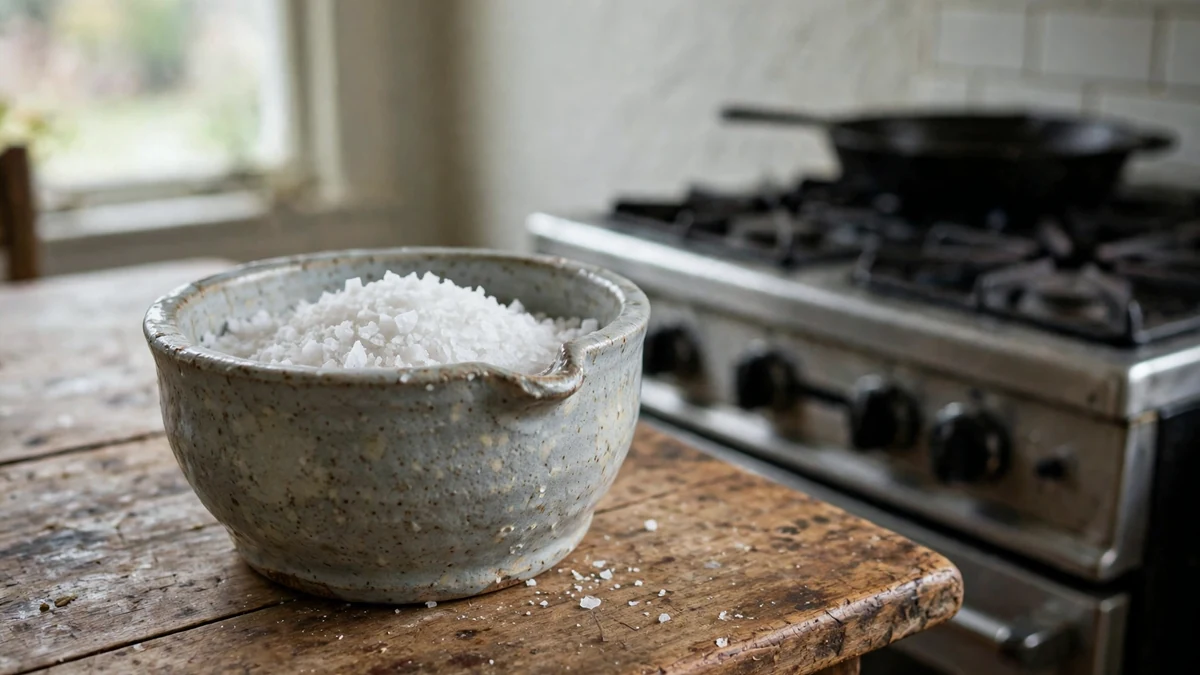
A salt cellar is a small open dish that keeps salt within reach of the cook, and it changes the way a kitchen feels to work in. Instead of shaking salt from a cardboard box or unscrewing a jar with wet hands, you pinch what you need, feel how much you are adding, and move on. The best salt cellars of 2026 do that job without fuss: they hold enough salt for a week of cooking, keep it dry beside a steaming stove, sit steadily on the worktop, and look good enough to leave out on the table at dinner.
What Is a Salt Cellar, and Why Use One
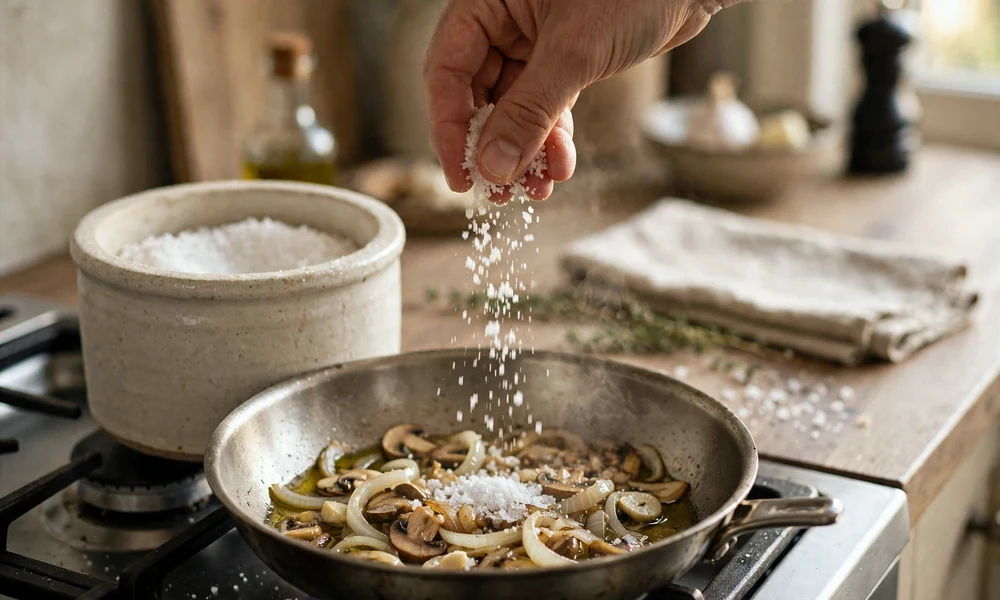
A salt cellar is an open container for salt, usually wide and shallow, with no holes in the top and no mechanism to jam. The cook dips in two or three fingers, takes a pinch, and seasons the food. It is one of the oldest kitchen tools in use, and it has survived because the action it enables is so simple. A shaker is fine for the table, where a light dusting is all that is needed, but at the stove a pinch is faster, more accurate and easier to repeat.
How to Choose: The Five Things That Matter Most
Start with size. A cellar that is too small needs refilling every other day, and a cellar that is too large holds salt that goes stale before you use it. For most home cooks, a capacity of roughly half a cup to one cup is right: enough for a week or two of everyday cooking, small enough that the salt stays fresh. If you cook for a large family or batch-cook at the weekend, go a little larger. If you live alone and cook simple meals, a small dish is plenty.
Next, look at the opening. It should be wide enough for three fingers to dip in comfortably without knocking the dish over, and shallow enough that you can see how much salt is left at a glance. A narrow, deep jar is not a cellar, however pretty it looks, because you cannot pinch from it cleanly. The rim should be smooth, with no sharp edge, and the base should be wide and flat so the dish does not tip when you reach for it with one hand.
The lid comes third, and it matters more than most buyers expect. An open cellar is the most convenient to use, but it leaves salt exposed to steam, splashes and dust. A cellar with a lid, a hinged wooden cover or a swivel top protects the salt between uses and still opens with one hand. If your cellar will sit right beside the stove, a lid is worth having. If it will live on a sideboard or a dining table, an open dish is fine.
Material is fourth. Ceramic and stoneware are the classic choices: heavy, stable, easy to clean and kind to salt. Marble is beautiful and cool to the touch, and its weight keeps it firmly planted, though it needs occasional sealing. Wood is warm and light, and a wooden cellar suits a rustic kitchen, but it must be kept dry and oiled now and then. Glass lets you see the salt level at a glance, which is genuinely useful, though it shows every fingerprint. Stainless steel is the practical choice for a busy kitchen, unbreakable and easy to wipe down.
Finally, think about where the cellar will live. A cellar for the stove needs to be heat-resistant, stable and easy to open with damp hands. A cellar for the table needs to look the part beside plates and glasses, and to be small enough not to crowd the place settings. Many cooks end up with two: a larger working cellar by the stove and a smaller, prettier one for the table. That is not extravagance. It is the same logic as keeping a good knife in the kitchen and a decent one for the table.
Materials Compared: Ceramic and Wood
Ceramic cellars are the safest first choice. A glazed stoneware dish does not react with salt, does not absorb moisture, and washes clean in seconds. The glaze also means the salt inside stays dry, which is the single most important job a cellar has. Look for a thick, well-fired piece with a smooth interior, because a rough interior traps salt in its pores and is hard to clean. Handmade ceramic cellars vary slightly in size and colour, and that variation is part of their charm rather than a fault.
Wooden cellars, often called salt pigs in the British tradition, are the warmest option. A turned wooden pig, with its wide opening and curved back, is designed to be reached into again and again, and the wood absorbs a little moisture, which can help keep salt dry in a humid kitchen. The trade-off is maintenance: wood should never be soaked, and it benefits from a light coat of food-safe oil from time to time. A well-cared-for wooden cellar develops a deep, honeyed colour with age.
Open, Lidded or Swivel: Which Style Suits Your Kitchen
An open cellar is the simplest and the most satisfying to use. There is nothing between your fingers and the salt, and the dish is always ready. It suits a cook who seasons constantly and refills often. The risk is exposure: steam from a boiling pot can drift into an open dish, and a splash of oil can reach it. Keep an open cellar a little back from the hob, on a dry stretch of worktop, and it will serve you well.
A lidded cellar trades a little convenience for protection. The lid may be a simple cover that lifts off, a hinged wooden top, or a swivel lid that turns aside with a flick of a finger. The swivel design is the best of the three for everyday cooking, because it opens and closes with one hand and never gets put down on a wet worktop and forgotten. A loose lid, by contrast, is a nuisance: it ends up beside the sink, and the cellar spends most of its life open anyway.

Which Salt Belongs in a Cellar
Not every salt belongs in a cellar, and the choice of salt matters as much as the choice of dish. Flaky sea salt is the classic cellar salt: its large, delicate flakes are easy to pinch, they crush pleasantly between the fingers, and they add a clean crunch as a finishing salt. Keep a cellar of flaky salt on the table for finishing dishes, and you will use it every day.
Coarse kosher salt is the workhorse for the stove. Its large, even grains dissolve quickly, they are easy to measure by the pinch, and they do not contain the anti-caking agents that can give fine table salt a faint metallic taste. Most professional cooks keep kosher salt in a cellar by the stove and use it for almost everything. If you buy only one salt for your cellar, make it this one.
Where to Keep It, and How to Keep It Dry
The best place for a working cellar is on the worktop, within arm’s reach of the stove but not directly beside a steaming pot. A spot about a forearm’s length from the hob is ideal: close enough to reach without stepping away, far enough that steam does not condense into the salt. Avoid the windowsill above the sink, where splashes are inevitable, and avoid the shelf directly above the kettle.
Salt Cellars at the Table
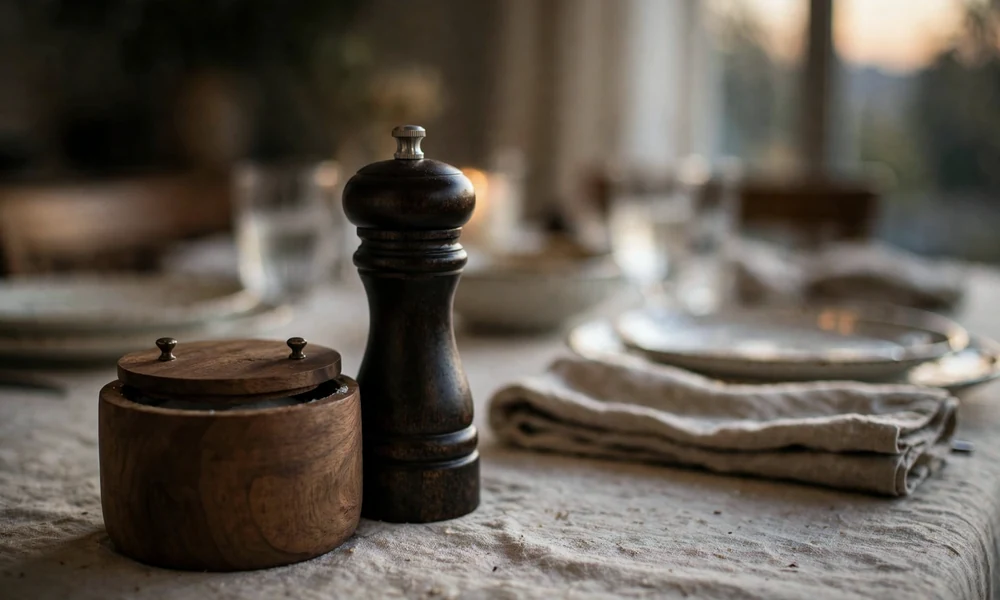
The table cellar does not need to match the stove cellar. In fact, it is often better if it does not. A small marble or glass dish looks right beside plates and glasses, while a large working cellar looks out of place. Choose the table cellar for looks and the stove cellar for work, and each will do its job better. Our guide to the best pepper mills of 2026 covers the natural companion to the table cellar, because salt and pepper belong together, and a good mill is worth as much care as a good cellar.
What to Avoid When Buying a Salt Cellar
Avoid cellars with a narrow opening. If you cannot get three fingers in comfortably, you will not enjoy using it, and you will go back to the box. Avoid very light dishes, too: a cellar that slides across the worktop every time you pinch from it is a daily irritation, and it will eventually be knocked over. Weight is a feature, not a flaw, in a salt cellar.
Building a Small Salt Collection
Once you have a good cellar, a second one is a natural step. A working cellar of kosher salt by the stove, a finishing cellar of flaky sea salt on the table, and perhaps a small dish of smoked salt for grilling will cover almost every meal you cook. Keep the collection small and use it daily, because salt that sits unused goes stale, and a cellar that is never touched is just decoration.
Storage matters as the collection grows. Keep bulk salt in sealed jars in a cool, dry cupboard, and keep only what you will use in the next week or two in the cellars. Label the jars if you keep several salts, because smoked salt and plain salt look alike in a jar, and the mistake is easy to make. Our guide to the best spice racks of 2026 is useful here, because a tidy spice shelf and a tidy salt collection belong together, and the same rules apply to both: keep things visible, keep them dry, and keep them within reach.
It is also worth thinking about the rest of the cooking shelf. A cellar sits beside the oil, the pepper and the herbs, and it should be as easy to reach as any of them. If you cook with good olive oil, our guide to the best olive oil of 2026 will help you choose a bottle worth keeping beside the salt, because the two are used together in almost every savoury dish, and both deserve a proper place on the worktop.
Frequently Asked Questions
Is a salt cellar hygienic? Yes, for home cooking. The salt itself is inhospitable to bacteria, and the dish is easy to wash. The sensible rules are simple: use clean, dry hands, keep the cellar away from raw meat, and wash and dry it when you refill it. In a shared house, a small spoon removes any worry about fingers altogether.
Can I put any salt in a cellar? Coarse and flaky salts work best, because they pinch cleanly and do not clump. Fine table salt is better left in its box, and damp salts should be kept in a sealed jar. Smoked and flavoured salts are excellent in a small cellar of their own.
The best salt cellar is the one you reach for without thinking: heavy enough to stay put, wide enough to pinch from, easy to keep dry, and pleasant to look at on the worktop. Choose a glazed ceramic dish for the stove and a smaller, prettier one for the table, fill them with good coarse salt, and seasoning will stop being a chore and start being part of the pleasure of cooking.