What Is Sea Salt and Is It Better Than Table Salt in 2026
Sea salt is salt made by evaporating seawater, and the honest answer to whether it is better than table salt in 2026 is that it depends on what you mean by better. For flavour and texture, sea salt usually wins: its larger, irregular crystals dissolve more slowly, give a brighter hit of saltiness, and add a crunch that fine table salt cannot match. For everyday cooking, baking and health, the two are far closer than the price gap suggests. Both are almost entirely sodium chloride, both season food the same way, and the small amounts of other minerals in sea salt make no meaningful difference to your diet.
Key takeaways
- Sea salt is evaporated seawater; table salt is usually mined and heavily refined, but both are about 98 to 99 percent sodium chloride.
- Sea salt tastes brighter and crunches more because of its crystal size and shape, not because it contains meaningfully more minerals.
- By weight, sea salt and table salt contain the same amount of sodium, so one is not a lower-sodium choice unless you measure by the spoonful.
- Flaky sea salt is best as a finishing salt, sprinkled on at the end, while fine sea salt or table salt is better for baking and for dissolving evenly.
- Table salt is usually iodised, which matters if you get little iodine from elsewhere, while most sea salt is not.
What sea salt actually is
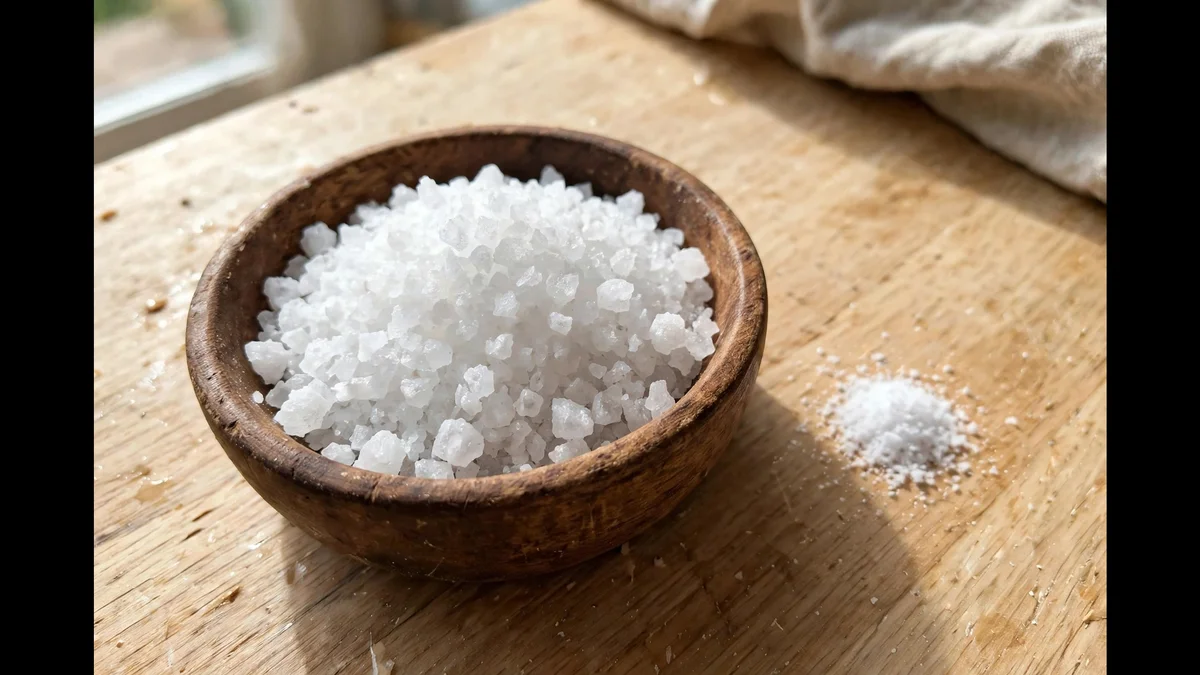
Sea salt is what is left when seawater evaporates. Seawater is about three and a half percent salt by weight, along with traces of magnesium, calcium, potassium and other minerals. When that water is left to dry in shallow ponds or pans, the water leaves and the salt stays behind as crystals. Those crystals are then raked up, washed lightly or not at all, and packed. Because the process is gentle and the salt is not heavily refined, the crystals keep their irregular shapes and a small amount of those trace minerals.
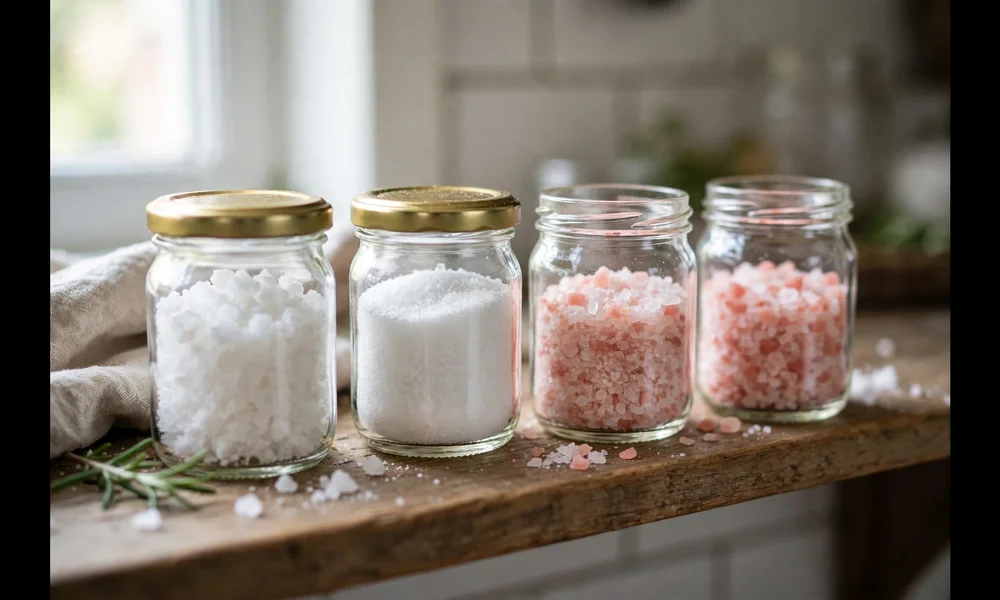
Sea salt comes in several forms. Fine sea salt is ground to a powder much like table salt and behaves the same way in cooking. Coarse sea salt has larger crystals that are good for grinders and for brines. Flaky sea salt, the kind sold in flat pyramid-shaped crystals, is the premium form: it dissolves quickly on the tongue, gives a clean salty hit, and adds a delicate crunch. Smoked sea salt is salt that has been exposed to wood smoke, and flavoured sea salts are mixed with herbs, chilli or other ingredients. All of them are still sea salt, and all of them are still mostly sodium chloride.
How sea salt is made
Traditional sea salt is made in salt pans: shallow, flat pools where seawater is let in and left under the sun and wind. As the water evaporates, the brine gets saltier until crystals begin to form on the surface or on the bottom. Workers rake the crystals into piles, let them drain, and then dry them. The best-known examples are the salt marshes of the Mediterranean and the Atlantic coast, where the climate gives long, dry summers and the process can run for months at a time.
Sea salt vs table salt
| Feature | Sea salt | Table salt |
|---|---|---|
| Source | Evaporated seawater | Usually mined rock salt, refined |
| Main ingredient | Sodium chloride, about 98 percent | Sodium chloride, about 99 percent |
| Crystal shape | Irregular, often large or flaky | Small, uniform cubes |
| Taste | Brighter, with a short crunch | Sharp and purely salty |
| Iodine | Usually not added | Usually iodised |
| Anti-caking agents | Rarely added | Often added to stop clumping |
| Best use | Finishing, salads, grilling | Baking, brines, everyday cooking |
| Price | Higher, much higher for flakes | Very cheap |
Is sea salt healthier than table salt?
The short answer is no, not in any way that matters. Sea salt does contain small amounts of magnesium, calcium and potassium, and those minerals are often listed on the packet as if they were a benefit. The amounts are tiny: you would need to eat far more salt than is safe to get a meaningful dose of any of them, and the sodium would do you harm long before the minerals did you good. If you want magnesium and potassium, eat leafy greens, beans and nuts, not more salt.
There is one genuine health difference, and it runs in table salt’s favour. Table salt is usually iodised, which means iodine has been added to it. Iodine is needed for a healthy thyroid, and many people get a large share of theirs from iodised salt, especially if they eat little fish or dairy. Most sea salt is not iodised, so a household that switches entirely to sea salt can quietly lose an important source of iodine. That does not mean sea salt is dangerous, but it does mean the switch is worth thinking about, and it is worth checking whether your sea salt is iodised or not. Some brands do add iodine, and the packet will say so.
When sea salt is worth the money
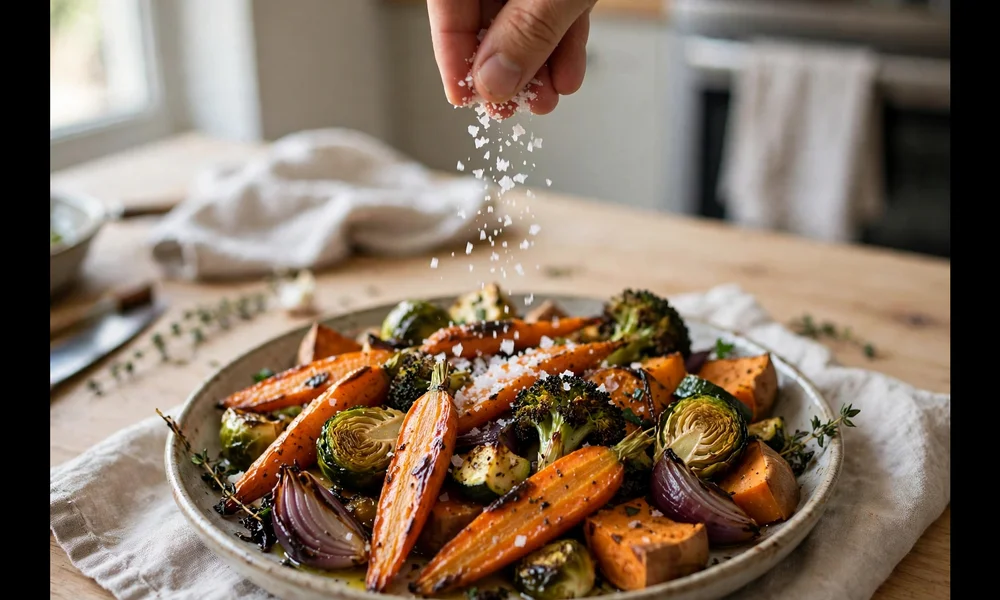
Sea salt earns its price in three situations. The first is finishing: a pinch of flaky salt on a sliced tomato, a piece of grilled fish, a chocolate brownie or a buttered slice of bread. Here the salt is not dissolved into the dish, so its texture and the way it hits the tongue are the whole point, and flaky sea salt is plainly better than fine table salt. The second is salads and simple dishes where the salt is one of only a few flavours, and its brightness can be tasted. The third is presentation: a dish finished with visible flakes looks cared for, and that matters when you are cooking for guests.
Sea salt is not worth the money when it will dissolve completely and disappear. In a soup, a stew, a brine or a bread dough, the crystals dissolve and the difference between sea salt and table salt becomes almost impossible to taste. The same goes for baking, where even crystal size matters: fine salt dissolves evenly and measures reliably, while coarse salt can leave salty pockets and throw off a recipe. For those jobs, fine sea salt or ordinary table salt is the sensible choice, and the expensive flakes should stay in the cupboard for the finish.
A practical kitchen needs two salts, not ten. A fine salt for cooking and baking, and a flaky sea salt for finishing, will cover nearly everything. The rest of the salt aisle, the smoked salts, the coloured salts and the herb blends, are enjoyable extras rather than essentials, and they are best bought in small amounts for the dishes they suit rather than as everyday replacements.
How to use sea salt well
Start by tasting the difference yourself. Put a pinch of flaky sea salt on a slice of tomato and a pinch of fine table salt on another, and the contrast is immediate: the flakes give a bright, clean saltiness and a crunch, while the table salt gives a sharper, flatter hit. That test tells you more than any packet, and it shows you where sea salt is worth using.
When you cook with coarse sea salt, remember to adjust for volume. Because the crystals are larger, a tablespoon of coarse salt contains less salt than a tablespoon of fine salt. If a recipe was written for table salt, use a little more coarse sea salt by volume, or better still, weigh it. A small set of kitchen scales removes the guesswork entirely, and it is the single most useful tool for anyone who cooks with different salts.
Sea salt buying checklist
- Buy one fine salt for cooking and baking, and one flaky sea salt for finishing, rather than a shelf full of near-identical salts.
- Check the packet for iodine: if your sea salt is not iodised, make sure you get iodine from fish, dairy or iodised salt elsewhere.
- Choose flakes for finishing and fine salt for baking, because coarse crystals dissolve unevenly in doughs and batters.
- Weigh salt when a recipe matters, since a spoonful of coarse sea salt holds less salt than a spoonful of fine table salt.
- Store sea salt in a sealed jar away from steam, and keep flaky salt dry so the crystals stay crisp instead of clumping.
- Taste before adding more: salt added at the end is easy to judge, while salt added early is easy to overdo.
Mistakes to avoid
The most common mistake is swapping salts spoon for spoon in a recipe and then wondering why the dish tastes under- or over-salted. Coarse sea salt and fine table salt simply do not weigh the same per spoonful, so a recipe written for one will be wrong for the other unless you adjust. Weighing takes seconds and removes the problem entirely.
The fourth mistake is storing salt badly. Sea salt left open beside the cooker absorbs steam and clumps, and flaky salt left damp loses its crunch. A lidded jar or a salt cellar solves the problem, and it also makes the salt easier to pinch, which helps you use less of it. The same care applies to the rest of the spice shelf: a cumin jar left open loses its warmth just as quickly, and a steak seasoning blend clumps the same way if it is left to steam.
Frequently asked questions
Is sea salt better than table salt?
For flavour and texture, yes: its larger crystals taste brighter and add a crunch that table salt cannot match. For health, no: both are almost entirely sodium chloride, and by weight they contain the same sodium. Choose sea salt for finishing and table salt, or fine sea salt, for everyday cooking.
Can I use sea salt in baking?
Yes, but use fine sea salt, not coarse or flaky. Fine salt dissolves evenly and measures reliably, while coarse crystals can leave salty pockets in a dough or batter. If a recipe calls for table salt, fine sea salt can replace it weight for weight.
Does sea salt contain iodine?
Most sea salt does not, because iodine is not added during evaporation. Table salt is usually iodised. If you switch to sea salt entirely, check the packet, and make sure you get iodine from fish, dairy or another source.
Why is flaky sea salt so expensive?
It is made by heating brine in open pans and skimming thin crystals off the surface by hand, which is slow and skilled work. The price reflects that labour and the low yield, not any nutritional advantage over cheaper sea salt.
Does sea salt expire?
Salt itself does not go off, but it does absorb moisture and clump, and flavoured salts can lose their aroma over time. Keep it in a sealed jar away from steam and it will last for years, though flaky salt is best used while its crystals are still crisp.
Can sea salt replace table salt in a brine?
Yes, provided you weigh it rather than measuring by volume. A brine needs a precise salt concentration, and coarse sea salt weighs less per spoonful than fine table salt, so weighing is the only reliable way to get the same result.
Bottom line
Sea salt is better than table salt where you can taste and feel it: as a finishing salt on salads, grilled food and baked treats, its flakes give a brighter flavour and a crunch that fine salt cannot match. It is not better for your health, it is not lower in sodium by weight, and it is wasted in soups, stews and baking, where it dissolves and disappears. Keep a fine salt for cooking, a flaky sea salt for finishing, and check that you are still getting iodine from somewhere. That is the whole of it, and it is enough.