The best olive oil in 2026 is not the most expensive bottle on the shelf, and it is not the one with the prettiest label either. It is the oil that tastes fresh, smells green and peppery, and still has its flavour intact when it reaches your table. Choosing well comes down to knowing what the labels actually mean and trusting your own palate more than the marketing.
A good extra virgin oil should smell like cut grass, green banana or fresh herbs, and finish with a gentle peppery bite at the back of the throat. That bite is a sign of fresh polyphenols, the natural compounds that give great olive oil its character. A flat, greasy or rancid bottle tells you the oil is old, badly stored or made from poor fruit, whatever the price tag says.
Key Takeaways
- Extra virgin is the only grade worth buying for flavour; it is the least processed and most aromatic olive oil you can buy.
- Look for a harvest date, not just a best-before date, and choose oil pressed within the last twelve months.
- Dark glass or a tin protects olive oil from light, which is its biggest enemy after heat.
- A peppery finish and a fresh green aroma are signs of good oil; a flat, waxy or crayon-like smell means it has gone off.
- Buy a size you will finish in six to eight weeks, and keep it in a cool, dark cupboard away from the stove.
What Makes an Olive Oil Great
Great olive oil starts in the grove, not in the bottle. The best oils come from healthy olives picked at the right moment, pressed within hours of harvest, and kept away from heat, light and air at every step. Early-harvest olives, picked while still green, give a bolder, more peppery oil. Later-harvest olives give a softer, more buttery oil. The variety matters too: Spanish Picual oils are robust and peppery, Italian oils are grassy with a strong finish, and Greek Koroneiki oils are fruity and fresh. The country on the label matters far less than the harvest date and the care taken after pressing.

Understanding the Grades
Extra virgin olive oil is the top grade. It must be made only by mechanical pressing, with no heat or chemicals, and it must pass both chemical tests and a tasting panel. Its free acidity must be below 0.8 percent, and it must have no flavour defects at all. Virgin olive oil is a step down, still mechanically pressed but allowed slightly higher acidity and minor defects. Pure olive oil is a blend of refined oil and a little virgin oil, with almost no flavour of its own. Light olive oil is not lower in calories, just lighter in flavour, because it has been refined. For anything where you will actually taste the oil, extra virgin is the only sensible choice.
Best Olive Oil Types Compared
There is no single best olive oil for every kitchen, because the right bottle depends on how you cook. A bold early-harvest oil is wonderful drizzled over grilled vegetables or a tomato salad, but its peppery edge can overwhelm delicate fish. A mild late-harvest oil is better for baking and everyday frying, where you want the fat without a strong flavour.
| Oil Style | Flavour | Best For | Typical Price |
|---|---|---|---|
| Early-harvest extra virgin | Bold, grassy, peppery | Finishing, salads, dipping | $20–$45 per 500ml |
| Mild extra virgin | Soft, buttery, fruity | Everyday cooking, baking | $10–$20 per 500ml |
| Single-estate extra virgin | Distinctive, varietal character | Special dishes, gifts | $25–$60 per 500ml |
| Everyday blended extra virgin | Balanced, gentle | All-purpose kitchen use | $8–$15 per 500ml |
| Refined olive oil | Neutral, almost no flavour | High-heat frying | $7–$12 per litre |
| Flavoured olive oil | Chilli, lemon, garlic notes | Finishing, marinades | $12–$25 per 250ml |
Price is a rough guide, not a rule. Some excellent everyday extra virgin oils cost under fifteen dollars, while some expensive bottles are old stock in heavy glass. Judge by the harvest date, the darkness of the bottle and the smell when you open it.
How to Choose the Best Olive Oil in 2026
Read the back label, not the front. The front is advertising; the back is where the useful facts live. Look for a harvest or pressed-on date within the last year, the country or region of origin, and the acidity level. If a label only shows a best-before date two years away and a vague origin like product of the EU, the oil inside is probably a bulk blend that has spent months in storage.
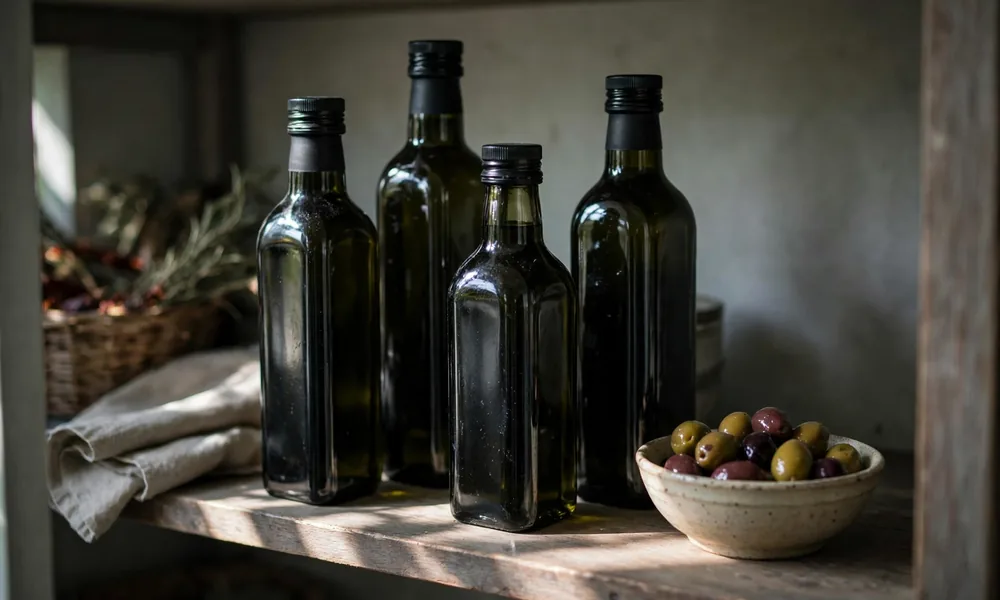
Next, look at the packaging. Olive oil hates light, so a dark green or amber glass bottle, a tin, or a bag-in-box keeps it fresher far longer than a clear glass bottle on a brightly lit shelf. Finally, think about how fast you will use it. Once opened, olive oil starts to lose its fresh aromas within weeks. If you cook with oil daily, a litre bottle makes sense. If you only drizzle it on salads at the weekend, buy a 500ml bottle and replace it more often.
How to Taste Olive Oil Properly
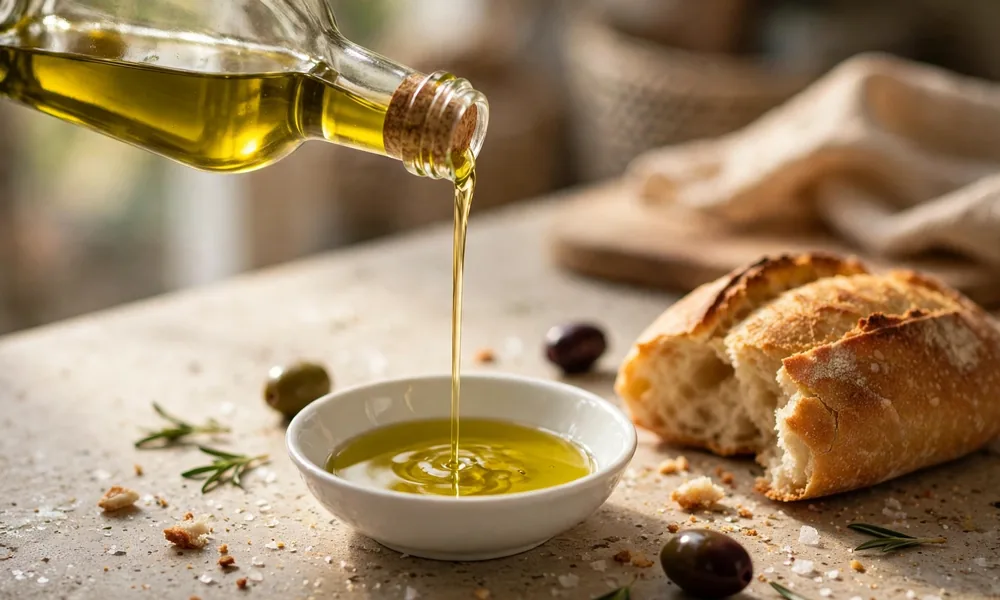
Pour a tablespoon into a small glass, cup it in your hand to warm it slightly, and swirl it gently. Smell it first: fresh oil smells green and alive, like cut grass, green apple or tomato leaf. Then take a small sip and draw a little air through it, the way you would with wine. Good oil will taste fruity at first, then bitter, then peppery, with the pepper catching at the back of your throat and sometimes making you cough. That cough is a compliment, not a fault.
What Bad Olive Oil Tastes Like
Rancid oil smells like old crayons, putty or stale nuts, and it tastes flat, greasy and stale. Fusty oil, made from olives that sat too long before pressing, smells musty and vinegary. If your oil smells of nothing at all, it is probably refined, or so old that its aromas have faded. A bottle that fails the smell test should be replaced, not saved for frying, because the same stale flavours will end up in your food.
Cooking With Olive Oil: Smoke Point and Everyday Use
A good extra virgin olive oil has a smoke point of around 190 to 210 degrees Celsius, which covers most everyday cooking: sautéing, roasting, frying an egg, or searing vegetables. Its high level of monounsaturated fat also makes it more stable under heat than many seed oils. What damages olive oil is sustained very high heat, like deep frying at full blast, where a neutral refined oil is a better tool.
For roasting vegetables, toss them in olive oil before they go in the oven and add a fresh drizzle when they come out. For baking, a mild oil works beautifully in cakes and breads, adding moisture without a strong olive flavour, and our guide to the best bread makers of 2026 is a useful companion if you bake your own loaves to dip in it. Save the bold, peppery bottle for finishing, where its flavour can shine undimmed.
Olive oil is also the base of the simplest dressings: three parts olive oil to one part acid, whisked with a pinch of salt and a little mustard. That acid can be lemon juice or a good vinegar, and our guide to the best apple cider vinegar of 2026 covers what to look for there. A dressing made fresh in a jar will always beat a bottled one, and it takes less than a minute.
Storing Olive Oil So It Stays Fresh
Olive oil has three enemies: light, heat and air. The best storage is a cool, dark cupboard away from the stove, with the cap screwed on tightly between uses. A temperature between 14 and 20 degrees is ideal, which for most homes means a kitchen cupboard rather than the fridge, where oil can cloud and thicken. Do not store olive oil in a decorative clear bottle on the worktop next to the cooker, however pretty it looks. That is the fastest way to ruin a good oil.
Flaxseed is another pantry staple that rewards the same care with freshness, and our guide to the best flaxseed of 2026 explains how to buy and store it well. The principle is the same across the pantry: buy fresh, buy small, and keep light and heat away.
Common Mistakes When Buying Olive Oil
The first mistake is buying by price alone. The cheapest bottle is often refined or old, and the most expensive bottle is often old stock in fancy packaging. The second mistake is trusting front-label claims like premium or pure without checking the back label for a harvest date and origin. The third mistake is buying a huge bottle to save money and then using it slowly for a year, by which time the oil inside is a shadow of what it was when opened. Many cooks also keep olive oil next to the stove, where heat and steam attack it daily, or use one bottle for everything, when two bottles, a mild everyday oil and a bold finishing oil, would serve them far better.
Olive Oil Buying Checklist
- Choose extra virgin, and check the acidity is below 0.8 percent if it is printed on the label.
- Find a harvest or pressed-on date from the last twelve months, not just a best-before date.
- Pick dark glass, a tin, or a bag-in-box, and avoid clear bottles and sunlit shelves.
- Buy a size you will finish within six to eight weeks of opening.
- Smell the oil when you open it: it should smell green, fresh and peppery, never flat or crayon-like.
- Store it in a cool, dark cupboard away from the stove, with the cap tightly closed.
Frequently Asked Questions
What is the best olive oil for everyday cooking?
A mild extra virgin olive oil is the best everyday choice, because it has a fresh flavour that suits most dishes without dominating them, and a smoke point high enough for sautéing, roasting and frying an egg. Keep a bold early-harvest bottle alongside it for salads and finishing.
Is expensive olive oil worth the money?
Sometimes, but only when the price reflects freshness and origin rather than packaging. A twenty-five dollar single-estate oil pressed last autumn is usually worth it. A forty dollar bottle with no harvest date and a vague origin is not.
Can you fry with extra virgin olive oil?
Yes, for most everyday frying. Extra virgin olive oil smokes at around 190 to 210 degrees Celsius, which covers sautéing, pan-frying and roasting. For sustained deep frying at very high temperatures, a neutral refined oil is the better tool.
How long does olive oil last once opened?
An opened bottle is at its best for six to eight weeks, and it stays usable for about three to six months if stored well in a cool, dark cupboard. Unopened, it keeps for twelve to eighteen months from harvest.
Should olive oil be refrigerated?
Usually not. The fridge can make olive oil cloudy and thick, which is harmless but inconvenient. A cool, dark cupboard between 14 and 20 degrees is better. Only refrigerate if your kitchen is consistently very warm.
What does it mean if olive oil tastes peppery?
A peppery finish is a good sign. It comes from polyphenols, the natural antioxidants in fresh olives, and it is strongest in early-harvest oils. If the oil also smells fresh and green, that pepper means you have a lively, well-made oil.
The Bottom Line
The best olive oil in 2026 is a fresh extra virgin oil with a recent harvest date, sold in dark glass or a tin, that smells green and peppery when you open it. Buy a mild bottle for everyday cooking and a bold bottle for finishing, use them within a couple of months, and store them in a cool, dark cupboard. With olive oil, freshness is the flavour.