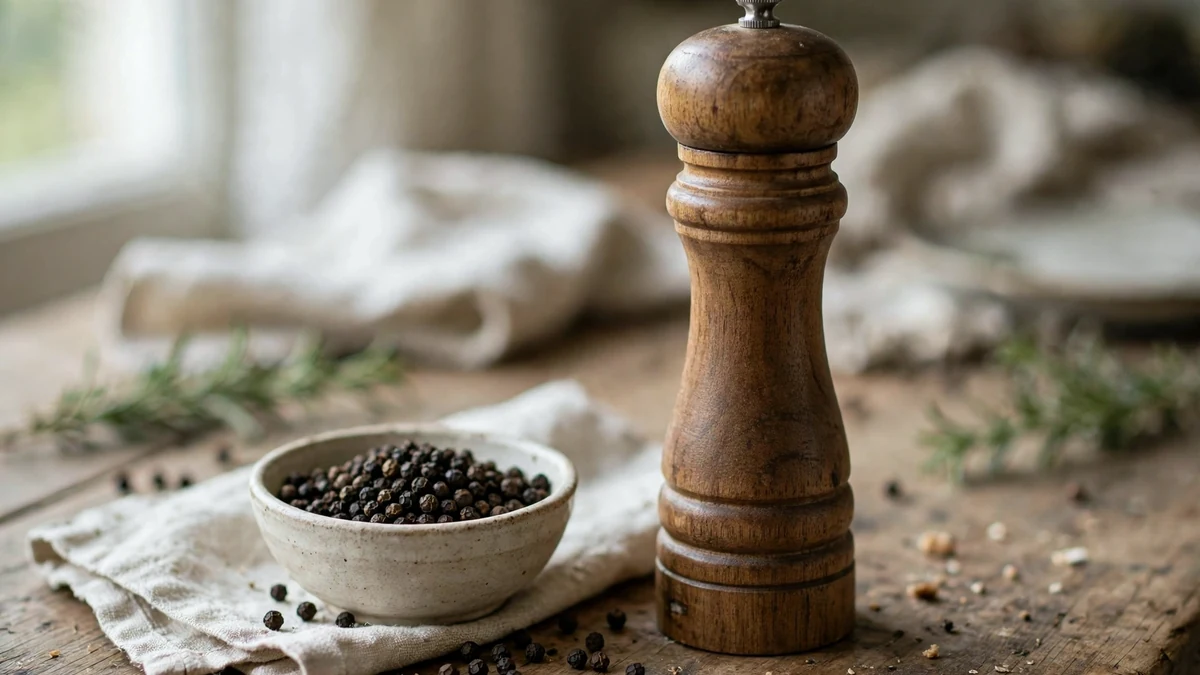
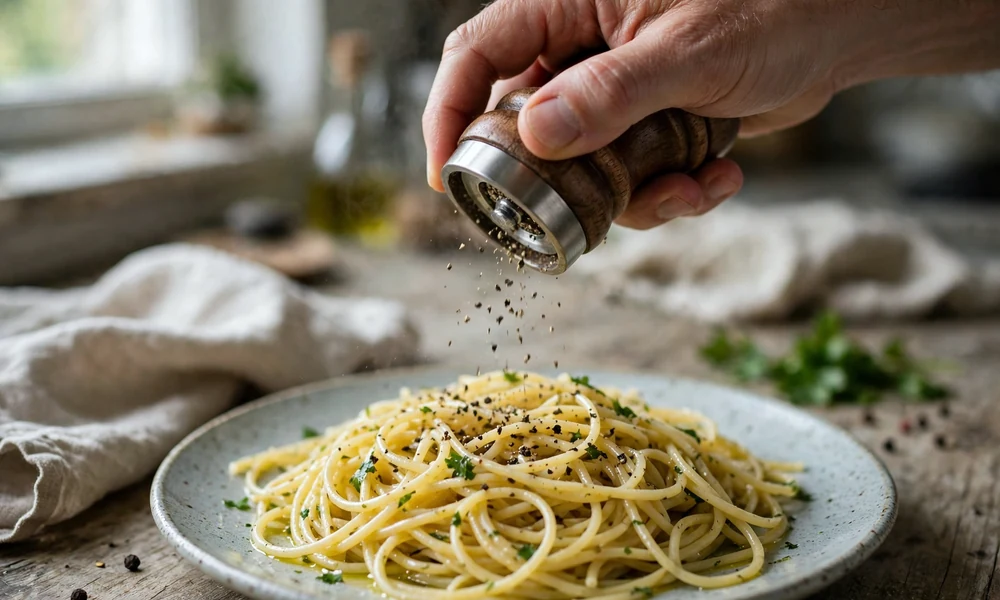
There is a small moment at the end of almost every good meal, just before the first bite, when someone reaches across the table for the pepper mill. The twist is slow, the grind is uneven in the best way, and the smell that rises off the plate is sharper and warmer than anything that comes out of a pre-ground jar. It is a tiny ritual, and it is the reason the pepper mill has never really gone away, even in kitchens full of gadgets that promised to replace it.
A good pepper mill does more than look handsome on the table. It grinds evenly, so the seasoning lands where it should instead of in dusty clumps or oversized chunks, and it holds enough to last through a week of cooking without constant refilling. The best pepper mills of 2026 are the ones that get those things right, and this guide covers them: classic wooden mills, ceramic mills, steel mills, and the electric models that suit some kitchens better than any manual mill can.
Key Takeaways
- The grinding mechanism matters more than the body, because a cheap mechanism clogs, jams, and grinds unevenly no matter how good the mill looks.
- Hardened steel mechanisms give pepper its sharpest, most even grind, while ceramic mechanisms resist corrosion and suit damp kitchens.
- A mill that adjusts from fine to coarse is worth paying for, because fine pepper suits soups and eggs while coarse pepper suits steaks, and one setting cannot do both well.
- Manual mills give you control and last for decades, while electric mills suit anyone with weak hands or a busy stove.
- Size is a real decision, not an afterthought, because a tall mill holds more and grinds faster, while a short one fits the table and the hand better.
How We Judged
We judged every mill in this guide on the grind first and everything else second. A good mill produces an even grind at every setting, from a fine dust for soups to a coarse crack for a steak, without leaving half the peppercorns untouched or crushing them into powder when coarse was asked for. We looked for mechanisms that turn smoothly under load, knobs and rings that adjust without slipping, and bodies that do not shed flakes of finish into the food.
The Classic Wooden Mill
The wooden mill is the shape most people picture when they hear the words pepper mill, and there is a good reason it has lasted. A turned wooden body is warm to hold, heavy enough to stay put on the table, and handsome in a way that suits both a farmhouse kitchen and a formal dining room. The best wooden mills use dense hardwoods such as beech, walnut, or olive wood, which resist dents and moisture far better than soft, pale woods.
What matters inside a wooden mill is the mechanism, and the better makers have used the same designs for decades for a reason. A steel mechanism with a sprung top gives pepper a clean, even crack and lets you set the grind by turning the knob at the top, tighter for fine, looser for coarse. The best wooden pepper mills grind with a smooth, even resistance rather than a gritty catch, and they keep that feel for years because the mechanism is built to be taken apart and cleaned.
Steel or Ceramic: The Mechanism That Decides Everything
Every pepper mill is really two things: a body you hold and a mechanism that does the work. The body is what you see in the shop, but the mechanism is what decides whether the pepper comes out even or in clumps, and whether the mill still works in five years. Two materials dominate, and they behave very differently.
Hardened steel is the traditional choice for pepper, and it is still the best at producing a sharp, even grind. Steel teeth bite into the peppercorn and crack it cleanly, which is why the best mills for coarse grinding use steel. The catch is that steel needs to stay dry. A steel mechanism left damp will eventually rust, and a rusted mechanism grinds unevenly and can flavour the pepper with metal.
Ceramic mechanisms are newer, and they have real advantages. Ceramic does not corrode, so it suits kitchens where the mill lives near the sink or the hob. It also stays sharp for a very long time, because ceramic is harder than steel. The trade-off is that ceramic can be more brittle, and a cheap ceramic mechanism can chip if it meets a stone or a stray bit of grit in the peppercorns. Buy ceramic from a maker you trust, and check that the peppercorns are clean before you fill the mill.
Grind Settings: Fine, Coarse, and Everything Between
The single most useful feature on a pepper mill is an adjustable grind, and it is the feature most often done badly. A good adjustment moves smoothly from a fine dust to a coarse crack, with enough steps in between to be useful, and it stays where you put it. A bad one slips a notch every time you twist, so the pepper that was fine yesterday is coarse today.
Fine pepper suits eggs, soups, and sauces, where you want the flavour to disappear into the dish rather than sit on top of it. Coarse pepper suits steaks, roasts, and salads, where you want the crunch and the visible flecks. Most cooking sits somewhere in the middle, and a mill that only does one setting well will frustrate you within a week.

Manual or Electric: Which Suits Your Kitchen
Manual mills are the default for a reason. They need no batteries, no charging, and no motor to fail, and they give you complete control over how much pepper comes out and how fast. A good manual mill is also a pleasure to use: the weight of it, the smooth twist, the sound of the grind. For most homes, a manual mill is the right answer, and it will still be working in twenty years.
Electric mills have their place, and it is a bigger place than many cooks admit. If you have weak hands, arthritis, or a wrist that complains after a long day, an electric mill turns a chore into a button press. They also suit busy cooking, when one hand is holding a pan and the other is free for exactly one job. The best electric mills grind evenly, run quietly, and have a light that shows where the pepper is landing, which is genuinely useful over a dark pan.
Size, Capacity, and the Shape of the Thing
Pepper mills come in sizes from a pocket-sized five inches to a showpiece twelve inches tall, and the size you pick changes how the mill feels and how often you refill it. A tall mill holds more peppercorns, so you refill it less often, and its longer body gives you more leverage, so grinding takes less effort. A short mill is easier to hold, easier to store, and fits better on a crowded table.
For most kitchens, an eight-inch mill is the sweet spot. It holds enough for a month or two of regular cooking, it is comfortable in most hands, and it looks right on the table without dominating it. Go shorter if the mill will live in a small kitchen or travel with you, and go taller if you cook for a crowd or simply like the look of a tall mill on the sideboard.
Refilling, Cleaning, and Keeping It Grinding
Refilling a pepper mill should take thirty seconds, and on a good mill it does. The top unscrews or lifts off, you pour in whole peppercorns, and the top goes back on. On a bad mill, the top sticks, the opening is too narrow for the peppercorns to fall through, or the mechanism falls apart in your hands when you open it. Check the opening before you buy, and fill the mill over a bowl the first time, so any spills land somewhere useful.
Cleaning is where most mills are neglected, and it shows in the grind. Every few months, empty the mill, brush out the dust with a dry brush, and wipe the outside with a damp cloth. If the mechanism stiffens, take it apart if the design allows, brush out the compacted dust, and put it back together. Never wash a wooden mill under the tap, and never put any mill in the dishwasher unless the maker says so in writing. A mill that is cleaned twice a year will grind as well in its tenth year as it did in its first.

Which Peppercorns to Put In It
The mill is only half the story. The peppercorns you put in it decide the flavour, and the differences between them are bigger than most people realise. Black peppercorns are the default: hot, sharp, and familiar, made from unripe berries dried until they wrinkle. They suit almost everything, and they are the right starting point for any mill.
Tellicherry peppercorns, from the Malabar coast, are larger and more aromatic than ordinary black pepper, with a citrus note that shows up clearly in simple dishes. They cost more, but a mill full of Tellicherry is the cheapest upgrade a home cook can make. Whatever you buy, check that the corns are dry, hard, and roughly the same size, and throw away any that look soft, mouldy, or dusty.
What to Avoid
The cheapest mills in the shop are cheap for a reason, and the reason is usually the mechanism. A mill with a plastic mechanism will grind unevenly from the start and get worse, and a mill with a painted body will shed flakes of paint into the food within a year. If the mill costs less than a bag of good peppercorns, the mechanism is almost certainly not worth having.
Finally, do not buy a mill for its looks alone. A beautiful mill that grinds badly is a decoration, not a tool, and it will end up as one. The best-looking mill in this guide is also one of the best-grinding, but that is a coincidence, not a rule. Judge the grind first, and let the looks be the tiebreaker.
Our Verdict
The best pepper mills of 2026 are not the most expensive ones, and they are not the ones with the most features. They are the mills with the best mechanisms, a grind adjustment that stays where you put it, and a size that suits the way you cook. A classic wooden mill with a steel mechanism is the best choice for most homes, and it is the mill we would buy first. An electric mill is the best choice for anyone whose hands struggle with a manual twist, and a ceramic mechanism is the best choice for a damp kitchen.
Whatever you buy, buy it for the grind rather than the looks, and look after it once it is home. Fill it with whole peppercorns, keep it dry, and clean the mechanism when it stiffens. Do that, and it will still be grinding well in 2036, which is more than can be said for most of the gadgets in the kitchen.
For more on the wider world of seasoning, see our guide to salt and pepper mills, and our guide to spice grinders that actually grind fine. And if the mill is for the table rather than the stove, our guide to salt shakers for everyday tables will help you finish the setting.