Dried figs are one of the oldest snacks in the world, and one of the easiest to buy badly. A good bag is soft, honeyed and chewy, with a deep caramel flavour and a gentle crunch. A bad bag is hard, dull and coated in sugar, closer to a sweet. The dried figs worth the price in 2026 taste unmistakably of figs, and this guide explains how to tell them apart before you pay.
The price of dried figs has climbed, and the gap between the cheapest bag and the best one is wider. A cheap bag left uneaten in the cupboard is the most expensive fig of all, while a slightly dearer bag finished in a week is a bargain. The trick is knowing what to look for: shape, colour, softness and the label.
Key Takeaways
- The best dried figs have one ingredient, figs, and feel soft and pliable when you squeeze the bag, never hard or brittle.
- Whole figs keep best and taste richest, while halved figs are handier for baking and chopping into salads and porridge.
- Turkish figs are pale, honeyed and soft, while Greek figs are darker, denser and more caramel-like, and both are worth buying.
- A light white bloom is natural fruit sugar, not mould, and it wipes away or disappears with a short soak.
- Store dried figs sealed in a cool, dark cupboard, and they stay soft for months instead of turning hard.
Dried Figs 2026 at a Glance
| Best for | Type | Flavour | Standout strength |
|---|---|---|---|
| Best overall | Turkish Smyrna, whole | Pale, honeyed, mild | Soft, sweet, suits everyone |
| Best for baking | Halved figs | Rich, caramel | Chop easily, spread through cakes |
| Best for snacking | Greek figs, whole | Dark, dense, chewy | Slow to eat, deeply satisfying |
| Best with cheese | Mission figs | Dark, jammy, wine-like | Stands up to strong cheese |
| Best on a budget | Fig strings or rings | Sweet, mild | Cheapest per kilo, good for cooking |
| Best for porridge | Diced figs | Sweet, soft | Stir straight in, no chopping |
What a Good Dried Fig Looks and Tastes Like
A good dried fig is plump for its size, with a skin that gives a little when you press it. The colour depends on the variety: Turkish figs are golden brown, Greek figs dark brown, Mission figs nearly black. What matters is an even colour and a surface that looks slightly moist, not dusty and grey. A fig that rattles like a pebble has dried out too far, and no soaking will fully bring it back.
The taste should be sweet but not sugary, with a honeyed, almost caramel note and a faint tang underneath. Chew slowly and you should notice the tiny seeds crunching, then a soft, almost jammy centre. If the first thing you taste is plain sugar, the figs have probably been dipped in syrup, a sign the fruit underneath was poor. Our guide to what makes great dried fruit worth stocking in 2026 notes that one ingredient on the label is the mark of quality, and anything else is usually covering something up.
Whole Figs or Halved Figs
Whole figs are the better buy most of the time. They dry slowly, which keeps the inside soft, and the unbroken skin protects the flesh in the bag. A whole fig shows its quality at a glance: plump, skin intact, stem end clean. Halved figs dry faster and can turn leathery at the edges, but they are handier in the kitchen, chopping in seconds and folding into dough without a fight.
Keep both, for different jobs. Buy whole figs for the snack bowl and the cheese board, where looks and texture matter, and halved or diced figs for baking, porridge and salads, where they disappear into the dish anyway. Halved figs are also the better choice if you cook with figs often, because you will use them up before they harden.

Turkish Figs or Greek Figs
Turkish figs, usually sold as Smyrna figs, are the pale, honeyed ones most people picture. They are large, soft and golden, with a gentle sweetness and a short, clean chew. They are the best all-round fig: good for snacking and baking, and the easiest to like if you are new to dried figs. The softest ones can be a little sticky, so they suit a jar better than a pocket.
Greek figs are darker, smaller and denser, with a deeper caramel flavour and a longer, chewier bite. They taste more intensely of fig, which makes them the connoisseur’s choice, but they can be an acquired taste after the milder Turkish kind. They also keep slightly better. Neither is better outright: buy Turkish for sweetness and softness, Greek for depth and chew, and try both before deciding which one your household finishes.
Sweetness, Chew and the Sugar Bloom
Dried figs are naturally sweet, with no added sugar needed, and that sweetness concentrates as the water leaves the fruit. A 30-gram serving, about three or four figs, carries roughly the same natural sugar as a small apple, which is why a handful is a sensible portion and a whole bag is not. The fibre slows the sugar down, so they satisfy in a way a biscuit does not, but they are still energy-dense, and the bag is easy to keep reaching into.
First-time buyers often worry about the pale white bloom that sometimes appears on dried figs. It looks like mould, but it is almost always crystallised fruit sugar, drawn out as the fig dries, and it is harmless: it wipes off, and it disappears if you soak the figs for ten minutes. Real mould is fuzzy, green or grey, and smells musty: if a fig looks or smells like that, throw it away and check the rest of the bag.
Baking and Cooking With Dried Figs
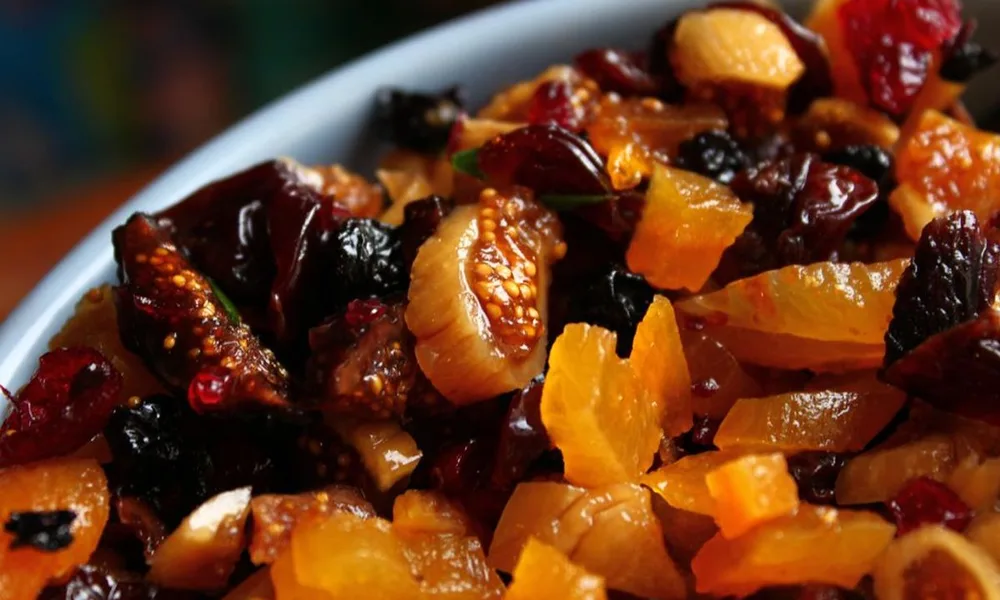
Dried figs are one of the most useful dried fruits in baking, because they hold their shape, keep their sweetness, and add a chewy texture raisins cannot match. Chop them into a fruit cake, a soda bread or flapjacks, and they go soft and jammy in the oven while the edges caramelise slightly. They are equally good in savoury cooking: simmered with onions and vinegar they make a sharp-sweet chutney.
The one rule for cooking with figs is to soak them first if they are at all firm. Ten minutes in warm water, or orange juice for a cake, plumps them up, and the soaking liquid can go into the recipe for extra flavour. Very soft figs can go straight in, but a hard fig will stay hard through baking, and nobody enjoys biting into a pebble in a soft cake. Our guide to how to choose a charcuterie board for effortless hosting in 2026 shows the other side of figs: halved on a board with cheese and nuts, they are the easiest way to make a spread look generous.
Snacking, Portions and Pairings
As a snack, dried figs are at their best with something salty or creamy beside them: a sliver of hard cheese, a spoonful of yoghurt or a small handful of nuts. The contrast makes the fig taste sweeter, and a small tub of figs travels better than a chocolate bar, with no melting, crumbling or fridge needed.
Portion matters, because figs are easy to eat without noticing. Three or four figs with a few nuts is a satisfying snack; ten figs eaten at the cupboard is a meal’s worth of sugar. The fix is to portion them when you open the bag: tip a week’s worth into a small jar, and leave the rest sealed. Our guide to mixed nuts worth snacking on in 2026 covers the other half of that pairing, and the same rule applies: the best snack is the one you have already measured out.
How to Store Dried Figs So They Stay Soft
Dried figs go hard for one reason: air. Left open, they lose moisture within days, and once they harden they are hard to rescue. The fix is a sealed jar or clip-top bag in a cool, dark cupboard, away from the cooker and the sun. Stored that way, good figs stay soft for three to six months.
If a bag has gone hard, do not throw it away. Soak the figs in warm water for fifteen minutes, then drain and pat them dry: most will come back soft enough for cooking, and the firmer ones are still fine chopped into porridge or a cake. The fridge is not a good home for dried figs, because the cold dries them out faster, though a sealed jar in the fridge keeps them longer in a warm kitchen.
Common Mistakes to Avoid
The most common mistake is buying on price alone and ending up with the hardest, sweetest bag on the shelf. The second is buying a huge bag to save money, then watching it harden before it is finished: a small bag you finish beats a big bag you throw away. The third is storing figs in the bag they came in, loosely folded, which dries them out in a week. The fourth is confusing sugar bloom with mould and throwing good figs away, or the reverse, ignoring real mould because it looks like bloom. The fifth is keeping figs in the fridge unsealed.
Before You Buy: A Short Checklist
- Squeeze the bag: the figs should feel soft and pliable, never hard or rattling.
- Read the label: ingredients should list figs only, with no added sugar or syrup.
- Check the colour: even and slightly moist-looking, not dusty or grey.
- Choose whole figs for snacking and halved or diced figs for baking.
- Buy a size you will finish in a month or two, not the biggest bag.
- Plan storage first: a sealed jar in a cool, dark cupboard.
Frequently Asked Questions
Are dried figs healthy? They are a whole fruit with fibre, potassium and magnesium, and no added sugar when bought plain. They are energy-dense, so a small handful is the sensible portion.
What is the white coating on dried figs? Usually crystallised fruit sugar, which is harmless and wipes or soaks away. Fuzzy green or grey growth with a musty smell is mould, and those figs should be thrown away.
Should I buy Turkish or Greek dried figs? Turkish figs are paler, softer and more honeyed; Greek figs are darker, denser and more caramel-like. Try both and buy the one you finish.
How long do dried figs keep? Sealed in a cool, dark cupboard, they stay soft for three to six months. Left open, they harden within a week or two.
Can I eat dried figs every day? Yes, in portions of three or four figs, ideally with nuts or yoghurt. A whole bag at once is a lot of natural sugar for one sitting.
Do dried figs need soaking before baking? Firm figs should soak in warm water for ten minutes first. Very soft figs can go straight into a cake or loaf.
The Bottom Line
The dried figs worth the price in 2026 are soft, plump and made of figs alone, whether pale Turkish or dark Greek. Buy whole figs for snacking, halved figs for baking, and a bag small enough to finish while it is still soft. Squeeze the bag, read the label, and store what you buy sealed.
Start with one good bag rather than the cheapest big one, and eat it the way figs deserve: a few at a time, with cheese or nuts, or chopped into something warm from the oven. Get that right and dried figs become one of the best-value foods in the cupboard.