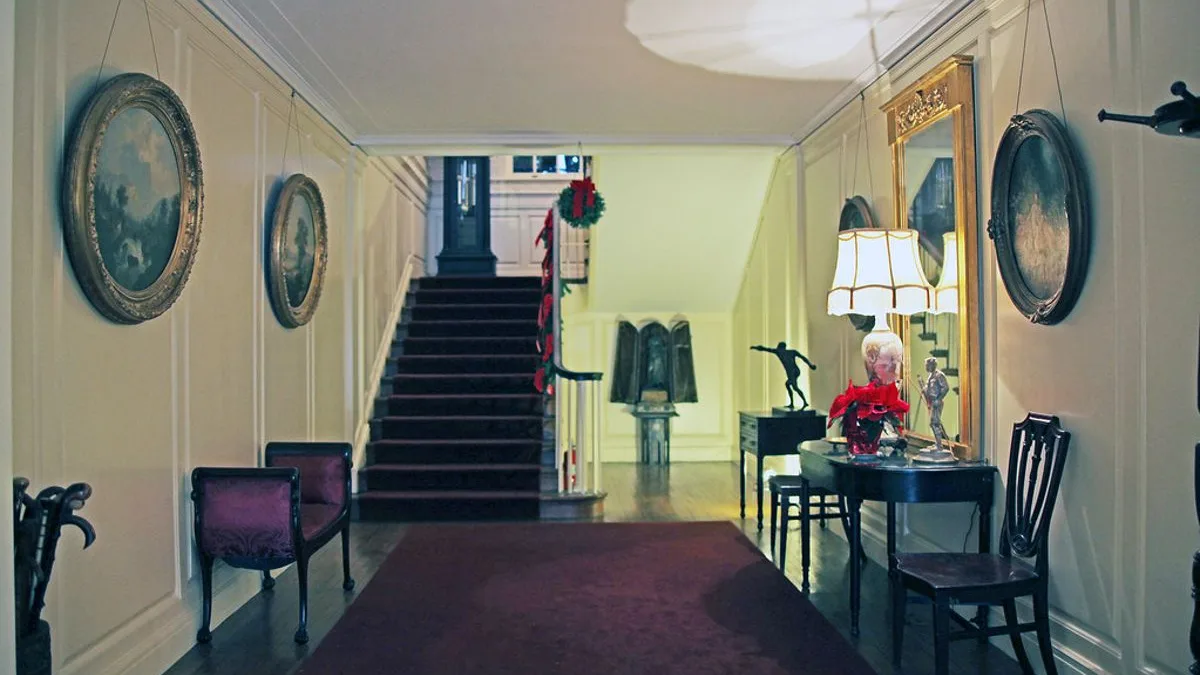
Most entryways fail for a simple reason: there is nowhere to put anything down. Keys end up on the stairs, post piles up on the floor, and a visitor sees a bare wall and a mess. A console table fixes that in one piece of furniture. The console tables that make an entryway in 2026 are narrow, tall and well placed, turning a corridor you walk through into a room you arrive in.
A console table is not a desk, a sideboard or a TV stand, though it is often confused with them. It is a long, shallow table against a wall, usually in a hallway or entryway, at about waist height. It holds the things you need when you come in and go out, and gives the wall something to look at. Get the size and styling right, and it is the best upgrade a hallway can have.
Key Takeaways
- A console table should be 25 to 35 centimetres deep, so it holds keys and a lamp without blocking the hall.
- Measure first: the table should fill about two-thirds of the wall, never the whole of it.
- A mirror or picture above the table doubles its effect, bouncing light down the hallway.
- One lamp on a console table warms the whole entryway, and two lamps suit a longer table.
- Keep the top to three or four objects, or the table becomes another cluttered surface.
Console Tables 2026 at a Glance
| Best for | Style | Depth | Standout strength |
|---|---|---|---|
| Best overall | Wood with drawers | 30 centimetres | Storage for keys and post, warm and classic |
| Best for narrow halls | Slim metal frame | 25 centimetres | Barely there, yet holds a lamp and keys |
| Best for period homes | Antique or reproduction | 35 centimetres | Carved detail for old plaster and wood |
| Best for modern homes | Glass and steel | 28 centimetres | Light and clean, keeps a small hall open |
| Best for storage | Console with shelf below | 32 centimetres | Lower shelf for shoes, baskets or books |
What a Console Table Actually Is
A console table is a narrow table against a wall, and the difference is all in the proportions: long, usually 100 to 140 centimetres, but shallow, usually 25 to 35 centimetres deep, and about 75 to 90 centimetres tall, which is waist height. That shape is what makes it work in a hallway: a surface without the floor space a normal table takes.
The name comes from the French console, a bracket that held a shelf against a wall, and the earliest console tables were just that: a slab on brackets, often under a mirror. The modern version is freestanding, but the job is the same: a landing place, not a work surface, judged on how well it catches the things of daily life. Our guide to a guide to TV consoles that hide the clutter in 2026 covers the other kind of console: low, wide cabinets that sit under a television, a different piece of furniture with a different job.
Console Table or TV Console
The confusion is understandable: they share a name and a job, and both hide clutter. But a TV console is 40 to 60 centimetres tall, built to hold a screen, a soundbar and boxes and cables, while a console table is 75 to 90 centimetres tall, built to hold keys, a lamp and a vase. Put a TV console in a hallway and it looks like a low bench with nothing on it; put a console table under a television and the screen sits far too high. If the piece has cable holes and room for a games console, it is a TV console, and it belongs in the living room.

Getting the Size Right
Size matters most, and it is the decision most people get wrong. Measure the wall and aim for about two-thirds of it. A table spanning the whole wall looks built in, while one covering less than half looks lost, like furniture waiting to be moved. In a typical hallway, that means 100 to 120 centimetres.
Depth matters more than length in a narrow hallway. A table 35 centimetres deep in a 90-centimetre hallway leaves only 55 centimetres to walk past, which is tight with a coat on. A 25-centimetre table leaves 65 centimetres, which feels generous. Measure the hallway at its narrowest point, including skirting boards and radiators, and subtract the table depth: if less than 60 centimetres remains, the table is too deep, however good it looks in the shop.
Where to Put It in the Entryway
The best spot is the longest clear wall, facing the front door if possible, so it is the first thing you see when you walk in. That makes it the natural landing place for keys and post, because you pass it the moment you step inside. The second-best spot is the wall beside the door, within arm’s reach, which works well where the facing wall is taken up by a staircase or a door.
Avoid putting a console table where a door swings into it, the most common placement mistake in a hallway. Check every door swing before you buy, and leave at least a hand’s width between the table and any door frame. A table tucked into an alcove works beautifully, because the walls frame it, but measure carefully: two centimetres too wide and it will not fit, and too narrow and it looks like it is hiding.
Styling the Top: Mirror, Lamp and Three Objects
A console table earns its place by what sits on it: a mirror or picture above, a lamp on the table, and two or three objects beside it. The mirror does the most work: it bounces light down the hallway, makes the space feel twice as wide, and gives you somewhere to check your coat before you leave. A round mirror suits a rectangular table, and a rectangular mirror suits a round one, because the contrast stops the arrangement looking too matched.
The lamp is the second essential, and it should be a real table lamp, not a candle or fairy lights. One lamp warms the whole entryway in the evening, and on a longer table two matching lamps, one at each end, beat one in the middle. Our guide to the best table lamps for warm, layered light in 2026 covers the same low-and-warm principle for living rooms: warm bulbs, a shade that softens the light, and a lamp tall enough to clear the mirror frame.
The rest should be few and useful: a small dish for keys, a vase with fresh stems or a branch, and one personal object. Three or four things in total is right. Five or more and the table looks like a shop shelf, with nowhere for the keys. Size the mirror to the table: it should be narrower by about 10 to 15 centimetres on each side, so the arrangement looks balanced rather than top-heavy.
Storage: Drawers, Shelves and the Key Problem
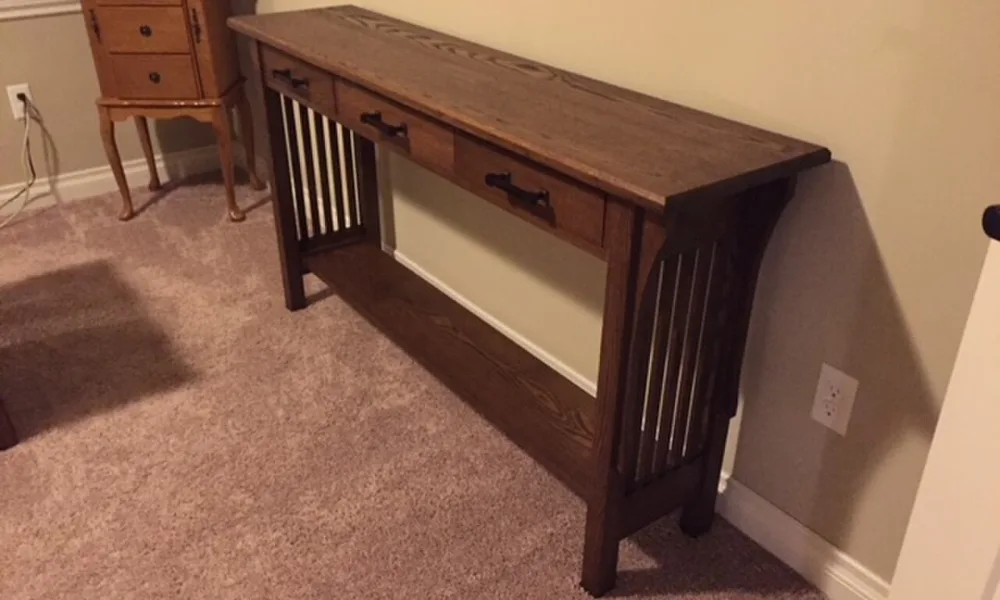
A console table with drawers is worth paying more for, because the drawers solve the key problem. Keys, post, dog leads, spare batteries and all the small things that live in a hallway disappear into a drawer, and the tabletop stays clear for the lamp and the vase. One drawer is enough for keys and post; two let you separate everyday from occasional, and dividers are better still.
A lower shelf suits shoes, baskets or a stack of books. It keeps the floor clear without adding depth, and a basket on it hides the mess a shoe rack would show. The trade-off is that a shelf makes the table look heavier, so in a very narrow hallway open legs with no shelf can feel lighter. Choose the shelf if your hallway is wide enough, and skip it if every centimetre counts.
Materials and Styles That Suit a Hallway
Wood is the safest material: it suits almost any hallway and ages well. Oak and walnut are warm and classic, painted pine is cheap and easy to change, and a dark wood table looks striking against a pale wall. Metal frames with a wood or glass top suit modern hallways, and they look light: thin legs and an open frame let the eye pass through, making a narrow hallway feel wider.
Console Tables and the Rest of the Entryway
A console table works best as part of a small set of entryway furniture, not on its own. A bench beside it gives somewhere to sit and put shoes on, and hooks above hold coats without a wardrobe. Table, bench and hooks should share a material or a colour, so the hallway reads as one room. Our guide to which entryway bench is worth the hallway space in 2026 covers the bench half of that pairing: the bench should be shorter than the table, so the table stays the main piece.

Common Mistakes to Avoid
The most common mistake is buying a table too deep for the hallway, so everyone brushes past it and the lamp wobbles. The second is buying one too short for the wall, so it looks lost. The third is piling the top with ornaments until there is nowhere to put keys. The fourth is hanging a mirror wider than the table, which looks top-heavy. The fifth is forgetting the door swings. The sixth is choosing glass for a hallway with children or dogs, and wiping fingerprints off it every weekend.
Before You Buy: A Short Checklist
- Measure the wall and the hallway, and leave at least 60 centimetres of walking space.
- Choose a table about two-thirds the wall length, 100 to 120 centimetres in most halls.
- Pick a depth of 25 to 35 centimetres, shallower for narrow halls.
- Check every door swing so no door hits the table.
- Decide on drawers or a lower shelf before falling for a table with neither.
- Plan the mirror and lamp together, so the three pieces fit.
Frequently Asked Questions
How deep should a console table be? Between 25 and 35 centimetres: 25 for narrow halls, 35 where space is generous.
How tall is a console table? Usually 75 to 90 centimetres, which is waist height, much taller than a TV console at 40 to 60 centimetres.
Can I put a console table in a narrow hallway? Yes, if it leaves at least 60 centimetres of walking space. A slim metal frame at 25 centimetres deep is best for a tight hall.
What should I put on a console table? A lamp, a small tray for keys, a vase, and one personal object. Three or four things keeps the top useful.
Should the mirror be wider than the console table? No, it should be narrower by about 10 to 15 centimetres on each side, so the arrangement looks balanced.
Do console tables need drawers? They do not, but a drawer makes the table far more useful, hiding keys, post and small clutter that would otherwise cover the top.
The Bottom Line
The console tables that make an entryway in 2026 are narrow, tall and sized to their wall, with a mirror above, a lamp on top and room for keys. Wood with drawers suits most homes, slim metal suits narrow halls, and glass suits small spaces. Measure first.
Start with the hallway, not the catalogue: measure the wall, check the door swings, and leave 60 centimetres to walk past. Then pick the table that fits, add a mirror and a lamp, and keep the top to three objects. Get that right and the first thing you see when you come home is a proper entryway, not a bare wall.


