Pet Toys That Survive Aggressive Chewers in 2026
Pet toys that survive aggressive chewers are built for the job, not just made to look tough on the shelf. If you live with a dog that can shred a plush toy in four minutes, you know the pattern: a hopeful purchase, a brief burst of joy, then stuffing on the floor and a toy in the bin. The best pet toys of 2026 break that pattern by matching the toy to the chewer in front of you, using materials that bend instead of splitting, and giving strong jaws something worth working on. This guide covers the chew-proof picks that actually last, the puzzle toys that tire a pet out without a walk, and the safety checks that keep a tough toy from becoming a vet visit.
Key Takeaways
- Buy for jaw strength first: a toy rated for a heavy chewer is the only honest starting point, and a toy that is too small is a choking risk no matter how tough it looks.
- Solid rubber and thick rope outlast plush and thin plastic, because they flex under pressure instead of cracking or tearing at a seam.
- Puzzle and treat-dispensing toys tire a dog out faster than a plain chew, and a tired dog chews the furniture far less.
- Inspect every toy weekly and retire it the moment a chunk comes off, a seam splits, or a squeaker works loose.
- Cats need toys too, but their play is about chase and kick, not sustained chewing, so their toys should be light and safe to bat.
Pet Toys 2026 at a Glance
| Best for | Toy type | Pet | Standout strength |
|---|---|---|---|
| Best overall for chewers | Solid rubber chew bone | Dogs | Flexes under strong jaws and lasts for months |
| Best for brains | Wooden treat puzzle | Dogs | Slows feeding and works the mind |
| Best for tug games | Thick cotton rope toy | Dogs | Strong weave, good for teeth, easy to wash |
| Best for cats | Plush kicker mouse | Cats | Long body made for wrestling and kicking |
| Best for solo play | Treat-dispensing ball | Dogs and cats | Rewards play when you are out |
| Best for puppies | Soft rubber teething ring | Dogs | Gentle on sore gums, safe to freeze |
Why Aggressive Chewers Destroy Most Toys
Chewing is not bad behaviour. For a dog, it is how the world gets tested, how boredom gets burned off, and how a puppy soothes sore gums. A strong chewer applies force in a very specific way: the back teeth grind, the front teeth pick, and the paws pin the toy down so the jaw can work on one spot. A toy that is hollow, thin, or stitched at a weak point fails at exactly that spot, because all the pressure lands on the same seam or the same thin wall.
Size makes the problem worse. A toy that is too small gets swallowed or wedged behind the back teeth, and a toy that is too big gets ignored because the dog cannot grip it. The right toy is wider than the dog’s open mouth, heavy enough to stay put on the floor, and shaped so the dog can hold it with its paws. If you are not sure where your dog sits on the chewing scale, watch what happens to an ordinary tennis ball. A gentle chewer carries it. A moderate chewer dents it. An aggressive chewer peels it in strips, and that dog needs the toughest tier of toy you can buy.
What Makes a Toy Genuinely Chew-Proof
No toy is truly indestructible, and any brand that promises otherwise is overselling. What the best pet toys of 2026 offer instead is controlled wear: a toy that gets scuffed and dented over months rather than shredded in minutes. The material is the first thing to judge. Solid rubber is the workhorse, because it compresses under a bite and springs back instead of cracking. Look for a single piece of rubber with no glued joints and a wall thick enough that you cannot squeeze it flat between your fingers. A rubber toy with a hollow centre for treats is fine, provided the walls stay thick around the opening.
The Main Types of Pet Toy
Solid Rubber Chews
The solid rubber chew is the default recommendation for an aggressive chewer, and it earns that place. A thick rubber bone or a rubber toy with a treat cavity gives a strong jaw a job that lasts, and it is the easiest toy to clean: warm water, a little soap, and it is ready again. The best ones have a slightly uneven surface, which keeps the dog interested and helps clean the teeth as the dog gnaws. Size it generously: if it fits whole in your dog’s mouth, go up a size.
Rope Toys and Tug Toys
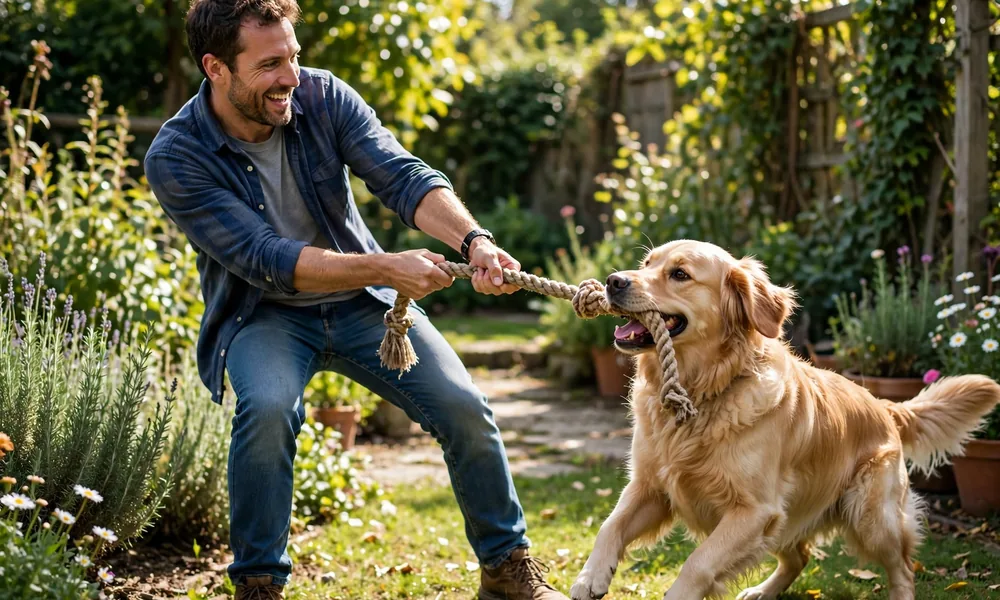
Rope toys are for dogs that like to play with you, not alone. A tug game is a workout, a bonding session, and a lesson in self-control all at once, because a dog that learns to drop the rope on command is a dog that has learned to stop when asked. Keep tug games short and low to the ground, never yanking upward, which can strain a dog’s neck, and always let the dog win sometimes so the game stays fun. A thick rope also doubles as a dental aid, since the fibres act like floss as the dog bites down.
Puzzle and Treat-Dispensing Toys
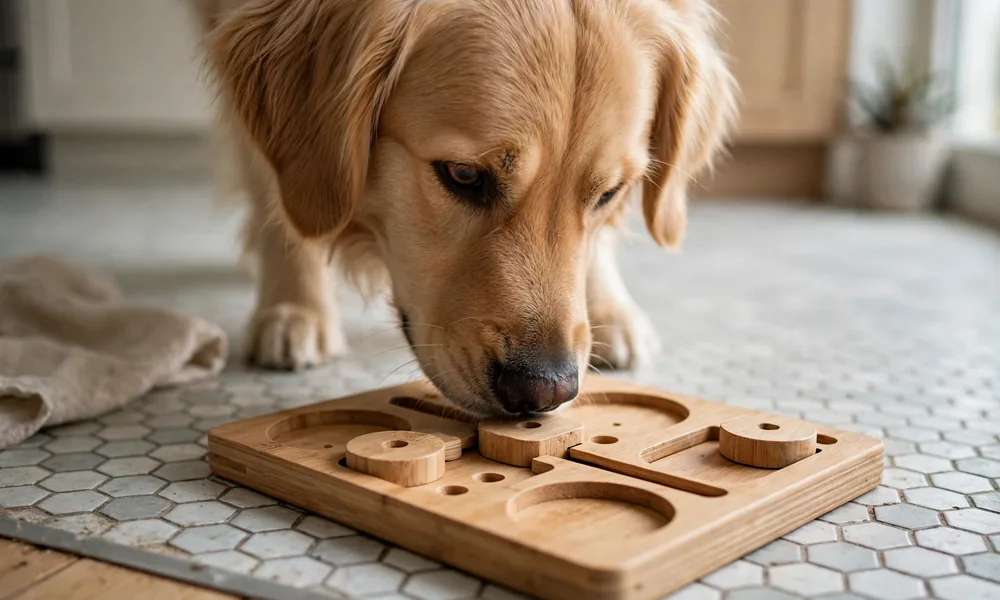
A puzzle toy is the best answer to a bored dog, and boredom is the real reason most furniture gets chewed. A wooden treat puzzle with sliding covers and hidden compartments turns a meal into a job that takes ten or fifteen minutes, and a dog that has worked for its food settles far more easily than one that has eaten in thirty seconds. A puzzle that is too hard on day one gets ignored, and one that is too easy forever gets boring.
Cat Toys in a Dog-Heavy Home
Cats in a house with dogs need toys of their own, and somewhere safe to play with them. A cat’s best toys are light and quick: a plush mouse it can carry, a ball it can bat across a hard floor, and a kicker toy it can grab and wrestle. Our guide to the best cat toys of 2026 covers the wand, ball, and puzzle picks that cats actually return to, and it is worth reading before you buy for a cat that shares a home with a dog. Keep cat toys out of a dog’s reach when they are not in use, because a dog will happily chew a cat’s plush mouse to pieces, and a cat that loses its favourite toy to the dog stops playing altogether.
Matching the Toy to Your Dog

Watch your dog play before you buy. A dog that chews steadily for an hour needs a rubber chew and a puzzle. A dog that plays in short, frantic bursts needs a rope toy and a ball. A dog that guards its toys needs a trade-up game, where you swap the toy for a treat, so that taking a toy away never becomes a fight. A calmer walk helps too, and our guide to the best dog harnesses of 2026 covers the ones that stop pulling without choking. Puppies need softer rubber they can dent with a thumbnail, because their adult teeth are still coming in, and a toy that is too hard will put them off chewing altogether.
Safety: The Checks That Matter Most
Safety is the part of pet toy shopping that people skip, and it is the part that matters most. A toy that falls apart is not a bargain, it is a vet bill waiting to happen. Before you give a new toy to your pet, pull on every part of it hard. Eyes, squeakers, bells, ribbons, and knots should all stay firmly attached. If anything comes loose, cut it off or throw the toy away.
Supervision is the other half of safety. No toy is safe enough to be left with a known destroyer all day, and even the toughest rubber toy can be chewed into a piece small enough to swallow if the dog works on it for hours alone. If your dog is regularly alone, a camera helps you see whether it is playing, sleeping, or getting bored, and our guide to the best pet cameras of 2026 shows how to watch what your pet does while you are out. Inspect every toy once a week, and retire it the moment a chunk is missing, a seam has split, or the toy has gone soft in one spot.
How to Make Toys Last Longer
Rotation is the cheapest trick in this guide. A toy that lives on the floor all week becomes furniture, while the same toy returning after three days in a cupboard feels new again. Keep a small box of toys and swap two or three at a time, so your pet always has something fresh to chew.
Pet Toy Buying Checklist
- Size the toy to your pet’s mouth, wider than the open jaw, and go up a size if you are unsure.
- Choose solid rubber or thick woven rope for aggressive chewers, and skip thin plastic and single-stitched plush.
- Pull every part hard before the first play, and remove anything that comes loose.
- Buy a puzzle toy alongside a chew toy, so your pet gets mental work as well as jaw work.
- Rotate toys every few days, and wash rubber and rope toys regularly.
- Retire a toy the moment it loses a chunk, splits a seam, or goes soft in one spot.
Frequently Asked Questions
What is the toughest pet toy for aggressive chewers?
A solid, single-piece rubber chew is the toughest honest choice for most aggressive chewers. It flexes instead of cracking, it has no seams to split, and it can be stuffed with treats to keep a dog busy.
Are rope toys safe for dogs that chew hard?
Thick, tightly woven cotton rope is safe when it is supervised and retired before it unravels.
How many toys does a dog actually need?
Three or four toys in rotation are enough for most dogs: a rubber chew, a puzzle toy, a rope or tug toy, and a ball.
Can cats and dogs share toys?
They can share balls and some puzzle toys, but most toys should be separate. Dog toys are too big and too tough for cats, and cat toys are too small and too fragile for dogs, so a shared toy usually ends up destroyed by the dog or ignored by the cat.
When should I throw a pet toy away?
Throw it away the moment a piece is missing, a seam has split, a squeaker has worked loose, or the toy has gone soft or cracked in one place. A toy that is visibly worn is a toy that is about to become a hazard, and replacing it is far cheaper than a vet visit.
Do puzzle toys really tire a dog out?
Yes, and often faster than a walk does. Ten minutes of sniffing, nudging, and problem-solving uses more mental energy than a gentle stroll, and a dog that has worked for its food settles more easily afterwards.
The Bottom Line
The best pet toys for aggressive chewers in 2026 are not the ones with the boldest claims on the packet. They are the solid rubber chews, the thick rope toys, and the puzzle toys that match your pet’s jaw, its play style, and its boredom level, checked weekly and replaced before they become a hazard. Buy for the chewer you have, rotate what you own, and give your pet something worth working on, and the stuffing stays inside the toy instead of all over your floor.