
Best Cat Toys 2026
A bored cat is a destructive cat. When a cat has nothing to chase, pounce on, or bat across the floor, it finds its own entertainment: the curtains, the houseplants, your ankles at three in the morning. A good toy changes that completely, turning restless energy into the kind of play that keeps a cat fit, calm, and out of trouble.
The best cat toys of 2026 are the ones cats actually return to. They move like prey, they survive a proper kicking, and they do not fall apart into pieces a cat can swallow. These are the toys worth buying, chosen for how cats play, how long they last, and how safe they are.
Key Takeaways
- Wand toys are the best first buy, because they let you play with your cat and mimic the movement of prey better than any toy a cat uses alone.
- Buy for your cat’s play style, since a chaser needs balls and wands, a kicker needs a long plush toy, and a puzzle lover needs a treat dispenser.
- Check every toy for loose parts, because eyes, bells, and feathers that pull off easily are a choking risk and should be removed or avoided.
- Rotate toys every few days, as a toy left on the floor for weeks becomes furniture, while the same toy returning after a break feels new again.
- Solo toys matter as much as interactive ones, because a cat left alone still needs something safe to bat, chase, and wrestle with.
Cat Toys 2026 at a Glance
| Best for | Toy type | Play style | Standout strength |
|---|---|---|---|
| Best overall | Feather wand | Interactive chase | Moves like prey and gets any cat moving |
| Best for solo play | Crinkle ball | Chase and bat | Light, noisy, and easy to carry |
| Best for kickers | Catnip kicker toy | Wrestle and kick | Long body made for back-leg kicking |
| Best for brains | Treat puzzle | Foraging | Slows feeding and works the mind |
| Best for kittens | Plush mouse | Carry and pounce | Soft, light, and easy to grab |
| Best for evenings | Automatic teaser | Solo chase | Moves on its own when you are busy |
Why Cats Need Toys at All
Cats are hunters by nature, and play is how a house cat rehearses the hunt. The stalk, the crouch, the sudden pounce, and the kick with the back legs are all part of a sequence that a cat needs to run through regularly. Without toys, that sequence has nowhere to go, and the energy behind it turns into scratched furniture, night-time zoomies, and ambushes on passing feet.
Toys do a quieter job too. A cat that plays with its owner trusts its owner more, and a nervous cat that plays in a new home settles faster. If your cat spends a lot of time alone, our guide to the best pet cameras of 2026 can help you watch how it behaves while you are out, and whether it is playing, sleeping, or getting bored.
The Main Types of Cat Toy
Cat toys fall into a few clear types, and each one suits a different kind of play. The right choice depends less on what looks cute on the shelf than on how your cat actually plays.
The feather wand is the classic, and it is the best place to start. A stick, a string, and a bundle of feathers or fabric at the end, moved in short darting runs across the floor, looks exactly like prey to a cat. It is the only toy that truly needs you, which is its strength: it turns play into time together, and it lets you control the pace so a shy cat can join in slowly.
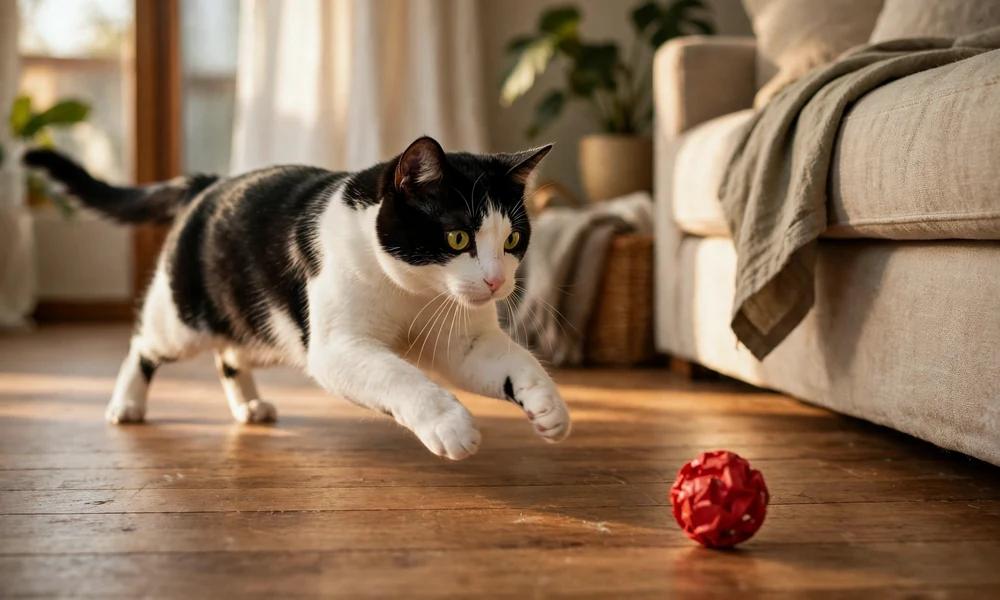
Balls are the simplest solo toy. A light ball that rolls easily, especially one that crinkles or has a bell inside, invites a cat to chase it across the room and bat it back. The best balls are too big to swallow and light enough to carry, and they should roll freely on hard floors without disappearing under the sofa every thirty seconds.

Kicker toys are long, stuffed toys built for the wrestling move cats love: grab with the front paws and kick with the back legs. They are usually filled with catnip or silvervine, and they need to be long enough for a cat to hold properly, about the length of a forearm. A kicker that is too short gets ignored, and one with sewn-on eyes that pull off is a hazard.
Matching the Toy to Your Cat
Watch your cat play before you buy. A cat that chases everything that moves needs wands and balls. A cat that grabs and wrestles needs a kicker toy. A cat that bats things off tables needs small, light toys it can carry around. A cat that stares out of the window all day needs a puzzle or an automatic teaser to break the boredom.
Personality counts as well. A confident cat will chase a noisy ball across a tiled floor, while a nervous cat may only play with a wand dragged slowly along the ground. Let a shy cat win often: if the toy always escapes, the cat gives up. End every play session with a catch, so the hunt feels complete.
Safety: What to Check Before You Buy
Safety is the part of cat toy shopping that people skip, and it is the part that matters most. A toy that falls apart is not a bargain; it is a vet bill waiting to happen.
Pull on every part of a new toy before you give it to your cat. Eyes, noses, bells, ribbons, and feathers should all stay firmly attached when tugged hard. If anything comes loose, cut it off or throw the toy away. Strings and ribbons are the biggest risk of all: a cat that swallows string can end up needing surgery, so never leave a wand toy or anything with a long cord out unsupervised.
Check the materials as well. Toys should be made from non-toxic fabric and stuffing, with no small plastic pieces inside. Avoid toys painted with flaking paint, and avoid anything with a strong chemical smell straight out of the packet. Wash new plush toys before the first play if you can.
How to Play With Your Cat Properly
Buying the toy is only half the job. How you play matters as much as what you buy, and a few small habits make play sessions far better for your cat.
Move the toy like prey, not like a toy. Prey runs away, hides behind furniture, and darts in short bursts, so drag the wand along the floor and around corners instead of waving it in the air. Let the cat stalk, then let it catch the toy, and then let it go again. A toy that never gets caught is frustrating, and a cat that is always frustrated stops playing.
Solo Play: Toys for When You Are Out
Most cats spend hours alone each day, and solo toys are what keep those hours from turning into boredom. The best solo toys are the ones a cat can use without you: balls, springs, kicker toys, and puzzles.
A spring toy, a small coiled plastic spring that bounces unpredictably, is a favourite for many cats and costs almost nothing. Crinkle balls, catnip mice, and small plush toys all work the same way: light, easy to carry, and interesting enough to bat around. Leave two or three out, not twenty, and rotate them every few days so they keep their novelty.
If your cat travels with you, toys have a second job: keeping a cat calm in a carrier. A familiar-smelling plush toy tucked into the carrier can make a stressful trip easier, and our guide to pet carriers that travel comfortably in 2026 covers carriers with room for a toy and a blanket.
Keeping Toys Fresh: Rotation and Storage
Cats get bored with toys the same way children do, and the fix is the same: rotation. Keep most of the toys in a basket or a drawer, put out three or four at a time, and swap them every few days. A toy that vanished for a week feels new when it comes back, and you will buy far fewer toys over the year.
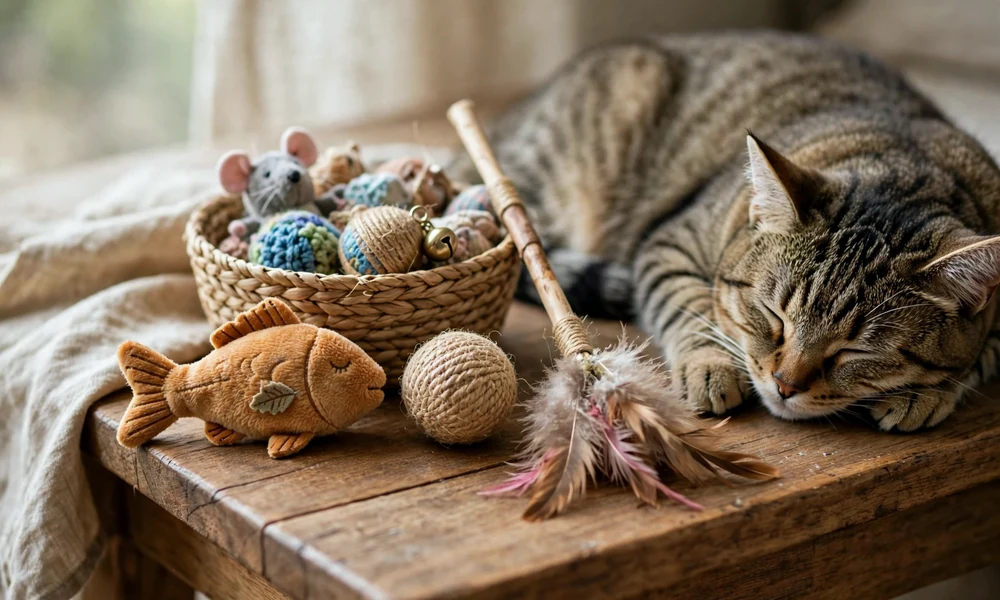
Watch which toys your cat returns to, and buy more of that kind. Every cat has a preference, and the best toy collection is not the biggest one; it is the one built around what your particular cat loves. A cat that adores a two-pound spring does not need a thirty-pound electronic gadget.
Common Mistakes to Avoid
The most common mistake is buying one toy and expecting it to do everything. No single toy suits every mood, so a small collection of different types works far better than one expensive gadget. The second mistake is buying toys with small parts that pull off, which is a safety problem first and a waste of money second.
Before You Buy: A Short Checklist
- Watch how your cat plays, and buy the toy type that matches its style.
- Pull every part of a new toy hard before giving it to your cat.
- Choose toys too big to swallow, with no loose eyes, bells, or ribbons.
- Buy a wand for play together, and balls and kickers for solo play.
- Keep strings and ribbons out of reach when you are not playing.
- Rotate toys every few days so they stay interesting.
- Replace any toy with a split seam, a crack, or a frayed string.
Frequently Asked Questions
How many toys does a cat need? Three or four out at a time is plenty, with a few more in rotation. A small collection of different types beats a large pile of similar toys.
Are laser pointers good cat toys? They can be fun in short bursts, but they frustrate cats because there is nothing to catch. Always end a laser session by pointing at a real toy or a treat, so the hunt ends with a catch.
How often should I replace cat toys? Replace a toy as soon as it shows wear: a split seam, a loose part, or a frayed string. Most plush toys last a few months of regular play, while balls and springs last longer.
What toys are best for kittens? Soft, light toys with no small parts: plush mice, small balls, and a gentle wand. Avoid anything with buttons, beads, or loose ribbons until the kitten is older.
The Bottom Line
The best cat toy of 2026 is the one your cat actually plays with, and that is different for every cat. Start with a feather wand, add a ball and a kicker toy, and watch what your cat returns to. Then buy more of that, rotate them often, and keep the dangerous ones put away.
Play is not a luxury for a cat; it is how a cat stays healthy, calm, and connected to you. Ten minutes with a wand in the evening, a few good solo toys for the day, and a basket that keeps everything fresh will do more for your cat than any gadget. And if you are building out the rest of your cat’s world, our guide to cat trees your cat will actually climb in 2026 covers the climbing and scratching side of the same instinct.


