
Best Dog Toys 2026
A good dog toy does far more than keep a dog busy for ten minutes. It gives a dog something safe to chew, chase, tug, and puzzle over, and it gives the owner a calmer evening, a quieter house, and a dog that settles instead of chewing the furniture.
Get the toy wrong, though, and the opposite happens: a toy that is too small becomes a choking risk, a toy that is too hard cracks a tooth, and a toy that falls apart in an afternoon leaves stuffing all over the floor. These are the best dog toys of 2026, chosen for safety, durability, and how well they actually hold a dog’s attention.
Key Takeaways
- Match the toy to the dog, not to the shelf, because size, jaw strength, and chewing style matter more than colour or shape.
- Buy toys sized for the dog you have now, since a toy that fits a puppy will be dangerously small for the same dog six months later.
- Rotate a small set of toys instead of leaving every toy out at once, because novelty is what keeps a familiar toy interesting.
- Check every toy weekly for cracks, loose seams, and missing pieces, and throw it away the moment it starts to come apart.
- Supervise new toys until you know how the dog plays with them, especially plush toys, rope toys, and anything with a squeaker inside.
Dog Toys 2026 at a Glance
| Best for | Toy type | Material | Standout strength |
|---|---|---|---|
| Best overall | Durable rubber chew toy | Natural rubber | Tough, bouncy, and easy to clean |
| Best for strong chewers | Heavy-duty chew bone | Hard rubber | Survives determined jaws for weeks |
| Best for fetch | High-bounce ball | Rubber | Bounces true and is easy to spot |
| Best for brains | Treat puzzle toy | Hard plastic | Slows feeding and tires the mind |
| Best for puppies | Soft teething toy | Soft rubber | Gentle on sore gums and small teeth |
| Best for tug games | Braided rope toy | Cotton rope | Strong grip and good for two dogs |
What a Dog Toy Is Really For
A dog toy has three jobs at once. First, it gives a dog an outlet for chewing, which is a natural behaviour that does not go away just because the dog lives indoors. Second, it gives a dog exercise and mental work, whether that is chasing a ball, working food out of a puzzle, or learning the rules of a tug game. Third, it gives a dog comfort, especially for puppies and anxious dogs that settle better with something soft to carry around.
Getting the Size Right
Size is where most dog toy purchases go wrong. A toy should be too big to fit entirely in the dog’s mouth, and too big to be swallowed, even by a dog that tries. As a rough guide, a toy for a small dog should be about the size of a tennis ball, a toy for a medium dog should be clearly larger than that, and a toy for a large dog should be too big to disappear behind its teeth.
The Main Types of Dog Toy
Dog toys fall into a handful of types, and each suits a different kind of play. The right choice depends less on what looks fun in the shop than on how your dog actually plays.
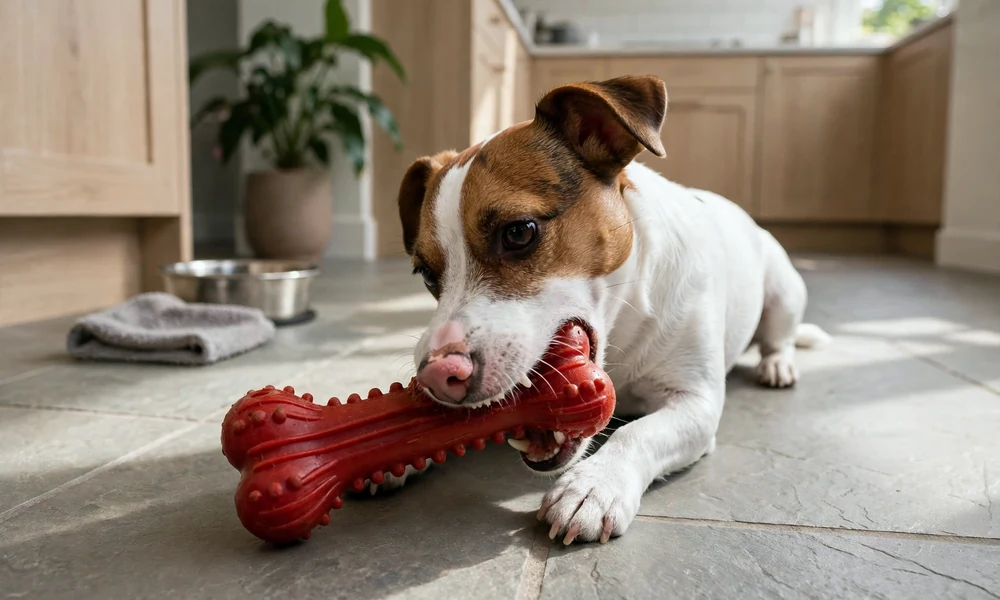
The rubber chew toy is the safest choice for most homes: a solid, bouncy toy that a dog can gnaw for a long time without breaking it into pieces. Its strength is durability, and many designs can be stuffed with food to keep a dog busy for longer. Its weakness is that some dogs simply do not find plain rubber interesting without food inside.
The fetch ball is the classic outdoor toy. A good one bounces predictably, is easy to spot in long grass, and is too big to be swallowed. Avoid real tennis balls for heavy chewers, because the fuzzy covering wears teeth down and the ball can be crushed and swallowed in pieces.

Puzzle and treat-dispensing toys are the answer for clever, restless dogs. They hide food behind flaps, sliders, and rolling chambers, so the dog has to think to eat. Start with the easiest setting and only make it harder once the dog understands the game, or the toy will be ignored in frustration.
Materials and Safety
Natural rubber is the classic choice for chew toys, and it earns its reputation. It is springy, it bounces, and it is gentle enough on teeth while still surviving serious chewing. Hard nylon is tougher, but it can be too hard for some dogs, so watch for tooth wear and replace it if the surface becomes sharp or pitted.
Matching the Toy to the Dog
A strong chewer needs a different toy from a gentle one, and the difference matters more than the price tag. Strong chewers need thick, solid rubber or hard chew toys rated for their size, and they need them checked often, because even the toughest toy wears down eventually. Gentle dogs can enjoy plush toys, softer rubber, and puzzle toys without destroying them in a day.
Puppies are a special case. Their teeth are sharp, their gums are sore, and they explore the world with their mouths, so they need soft, safe toys they can chew without hurting themselves. A puppy that is teething will chew whatever is nearest, so having the right toy within reach protects shoes, furniture, and fingers. As the puppy grows, move up a size before the toy becomes small enough to swallow.
Play, Training, and Alone Time
Toys work best when they are part of a routine, not just something left on the floor. A short game of fetch before work burns off energy, a puzzle toy at lunchtime keeps a dog occupied, and a chew toy in the evening helps a dog settle. Ten minutes of focused play is worth more than an hour of a dog wandering past a pile of ignored toys.
For time alone, a stuffed rubber toy or a long-lasting chew is the kindest option. It gives the dog something to do while you are out, and it teaches the dog that being alone can be pleasant. A dog that is used to settling with a chew toy is calmer when left, and a good crate routine helps too, as our guide to the best dog crates of 2026 explains, since a crate gives a dog a safe den of its own.
Indoor Toys and Outdoor Toys
Outdoor toys can be bigger, louder, and messier. Fetch balls, frisbees made for dogs, and floating toys for water-loving dogs all belong outside, where there is room to run. Outdoor play is also where a good lead matters, and our guide to choosing a dog leash that will not fray in 2026 covers the leads that hold up to daily walks and strong pullers.
Cleaning and Storage
Dog toys get dirty, and dirty toys can make a dog ill. Rubber and hard plastic toys can be washed in warm soapy water, and many can go in the dishwasher on a gentle cycle. Rope toys can be washed in the machine and dried thoroughly, and plush toys should be washed regularly too, especially if they are carried everywhere and slept with.
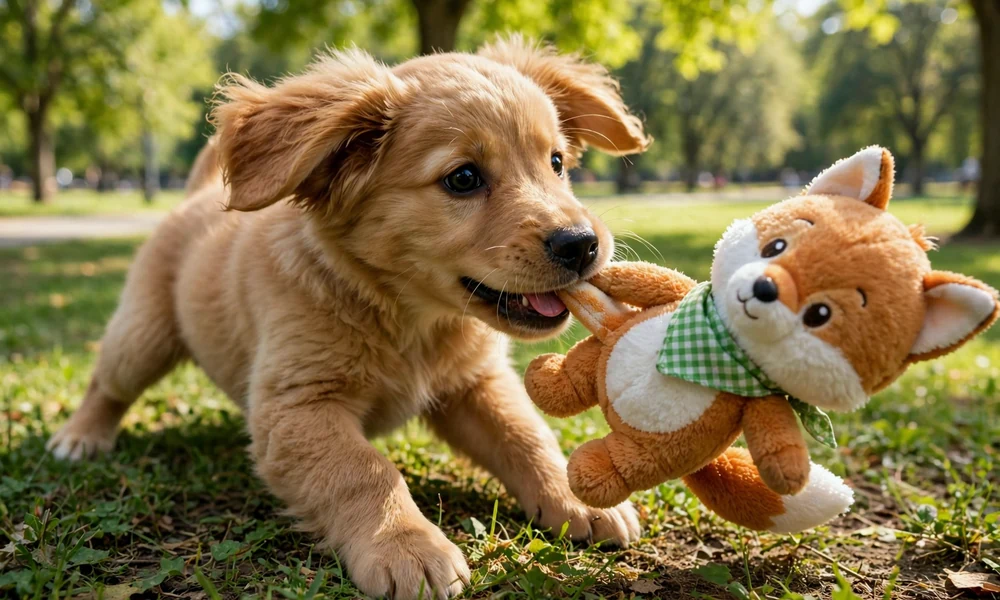
Throw a toy away when it is damaged, not when you get round to it. A cracked rubber toy can split into sharp pieces, a frayed rope can be swallowed strand by strand, and a plush toy with stuffing coming out is a vet visit waiting to happen. Replacing a toy is always cheaper than treating the problem it causes.
Rest, Sleep, and the Toy Box
The toy box and the bed belong together in the dog’s corner of the house. A dog that knows where its toys live and where its bed is will settle faster, and the house stays tidier too. If your dog is still restless at night, our guide to finding a dog bed your dog will actually use in 2026 covers the beds that suit different sizes, ages, and sleeping styles.
Common Mistakes to Avoid
The most common mistake is buying a toy that is too small for the dog, because a small toy is a choking risk and a vet bill. The second is buying a toy that is too hard, which can crack a tooth. The third is leaving a rope or plush toy with an unsupervised dog that shreds things. The fourth is buying twenty toys at once and leaving them all out, which bores the dog faster than having three good ones. The fifth is keeping a damaged toy because it was expensive. Finally, do not buy a toy you have not checked in your own hands: squeeze it, pull it, and look for weak seams before the dog does.
Before You Buy: A Short Checklist
- Measure the dog, not the toy, and choose a size too big to swallow.
- Match the hardness to the dog’s teeth and chewing strength.
- Check seams, squeakers, and small parts before the first play session.
- Buy two or three types, not twenty of the same kind.
- Plan where each toy will be used, indoors or outdoors.
- Set a weekly check for cracks, fraying, and missing pieces.
- Keep the receipt, and replace any toy that starts to come apart.
Frequently Asked Questions
How many toys does a dog need? Three or four toys out at a time is enough, with a few more stored for rotation. A small, rotating set stays interesting far longer than a large pile left out all at once.
Are squeaky toys safe for dogs? Yes, with supervision, for dogs that do not tear toys apart. Retire any squeaky toy as soon as the squeaker is exposed or the toy is torn, because a swallowed squeaker is dangerous.
What is the best toy for a strong chewer? A thick, solid rubber chew toy rated for the dog’s size, checked weekly for wear. No toy is truly indestructible, so even the toughest toy needs replacing when it wears down.
Can puppies have the same toys as adult dogs? No, puppies need softer toys for sore gums and small teeth. Move up to adult toys as the puppy grows, and re-check the size every few months.
How often should I replace dog toys? Whenever a toy is cracked, frayed, torn, or missing pieces, and sooner for heavy chewers. A weekly check takes a minute and prevents most toy-related accidents.
The Bottom Line
The best dog toy of 2026 is the one that fits your dog, survives the way your dog plays, and keeps coming back out of the basket because the dog actually wants it. It is big enough to be safe, tough enough to last, and interesting enough to hold a dog’s attention without needing you to throw it every thirty seconds.
Start with the dog, not the shelf. Watch how your dog chews, chases, and settles, then choose two or three toys that match: a chew toy for quiet time, a fetch or tug toy for active play, and a puzzle toy for the days when the dog’s brain needs work more than its legs do.


