Best Bathroom Sinks 2026
A bathroom sink is the most used fixture in the house, and the most judged. It is where the day starts and ends, where hands are washed, teeth are brushed, and faces are rinsed, and a bad one shows it within a week: water pooling at the back, toothpaste that will not rinse away, and a rim that catches every splash.
Get the sink right, though, and the whole bathroom feels calmer: the water drains cleanly, the counter stays dry, and there is somewhere sensible to put the soap. These are the best bathroom sinks of 2026, chosen for size, material, drainage, and how easily they clean.
Key Takeaways
- Buy the sink for the vanity and the room you own, because a basin wider than its cabinet by even a little looks wrong and splashes everywhere.
- Depth matters as much as width, since a shallow bowl throws water onto the counter while a deep one keeps splashes where they belong.
- Vessel sinks suit a statement bathroom, while undermount sinks suit households that wipe the counter down every day.
- Check the tap holes, the drain size, and the overflow before you fall for a shape, because a beautiful basin with the wrong fittings is a long argument with a plumber.
- Ceramic is the safest all-round material, but stone, glass, and solid surface each earn their place when the household and the budget fit them.
Bathroom Sinks 2026 at a Glance
| Best for | Sink type | Typical width | Standout strength |
|---|---|---|---|
| Best overall | Undermount ceramic basin | 50 cm | Easy to wipe clean, nothing to catch dirt |
| Best for a statement look | Vessel sink | 40 cm | Sits proud of the counter and draws the eye |
| Best for small bathrooms | Wall-hung basin | 45 cm | Frees the floor and makes a tight room feel bigger |
| Best for couples | Double vanity sinks | 120 cm pair | Two people, two basins, no morning queue |
| Best for family bathrooms | Deep drop-in basin | 55 cm | Deep bowl that contains splashes from children |
| Best for tight budgets | Pedestal basin | 50 cm | Simple, sturdy, and cheap to replace |
What a Bathroom Sink Is Really For
A bathroom sink does three jobs at once. First, it catches water and sends it away cleanly, without pooling or splashing. Second, it gives you somewhere to stand and work: washing hands, brushing teeth, shaving, and rinsing a face all happen at the basin. Third, it anchors the bathroom visually, because the sink and the mirror above it are what the eye lands on first.
It helps to think of the sink as part of a set, not a solo purchase. The mirror above it sets the height of the whole arrangement, and our guide to the best bathroom mirrors of 2026 covers the sizes and styles that sit well above each type of basin. A sink, a mirror, and a tap that all suit each other beat a beautiful basin fighting the rest of the room.
Getting the Size Right
Size is where most bathroom sink purchases go wrong. Measure the vanity, the wall, and the space in front of it, then buy the basin that fits those numbers. A standard single basin is about 45 to 55 centimetres wide, so the vanity should be at least 60 centimetres wide to leave a rim of counter on each side, and a double vanity needs 120 centimetres or more before it stops feeling cramped.

Depth follows the same logic. A basin 12 to 15 centimetres deep is the comfortable middle ground for most adults: shallow enough to reach the bottom without stooping, deep enough to keep splashes inside. For a household with small children, go deeper, because little hands splash further. If you are still choosing the tap itself, our guide to the best kitchen faucets of 2026 explains spout reach and flow first, and the same reach rule applies here: the water should land near the centre of the bowl, not against the back wall.
The Main Types of Bathroom Sink
Bathroom sinks fall into a handful of types, and each suits a different kind of bathroom. The right choice depends less on taste than on how much space you have and who uses the room.
The undermount sink is the safest choice for most homes: a ceramic basin fixed beneath the counter, with the rim hidden below the worktop. Its strength is cleaning, since there is no lip for grime to gather around and a cloth sweeps straight into the bowl. Its weakness is installation, because it needs a solid counter and a careful fitter, and a cheap cut-out will show.
The vessel sink is the statement option. It sits entirely on top of the vanity like a bowl, and it suits bathrooms where the sink is meant to be seen. The trade-off is height and splashing, so the tap must be tall enough to clear the rim and the bowl must be deep enough to contain the water. A shallow vessel with a short tap is a puddle waiting to happen.
The drop-in sink, sometimes called a top-mount, drops into a hole cut in the counter and rests on a rim. It is the easiest to fit and the easiest to replace, which makes it the sensible choice for a rental or a quick refresh. The rim is its only real drawback, since dirt collects around the edge and needs a wipe every few days.
The wall-hung basin fixes straight to the wall with no pedestal and no vanity, and it is the best choice for a very small bathroom or a cloakroom. It leaves the floor clear for cleaning and for feet, and it can be hung at any height. It needs a strong wall, though, and the waste pipe is on show unless it is hidden in the wall.
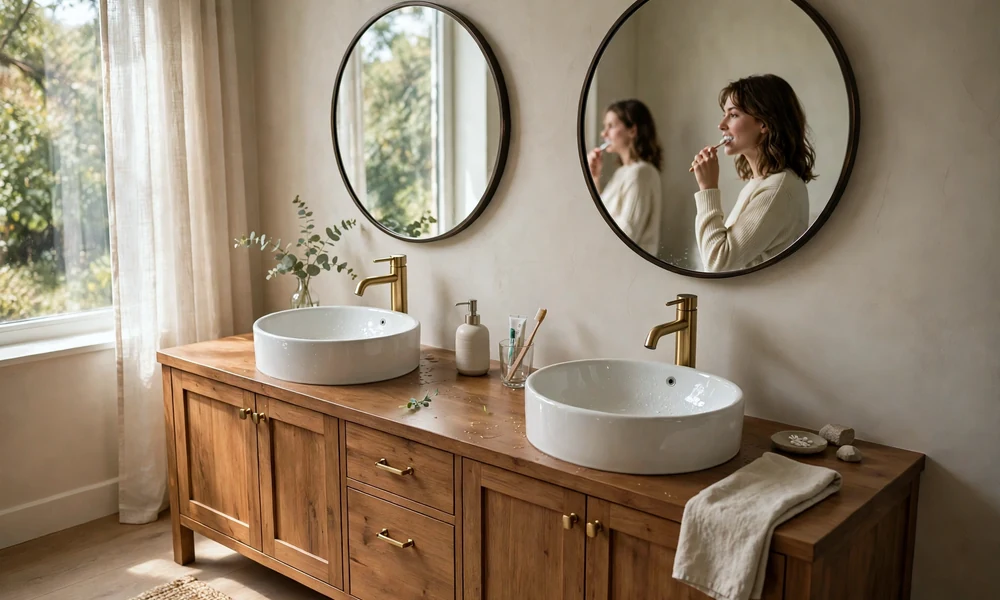
Double vanity sinks are the answer to a shared bathroom. Two basins on one long vanity give each person their own space, and the argument over the mirror disappears. They need a wide wall and two sets of plumbing, so they suit a family bathroom or an en-suite, not a cloakroom.
Materials and Build Quality
Ceramic is the classic choice, and it earns its price. Glazed ceramic feels smooth, resists stains, shrugs off hot water, and can be cleaned with almost anything. It chips if something heavy is dropped in it, so check the glaze for cracks before the fitter leaves, and treat a chipped basin as a replacement job, not a repair.
Taps, Drains, and Overflows
A sink is only as good as its fittings. Count the tap holes before you buy: a basin with one hole takes a single mixer tap, while three holes suit separate hot and cold taps. A vessel sink usually has no holes at all, so the tap mounts on the counter or the wall behind it, and the spout must be tall enough to clear the rim by a comfortable margin.
Cleaning, Splashes, and Daily Life
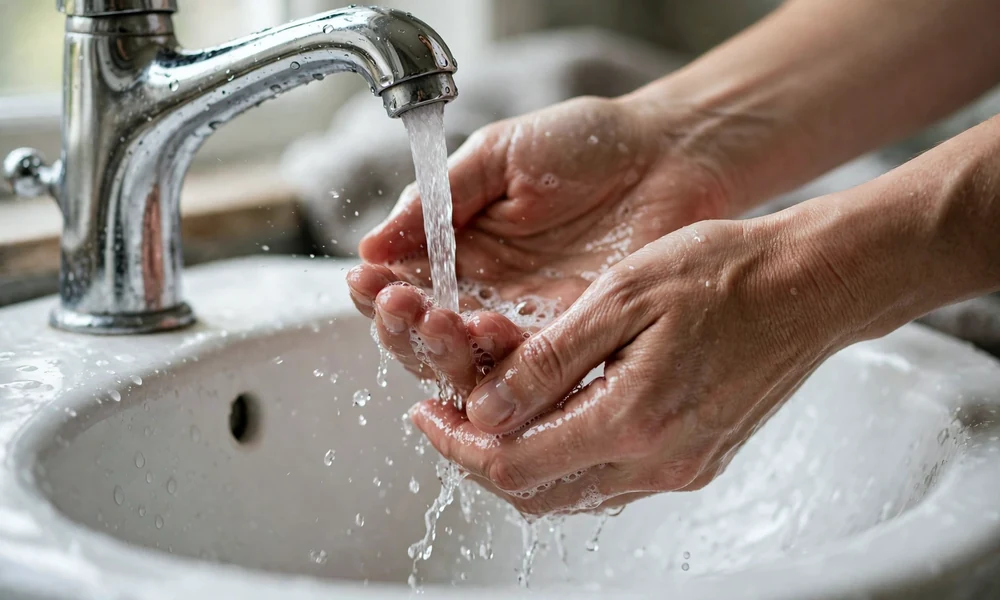
Splashes are a matter of geometry, not luck. A deep bowl, a tap that lands near the centre, and a basin wide enough for two hands will keep the counter dry. A shallow bowl with a tap that fires against the back wall will spray the mirror and the floor. If the bathroom is shared, the small things matter too: a dish for the soap keeps the counter clear, and our guide to soap dishes that keep the sink tidy covers the ones that drain instead of turning to mush.
Installation and Plumbing
Replacing a basin is rarely just a swap. The waste position, the tap holes, and the height of the supply pipes all have to match, or the job grows. Measure the distance from the wall to the centre of the drain, note whether the waste runs through the wall or the floor, and take those numbers to the shop before you buy.
Matching the Sink to the Bathroom
Common Mistakes to Avoid
The most common mistake is buying the basin before measuring the vanity: people remember the width in centimetres and forget the counter depth, then discover the bowl overhangs the front. The second is choosing a vessel sink with a tap that is too short, so the water hits the rim instead of the bowl. The third is forgetting the overflow, especially in a household with children. The fourth is picking a stone basin for a busy family bathroom without sealing it. The fifth is ignoring the drain position, which turns a simple swap into a plumbing job. Finally, do not buy a basin you cannot get into the room: measure the doorways and the stairs first, because a stone vessel is heavier than it looks.
Before You Buy: A Short Checklist
- Measure the vanity width and depth, and buy a basin that leaves counter on each side.
- Check the basin depth against your household, so splashes stay inside the bowl.
- Count the tap holes and match them to the tap you own or plan to buy.
- Check the drain size and whether a waste and an overflow are included.
- Confirm the basin height once fitted, so the rim lands at a comfortable 80 to 85 centimetres.
- Check the weight against the vanity or the wall, and confirm the fixings are up to it.
- Measure the doorways and stairs, and confirm whether the basin arrives with fittings or without.
Frequently Asked Questions
What size bathroom sink should I buy? A standard single basin is 45 to 55 centimetres wide, on a vanity at least 60 centimetres wide. A double vanity needs 120 centimetres or more before two people can use it comfortably.
Is an undermount sink better than a drop-in sink? An undermount sink is easier to clean because there is no rim to trap dirt, but it needs a solid counter and a careful fitter. A drop-in sink is cheaper, easier to fit, and easier to replace.
Do I need an overflow in a bathroom sink? An overflow stops the basin flooding if the tap is left running, and it is worth having in any household with children. A basin without one needs a flow limiter on the tap or a very attentive user.
How do I stop water splashing all over the counter? Choose a deeper bowl, make sure the tap lands near the centre of the basin, and leave enough counter on each side. A shallow bowl with a tap that fires against the back wall will always spray.
The Bottom Line
The best bathroom sink of 2026 is the one that fits your vanity, your household, and your bathroom, and then quietly does its job twice a day without a fuss. It is wide enough for two hands, deep enough to keep splashes inside, fitted with a tap that reaches the middle of the bowl, and easy enough to wipe that it still looks new in a year.
Start with the tape measure, not the catalogue. Measure the vanity, the wall, and the height of the rim, count the tap holes, and then choose the type that fits: an undermount basin for easy cleaning, a vessel for a statement, a wall-hung basin for a small room, or a double vanity if two people share the morning.