Best Kitchen Faucets 2026
A kitchen faucet is the hardest-working fitting in the house. It fills pots, rinses vegetables, washes hands, and cleans the sink itself, dozens of times a day. A good one makes all of that feel effortless. A bad one drips, splashes, wobbles, and turns a simple job into a wet chore.
Get the faucet right, though, and the whole sink area works better: the spray reaches every corner, the handle moves smoothly with one wet hand, and the water lands in the bowl instead of on the worktop. These are the best kitchen faucets of 2026, chosen for reach, flow, build quality, and how they hold up to daily use.
Key Takeaways
- Buy the faucet for the sink you own, because a spout that is too tall for a shallow bowl will splash, and one that is too short will not clear a tall pot.
- Reach matters as much as height, since the water should land near the centre of the bowl, not against the back wall.
- A pull-down sprayer suits households that rinse food and wash large pans, while a fixed spout suits households that want the simplest, most reliable fitting.
- Check the number of holes in your sink or worktop before you shop, because a three-hole faucet will not fit a one-hole deck without a cover plate.
- Look inside the faucet, not just at the finish, since a ceramic disc valve and a solid brass body outlast a cheap cartridge by years.
Kitchen Faucets 2026 at a Glance
| Best for | Faucet type | Spout height | Standout strength |
|---|---|---|---|
| Best overall | Pull-down sprayer | High arc | Reaches every corner of the sink |
| Best for small sinks | Low-arc single lever | Low | Less splash in a shallow bowl |
| Best for big pots | High-arc gooseneck | Very high | Clears tall stockpots with ease |
| Best for busy cooks | Touchless sensor | High arc | Hands-free with messy hands |
| Best for classic kitchens | Bridge faucet | Medium | Traditional look, two handles |
| Best for tight spaces | Wall-mounted | Adjustable | Frees the deck behind the sink |
What a Kitchen Faucet Is Really For
A kitchen faucet does three jobs at once. First, it delivers water exactly where you need it, at the temperature you want, without fuss. Second, it reaches the whole sink, so you can rinse a roasting tray or fill a tall jug without lifting it awkwardly. Third, it sets the look of the sink area, since it is the one fitting you see and touch every time you cook.
It helps to know that faucet lessons cross rooms. The finishes, valves, and water-pressure questions are much the same in a bathroom, and our guide to the best and worst bathroom faucets of 2026 covers those shared choices in detail. A kitchen faucet is the busier cousin, and the right choice depends on your sink, your water, and how you cook.
Getting the Size Right
Size is where most kitchen faucet purchases go wrong. Measure the sink, the depth of the bowl, and the distance from the faucet hole to the centre of the bowl, then buy the faucet that fits those numbers. A standard single bowl is about 50 centimetres wide, so the spout should reach roughly 20 to 25 centimetres forward, and a wide double bowl calls for a longer reach or a swivelling spout.
Height follows the same logic. The spout should clear the tallest pot you wash by a few centimetres, but not sit so high above a shallow bowl that the water bounces back out. For a bowl 20 centimetres deep, a high-arc spout of 30 to 40 centimetres above the deck usually works well. If the bowl is shallower, choose a lower arc or a faucet with a gentle aerated flow.
The Main Types of Kitchen Faucet
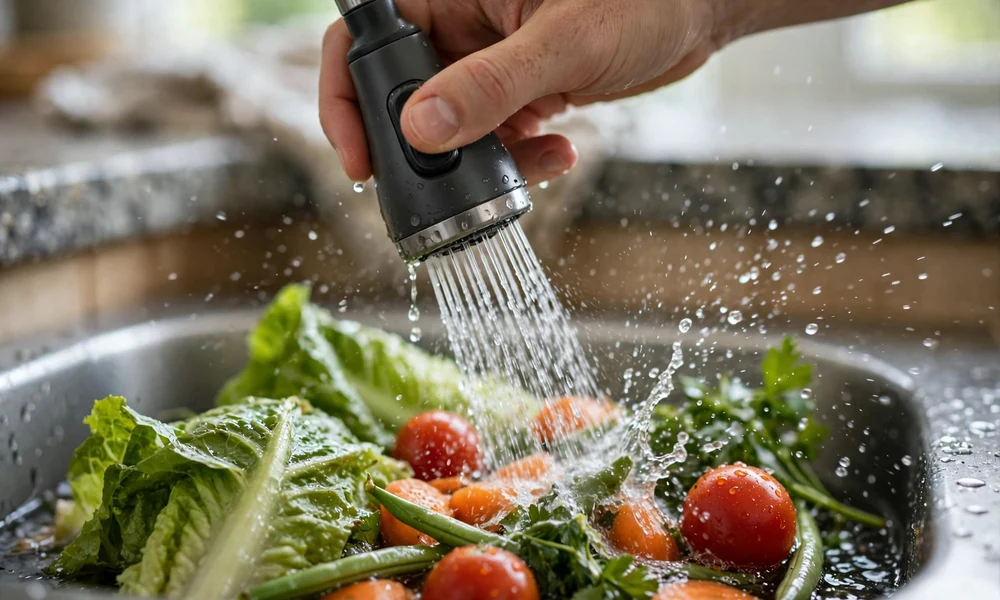
The pull-down sprayer is the safest choice for most homes: a high-arc spout with a spray head that pulls out on a hose and docks back when you let go. Its strength is reach, so rinsing a large tray or washing the sink itself is easy. Its weakness is the hose, which can wear over time, so check that the hose and the docking weight feel solid.
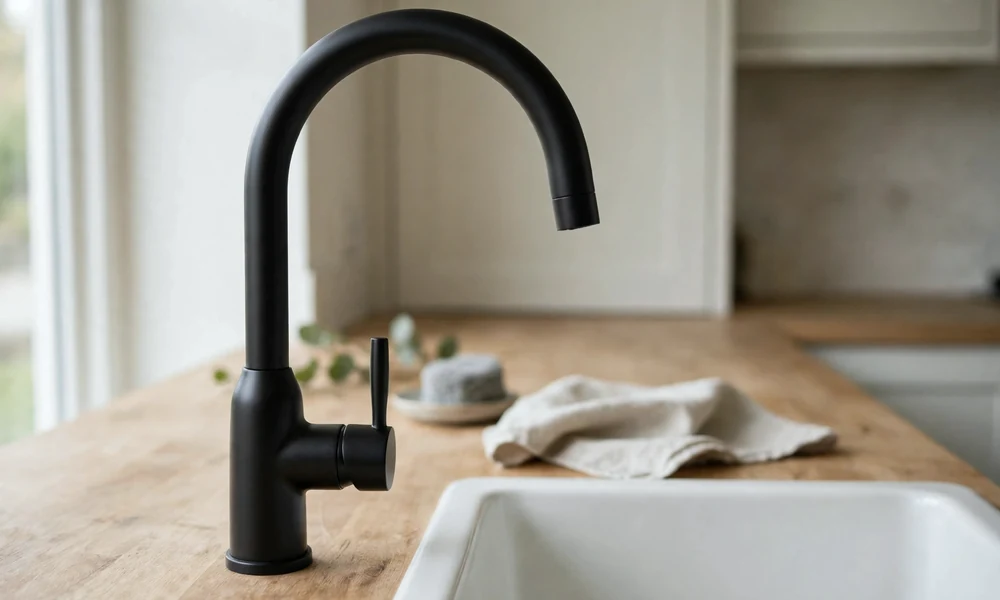
The single-lever mixer is the simplest option. One handle controls both flow and temperature, so you can start the water with the back of a wet hand. It is the best choice when reliability matters most, since there is one valve to wear out instead of two.
Bridge faucets join two separate hot and cold taps with a bar across the top, and they are the traditional choice for farmhouse and period kitchens. They look the part, but they need three holes in the deck and a wider sink, so measure carefully.
Materials and Finishes
Brass is the classic body material, and it earns its price. A solid brass body feels heavy, resists corrosion, and lasts for decades. Stainless steel is the sensible middle ground: it looks clean, shrugs off water spots, and costs less than brass. Cheaper faucets use zinc alloy, which is lighter and can corrode once the coating fails, so lift the faucet before you buy it and feel the weight.
Valves, Flow, and Water Pressure
The valve is the heart of the faucet, and it decides whether the tap drips in a year or runs smoothly for a decade. Ceramic disc valves are the best choice: two hard discs that slide against each other, seal tightly, and resist wear. They cost more than rubber washers, and they are worth it.
Installation: Holes, Decks, and Fitting
Count the holes before you shop. Most kitchen sinks have one, two, or three holes, and some have four. A single-lever faucet needs one hole. A two-handle faucet needs two or three. A soap dispenser or a filtered-water tap needs one more each, so count everything that will sit on the deck.
Fitting is straightforward for a confident home improver: turn off the water, disconnect the old supply hoses, and fit the new faucet from above while someone holds it steady from below. Replace the supply hoses at the same time, since old hoses are the most common cause of leaks under the sink. If the pipes are old, the space is tight, or the worktop needs drilling, a plumber is money well spent.
While you are planning the deck, think about the small fittings that share it. A matching soap dispenser sits in the spare hole and keeps the bottle off the worktop, and our guide to the best soap dispensers of 2026 covers the pump and bottle styles that fit a kitchen sink. A deck that is planned as a whole looks tidier than one assembled one fitting at a time.
Washing Up, Rinsing, and Everyday Use
A faucet earns its keep at washing-up time. A pull-down sprayer rinses soap off a stack of plates in seconds, and a high arc lets you fill a tall jug or a stockpot without tipping it. A swivelling spout swings out of the way when you are lifting a heavy pot in and out of the bowl.

Think about the drying space as well as the sink. A faucet that sprays wide will soak the drying area, while a gentle aerated flow keeps the water in the bowl. The drying rack matters too, and our guide to the best dish racks of 2026 covers the sizes and styles that fit beside a busy sink without crowding the faucet.
Care, Limescale, and Cleaning
A kitchen faucet needs little care, but it needs it regularly. Wipe it dry after the last wash of the day, and water spots will not have time to set. In hard-water areas, limescale builds up around the aerator and the base, and a cloth soaked in white vinegar will dissolve it without scratching the finish.
Common Mistakes to Avoid
The most common mistake is buying the faucet before measuring the sink: people remember the style they liked and forget the spout reach, then discover the water lands against the back wall. The second is ignoring the number of holes, which turns a simple swap into a new sink. The third is choosing a tall arc for a shallow bowl, which guarantees splashing. The fourth is picking a finish for looks alone in a hard-water home, where limescale will show within a week. The fifth is keeping old supply hoses, which are the likeliest leak in the whole job. Finally, do not buy a faucet with a flimsy pull-down hose: pull it out in the shop, let it dock, and check that it returns smoothly every time.
Before You Buy: A Short Checklist
- Measure the sink bowl and the distance from the faucet hole to the centre of the bowl.
- Check the spout height against the tallest pot you wash, and the bowl depth against splashing.
- Count the holes in the sink or worktop, including any for a soap dispenser or filter tap.
- Check your water pressure against the minimum on the box, and the flow rate you want.
- Look for a ceramic disc valve and a solid brass or stainless steel body, and lift the faucet to feel its weight.
- Test the pull-down hose and the docking, and check that the handle moves smoothly with one hand.
- Confirm the finish suits your water: brushed nickel hides marks, matte black shows limescale.
- Buy new supply hoses with the faucet, and check whether you need a cover plate for spare holes.
Frequently Asked Questions
Are pull-down faucets worth it? Yes, for most kitchens, because the sprayer reaches every corner of the sink and rinses large trays easily. Choose one with a solid hose and a smooth docking action, and it will outlast a cheap fixed spout.
Can I fit a kitchen faucet myself? Yes, if the pipes are in good condition and the holes already match. Turn off the water first, replace the supply hoses, and call a plumber if the worktop needs drilling or the space under the sink is tight.
Why does my faucet splash so much? Usually the spout is too high for a shallow bowl, the flow is too strong, or the aerator is clogged with limescale. A lower arc, a gentler flow, or a cleaned aerator usually fixes it.
How do I stop limescale on a matte black faucet? Wipe it dry after use and clean it weekly with a cloth soaked in white vinegar. Avoid abrasive cleaners, which strip the finish and make the problem worse.
The Bottom Line
The best kitchen faucet of 2026 is the one that fits your sink, your water, and the way you cook, and then quietly does its job for years. It reaches the centre of the bowl, clears your tallest pot, turns smoothly with one wet hand, and never drips.
Start with the tape measure, not the catalogue. Measure the bowl, count the holes, check your water pressure, and then choose the type that fits: a pull-down sprayer for a busy family kitchen, a low single lever for a small sink, a high gooseneck for big pots, or a bridge faucet for a classic room.