Porch Swings That Make Evenings Slower in 2026
The best porch swings in 2026 do something no other piece of garden furniture can: they slow an evening down. You sit, push gently with your feet, and the day’s hurry starts to loosen. A porch swing is not really about seating; it is about giving the end of the day a place to happen, somewhere between the house and the garden, where a cup of tea lasts longer and a conversation wanders further.
Porch swings vary far more than they look like they should. Some glide silently for a decade; others creak from the first week, sag in the middle, or rust after one wet winter. This guide compares the main types, explains what to check before you buy, and picks the porch swings that make evenings slower in 2026.
Key Takeaways
- A solid hardwood swing with proper hanging hardware outlasts cheaper alternatives by years.
- Check your porch ceiling or beam before buying: the swing is only as safe as what holds it.
- Two-person swings around 120 to 150 centimetres wide suit most porches.
- Weatherproof cushions matter more than the frame material for everyday comfort.
- Oil the chains and check the bolts every spring, and a good swing glides quietly for a decade.

Why a Porch Swing Slows an Evening Down
A porch swing changes how an evening feels because gentle motion calms people. The slow, regular sway has settled restless children for generations, and it works on adults too: ten minutes on a swing after dinner lets the shoulders drop and the breathing slow.
A swing also changes where an evening happens. A porch is neither indoors nor fully outside, and that in-between space invites a different pace: close enough to fetch a blanket, far enough from the television to stop tidying. Two people on a swing sit close without facing each other directly, which makes conversation easier and silences comfortable.
The Main Types of Porch Swing
Most porch swings fall into four families: the frame material decides how long it lasts outdoors, while the seat design decides how comfortable it feels after an hour.
Classic Wooden Swings
The classic wooden porch swing is the one most people picture: slatted hardwood, often cedar, teak, or cypress, hanging from two chains. Wood feels warm, looks better with age, and suits almost any house style. Cedar and cypress resist rot and insects naturally, while teak is the most durable of all.
The weakness of wood is maintenance: an unfinished swing left in full sun and rain will grey and crack within a couple of seasons. A coat of exterior oil once a year keeps the colour and prevents splitting, and it takes less than an hour.
Wicker and Rattan Swings
Wicker and rattan swings bring a softer, lighter look, and they are more comfortable without cushions because the woven seat gives slightly under weight. Natural rattan suits a covered porch, while synthetic resin wicker handles rain and sun without fading, making it the practical choice for an exposed porch.
The trade-off is weight capacity: woven seats rarely support as much as a solid wooden or metal frame, so check the rating before buying. A resin wicker swing with a metal inner frame gives you the look of wicker with the strength of steel.
Metal Frame Canopy Swings
A freestanding metal frame swing with a canopy is the answer when there is no porch ceiling to hang from. The frame stands in the garden or on a patio, the swing hangs from its own top bar, and the canopy keeps off sun and light rain. These are the easiest swings to set up, and they can be moved.
The canopy is also the weak point: cheap fabric fades and tears within a season, and strong wind can turn the whole frame into a sail. Look for UV-rated, water-resistant fabric, and anchor the legs to the ground or to heavy patio slabs if your garden catches the wind.
Bed Swings and Hammock Swings
Bed swings are the luxury end: a mattress-sized platform hung from the porch ceiling, dressed like an outdoor daybed. They are made for lying down, and on a warm evening nothing is slower than stretching out on one with a book. They need a wide porch and a very strong beam, since frame, mattress, and two people add up quickly.
Hammock swings sit at the other end: a single hanging chair for one person. They suit a small porch or a corner where a full swing would not fit, and they are the cheapest way into the slow-evening habit. If you already enjoy a hammock in the garden, a hanging porch chair gives you the same sway in less space.
What to Check Before You Buy
The most important check has nothing to do with the swing itself: it is the structure above it. A swing for two adults can carry 250 kilograms or more once people, cushions, and the push of swinging are counted. The ceiling joist or beam must be solid timber or steel, not plasterboard, a decorative beam, or a thin roof panel. If you are unsure, have a carpenter look before you drill.
Size comes next. Leave at least 15 centimetres of clearance on each side so the swing never knocks the posts or the wall, and enough depth in front for it to move freely. The seat should sit about 45 to 50 centimetres off the floor: low enough to sit down easily, high enough to push with your feet.
Then look at the hardware and the weight rating. Galvanised or stainless steel chains resist rust, and heavy-duty swing hangers with bearings let the swing move smoothly without squeaking. Cheap kits with thin hooks and soft screws are the most common reason a swing fails, so buy a swing rated comfortably above the weight it will carry.
The Best Porch Swings for Slow Evenings in 2026
The swings below were chosen for what makes evenings slower: a smooth, quiet glide, a seat that stays comfortable for an hour, and a build that survives weather. Each pick leads in one area.
Best Overall: Solid Cedar Slat Swing
The solid cedar slat swing is the default recommendation. Cedar resists rot and insects without treatment, the slatted seat drains rain and dries quickly, and the wood warms in the sun rather than staying cold like metal. A well-made cedar swing with stainless chains glides quietly and looks better after a year of weathering than on the day it arrived. Choose contoured seats over a flat bench: the curve supports the lower back.
Best for Two: Wide Teak Swing
A wide teak swing, around 150 centimetres, is the pick for couples who want to share the evening without elbowing each other. Teak is the hardest-wearing outdoor wood: it shrugs off rain, resists warping, and needs no sealant to survive a decade outside. The wide seat also fits a child between two adults, making it the family choice.
Best Budget Pick: Metal Frame Canopy Swing
For a garden or patio with no porch to hang from, a metal frame canopy swing is the best value here. It sets up in an afternoon, the canopy gives shade for reading, and the cushioned bench seat is comfortable straight out of the box. Buy the sturdiest frame you can afford and anchor it well: a heavier steel tube frame costs a little more, but it will not wobble when two people swing together.
Best for Comfort: Resin Wicker Swing with Deep Cushions
Some porch swings feel like garden furniture; a deep-cushioned resin wicker swing feels like an outdoor sofa that happens to move. Thick, quick-dry cushions, a gently reclined back, and a woven seat that gives slightly under weight make this the swing for readers and nappers. It suits a covered porch best, where the cushions stay dry. The trade-off is care: the covers need washing a few times a season, but no other swing is as easy to fall asleep on.
Porch Swing Comparison
Compare the main types at a glance.
| Swing type | Best for | Comfort | Upkeep | Price level |
|---|---|---|---|---|
| Solid cedar slat | Most porches | Good with cushions | Oil once a year | Mid-range |
| Wide teak | Couples and families | Very good | Almost none | Premium |
| Metal frame canopy | Gardens, no porch | Good | Canopy care | Budget |
| Resin wicker | Covered porches | Excellent | Cushion washing | Mid-range |

Making the Swing Comfortable
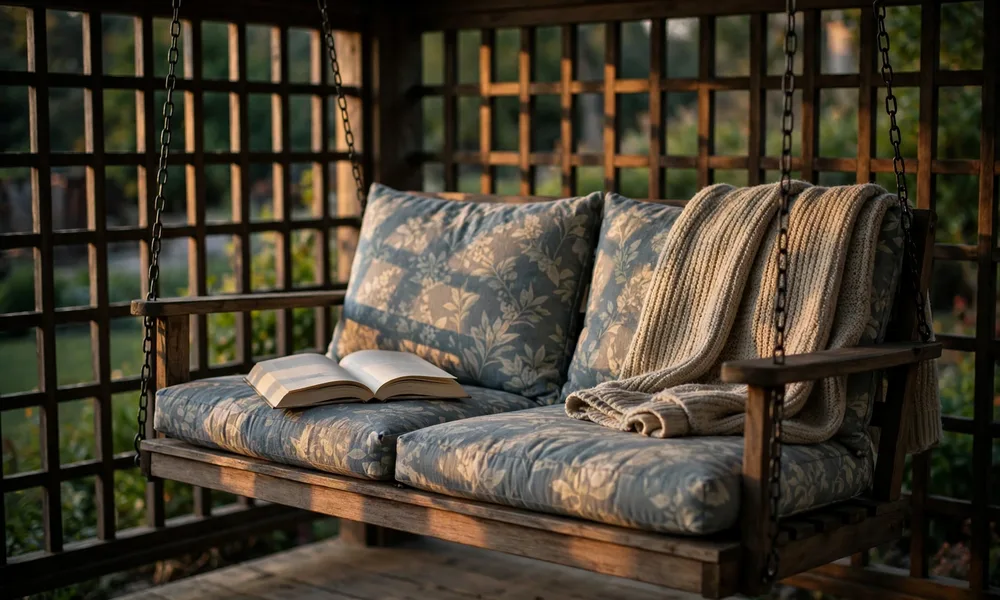
A swing is only as inviting as its cushions. Thin, flat pads look tidy and feel hard within twenty minutes, while deep, quick-dry cushions turn a swing into a seat people fight over. Choose outdoor cushions with a removable, washable cover in a mid-tone pattern, which hides pollen and dust far better than plain white. A folded throw blanket over the armrest invites someone to stay out after the temperature drops.
Lighting matters just as much: a porch swing in the dark is a seat nobody uses, while a warm light nearby turns it into the evening’s destination. String lights along the porch beam or a small lantern on a side table both work, and warm white suits the mood far better than bright white. Finally, give the swing a small table: a swing with nowhere to put a mug is a swing people keep leaving, and every trip inside breaks the mood.
Porch Swing Care Checklist
- Check the bolts, hooks, and chains every spring, and tighten anything that loosened over winter.
- Oil wooden swings once a year and wipe metal frames dry after heavy rain to stop rust.
- Wash cushion covers a few times each season and let them dry fully before refitting.
- Brush leaves and pollen off the seat weekly so they do not stain the fabric.
- Cover the swing or bring the cushions inside during long wet spells and winter.
- Listen for new creaks: a swing that suddenly sounds different usually means a bolt needs attention.
Frequently Asked Questions
How much weight can a porch swing hold?
Most two-person porch swings are rated between 200 and 350 kilograms, but the rating only matters if the beam above it is equally strong. Check the swing’s rating and the joist it hangs from, and buy a swing rated above the weight it will actually carry.
Can I hang a porch swing from any porch ceiling?
No. The swing must hang from a solid timber joist or beam, never from plasterboard, a decorative beam, or a thin roof panel. If you cannot reach a solid joist, ask a carpenter to check first.
What size porch swing do I need?
A two-person swing is usually 120 to 150 centimetres wide. Leave at least 15 centimetres of clearance on each side, plus room in front for it to move freely.
Are porch swings safe for children?
Yes, with supervision and sensible rules. Children should sit rather than stand, and the swing should never be pushed hard enough to hit the porch posts. A sturdy frame and a generous weight rating make the safest family swing.
How do I stop a porch swing from squeaking?
Most squeaks come from the hangers or the chain links. A drop of silicone lubricant on the moving parts usually fixes it, and heavy-duty hangers with bearings glide far more quietly than basic hooks. Check the bolts too, since a loose bolt can squeak.
Should I leave my porch swing out all winter?
The frame can usually stay out if it is wood or powder-coated metal, but the cushions should come inside. Cover the seat against rain and snow, and check the hardware in spring.
The Bottom Line
A good porch swing changes how evenings feel. Buy a solid frame, hang it from a beam you trust, add deep cushions and a warm light, and the porch becomes the best room in the house after dark. Pair it with comfortable patio furniture and soft lighting, and the slow evening takes care of itself.