
A hammock looks like the simplest thing in the world: two trees, a strip of fabric, and an afternoon with nothing to do. Then you lie down, the fabric folds around you, one end slips, and you are on the ground. The best hammock in 2026 never lets that happen: the difference is the fabric, the suspension, and the way it is hung.
We judged the best hammocks on what decides whether you stay in the air: fabric strength, weight capacity with a safety margin, suspension that holds and adjusts easily, and a hang that keeps your body flat. The camping tents we ranked are the right shelter when the weather turns, but on a warm evening nothing beats a hammock strung between two trees, provided it is the right hammock and hung the right way.
Key Takeaways
- A gathered-end camping hammock is the best hammock overall in 2026: light, strong, packs small, and lets you lie flat.
- Hang your hammock with a 30-degree sag. A hammock pulled tight puts huge force on the trees and the fabric, and it is the most common reason people end up on the ground.
- Check the weight rating and leave a margin. A hammock rated for exactly your weight will stretch and wear out far faster than one rated well above it.
- Wide tree straps are non-negotiable. Thin rope cuts into bark and slips under load, while wide straps spread the force and hold firm.
- A spreader-bar hammock is the best hammock for a garden because it lies flat and open, but it tips easily, so it belongs in the backyard, not on a campsite.
The Best Hammocks of 2026 at a Glance
| Hammock Type | Best For | Weight Capacity | Packed Size |
|---|---|---|---|
| Gathered-end camping | Best overall | 180 to 225 kg | Water bottle |
| Lightweight backpacking | Long hikes | 135 to 180 kg | Softball |
| Double camping | Two people | 225 kg and up | Small stuff sack |
| Spreader-bar | Garden relaxing | 135 to 200 kg | Does not pack |
| Hammock with stand | No trees | 150 to 200 kg | Does not pack |
How a Hammock Actually Holds You
A hammock spreads your weight across a curved sheet of fabric, and the curve is the whole secret. Lie straight down the middle and your body sinks, your knees rise, and your back bends. Lie on the diagonal instead, head on one side of the centre line and feet on the other, and the surface under you flattens out. A good hammock is wide enough to let you do this, which is why width matters more than length.
The hang angle matters just as much. At 30 degrees, the force on each end roughly equals your body weight, which the fabric and straps handle easily. Pulled nearly flat, that force can triple, and that is when stitching pops and straps slip.
Fabric is the third part of the equation. Most camping hammocks use parachute nylon or ripstop nylon: strong, light, and quick to dry. Cotton feels lovely in a garden, but it absorbs water and rots if left out in the rain, so it belongs in the backyard, not in a backpack.
The Best Hammock Overall: Gathered-End Camping
The gathered-end camping hammock is the best hammock for most people in 2026: a rectangle of strong nylon gathered at each end, under a kilogram, packing down to the size of a water bottle. The best ones are at least 2.7 metres long and 1.4 metres wide, enough for a tall person to lie on the diagonal, and rated for 180 to 225 kilograms, a comfortable margin for one person.
What sets the best gathered-end hammocks apart is the suspension. The good ones come with wide tree straps, at least 2.5 centimetres across, with sewn loops for a carabiner, and adjust in seconds without knots. The worst ones ship with thin rope that saws into bark, slips when wet, and takes ten minutes of knot-tying to adjust. A good suspension is worth more than a fancy fabric, because it fails first, and it fails suddenly.
The Best Hammock for Long Hikes: Lightweight Backpacking
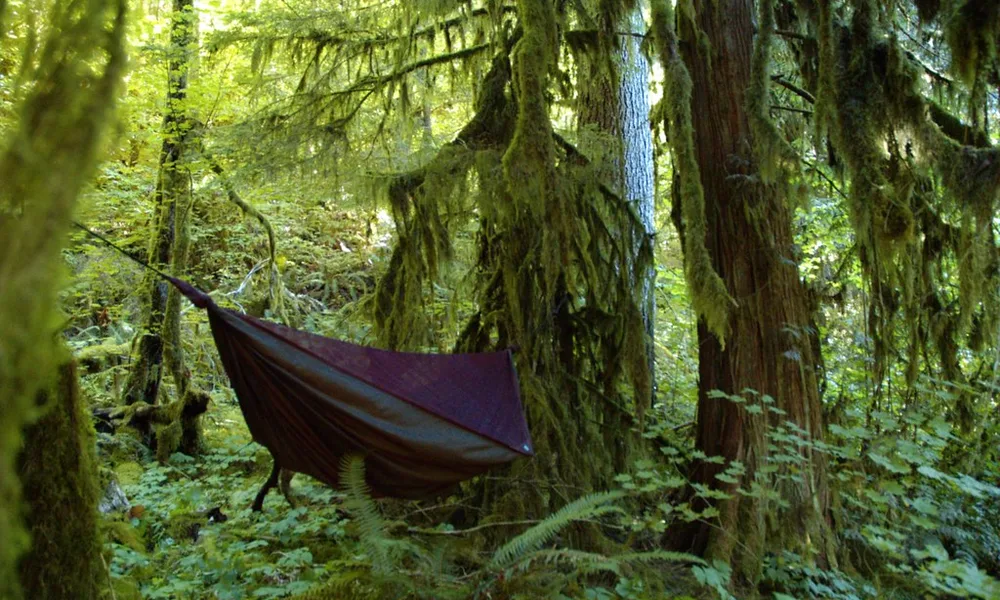
A backpacking hammock is a gathered-end hammock stripped to the essentials, and the best hammock for anyone who carries everything on their back. The best ones weigh 400 to 600 grams including straps, lighter than most sleeping pads, and pack down to the size of a softball. The trade-off is thinner nylon, usually 20- or 40-denier, less forgiving of sharp sticks and rough bark.
The best backpacking hammocks pair with a bug net, a rain tarp, and an underquilt that insulates you from the cold air below. Without insulation, a hammock is cold: the air moves beneath you and steals heat from your back, and a sleeping bag compressed under your weight cannot stop it. That is why the sleeping bags we compared matter just as much in a hammock as they do in a tent.
The Best Hammock for Two: Double Camping
A double hammock sounds romantic, and it is, for about twenty minutes, and then two people in one hammock discover physics. Two bodies roll together into the middle and nobody sleeps well, which is why the best double hammocks are wide, at least 1.8 metres, and rated for 225 kilograms or more. Used as a wide single, a double is superb: room to lie fully diagonal and sleep flat.
The best double hammocks use a double layer of fabric, which raises the weight capacity and creates a pocket where a sleeping pad slides in and stays put, instead of bunching up near your knees by midnight. A double also makes a good family hammock, holding one adult and two small children.
The Best Hammock for the Garden: Spreader-Bar
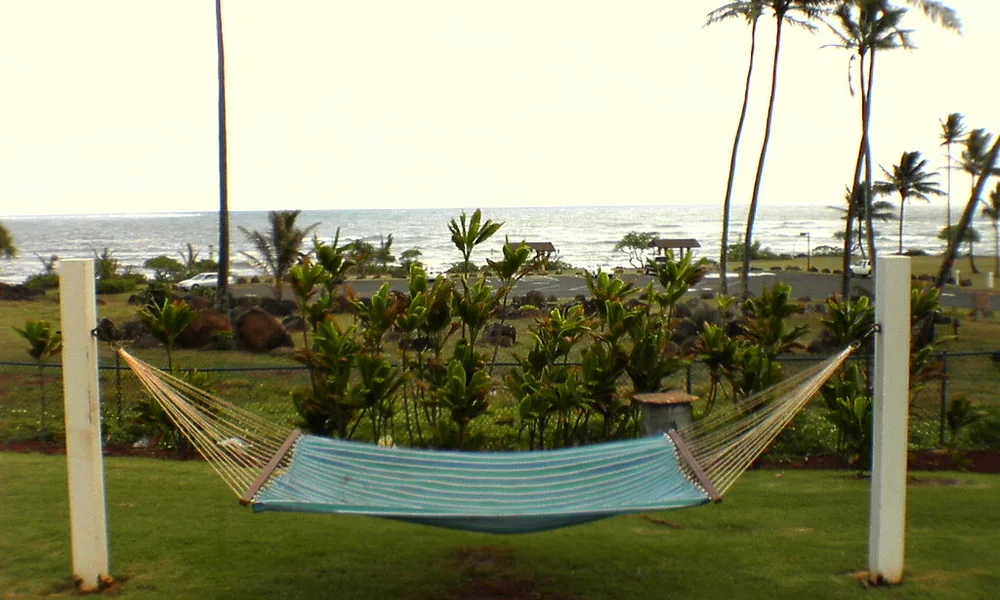
A spreader-bar hammock is the one most people picture: a wide strip of fabric held open by wooden bars at each end, strung between two trees or on a stand. It is the best hammock for relaxing, because it lies flat and open like a bed, you can lie on your back, side, or stomach, and getting in and out is easy.
The spreader bar is also the weakness. A spreader-bar hammock is tippy, because the bars hold the fabric flat and your weight sits high above the centre, so leaning to one side can flip it over. It is heavy and impossible to pack, so it never leaves the garden, and cotton versions must come inside when it rains. Hang it low and never take it camping.
The Best Hammock With No Trees: Hammock and Stand
Not everyone has two trees in the right place, and a hammock stand solves that problem: a metal or wooden frame that holds the hammock between two raised ends, adjusts to fit different lengths, and holds 150 to 200 kilograms without wobbling. It turns any garden, balcony, or patio into a hammock spot. A stand is also a commitment, heavy and as costly as a good hammock, and one for a 3.5-metre hammock needs nearly four metres of clear ground. If you have trees, use them.
The Worst Hammocks of 2026
The worst hammocks fail in the same few ways. The most common failure is a hammock rated for too little weight, usually a cheap single-layer nylon hammock rated for 100 kilograms or less, which stretches under a normal adult, sags to the ground, and tears at the seams after a season. The second is thin rope suspension, which slips, cuts into trees, and is nearly impossible to adjust without untying knots in the dark. The third is a hammock too short or too narrow, usually under 2.4 metres, which forces you to lie curled like a banana.
Some hammocks fail by being the wrong type for the job. A cotton garden hammock taken camping will soak up rain and take a day to dry. A spreader-bar hammock taken camping will tip on uneven ground. The worst hammock is rarely the cheapest on the shelf; it is the one bought for the wrong place, hung the wrong way, and trusted with more weight than it was built for.
How to Hang a Hammock So It Stays Up
Pick two healthy, living trees at least 15 centimetres across, about four to five metres apart, with no dead branches above you. Wrap a wide tree strap around each one at about head height, and clip the hammock on with carabiners, so it hangs with a deep sag and the lowest point sits about 45 centimetres off the ground: chair height, and a short fall if anything goes wrong.
Check the angle by holding your hand up with thumb and forefinger spread: the suspension should run at roughly the same angle as your fingers, about 30 degrees. Lie on the diagonal and you should feel flat. Test it by sitting in it first, then lying down slowly, and never jump into a hammock or stand in one. The camping chairs we ranked are the right seat for the fireside, but a well-hung hammock is the best seat in camp.
Hammock Checklist: Before You Buy
- Measure your height against the hammock: you need one at least 30 centimetres longer than you are tall, and wider is better.
- Check the weight rating and leave a margin of at least 50 kilograms above your weight.
- Make sure wide tree straps are included, at least 2.5 centimetres across. Thin rope damages trees and slips.
- Decide where the hammock will live: a garden hammock wants cotton and spreader bars, a camping hammock wants ripstop nylon.
- Look for a ridgeline or a bug net if you plan to sleep in it: a fixed sag and insect protection turn a lounge hammock into a bed.
- Test the packed size and weight. A hammock too big or heavy for your pack will stay at home, and a hammock at home is no use at all.
Frequently Asked Questions
How far apart should the trees be for a hammock?
Four to five metres apart is ideal, with the straps wrapped at about head height. Closer, and the hammock hangs too tight; further apart, and you will need longer straps.
Can two people sleep in one hammock?
Two people can lounge in a wide double hammock, but sleeping two in one is uncomfortable, because both bodies roll into the middle and nobody lies flat. For a full night, two separate hammocks hung side by side sleep better.
How do I stay warm in a hammock at night?
Use an underquilt or a sleeping pad inside the hammock. The air beneath you steals heat from your back, and a sleeping bag compressed under your weight cannot insulate. An underquilt hangs beneath the hammock and stays lofted.
Are hammocks bad for your back?
A hammock hung tight forces your back into a curve and can ache by morning, but a hammock with a 30-degree sag, slept in on the diagonal, holds your body flat. If your back hurts, add more sag.
Can I hang a hammock indoors?
Yes, with solid anchor points such as wall studs or ceiling joists, but never from plasterboard, a curtain rail, or a door frame. A stand is the safer choice indoors, because it needs no drilling.
How do I keep a hammock from tipping over?
Hang it low, keep your weight centred, and get in slowly by sitting down first, then swinging your legs in. Spreader-bar hammocks tip most easily, so sit in the middle and avoid leaning to either side.
The Bottom Line
The best hammock in 2026 is the one that fits your body, your trees, and the place you will actually use it, and for most people that is a wide gathered-end camping hammock with strong tree straps, a sensible weight rating, and a 30-degree sag. Hang it low, lie on the diagonal, and leave a margin on the weight rating, and it will hold you all night for years. Buy the wrong type, hang it tight, or trust thin rope, and the ground will teach you the lesson instead.


