
A hammock looks like the simplest thing in the world: two trees, a strip of fabric, and an afternoon with nothing to do. Then you lie down, the fabric folds around you, one end slips a little, and you are on the ground wondering what went wrong. The best hammocks of 2026 never let that happen. They hold you flat and steady, they breathe on a warm day, and they pack down small enough to carry anywhere. The worst ones sag like a banana, tip you out without warning, and fall apart after a single summer.
This comparison puts the best hammocks of 2026 head to head against the worst, judging them the way you would actually use them: an afternoon nap in the garden, a weekend camping trip in the woods, and a lazy hour on a beach or a balcony. We look at comfort and the lie, fabric strength and weight capacity, suspension and how easy it is to hang, and how well the hammock survives sun, rain, and being stuffed into a bag again and again. The same honest approach sits behind our comparison of the best and worst camping tents of 2026, because a hammock is often the shelter you choose instead of a tent.
Key Takeaways
- Judge a hammock by how flat you lie in it, not by how soft the fabric feels in the shop.
- A wide fabric bed and a proper diagonal lie matter more than any number of pockets or straps.
- Weight capacity should have a real safety margin: a hammock rated for your weight alone is not enough.
- Suspension that adjusts easily and grips the tree is worth more than a fancy carry bag.
- Cheap hammocks often cost more in the long run, because they sag, fray, and fail after one season.
What Makes a Hammock Good or Bad
The first thing that separates a good hammock from a bad one is the lie. A good hammock lets you lie almost flat, on a slight diagonal across the fabric, so your back stays straight and your knees are not bent up in the air. The best hammocks of 2026 are wide enough for that diagonal lie, usually well over a metre and a half across, and their fabric supports your whole body evenly. The worst hammocks are narrow and short, so you end up curled like a banana with your feet higher than your head, and twenty minutes later your back is aching.
The second test is fabric and strength. A good hammock is made from a tightly woven fabric that holds its shape under load, with reinforced stitching at the ends where all the force gathers. It should carry its rated weight with room to spare, because a hammock that is only just strong enough will stretch, sag, and eventually tear at the seams. The best hammocks use ripstop nylon or strong cotton canvas that resists tearing and dries quickly. The worst ones use thin, loosely woven fabric that stretches the first time you lie in it and starts to fray at the edges within weeks.

The Best Hammocks of 2026
The best hammocks of 2026 share a simple quality: they disappear beneath you. The fabric is wide and strong, the lie is flat, and you can read, nap, or watch the clouds without thinking about the hammock at all. A good garden hammock is made from breathable cotton or a cotton blend that stays cool in the sun and feels soft against bare skin. A good camping hammock is made from feather-light ripstop nylon that packs down to the size of a water bottle and still holds a grown adult with room to spare.
Build quality is what sets the best hammocks apart over the years. Their seams are double-stitched and bar-tacked at the stress points, their ropes and straps are thick and even, and their spreader bars, where they have them, are solid wood or sturdy metal rather than hollow plastic. The best hammocks come with a proper stuff sack, tree straps, and carabiners that are rated for the load, not flimsy clips that bend the first time you sit down. These are hammocks built to be hung and taken down hundreds of times.
The Worst Hammocks of 2026
The worst hammocks of 2026 fail in the same few ways, and the failures show up fast. Their fabric is narrow and thin, so you lie curled up with your shoulders squeezed together, and the weave stretches unevenly until one side sits lower than the other. Their stitching is single-thread and skimpy, and the first sign of trouble is a seam that starts to pull apart at the end, exactly where all your weight hangs. A hammock that tears while you are in it is not just disappointing, it is dangerous.
Cheap hammocks also cut corners on suspension that you only discover outdoors. Their straps are short and thin, so they only fit trees that happen to be the right distance apart, and their ropes slip the moment you shift your weight. Their carabiners are decorative rather than rated, bending under a load they were never meant to carry. What looked like a bargain in the shop becomes a hammock you do not trust, and a hammock you do not trust is a hammock you never use.
Garden, Camping and Travel Hammocks
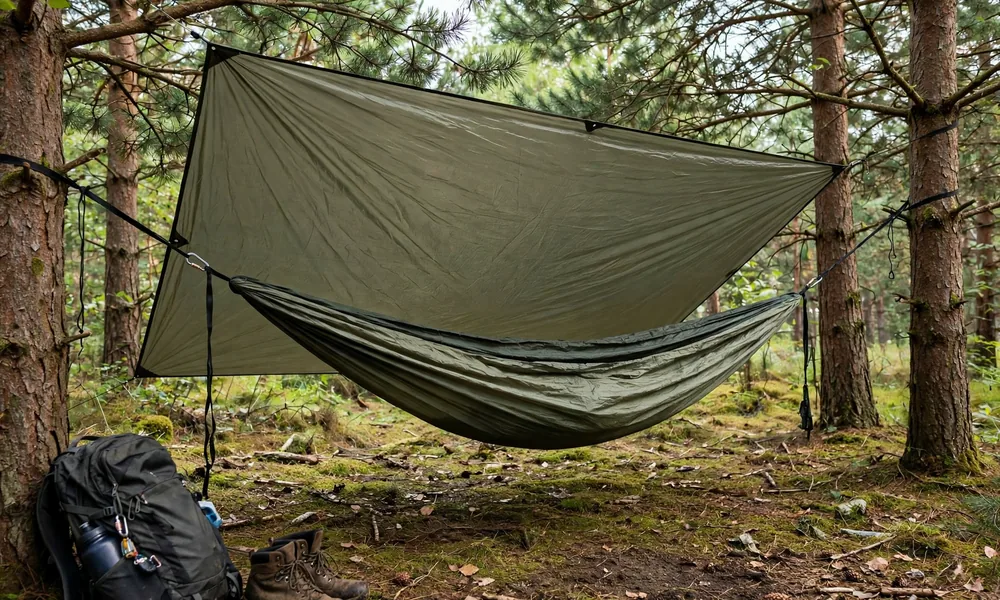
Most people buy one of three kinds of hammock, and the kind shapes everything else. A garden hammock is the big, comfortable one: wide cotton fabric, often with a wooden spreader bar and a stand, built for long lazy afternoons rather than for carrying anywhere. It stays in one place all summer, and its job is comfort. A camping hammock is the opposite: light, compact, and tough, built to be carried into the woods and hung between whatever trees you find. A travel hammock sits in between, light enough for a suitcase but comfortable enough for a proper rest.
Spreader-bar hammocks and gathered-end hammocks feel very different to lie in. A spreader bar holds the fabric open, so the hammock looks like a bed and is easy to get into, but it can tip more easily if you move suddenly. A gathered-end hammock gathers the fabric at each end, wrapping around you like a cocoon, and it is far more stable once you learn the diagonal lie. For sleeping overnight, most experienced campers prefer the gathered end. For an afternoon in the garden, the spreader bar is often the easier choice.
Two-person hammocks deserve a careful look before you buy one. A hammock rated for two people needs to be genuinely wide, with a weight capacity that covers both sleepers with a safety margin, and a suspension that can hold the combined load without slipping. Many cheap double hammocks are simply a single hammock with a bigger label, and two people in one soon discover that gravity pulls them together into the middle. The same honest approach sits behind our comparison of the best and worst sleeping bags of 2026, because a hammock and a sleeping bag are often the two halves of the same night outdoors.
What to Check Before You Buy
Before you buy a hammock, check the size honestly. Measure the distance between the trees or posts where you plan to hang it, and compare it with the hammock’s total length including its ropes. A hammock needs slack to hang in a curve, so the gap between the trees should be longer than the hammock itself. Check the width too: a hammock narrower than your shoulders will never let you lie flat, however good the fabric is. If you are tall, look for a longer bed, because a short hammock forces your knees up.
Look at the weight capacity, and treat it as a limit with a margin, not a target. A hammock rated for 150 kilograms should carry one person of 90 kilograms with ease, and it should still feel solid rather than stretched. If the rating is barely above your weight, the fabric will sag and the seams will strain. Check what the suspension is rated for as well, because a strong hammock on weak straps is still a weak system. Good makers publish the rating for every part, not just the fabric.
Try the hang if you can, even in the shop. Sit in the hammock, then lie back slowly and find the diagonal. The fabric should support you evenly without a ridge pressing into your back, and getting out should be as easy as sitting up and swinging your legs over the side. Check the stitching at the ends, the thickness of the ropes, and the quality of the carabiners. And ask about the warranty, because a maker who stands behind a hammock for years is a maker who trusts their own seams.
- Measure the gap between your trees before ordering anything, and allow room for slack.
- Check the width and the length against your height, not just the label on the box.
- Make sure the weight rating leaves a real safety margin for you and your gear.
- Look for wide tree straps, rated carabiners, and double-stitched seams at the ends.
- Ask whether the hammock is meant for the garden, for camping, or for travel.
Care, Storage and Making a Hammock Last
A hammock lasts longer when it is looked after, and the best hammocks make that easy. Take it down when you are not using it, especially in rain, because fabric left hanging stays damp and weakens faster than fabric that is dried and stored. Wash it gently when it gets dirty, following the maker’s care label, and let it dry fully before packing it away. A clean, dry hammock also feels better to lie in, since a layer of mildew or ground-in dirt makes the fabric stiff and scratchy.
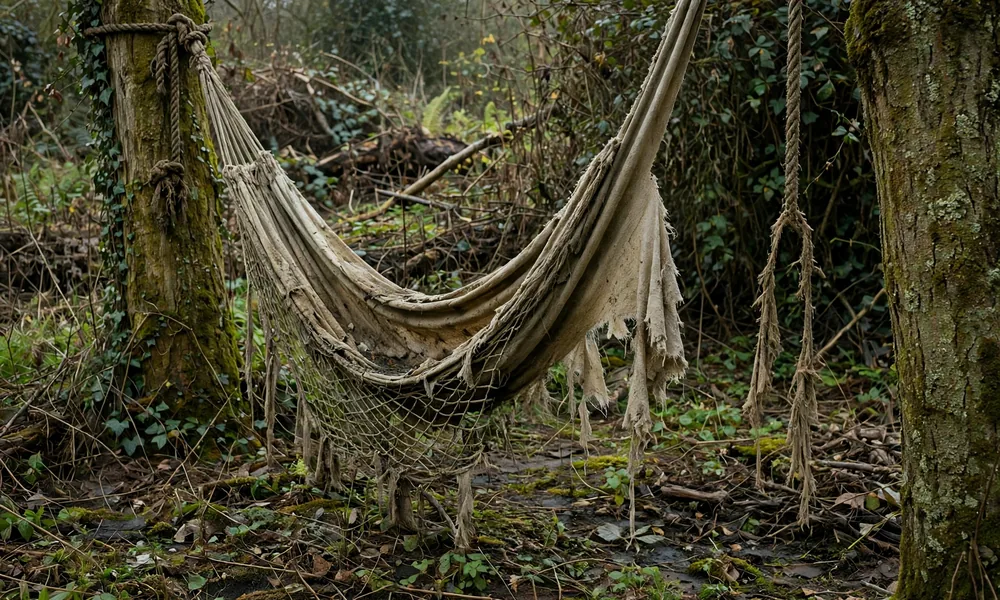
When a hammock does start to fail, the signs are usually clear: it sags lower each time you hang it, the fabric feels thin and papery at the ends, or a seam starts to open where the ropes gather. A frayed rope can sometimes be replaced, and a small tear can be patched, but a hammock whose fabric is weakening across its whole width is finished. If you are choosing a hammock for the first time, our guide on how to pick a hammock that will not dump you on the ground covers the hang, the lie, and the safety checks in detail, and it is worth reading before you spend anything.
The Verdict
The best hammocks of 2026 are honest pieces of kit. They are wide enough to lie flat in, strong enough to trust, easy to hang, and built well enough that the seams still hold after years of summers. They do not need gimmicks to impress you, because the feeling of lying flat in the shade on a warm afternoon speaks for itself.
The worst hammocks are the opposite: narrow, weak, and hard to hang, with fabric that stretches and seams that fail. They turn relaxing into a balancing act and make every lie-down slightly worse than it should be. If your hammock tips you out, sags to the ground, or leaves your back aching, it is not you. It is the hammock, and a better one will change your summers more than any new garden chair ever could.


