Outdoor Cushions That Stay Comfortable All Summer in 2026
The best outdoor cushions of 2026 are the difference between a garden chair you sit on for five minutes and one you settle into all afternoon. A good cushion is thick enough to soften a hard seat, firm enough to hold its shape, and built from foam and fabric that dry quickly after rain and keep their colour under strong sun. A bad one goes flat within a month, soaks up water, and fades to grey by midsummer. This guide covers how to choose cushions that stay comfortable all summer, from foam and fabric to sizing, ties, and care.
Outdoor cushions live a harder life than any cushion indoors. They face direct sun, sudden downpours, morning dew, pollen, and spilled drinks, all while being sat on and left out overnight. The cushions that survive are not the prettiest in the shop; they are the ones built from the right materials in the right thickness, with covers you can remove and wash. Price is a poor guide: a mid-priced cushion with quick-drying foam and solution-dyed fabric will outlast an expensive one stuffed with ordinary foam and cotton.
Key Takeaways
- Thickness matters most: seat cushions should be at least 8 to 10 centimetres thick, and deep-seat lounge cushions at least 12 centimetres.
- Quick-drying foam is the single best upgrade. Ordinary foam holds water for days; open-cell or reticulated foam drains and dries in hours.
- Solution-dyed acrylic and outdoor polyester resist fading far better than cotton or standard polyester covers.
- Measure your furniture before you order. A cushion that is too small slides around, and one that is too big hangs over the edge and soaks up rain.
- Ties, straps, and non-slip bases keep cushions in place on windy days and stop them sliding off smooth metal or wooden seats.
What Makes an Outdoor Cushion Different
An indoor cushion is built for comfort in a dry, shaded room. An outdoor cushion must deliver the same comfort while surviving weather, and that changes every part of it: the fill must drain water instead of absorbing it, the cover must resist ultraviolet light, and the seams must be tight enough to keep rain out.
The foam is where the difference starts. Standard polyurethane foam is a closed sponge: it absorbs water, holds it, and takes days to dry, growing mildew and losing its spring. Outdoor cushions use open-cell foam, whose connected cells let water drain straight through, so a soaked cushion can be dry enough to sit on a few hours later.
The cover matters just as much. Solution-dyed acrylic is the gold standard: the colour runs through the fibre, so it cannot wash out or bleach away, and the fabric resists water, mildew, and staining. Outdoor polyester is a close second and usually cheaper. Cotton and linen look beautiful indoors and fail outdoors within weeks.
Seat, Back, and Lounge Cushions Explained
Outdoor cushions come in three main forms, and buying the right one for your furniture matters more than the pattern or the colour.
Seat Cushions
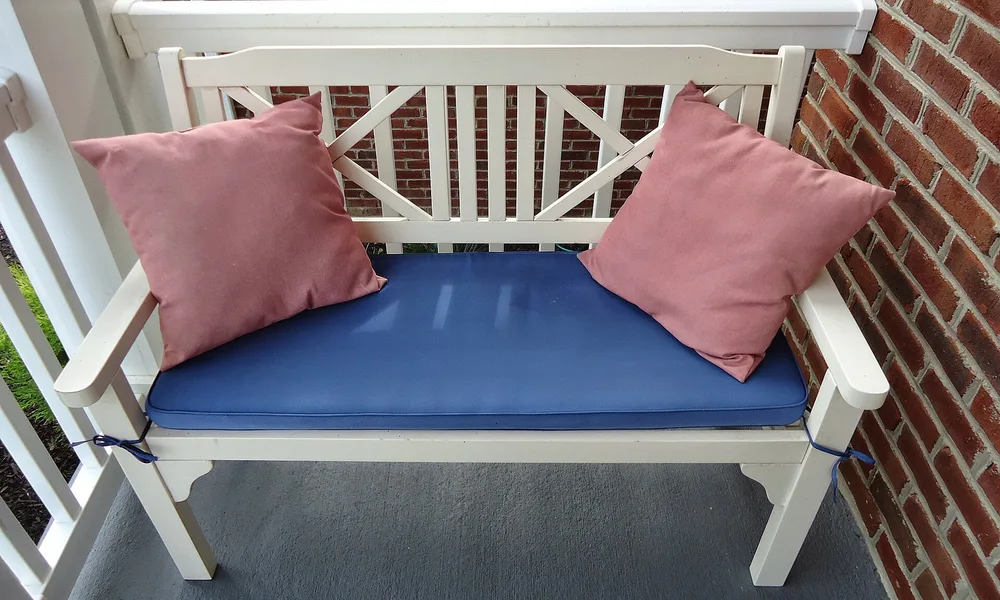
Seat cushions sit on dining chairs, benches, and bistro chairs, and they take the most wear of any cushion in the garden. They should be 8 to 10 centimetres thick, firm enough that you do not feel the chair beneath you, and fitted with ties that fasten to the chair. A seat cushion without ties slides forward every time you stand up. Measure the seat and allow a centimetre of clearance so the cushion does not bunch against the chair back.
Back Cushions
Back cushions support your spine on lounge chairs and sofas, and they need to be softer than seat cushions while still holding their shape. A good back cushion is 10 to 15 centimetres thick, with a fill that compresses gently and springs back. Back cushions often have loops or straps at the top so they can be fastened to the chair frame, which stops them slipping down during a long afternoon.
Deep-Seat and Lounge Cushions
Deep-seat cushions are the thick, generous pads on lounge sofas, daybeds, and sun loungers, and they are the closest outdoor furniture gets to an indoor sofa. They should be at least 12 centimetres thick, and the best are 15 centimetres or more, with a firm foam core for support and a softer wrap for comfort. A lounge cushion that is too thin feels like sitting on the frame, however expensive the furniture is.
Foam and Fill: The Comfort Test
Foam density decides whether a cushion stays comfortable. For outdoor seat cushions you want a density of at least 25 kilograms per cubic metre, and 30 or more for deep-seat cushions. Low-density foam feels soft in the shop and collapses within weeks; high-density foam feels firmer at first and keeps its shape for years.
Some cushions use a layered fill, with a firm foam core wrapped in polyester fibre for a softer surface. Others use a single piece of high-density foam, which is simpler and dries faster. The layered kind needs a removable, washable cover, because fibre fill traps moisture more readily than foam alone.
After rain, a cushion with open-cell foam and a water-resistant cover sheds most of the water and dries in a few hours of sun, while one with ordinary foam and a cotton cover stays wet for days. Press a cushion firmly: a good outdoor cushion springs back instantly and releases very little water.
Fabric: Colour That Lasts the Summer
Fading is the most visible way an outdoor cushion fails, and it happens fast: a cheap cover can lose half its colour in a single summer. Solution-dyed acrylic resists this better than any other common fabric, because the colour is part of the fibre rather than a coating on it, and it also resists water and mildew. Outdoor polyester is the next best option: it fades more slowly than cotton, dries quickly, and costs less, though its colours are less rich.
Weave matters too. A tight weave keeps out dust and pollen and stops the cover stretching out of shape. Look for bound seams, hidden zips, and a water-repellent finish that makes rain bead on the surface.
Colour choice is practical as well as decorative. Dark colours absorb heat and can be uncomfortably hot in direct sun, while very pale colours show every mark. Mid-tones and patterns hide marks best, which is why striped and textured cushions are so popular outdoors.
Outdoor Cushion Comparison
| Cushion type | Best thickness | Best fill | Best fabric | Suits |
|---|---|---|---|---|
| Dining seat cushion | 8 to 10 cm | High-density open-cell foam | Solution-dyed acrylic | Dining chairs and benches |
| Back cushion | 10 to 15 cm | Firm foam core with fibre wrap | Solution-dyed acrylic | Lounge chairs and sofas |
| Deep-seat cushion | 12 to 15 cm | Layered foam, dense core | Solution-dyed acrylic or outdoor polyester | Lounge sofas and daybeds |
| Sun lounger pad | 8 to 12 cm | Quick-drying open-cell foam | Outdoor polyester | Loungers and recliners |
| Bench cushion | 8 to 10 cm | High-density foam, tied | Outdoor polyester | Garden benches and swings |
| Floor and pouf cushion | 15 cm or more | Shredded foam or fibre | Outdoor polyester, removable cover | Informal seating and play |
Sizing: Measure Twice, Order Once
The most common mistake is ordering the wrong size. A cushion that is too small leaves hard edges exposed and slides around; one that is too large hangs over the edge and catches rain. Measure each piece of furniture before you order: seat width, depth, and backrest height.
Allow about a centimetre of clearance on each side so the cushion sits neatly without bunching. For a sofa, measure each seat separately, because the end seats are often narrower than the middle ones. The same care applies to the patio furniture that turns your garden into a second living room in 2026, and to the best outdoor rugs for patios in 2026, which anchor the seating area and tie the colours together.

Ties, Straps, and Staying Put
A cushion that will not stay put is one you will stop using. Ties are the simplest fix: two fabric ties at the back of a seat cushion, fastened around the chair, stop it sliding forward. Straps with buckles suit heavier lounge cushions, while a non-slip base stops a cushion sliding on smooth metal or varnished wood. Some cushions have all three, and those are worth paying for.
Wind is the other enemy. A light cushion on a breezy terrace will end up in the flowerbeds, so heavy, dense cushions and ties are worth having. Store cushions in a box or storage bench overnight and bring them in before a storm.
Care, Cleaning, and Winter Storage
Outdoor cushions need very little care, but they need it regularly. Brush off dust and pollen once a week, and wipe up spills at once, because a stain that sets in the sun is far harder to remove. Most covers can be machine-washed on a gentle cycle or scrubbed by hand with warm water and mild soap. Never use bleach, and never use a hot dryer, because heat shrinks the fabric.
After rain, stand cushions on their edge so water drains out, and let them dry in the sun. A cushion left flat and wet stays damp underneath, and dampness causes mildew. At the end of the summer, wash the covers, dry the foam, and store the cushions somewhere dry and ventilated, never in a sealed plastic bag. Stored properly, a good set lasts five summers or more. Seat and back cushions are the working cushions; decorative pillows are the finishing touch, covered in our guide to the best throw pillows for outdoor use in 2026.

Checklist: Before You Buy Outdoor Cushions
- Measure every seat: width, depth, and back height, and allow a centimetre of clearance on each side.
- Choose a thickness of at least 8 to 10 centimetres for seat cushions and 12 centimetres or more for deep-seat lounge cushions.
- Check the foam: it should be open-cell and quick-drying, and it should spring back immediately when pressed.
- Pick a cover in solution-dyed acrylic or outdoor polyester, with tight seams and a hidden zip.
- Confirm the ties, straps, or non-slip base, so the cushion stays in place on windy days.
- Check that the covers are removable and washable, and plan dry storage for winter.
Frequently Asked Questions
How thick should outdoor cushions be?
Seat cushions should be at least 8 to 10 centimetres thick, and deep-seat lounge cushions at least 12 centimetres.
What is the best foam for outdoor cushions?
Open-cell, quick-drying foam is best, because water drains through it instead of soaking in. Look for a density of at least 25 kilograms per cubic metre, and 30 or more for deep-seat cushions.
What fabric lasts longest outdoors?
Solution-dyed acrylic lasts longest, because its colour runs through the fibre and resists sun, water, and mildew. Outdoor polyester is a good, cheaper alternative; cotton and linen fade and mildew quickly outside.
Can outdoor cushions be left out in the rain?
A well-made cushion with quick-drying foam and a water-resistant cover can handle rain and dry within hours.
How do I stop outdoor cushions from sliding?
Use the ties or straps to fasten them to the chair and choose cushions with a non-slip base. A cushion that fits and is tied on will stay put even on smooth metal or wood.
How do I clean outdoor cushion covers?
Brush off loose dirt, wash removable covers on a gentle cycle or by hand with warm water and mild soap, and air-dry them. Avoid bleach and hot dryers.
The Bottom Line
The best outdoor cushions of 2026 are thick, quick-drying, and built from fabric that holds its colour all summer. Choose seat cushions of at least 8 to 10 centimetres and deep-seat cushions of 12 centimetres or more, in open-cell foam with a solution-dyed acrylic or outdoor polyester cover, and measure your furniture before you order. Add ties or a non-slip base, wash the covers when they need it, and store the cushions dry over winter.