A bare patio can feel unfinished no matter how good the furniture is. Hard stone or plain concrete does the practical work, but it rarely invites anyone to sit down and stay a while. The best outdoor rugs for patios change that in a single step, softening the ground underfoot, pulling scattered furniture into one coherent space, and adding colour without a renovation.
Choosing the right one is not as simple as picking a pretty pattern, though. An outdoor rug faces full sun, heavy rain, muddy shoes, and spilled drinks. A rug that looks wonderful in a showroom can fade, hold water, or grow mildew within a single season if the material is wrong.
This guide covers those decisions: the materials that hold up outdoors, the sizes that fit real patios, and a shortlist of the best outdoor rugs for patios in 2026.
Key takeaways
- Polypropylene flatweave rugs are the safest all-round choice: they resist fading, dry quickly, and hose clean.
- Measure your furniture first, then buy the rug — it should sit under the front legs of every chair.
- An outdoor rug pad stops slipping and helps water drain instead of pooling underneath.
- Light and mid-tone patterns hide dust and pollen better than solid dark colours.
- Hose your rug down monthly and let it dry fully after heavy rain to prevent mildew.

What Makes a Great Outdoor Rug
An outdoor rug has one job indoor rugs never face: surviving the weather while still looking like it belongs in a living space. The best outdoor rugs for patios manage both. They feel pleasant under bare feet, anchor the furniture, and keep their colour after a summer of sun. Three qualities decide this: the material, the weave, and the backing.
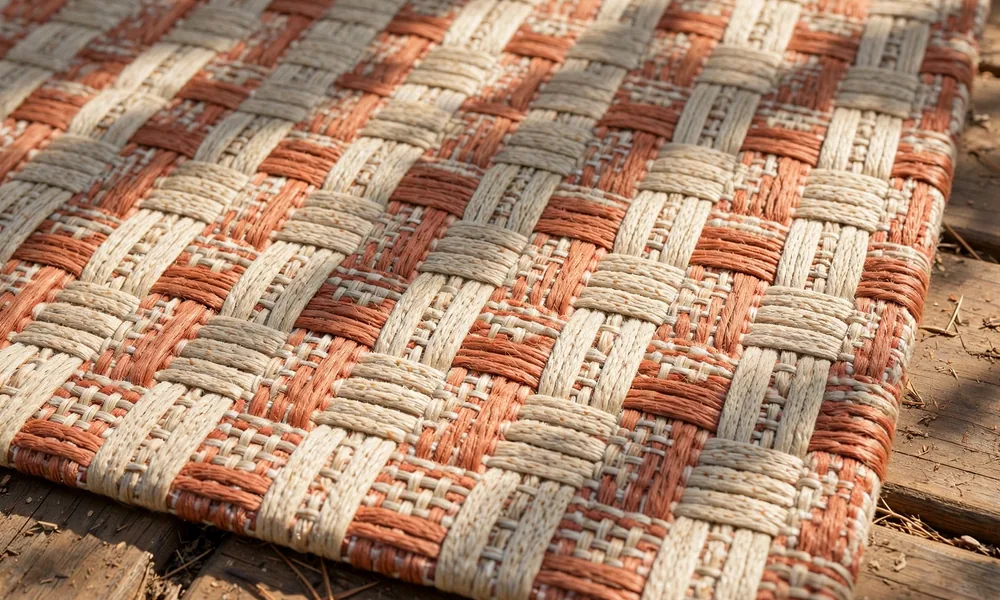
Material is the foundation. Synthetic fibres such as polypropylene and polyester dominate the outdoor rug market for good reason. They absorb little water, resist mould and mildew, and hold their colour under ultraviolet light. Polypropylene is the workhorse of the category, while polyester feels slightly softer and takes deep colours well. Both hose clean and dry in the sun.
Jute and sisal look warm and textured, and cotton rugs feel soft, but all three absorb water, dry slowly, and can develop mildew if they stay damp. They suit a sheltered porch, but on an open patio they are a short-term choice.
Material Matters Most
When two rugs look similar, the material label tells you more than the pattern does: a polypropylene rug rated for outdoor use is built to shed water and resist fading. Check the label for two phrases: UV stabilised and mould resistant. The first slows fading; the second keeps dark spots and musty smells away.
Weather Resistance and Drainage
A good outdoor rug does not just resist water; it lets water through. Flatweave and loosely woven rugs drain naturally, so rain passes through to the patio below and the rug dries within hours. Dense, heavy rugs with solid rubber backings trap water underneath instead, causing mildew, staining on stone, and a slippery surface after rain. Look for a breathable, open backing or no backing at all, and pair the rug with an outdoor rug pad, which improves airflow and stops it sliding on smooth stone or decking.
The Best Outdoor Rugs for Patios in 2026
The rugs below were chosen for the qualities that matter outdoors: proven materials, sensible sizing, and patterns that hide everyday dirt. Each pick leads in one area, so start with the job your patio needs done.
Best Overall: Flatweave Polypropylene Rug
The flatweave polypropylene rug is the default recommendation for a reason. It handles sun, rain, and heavy foot traffic without complaint, and it comes in more patterns and sizes than any other type. The flat weave means chairs slide easily, crumbs brush off, and a garden hose restores it in minutes. Choose a pattern with two or three tones rather than a single flat colour, since multi-tone designs hide dust while solids show every footprint.
Best for Dining Areas: Low-Pile Patterned Rug
Dining chairs move constantly, and a thick pile rug fights every push and pull. A low-pile patterned rug solves that problem: chairs glide, food spills wipe away, and crumbs are easy to sweep off. A bold pattern also disguises the small stains that come with outdoor meals. Size the rug so chairs stay on it even when pulled out.Measure the table, add at least 60 centimetres on every side, and buy the closest size above that.
Best for Small Patios: Striped Runner Rug
Small patios and narrow balconies need a rug that defines the space without swallowing it. A striped runner does exactly that, drawing the eye forward and giving a small seating group a clear boundary.
Best for Luxury Looks: Textured Indoor-Outdoor Rug
Some outdoor rugs now look and feel close to indoor rugs, with a soft texture and subtle, sophisticated patterns. These indoor-outdoor rugs use solution-dyed fibres that resist fading while feeling far plusher than a standard flatweave, suiting covered patios where the rug is part of the furniture. The trade-off is care: a textured rug holds more dust and takes longer to dry, so it needs a covered spot and regular shaking or vacuuming.
Best Budget Pick: Recycled Plastic Woven Rug
Recycled plastic rugs offer the best value in the category: light, tough, and almost indifferent to weather. They dry in minutes, scrub clean with soap and water, and hide dirt well. Their firmer feel suits high-traffic family patios.
Outdoor Rug Comparison
Compare the main types at a glance — the best choice depends on your patio, your climate, and how much care you are willing to give the rug.
| Rug type | Best for | Dries | Cleaning | Price level |
|---|---|---|---|---|
| Flatweave polypropylene | Most patios | Fast | Hose down | Mid-range |
| Low-pile patterned | Dining areas | Fast | Wipe and sweep | Mid-range |
| Striped runner | Small patios | Very fast | Shake and hose | Budget |
| Textured indoor-outdoor | Covered patios | Moderate | Vacuum and spot clean | Premium |
| Recycled plastic woven | Family patios | Very fast | Scrub with soap | Budget |
How to Choose the Right Size
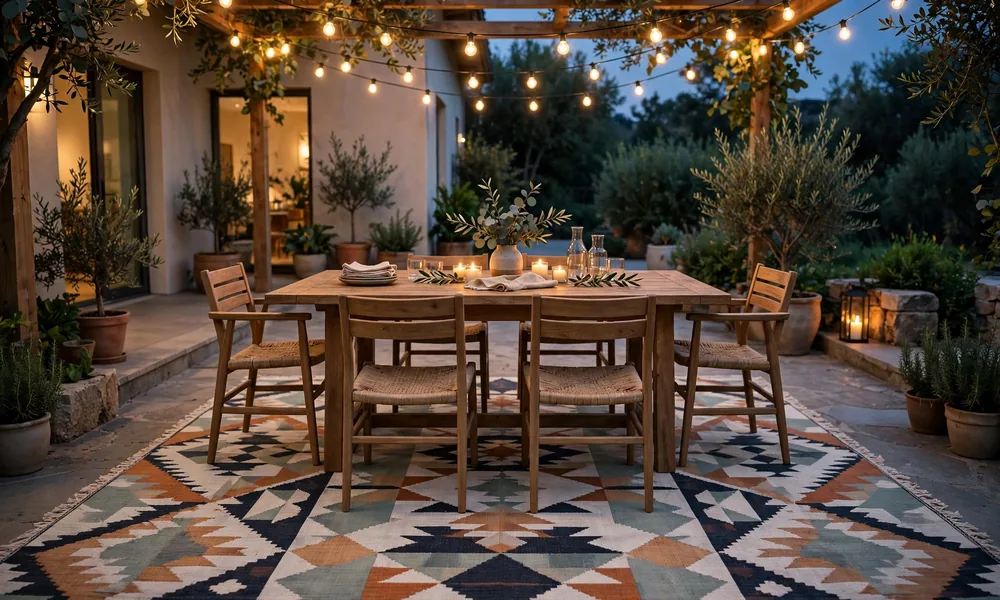
Size is the mistake most people make with outdoor rugs. A rug that is too small looks like a doormat under your furniture, while one that is too large can overwhelm a modest patio and trap dirt at the edges. The rule is simple: measure the furniture, then choose the rug. For a lounge area, the rug should extend at least 15 to 20 centimetres beyond the seating and sit under the front legs of every chair and sofa. For dining, add at least 60 centimetres on each side of the table so chairs stay on the rug when pulled out.
When in doubt, go one size up. A slightly generous rug looks intentional and makes the patio feel larger.
Styling Your Patio Rug
A rug is the easiest way to give a patio a style. Start with the pattern. Bold geometric designs suit modern furniture, while softer, faded patterns work with rustic wood and rattan. Stripes are the most forgiving choice, adding structure without competing with the furniture. If your furniture is plain, the rug can carry the pattern; if it is already bold, choose a quieter rug.
Colour deserves the same thought. Warm terracotta, sand, and sage suit sunny, Mediterranean-style patios, while navy, charcoal, and slate work in cooler, modern settings. Light colours brighten a shaded patio but show dirt faster, so reserve them for covered areas. Mid-tones are the practical sweet spot, hiding dust while still feeling bright. Finish the look with cushions in colours picked from the rug, and the best throw pillows for couches offer a useful guide to choosing colours and textures that work with patterned rugs.
Dining Zones and Cooking Spaces
On a patio used for cooking and eating, the rug should define the dining zone and stay clear of the grill. Place the rug under the table, clear of direct heat, and choose a low-pile surface that handles dropped food and chair movement. If you are setting up the cooking side of the patio, comparing gas vs charcoal grills will help you decide which type of grill suits your space and how much room to leave around it.
Care and Cleaning
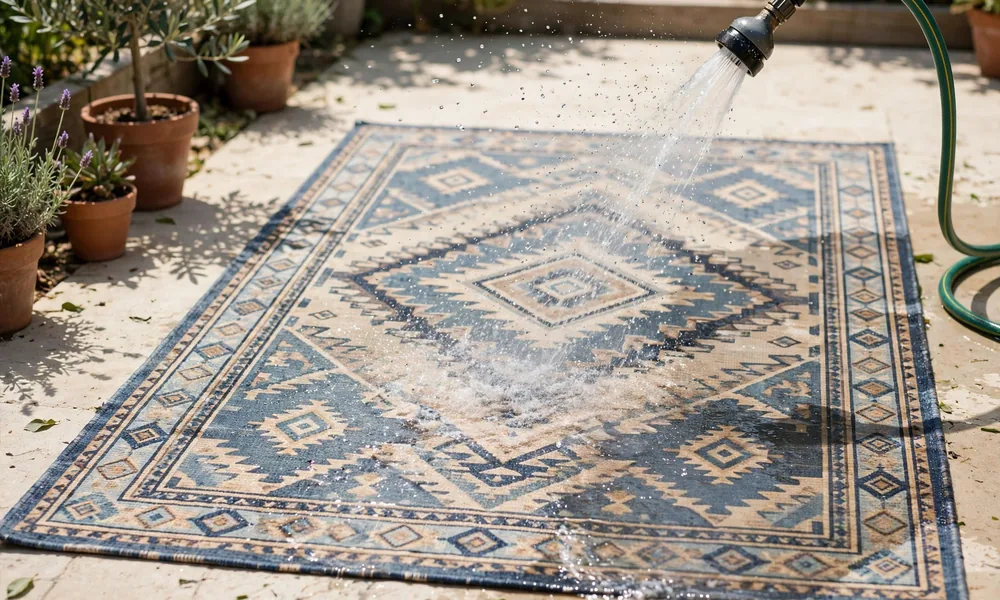
Outdoor rugs are low maintenance, not no maintenance. Sweep or shake the rug weekly, hose it down monthly, and let it dry completely after heavy rain. For a deeper clean, lay the rug flat, hose it down, and scrub stubborn marks with a soft brush and mild soap. Rinse well and dry it in the sun, ideally draped over a railing so air reaches both sides. Never fold a damp rug away, since trapped moisture causes mildew.
Stains need prompt attention. Blot spills immediately rather than rubbing them in, then clean with mild soap and water. Avoid harsh bleach on coloured rugs, and use a diluted white vinegar solution for pet messes or food spills.
Storing Your Rug for Winter
In regions with harsh winters, storing the rug indoors extends its life. Clean it thoroughly, dry it completely in the sun, then roll it rather than folding it, since folds can crease the weave. Store it in a dry garage or shed; a breathable bag is better than sealed plastic, which traps moisture. Keeping the wider garden tidy helps too, and the best robot lawn mowers can keep the lawn around your patio neat with very little effort from you.
Checklist: Before You Buy
Run through this checklist before ordering.
- Measure your furniture footprint and add the recommended margin for lounge or dining use.
- Confirm the material is polypropylene, polyester, or another synthetic rated for outdoor use.
- Check that the backing is breathable or that the rug drains freely, with no solid rubber layer.
- Look for UV stabilisation and mould resistance on the product label.
- Choose a pattern with two or three tones to hide dust, pollen, and everyday marks.
- Buy an outdoor rug pad in the same size to stop slipping and improve drainage.
Frequently Asked Questions
Can outdoor rugs be left outside in the rain?
Yes, good outdoor rugs are designed for rain. Polypropylene, polyester, and recycled plastic rugs shed water and dry quickly, especially with an open weave and a breathable backing. Drape the rug to dry after very heavy rain.
How do I stop an outdoor rug from slipping?
Use an outdoor rug pad cut to the size of the rug. The pad grips both the patio and the rug and adds a little cushioning. Avoid indoor rug pads outdoors, since they absorb water and trap moisture.
Will an outdoor rug fade in the sun?
All outdoor rugs fade eventually, but UV-stabilised synthetic rugs fade far more slowly than untreated or natural fibre rugs, and solution-dyed fibres hold colour best.
Can I put an outdoor rug on grass?
You can, but not for long periods. A rug on grass blocks sunlight and traps moisture, which can kill the grass and encourage mildew. Use it for events and short stays.
How do I clean an outdoor rug?
Sweep it weekly, hose it down monthly, and scrub stubborn marks with a soft brush and mild soap. Rinse well and dry it fully in the sun, and avoid harsh bleach on coloured patterns.
What size outdoor rug do I need for a patio?
For a lounge set, choose a rug that extends at least 15 to 20 centimetres beyond the furniture and sits under the front legs of every seat. For dining, add at least 60 centimetres on each side of the table. When in doubt, size up.
The Bottom Line
The best outdoor rugs for patios are the ones that work as hard as they look good. A flatweave polypropylene rug is the safest choice for most patios, and a low-pile patterned rug suits dining areas. Measure your furniture, choose a synthetic material with UV protection and a breathable backing, and pick a pattern that hides everyday dirt. Do that, and your patio will feel finished, comfortable, and inviting for seasons to come.


